Arrow Direction Problems From Saddle Hunting: Fix Misses
Fix arrow direction problems from a saddle by checking body position, anchor, bow hand, and clearance first. Only call it a tuning issue after the same miss repeats from a square, repeatable shot. Ignoring those basics wastes arrows, hides dangerous clearance contact, and can cost a buck when the shot breaks under pressure. This guide shows how to diagnose left-right and vertical arrow-direction errors from awkward hunting positions, then separate form problems from real bow-tune issues.
This guide is part of our Arrow direction guide for archers series.
Saddle shot setup basics
A tree saddle is a hunter support system that allows 360 degrees of movement around a tree, but that freedom changes shooting angles and body mechanics. The bridge and tether change where the torso sits, where the bow can travel, and how much rotation is available before release.
Strong-side shots feel more natural for most shooters. Weak-side, or off-side, shots are harder because they demand more hip and shoulder rotation, especially for right-handed archers reaching left of the tree or left-handed archers reaching right of it.
The bridge can intrude into the bow path. The tether can change lean and stability, and it can be positioned like a seatbelt over the shoulder to help manage that lean without collapsing the chest.
What you’ll need
- Tree saddle with bridge and tether
- Platform with room to rotate the feet
- Knee brace or a planned knee contact on the tree
- Bow clearance markers, such as a bright string serving or taped reference point on the riser, for practice
- Safe practice target at ground level and, if possible, on an elevated setup
- Range lane or backyard space for angle-specific drills
Why do saddle shots miss high or low?
High and low misses usually come from lean angle, anchor changes, platform angle, or a torso that collapses against the tether. If the chest leans back, the release hand often climbs and the sight picture can float high. If the hunter folds into the tether or drops posture, the pin can settle low.
Suppose a right-handed shooter on a 12-inch platform leans hard to the left to clear the tree. If the hips shift but the anchor stays high, the arrow may hit high left. Change only the lean, and the miss often changes with it.
A common first-timer mistake is blaming the sight when the real issue is posture. A steep angle or a narrow stance changes where the head sits relative to the string, so the same bow can print differently from the same distance.
Step 1: Set your saddle for the shot lane
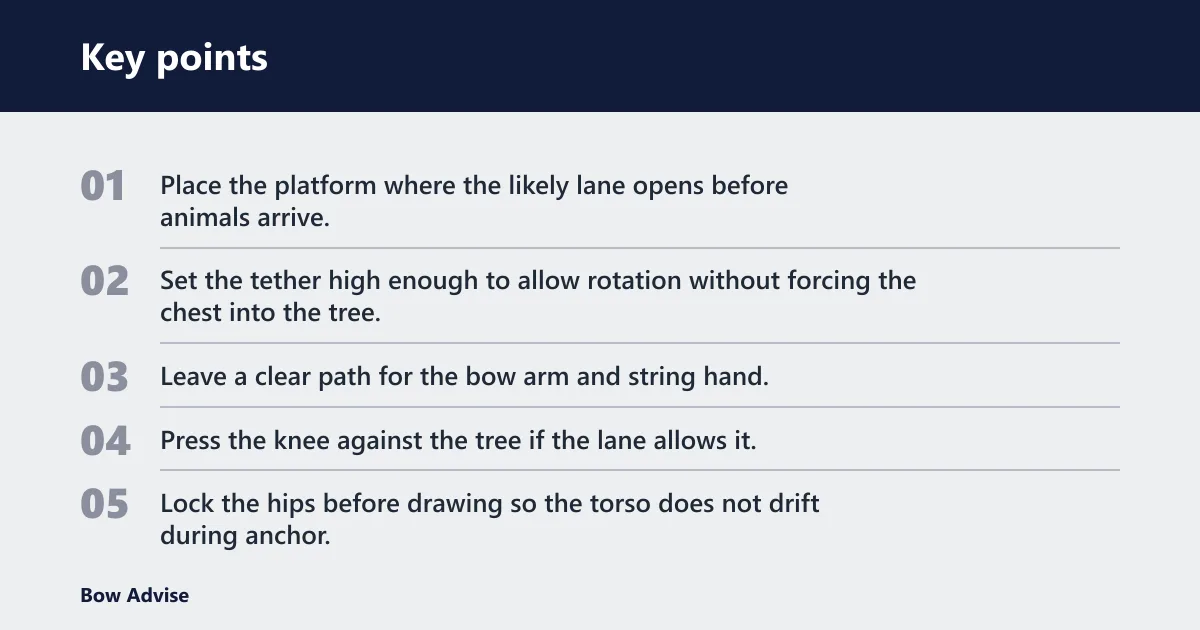
- Place the platform where the likely lane opens before animals arrive.
- Set the tether high enough to allow rotation without forcing the chest into the tree.
- Leave a clear path for the bow arm and string hand.
Step 2: Build a stable shooting position
- Press the knee against the tree if the lane allows it; that adds a contact point and steadies the core.
- Lock the hips before drawing so the torso does not drift during anchor.
- Keep the chest from over-rotating past the shot lane.
Step 3: Clear the bow path before release
- Move the bridge out of the way on weak-side shots if it can touch the bow.
- Check limb and cam clearance against the tree, bark, and saddle gear.
- Stop the shot if any contact appears during the draw cycle.
Step 4: Match the drill to the miss
- For a high miss, shoot from the same distance with the torso stacked and the tether slightly looser, then compare impact.
- For a low miss, repeat with the chest tall and the bow shoulder lifted into a firmer anchor.
- For a left or right miss, keep the feet fixed and rotate only the hips until the sight picture centers.
What is the best body position for weak-side saddle shots?
The best weak-side position is the one that leaves room in the hips without breaking anchor. Weak-side shots are the shot from the release-arm side, and they are harder than strong-side shots because they need extra torso rotation, better bow clearance, and cleaner bridge management.
For right-handed shooters, the weak side is commonly left of the tree. For left-handed shooters, it is commonly right of the tree. That difference matters because the bow often crosses the body on the off-side shot, and the string hand can crowd the bridge if the shoulders overreach.
Levi Morgan recommends setting the likely encounter lanes in the 11 o’clock to 7 o’clock zone. That keeps the common lane inside a workable rotation window and reduces the need for a desperate, behind-the-tree reach.
Best weak-side setup checks
- Rotate the platform so the front foot points into the lane.
- Keep the knee brace ready to add a third contact point.
- Raise the bow over the bridge on the quick weak-side move if the lane is tight.
- Use the tether like a seatbelt over the shoulder to control lean without collapsing the torso.
Weak-side correction drill
Shoot five arrows from the weak side at close range, then repeat after moving only the bridge and shoulder position. Do not change sight settings yet. If the impact follows the body change, the miss is mechanical. If it stays fixed from the same square setup, then tune deserves attention.
How do you stabilize a bow when leaning away from the tree?
Leaning away from the tree usually makes the shot float because the upper body loses the tree as a brace. The fix is to replace that lost support with a firm knee contact, a controlled tether line, and a platform angle that still gives the feet room to rotate.
The same source says the saddle can add a third contact point, and a knee against the tree is one way to create it. That extra contact helps the core stay locked while the upper body reaches for the lane.
Lean-away correction drill
- Stand on the platform and turn the chest away from the tree only until the bow clears.
- Press the knee into the trunk before coming to anchor.
- Hold that pressure through the release and note whether the pin settles faster.
Picture a shooter on a low platform reaching around the trunk for a steep lane. If the bow side shoulder rises and the chest drifts off the tree, the arrow often hits low and left for a right-handed archer. The same lane with a braced knee and tall spine usually tightens the group.
Which shot angles are hardest in a saddle?
The hardest shot windows are the ones that combine rotation with clearance problems: weak-side shots, behind-the-tree reaches, steep uphill or downhill lanes, and any position that forces the torso to twist while the tether limits movement. Those deserve extra reps first.
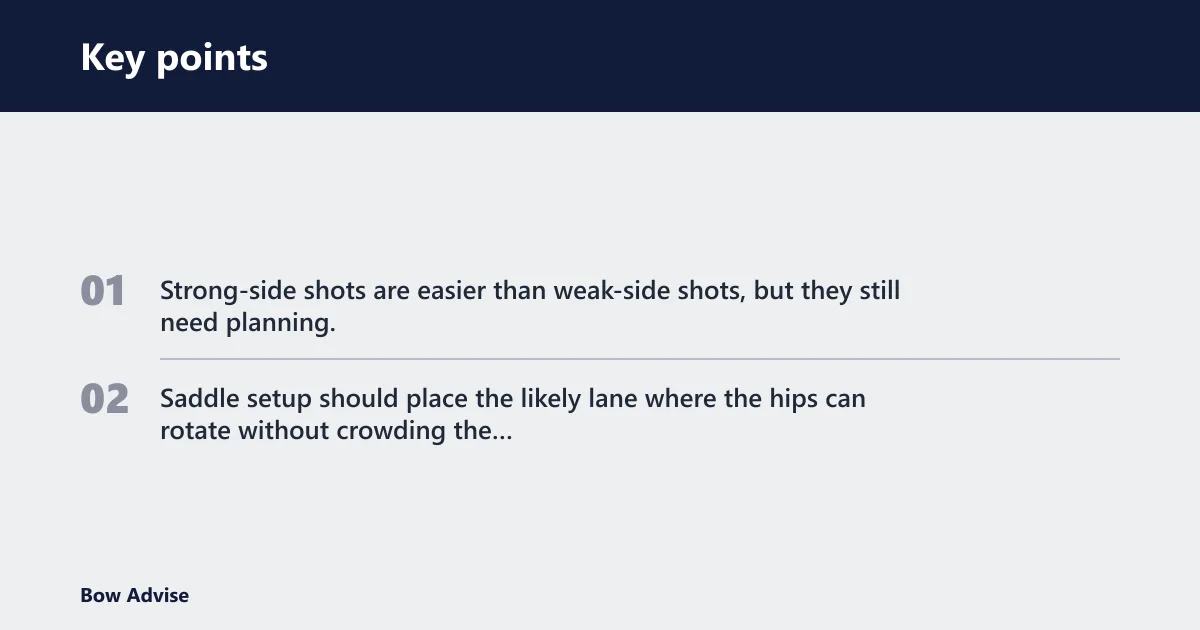
Strong-side shots are easier than weak-side shots, but they still need planning. Saddle setup should place the likely lane where the hips can rotate without crowding the bridge or pinching the bow path.
Saddle-shot error map
| Awkward position | Expected miss tendency | Likely cause | One correction drill |
|---|---|---|---|
| Strong-side | Small left or right drift | Over-rotation or rushed anchor | Freeze the feet and repeat anchor-to-release three times before shooting |
| Weak-side | Often high and left for right-handed shooters, high and right for left-handed shooters | Extra hip and shoulder rotation crowds the bow path | Raise the bow over the bridge and shoot with the knees set first |
| Under-tree | Low impact | Head drops under the string line | Stand taller on the platform and reset anchor height |
| Behind-tree | Wide horizontal miss | Bow path is forced around bark and gear | Shift the platform so the shoulder can square before the draw |
| Leaning back | High impact | Chest collapse into the tether changes anchor height | Set the tether like a seatbelt and keep the sternum tall |
| Twisting left or right | Side miss in the direction of the twist | Hips and shoulders are no longer stacked | Square the hips to the target line before drawing |
| Low platform | Low and sometimes short | Limited room for rotation and a crouched bow shoulder | Move the platform higher on the trunk, then recheck lane |
| Steep uphill or downhill | Vertical miss from altered angle | Angle changes the perceived pin gap and body lean | Practice the same lane from an elevated target at two angles |
How do you keep from hitting the bridge or tether on a saddle shot?
Start by treating bridge and tether contact as a clearance problem, not a sight problem. If the bow brushes either one, the shot lane is too tight or the body is rotated too far for that setup. Move the bridge out of the way on weak-side shots and reset the tether before chasing tune changes.
The tether should support the hunter, not block the bow. When it rides too low or too loose, it can interfere with lean control. When it is too tight, it can pull the chest backward and crowd the draw cycle.
Clearance check
- Draw slowly to anchor without an arrow.
- Watch the string hand, elbow, cam, and limb path near the bridge.
- Raise the bow over the bridge if needed, then repeat the draw before loading an arrow.
If that did not work, move one contact point at a time. Adjust the tether height first, then the platform position, then the knee brace contact. Changing all three at once hides the real cause.
How should you set up your saddle for strong-side and weak-side shots?
Set up for the side you expect to shoot most often, then leave room for the other side. Strong-side shots should be planned into the saddle setup because they are more natural and easier to execute with a slight twist. Weak-side shots need practice before season because they demand more rotation and better bow clearance.
Use the platform to create rotation room, not just standing room. The platform angle affects stance width, and the stance width affects how much the hips can turn before the knees and bridge get in the way.
Pre-hunt verification routine
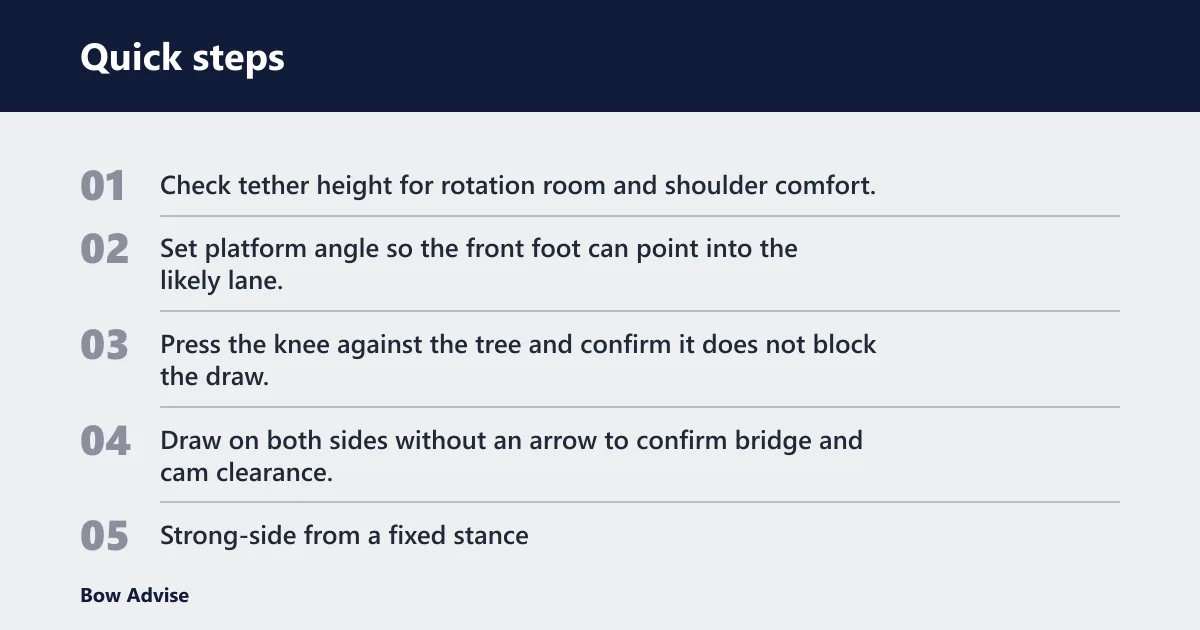
- Check tether height for rotation room and shoulder comfort.
- Set platform angle so the front foot can point into the likely lane.
- Press the knee against the tree and confirm it does not block the draw.
- Draw on both sides without an arrow to confirm bridge and cam clearance.
What should I practice before hunting from a saddle?
Practice elevated shooting, weak-side shots, and the exact shot angles expected from the tree. Repetition matters, but the repetition must match the field position. A flat-ground bullseye session does not replace a shot-angle drill from a platform.
A proper practice setup includes a backyard repetition lane, a higher stand or box, and a target placed so the arrow travels from above and across the body. Weak-side shot practice should be done before hunting from a saddle.
Practice order
- Strong-side from a fixed stance
- Weak-side with the bridge cleared
- Under-tree and behind-tree angles
- Steep uphill and downhill angles from an elevated setup
Before every hunt, a common routine is to repeat the same three checks in the same order: tether height, platform angle, and bow clearance. That routine catches most avoidable saddle misses before the deer appears.
Common mistakes
- Confusing bridge or tether contact with a tune problem. If the bow hits gear, stop and fix clearance first.
- Skipping weak-side practice. Off-side shots need their own reps because they change body rotation and bow path.
- Ignoring right-handed and left-handed differences. The weak side is mirrored, so the miss pattern can flip.
- Using the same body position for every lane. Under-tree, behind-tree, and steep-angle shots each change anchor height and torso lean.
- Bracing too loosely on the tree. A knee contact point can steady the shot, but only if the hips stay locked.
Say a right-handed hunter on the left side of the tree keeps printing high-left at 18 yards. If the same miss disappears when the bridge is moved and the knee is pressed into the trunk, the issue is body position and clearance, not the sight housing.
Frequently asked questions
How do you shoot from a saddle without missing high or low?
Keep the spine tall, set the tether so it supports without collapsing the chest, and anchor at the same facial point every time. If the miss changes when the lean changes, the problem is posture. Recheck platform angle before touching sight settings.