Best Arrow Lengths for Safety and Accuracy: Research Shows
Choose an arrow about 1 inch longer than full draw length, measured from the nock throat to the end of the shaft, so it stays ahead of the rest at full draw. Cut it too short, and the arrow can leave the rest with little margin or fail safely. This guide shows how to measure, add a safe buffer, and avoid overcutting your first arrows.
Best starter arrow length
A common starting point for a beginner is usually a shaft that sits about 1 to 2 inches past full draw before any cut is made. That gives room for a change in anchor, a new release aid, or a small form correction without forcing a replacement. It also leaves enough shaft length to work with spine selection before trimming.
For recurve bows, a longer shaft is often the better first buy because the arrow must clear the shelf and any strike plate cleanly. For compound bows, the key check is full-draw clearance at the rest and beyond the launcher. In both cases, longer is generally safer than too short.
If a beginner is unsure, leave the shaft uncut until draw length is confirmed on the actual bow and the arrow clears the rest at full draw. A slight overhang can be trimmed later. A shaft cut too short is far harder to fix.
Quick comparison
| Product | Badge | Best for | Price | ||
|---|---|---|---|---|---|
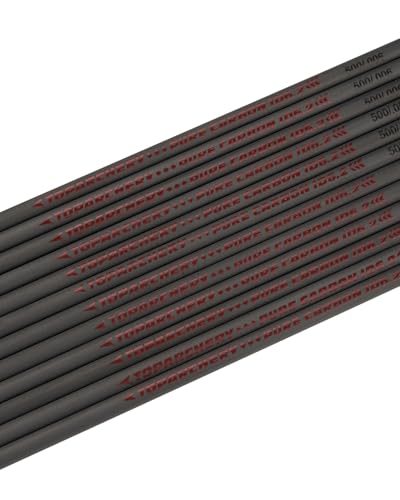 | TOPARCHERY Arrow Shafts Pure Carbon Shafts 31 Inch ArrowTOPARCHERY | Our pick | 31-inch · 12-pack · spine 350 | $37.99 Price as of 16 Nov 2026 | View |
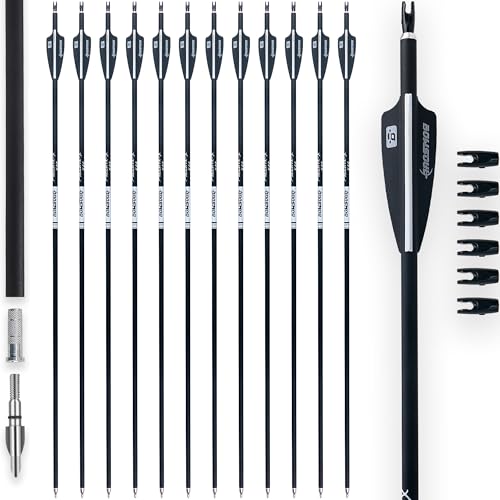 | BOWSOUL 31 Inch Carbon Target Hunting Arrows for CompoundBOWSOUL | Also great | 31-inch · 12-pack · 500 spine | $28.99 Price as of 16 Nov 2026 | View |
 | Carbon Express 50751 Maxima RED Carbon Arrow ShaftCarbon Express | Upgrade pick | 31.5-inch · 12-pack · 400 spine | $123.09 Price as of 16 Nov 2026 | View |
Draw length is the starting point, not the final arrow length. Arrow length is the measured shaft length you order or cut, and the measurement reference changes depending on whether the shaft is raw or finished.
Compound and recurve bows also need different clearance checks. A longer shaft can be easier to tune safely at first, but extra length changes spine behavior and can reduce speed.
How we chose
The guidance here rests on four checks: full-draw safety, basic tuning risk, common beginner setup changes, and the measurement standard used when ordering or cutting shafts.
That means the recommendation is not a single fixed number for every bow. It is a starting buffer that can be trimmed only after clearance, nock fit, and rest type are confirmed.
Where product choices appear below, they are based on published specs and buyer feedback. No hands-on testing claims are made.
Arrow length decision table
This table gives a practical starting buffer by draw-length range. Use it as a purchase guide, then confirm full-draw clearance before any cut.
| Draw length range | Recurve beginner buffer | Compound beginner buffer | What to do first |
|---|---|---|---|
| Up to 24 inches | 1.0 to 1.5 inches longer | 1.0 to 1.5 inches longer | Keep the shaft uncut until the full draw is checked on the bow. |
| 24.1 to 27 inches | 1.5 inches longer | 1.5 to 2.0 inches longer | Confirm shelf or rest clearance and then decide whether to trim. |
| 27.1 to 29 inches | 1.5 to 2.0 inches longer | 2.0 inches longer | Leave extra length if the release aid, anchor, or rest may change. |
| 29.1 inches and up | 2.0 inches longer | 2.0 inches longer | Do not cut until draw length is verified with the real setup. |
If the draw length falls between two ranges, use the longer buffer. That is the safer choice for a first arrow order, especially when the bow setup is still changing.
What counts as a measurement standard
For raw shafts, many archers measure from the throat of the nock to the end of the shaft, not including the point or insert. For finished arrows, the finished length may be described differently by a seller, so the listing should be checked before ordering. The same number can mean different things if the reference points differ.
That matters when comparing pre-cut arrows with raw shafts. A 31-inch shaft may not give the same finished length as a 31-inch arrow listing, because insert depth and point choice can change the total assembly length.
Arrow length checklist
Use this checklist before any cut. If one item is still uncertain, leave the arrow longer.
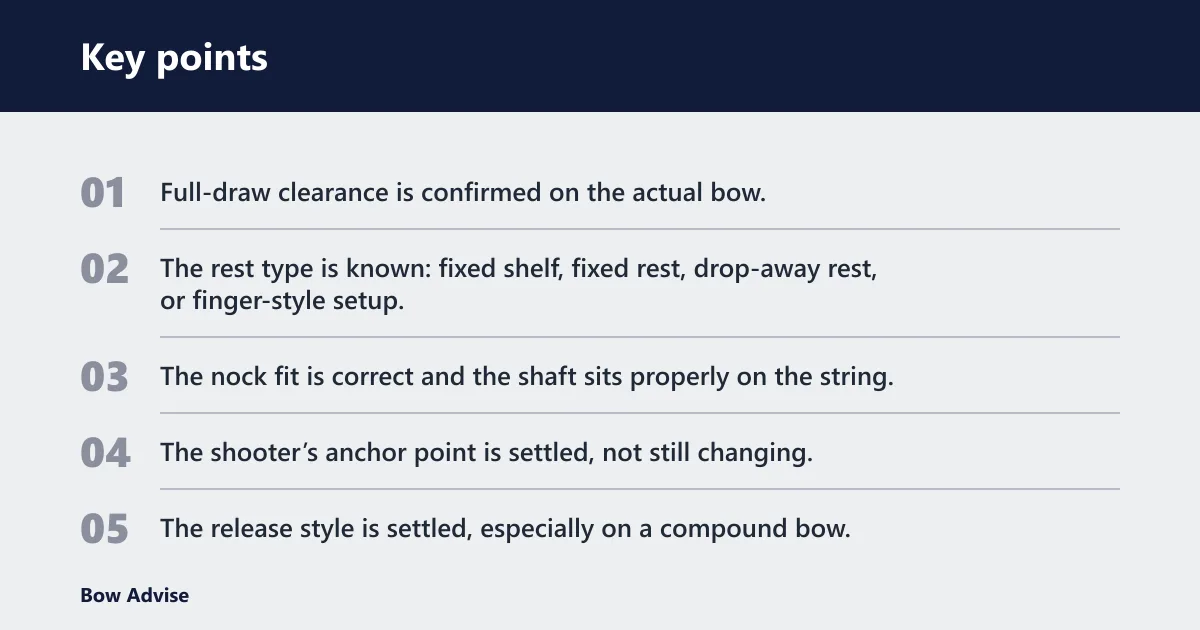
- Full-draw clearance is confirmed on the actual bow.
- The rest type is known: fixed shelf, fixed rest, drop-away rest, or finger-style setup.
- The nock fit is correct and the shaft sits properly on the string.
- The shooter’s anchor point is settled, not still changing.
- The release style is settled, especially on a compound bow.
- Future changes are unlikely, such as a new rest, release aid, or anchor point.
How do you measure draw length?
Draw length comes first because it sets the starting point for arrow length, but it is not the same measurement. It should be checked at full draw on the actual bow, with the real anchor point and release style that will be used for shooting.
Shoulder position, anchor height, and release type can change the result by enough to matter. A beginner who measures once with a rough stance may end up buying shafts that are too short after form settles in.
- Set the bow up with the intended rest, release, and anchor.
- Draw to the normal anchor point.
- Confirm the draw length at that full-draw position.
- Use that number as the starting point for arrow length selection.
Say a compound shooter measures 27 inches during a rough setup, then settles into a lower anchor and actually draws 27.5 inches after fitting. A 27-inch shaft that looked fine on paper can become too tight on clearance, which is why the bow setup must be confirmed before cutting.
What if the arrow is too short?
A short arrow can leave little margin at full draw and can create clearance problems with the rest or shelf. On a compound bow, that can be especially risky if the arrow sits too close to the launcher at full draw. On a recurve, a short shaft can be harder to handle cleanly and may leave less room for safe finger release form.
Short shafts are also harder to fix because length cannot be added back after cutting. That is why a first arrow order should err on the long side, then be trimmed only after the setup proves itself.
Why short shafts are harder to tune
Arrow length changes spine behavior. A shorter shaft behaves stiffer; a longer shaft behaves weaker. If the arrow is already too short, spine correction options are limited, especially for beginners who have not finalized draw weight, point weight, or rest position.
Length also affects speed. Extra shaft length usually adds weight, which can slow the arrow and make broadhead tuning harder if the spine is no longer matched to the bow.
Which beginner setup should you buy?
The best beginner choice is the shaft that leaves at least 1 inch of safe margin after full draw, with more room if the setup is still changing. For many recurve shooters, that means a slightly longer raw shaft than the initial draw length suggests. For many compound shooters, it means enough overhang to clear the rest at full draw without crowding the launcher.
If the buyer is a youth or short-draw archer, extra length matters even more because later form changes can shift the final draw length. A shaft that is already cut tight may become unusable after a coaching correction or a new anchor point.
Recurve beginner choice
Recurve shooters should prioritize shelf clearance and safe handling. A slightly longer shaft is usually the better starting point because finger release, anchor variation, and shelf contact make exact short cuts risky. The first trim should wait until the arrow clears cleanly at full draw and the point weight plan is set.
Compound beginner choice
Compound shooters should prioritize rest clearance at full draw and keep enough length to account for any future rest or release change. A drop-away rest, a fixed rest, and a launcher with a different timing setup can change the safest minimum length. Leave extra length until the system is settled.
Youth or short-draw shooter choice
Youth and short-draw shooters should avoid buying to a guess. A small change in stance or anchor can alter draw length enough to matter. A longer shaft lets the bow be fit safely now, then trimmed later if the setup stabilizes.
Top beginner arrow length picks
TOPARCHERY 31-inch carbon shafts: best for DIY beginner builds
These 31-inch pure carbon shafts are a straightforward option for a beginner who wants room to leave extra length before cutting. Based on the listed 31-inch length, 12-pack format, and spine options from 300 to 600, they suit bowyers who want a shaft they can trim after checking full-draw clearance.
The main strength is flexibility in setup. The listed straightness tolerance of +/-0.006 and the carbon construction make them practical for recurve, compound, and traditional bows.
The drawback is that they are raw shafts, so the buyer still needs to choose spine carefully and confirm the final cut before assembly. A wrong spine choice can still hurt accuracy even if the length is safe.
BOWSOUL 31-inch carbon arrows: best for ready-to-shoot beginners
These 31-inch arrows are aimed at beginners who want a safer starting length with less assembly work. The listed 500 spine, removable tips, pin nock system, and 12-arrow pack make them a practical option for shooters who need usable length right away.
The pin nock system is the standout detail. It can help service life and may reduce certain nock-related issues compared with more basic entry-level arrows.
The drawback is that the spine is fixed at 500, so it may not suit every draw weight or draw length. Buyers still need to check whether the arrow length and spine match the bow before ordering broadheads or trimming anything.
Carbon Express Maxima RED shafts: best for tighter tuning goals
These 31.5-inch shafts fit beginners who want extra room before cutting and a more tuning-focused build. The published 400 spine, matched weight, and Dynamic Spine Control make them a stronger candidate for shooters who expect to refine setup rather than leave the arrows as-is.
The longer 31.5-inch length offers a little more safety margin than a 31-inch shaft, which can be useful when draw length is still settling.
The drawback is cost. The set is more expensive than simpler beginner options, and the 400 spine may be too stiff or too weak depending on the bow and point setup.
Which one should you buy?
Choose the TOPARCHERY shafts if the goal is a raw shaft that can be cut only after clearance is confirmed. Choose the BOWSOUL arrows if the goal is a simpler ready-to-shoot option with a common beginner length. Choose the Carbon Express shafts if the goal is a longer starting point and more precise spine planning.
If the budget is tight, a basic 31-inch arrow is usually better than a shorter shaft that may need replacement. If the bow setup is still changing, the 31.5-inch Carbon Express option gives the most room for future adjustment. If the shooter is still unsure about draw length, keep the shaft longer and wait.
Say a beginner with a 26.5-inch draw is moving from a rental recurve to a personal bow. A 28-inch shaft gives enough clearance to confirm shelf fit first, then trim later if needed. A 26-inch cut would be a poor first choice because it removes the margin that could have covered a small anchor change.
Suppose a compound shooter switches from fingers to a release aid and the anchor shifts back by half an inch. A shaft that was already cut to the old draw length may now be too short. Leaving extra length would have made that change easier to absorb.
Start with draw length, then add a safety buffer, then confirm full-draw clearance on the bow. That order matters because arrow length is the final cut length, while draw length is the input that guides the choice.
Longer shafts are generally safer than arrows cut too short, but extra length changes spine and can affect accuracy. The right answer is usually the shortest shaft that still clears safely at full draw and leaves room for likely setup changes.
When to leave arrows longer
Leave arrows longer when the bow is new, the rest is still being adjusted, the anchor is not stable, or the shooter expects to change release style. Leave them longer when in doubt. The cut can wait until the setup stops moving.
When to trim
Trim only after draw length, rest type, nock fit, and clearance are confirmed. Trim in small steps if the shaft is being tuned for broadheads or for a specific point weight. That keeps the margin intact while still allowing a clean final fit.
When to re-check
Re-check length after any form change, release aid change, rest adjustment, or bow fitting. A new anchor or a different grip can change draw length enough to alter the correct arrow size. That is the point where a safe-looking shaft may no longer be the right shaft.
Frequently asked questions
What arrow length do I need?
You need an arrow that matches your full draw length with a safety buffer. A common starting point is at least 1 inch longer than full draw, measured from the throat of the nock to the end of the shaft. That keeps the setup safer while the bow fit is still being confirmed.
How long should your arrow length?
For most beginners, the shaft should be long enough to clear the rest or shelf at full draw and still leave a little extra room. That usually means 1 to 2 inches beyond full draw length at the start. The exact amount depends on bow type, rest type, and whether the setup may change.
How long should an arrow?
An arrow should be long enough to stay safe at full draw, then only as long as needed after tuning. Too short creates a safety and clearance problem. Too long can add weight, slow the arrow, and make spine selection less forgiving.
What length arrows do I need?
Use your draw length as the starting point, then add a beginner-safe buffer. Recurve setups often need extra attention to shelf clearance, while compound setups need full-draw clearance at the rest. If the bow is not fully fitted yet, choose the longer option first.
What size arrow should I shoot?
Shoot the size that gives safe full-draw clearance and matches spine for the bow’s draw weight and setup. Length and spine work together. A safer longer shaft may need a different spine than a shorter one, so the length decision should not be made in isolation.