How to Set Bow Draw Weight for a Beginner Without Overpull
Set the bow to the lowest draw weight that still lets you reach anchor smoothly and repeat that shot several times with clean form. If you shake, lean, or short-draw, the bow is too heavy. Too much weight builds bad habits fast, and it can turn practice or a first hunt into a missed shot. This guide shows how to test control, choose a safe starting weight, and adjust it for target work or early bowhunting.
This guide is part of our Archery basics: beginner guide to bows and shooting series.
What you’ll need before you change draw weight
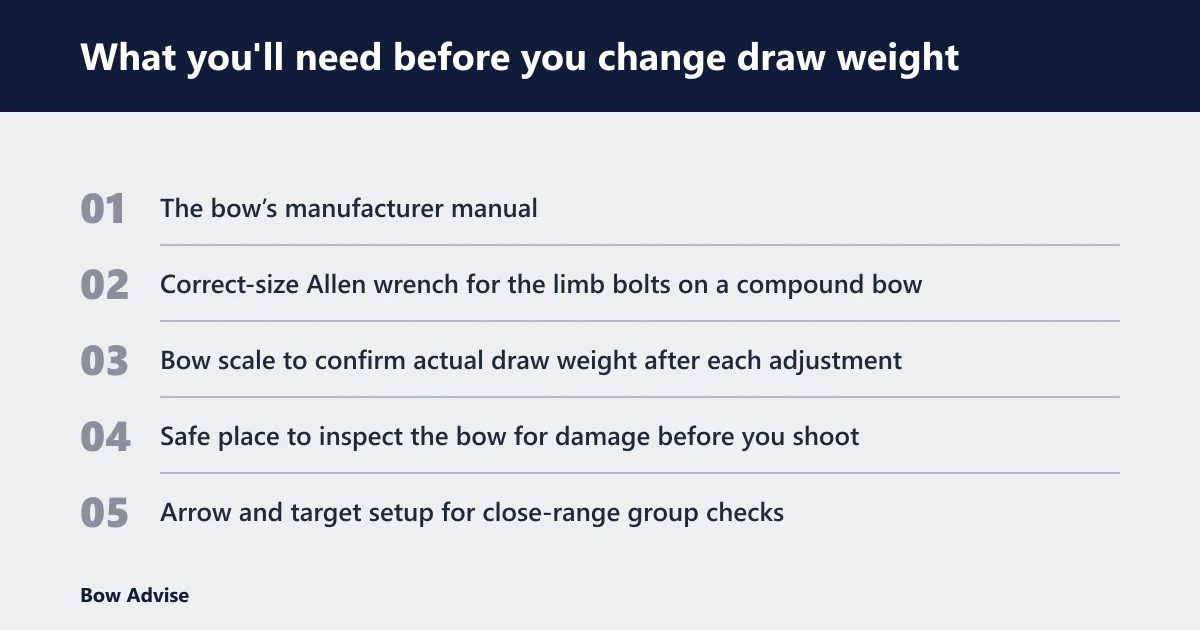


- The bow’s manufacturer manual
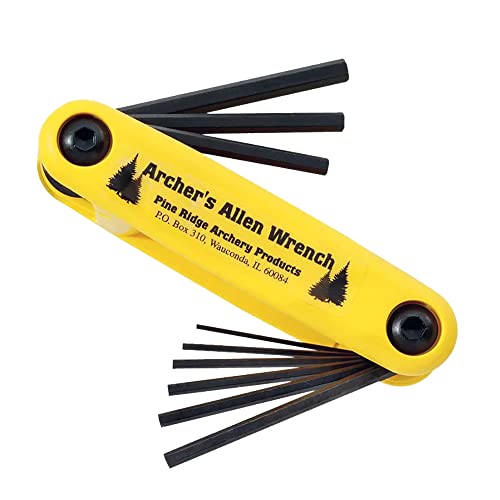
- Correct-size Allen wrench for the limb bolts on a compound bow
- Bow scale to confirm actual draw weight after each adjustment
- Safe place to inspect the bow for damage before you shoot
- Arrow and target setup for close-range group checks
What draw weight means for a beginner
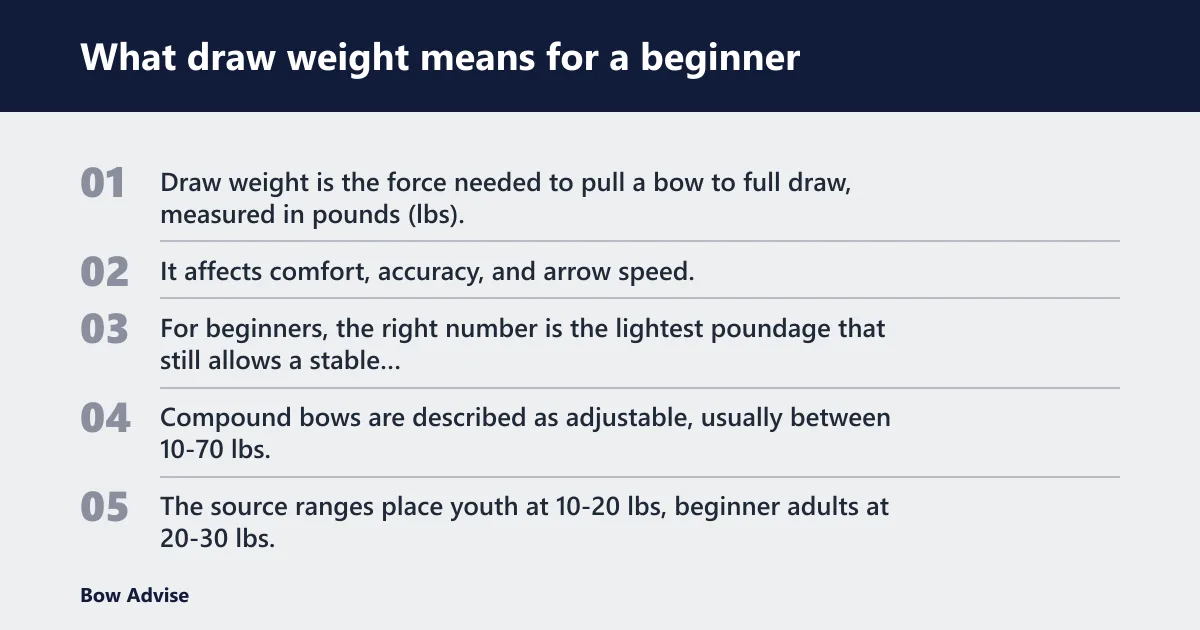
Draw weight is the force needed to pull a bow to full draw, measured in pounds (lbs). It affects comfort, accuracy, and arrow speed, and it has to match the shooter’s strength and skill. For beginners, the right number is the lightest poundage that still allows a stable anchor and repeatable shots.
Common starting ranges for adults and youth
Compound bows are described as adjustable, usually between 10-70 lbs. The source ranges place youth at 10-20 lbs, beginner adults at 20-30 lbs, and experienced adults at 35-50 lbs. Target archery uses 20-40 lbs, while hunting typically needs 40 lbs or more, but control still comes first.
My first compound bow was set 10 lb too heavy; I flinched for a month before I backed the limb bolts out.
That mistake happens often. A beginner who cannot hold steady at anchor does not need a higher number. A beginner who can repeat the shot cleanly does.

How to tell if your draw weight is too heavy
Your bow is too heavy if the shot falls apart before release. Shoulder shake, creeping off anchor, pin float that never settles, rushed release, target panic, and groups that open at close range are all signs to reduce weight. A number on the spec sheet does not matter if the shot is unstable.
What bad-fit draw weight looks like
- Shoulder shake: the bow arm trembles at full draw.
- Creeping: the string slides forward before release.
- Pin float: the sight never settles long enough to aim.
- Rushed release: you punch the trigger or snatch the string.
- Open groups: arrows land inconsistently at close range.
Say your anchor moves every time you draw a 28 lb bow, but a 22 lb setting lets you stop solidly at the same point. The lower setting is the better choice, even if the higher number sounds more serious.
How to set bow draw weight for a beginner without losing control
Start at the lightest setting that still feels stable, then move up only after the shot stays clean. A beginner should not chase speed first. Control decides whether practice builds skill or bad habits.
Control-first beginner checklist
| Test | Score 0 | Score 1 | Score 2 | Action |
|---|---|---|---|---|
| Anchor stability | Anchor breaks or shifts | Mostly stable, slight movement | Same anchor every shot | 0: reduce weight now; 1: stay put and retest; 2: continue |
| 10-second hold | Cannot hold 10 seconds | Can hold, but shakes near the end | Holds with steady aim | 0: reduce weight; 1: do another round later; 2: continue |
| Close-range groups | Arrows scatter | Group is loose but usable | Tight, repeatable group | 0: reduce weight; 1: hold steady and repeat; 2: consider a later increase |
How to use the checklist
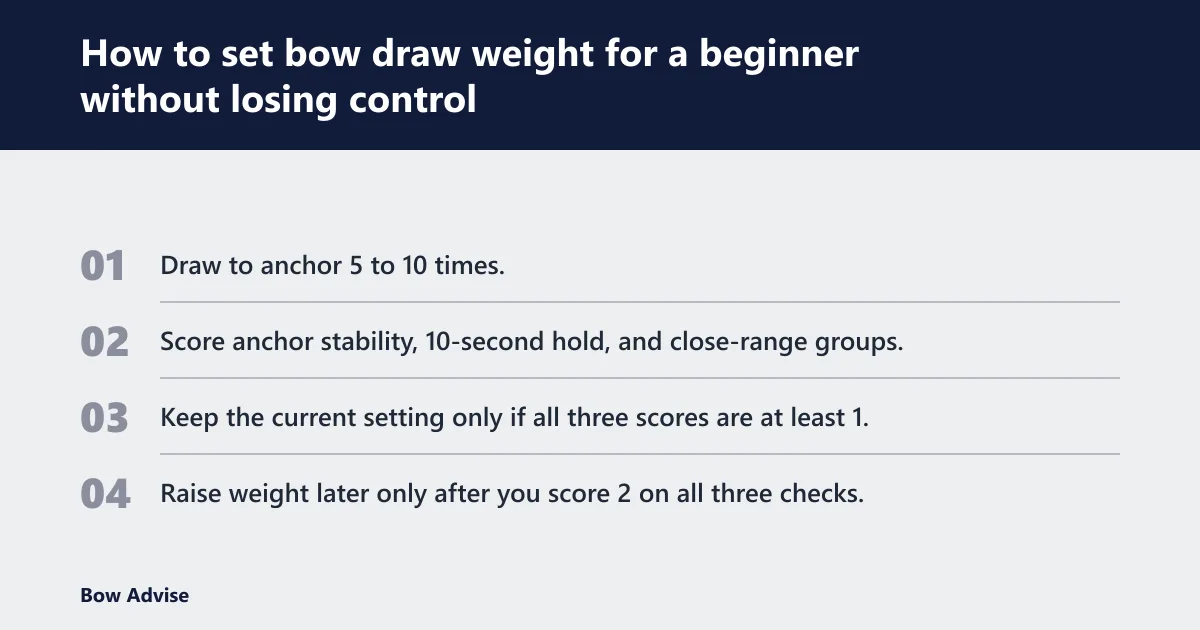
- Draw to anchor 5 to 10 times.
- Score anchor stability, 10-second hold, and close-range groups.
- Keep the current setting only if all three scores are at least 1.
- Raise weight later only after you score 2 on all three checks.
If that does not work, stay at the same poundage and build repetition before you add weight. If the bow still feels unstable on the third round of scoring, the setting is too high for your current form.
How do I lower draw weight on a compound bow?
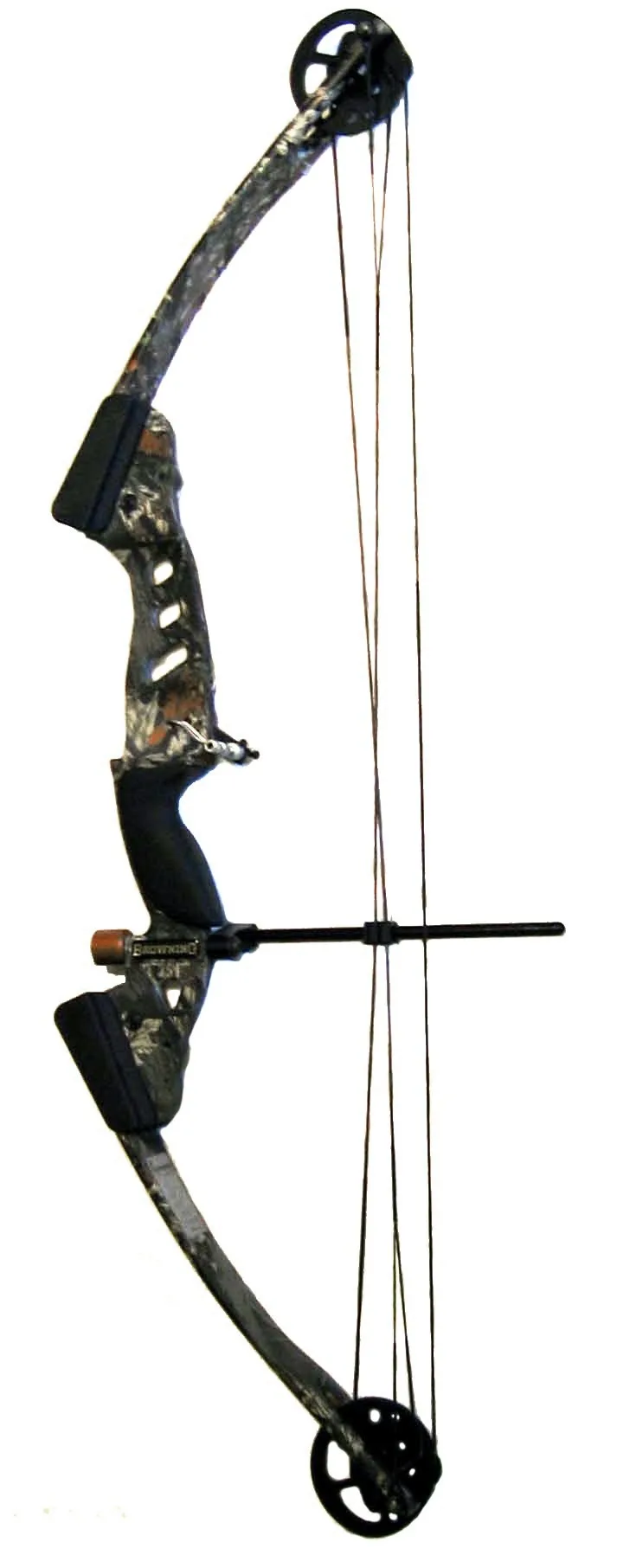
Yes. Compound bows are adjusted with limb bolts, and the top and bottom bolts should be turned equally. Clockwise increases draw weight. Counterclockwise decreases it. Make small changes, then confirm the new setting with a bow scale before shooting again.
Safe adjustment steps
- Check the manual for the bow’s safe adjustment range.
- Insert the correct-size Allen wrench into both limb bolts.
- Turn both bolts the same amount in quarter turns.
- Use counterclockwise to reduce draw weight.
- Measure the new draw weight with a bow scale.
- Stop if the bow feels odd or the limbs look stressed.
SportsRec notes that alternating limb bolts can change draw weight by two to four pounds, and it warns not to back out limb bolts more than three turns. Stay inside the maker’s range. Do not force the setting lower just because the number sounds better.
Can you change draw weight on a recurve bow?
Most recurves do not change draw weight with limb bolts. Draw weight is usually changed by swapping limbs with a different poundage. That makes limb choice the key adjustment, not a turn of hardware. If the limbs are not designed for adjustment, do not force the setup.
When to replace limbs instead of forcing a change
- The bow has fixed limbs and no adjustment system.
- The draw weight still feels heavy after form work.
- You want a cleaner jump in poundage, not a tiny tweak.
- The manual lists replacement limbs for different weights.
A common first-timer mistake is trying to “dial down” a recurve that was built too heavy for them. If the limbs are not made for adjustment, the right move is a different limb set, not more pressure on the bow.
Should I start light and increase draw weight later?
Yes. Start light, then increase later only after your anchor is stable, your hold is calm, and your groups stay together. That is the cleanest way to build control. For future bowhunters, the goal is not just reaching a hunting number; it is reaching a hunting number you can hold and shoot correctly.
Progression plan for beginners
- Pick the lowest poundage that passes the control test.
- Practice until anchor and release feel automatic.
- Recheck with the bow scale after each increase.
- Move up in small increments only when groups stay tight.
- Stop increasing if form breaks at the new setting.
For target beginners, 20-40 lbs is a common working band, but the best setting is the one that keeps the shot repeatable. For future bowhunters, heavier is only useful if it stays controllable. Hunting weight without control is a bad trade.
What happens if my draw weight is too high for my form?
Too much draw weight for your form causes poor anchor, shaky hold, poor aiming, and sloppy release. The bow may feel faster, but the shot gets worse. The fix is to lower the setting until you can draw smoothly, stay on target, and finish the shot without rushing.
When to reduce weight immediately
- Stop if you short-draw or collapse at anchor.
- Stop if the bow arm shakes on every shot.
- Stop if the release turns into a punch or snatch.
- Stop if close-range groups open up after a few arrows.
Suppose a beginner starts at a moderate draw weight, but a later arrow lands noticeably low because the draw felt rushed. That is not a sight problem. It is a control problem, and the answer is less weight.
Frequently asked questions
How much draw weight should a beginner start with?
Most beginner adults start around 20-30 lbs, and youth often start around 10-20 lbs. Those are starting points, not targets to force. The right setting is the lightest one that lets the shooter draw smoothly, anchor cleanly, and repeat the shot several times without visible strain.
What tools do I need to adjust bow draw weight?
For a compound bow, use the correct-size Allen wrench and a bow scale, plus the manufacturer manual. The wrench must fit the limb bolts properly. The scale matters because the bow’s marked setting and the actual draw weight should be checked after every small change.
How many turns can I back out limb bolts safely?
SportsRec warns not to back out limb bolts more than three turns. Make quarter-turn changes and keep the top and bottom bolts even. If you need more reduction than that, the bow may be outside its safe adjustment range and should be checked before further use.
How do I lower draw weight on a compound bow?
Turn both limb bolts counterclockwise in equal small increments, usually quarter turns, then check the new poundage on a bow scale. Do not change only one bolt. Uneven adjustment can affect bow behavior, and the manual should always set the outer limit for safe movement.
Can I change draw weight on a recurve bow without new limbs?
Usually no. Most recurves change draw weight by swapping to different limbs rather than turning limb bolts. If the bow’s design does not include an adjustment system, different poundage limbs are the correct route. Forcing the current limbs is not a safe substitute for proper fit.
What happens if my draw weight is too high for my form?
The shot gets worse before the number gets better. Expect shaky shoulders, creeping at anchor, pin float, and open groups. If that shows up, reduce weight and retest. A bow that you cannot hold correctly is heavier than it should be, even if the spec sheet says otherwise.