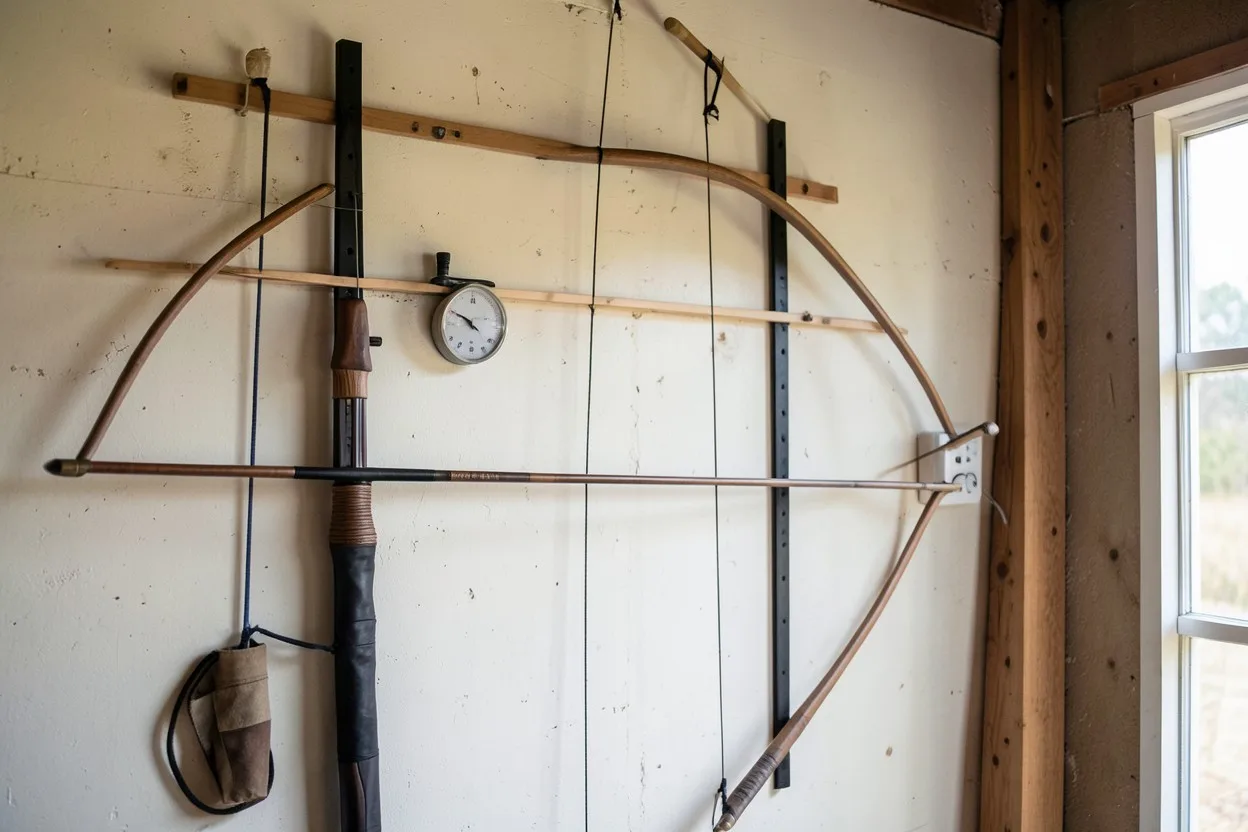
How to Store a Traditional Bow to Prevent Warping
To help prevent warping, unstring your bow for high heat or longer-term storage when appropriate, keep it in a cool, moderately dry place, store it flat or upright on the riser, and avoid direct sun or heat vents. When storage goes wrong, you get permanent limb set, finish cracks, and faster string wear. I walk you through a bow-type and climate decision tree, so you know when to unstring, where to store, and how to protect limbs, tiller, and bowstring.


What storage damage looks like on a traditional bow
Warping shows up as a change in the bow’s feel and straightness you can see later, especially after heat or sun. Limb-set is the limbs taking a new resting shape from load or consistent pressure. Start inspections with finish cracks and soft spots, then check limb geometry.
Warping vs limb-set: how they differ and what I check for first
Separate “the bow looks different” from “the bow behaves different.” A twist or odd bend pattern often points to limb pressure or misalignment during storage. Limb-set follows how long the bow sat strung, and whether one limb carried more load during that rest.
Finish damage patterns after humidity swings and cold-to-hot transitions
Humidity swings stress wood and any coating system. When moisture goes in and out, I see finish breakdown first as hairline cracks near stress zones, plus dull or sticky spots where coating flexes. If the bow got rained on, I dry it fully before any reassembly, because moisture is harmful enough that a bow exposed to rain or snow should be dried before reassembly.
Should I store my traditional bow strung or unstrung?
Use a decision rule based on bow type and storage duration. For many traditional bows, I unstring only when storage is long or heat is involved. I treat self-bows differently, because they’re more sensitive, and they are best strung only before a hunt and unstrung afterward.
Decision by bow type: longbow, recurve, and self-bow differences
Longbows and recurve-style traditional bows can be stored unstrung, and they generally tolerate short periods strung better when conditions stay stable. Self-bows are the picky ones. I unstring them after use, because self-bows are best strung only before a hunt and unstrung afterward.
Decision by duration: short-term vs long-term and what load does over time
My rule is plain: if the bow will sit for a while, I reduce stress on the limbs. Some experts recommend unstringing a traditional bow if it will not be shot for a week. I follow that when the storage spot is less than ideal, or when the bow is older and less tolerant.[1]
My rule for when unstringing is mandatory before storage
If heat or long-term storage is on the table, unstring. Leaving a strung bow in a hot car can damage adhesives and cause delamination. Damage often results from repeat warm-ups and cool-downs, so when the storage climate cannot be controlled, remove the string load.
How should I position the bow while it’s stored?
For me, the safe default is horizontal storage, or hanging it so the load stays even. I avoid placing a bow on one limb. Standing a bow on one limb can twist the limb. I also avoid high-risk vertical setups that press one bottom limb harder than the other.
Vertical hanging: when I consider it acceptable and when it risks bottom-limb pressure
Vertical hanging can be acceptable if the bow is supported so it isn’t bearing weight on a single limb tip. The bigger issue is bottom-limb pressure during vertical storage. If the bottom limb is effectively pressed down, I treat it like a loaded condition and switch to flat/horizontal or riser-supported storage.
Horizontal storage: what to avoid so limbs don’t sit in stress points
Horizontally, the win is avoiding one-limb pressure and avoiding direct heat. Always check that the bow isn’t resting where the limb can flex in only one spot. Use horizontal storage when keeping a bow for longer periods, as hanging the bow horizontally prevents warping.
Where is safe to store a traditional bow in real life?
I target a cool, dry location with stable temperature and humidity. Traditional bows should be kept in a cool, dry place away from heat and direct sunlight. In real apartments and camps, the main risks are unvented heat and moisture swings, plus sun exposure through windows.[2]
A practical environment checklist: cool, dry, stable temperature and humidity
I look for a spot where the bow doesn’t feel “hot to the touch” after normal daily temperature changes. If the room runs dry and stable, that helps. If it’s damp or swings day to day, that’s where finish breakdown starts, and where wood sensitivity to moisture becomes visible.
Why garages, sheds, basements, and attics cause problems even when they “seem dry”
Garages and sheds can spike in temperature even when they seem closed off. Basements and attics can swing humidity fast. I’ve watched people store bows under bikes or gear near cold concrete walls, then wonder why the coating went dull and hairline cracks appeared.
Hot vehicles are the clearest failure mode: hot cars and trucks have ruined more traditional bows than anything else. If heat is involved, you remove the string load and move the bow.
How do I prep the bowstring before storage?
Before a bow goes into storage, I inspect the string and make a clear call on waxing and replacement. Waxing before storage helps protect the string surface, but it doesn’t fix damage. A frayed, dry, brittle, or fuzzy string should be replaced, and manufacturers often recommend string changes every two or three years.
Waxing before storage: what I do and what I stop doing when a string is already aged
I wax with one goal, keeping the string protected while it sits. If the string is already brittle-looking or shedding fuzz, I stop and plan to replace instead of trying to coat over failure. String aging shows up as brittleness or texture changes, not as a missing shine.
String inspection signs: fraying, fuzzing, and brittleness
Check for fraying at the nock end, fuzzing that looks like it’s separating strands, and brittleness that looks dry and stiff. The rule I follow is straight: a frayed, dry, brittle, or fuzzy string should be replaced.
Replacement timing before storage and how older bow materials affect string choice
I replace before storage if the string shows wear signs, because damaged strings fail under normal handling, and storage time doesn’t heal fibers. Manufacturers often recommend string changes every two or three years. For older traditional bows, old limb-tip string material compatibility matters, and old traditional bows may not tolerate modern low-stretch string materials.
Beginners should match the string type to the bow’s original limb-tip setup when possible. If the bow has older limb-tip material that isn’t designed for modern stretch profiles, I treat string material choice as a safety decision, not a preference.
Bow-storage decision checklist (3-branch)
Use this checklist like a decision problem. Branch 1 picks your bow rule, Branch 2 decides stringing based on duration, and Branch 3 addresses climate risk. Follow it and you’ll avoid the failure modes I see most, limb set from load, finish breakdown from moisture swings, and string creep from temperature stress.
| Branch | Decision point | What I do | Signs it’s unsafe to store (get service first) |
|---|---|---|---|
| Branch 1: Bow type | Longbow or recurve traditional bow | Store unstrung by default for longer holds; strung is acceptable only if storage is short and cool/dry. | Twist or misalignment that appears only after storage, or finish thinning/gouges near limb stress points. |
| Branch 1: Bow type | Self-bow | Self-bows are best strung only before a hunt and unstrung afterward. Store unstrung. | Any new deformation after a storage period, plus persistent creaking or finish separation after moisture contact. |
| Branch 2: Storage duration | Short-term storage (about a week or less) | If the spot is cool and stable, strung storage can be acceptable on an even support. For riskier storage, I unstring. | If the bow sat in heat or you can’t control swings, unstring now and check alignment. |
| Branch 2: Storage duration | Long-term storage | Unstring. Some experts recommend unstringing a traditional bow if it will not be shot for a week. | Bottom-limb pressure signs or lingering string-load marks, plus coating cracking that follows storage. |
| Branch 3: Climate | Safe enough: cool, dry, stable; no direct sun | Keep it in a cool, dry place away from heat and direct sunlight. Protect from moisture swings. | Any finish breakdown pattern after humidity swings or after wet exposure. |
| Branch 3: Climate | High-heat risk (hot car, hot garage, vents, sun patches) | Unstring and move the bow. Leaving a strung bow in a hot car can damage adhesives and cause delamination. | Delamination smell, soft spots, or coating lifting. If you see it, take it to a bowyer. |
Branch 1 by bow type: longbow, recurve, and self-bow guidance
Longbow and recurve bows get my standard treatment, cool and dry, string choice matched to the bow, and storage so limbs aren’t forced into one resting pressure. Self-bows get the stricter rule. I store them unstrung because self-bows are best strung only before a hunt and unstrung afterward.
Branch 2 by storage duration: when strung storage is acceptable and when unstringing is required
If you’re storing for only a week or so and your environment is controlled, strung storage can work if the bow is supported so limbs aren’t twisted. When the storage is longer, I unstring. Some experts recommend unstringing a traditional bow if it will not be shot for a week.
Branch 3 by climate: what counts as “safe enough,” plus signs that mean “take it to a bowyer first”
Safe enough means cool, dry, stable, and out of direct sunlight. Traditional bows should be kept in a cool, dry place away from heat and direct sunlight. Send the bow to a bowyer first when finish thinning and gouges are visible, as the finish or coating should be inspected for thin spots and gouges, and when string damage suggests material failure.
How do I string and unstring safely so I don’t damage limbs?
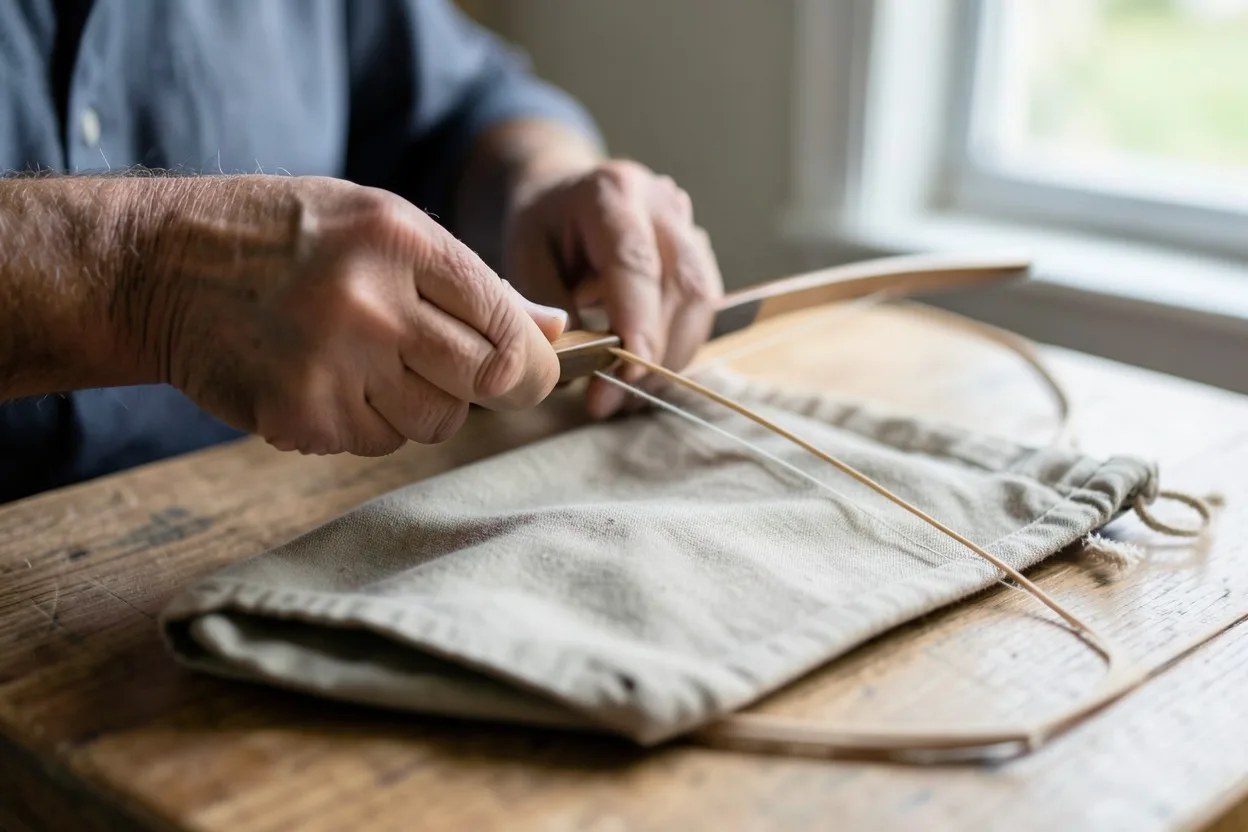
The safe method is load management and controlled setup. Use a bow stringer to avoid twisting the limbs when stringing or unstringing. I treat accidental impacts during setup as another risk, because that’s how people chip coatings and shift limb alignment before they even store the bow.
Using a bow stringer to reduce limb twisting and accidental impacts
I use a bow stringer every time I string or unstring. A bow stringer helps avoid twisting the limbs when stringing or unstringing, and it reduces the chance of accidental damage during setup. Also keep hands clear of the limb path while pulling to final tension.
Quick pre-motion checks before you apply load to the limbs
Before pulling, check alignment and confirm the string isn’t already frayed or fuzzy in the sections that contact the bow. A frayed, dry, brittle, or fuzzy string should be replaced. If the finish shows thin spots or gouges, I handle it gently and consider professional inspection before storage.
Frequently asked questions
How do I store a traditional bow without warping it?
To prevent warping, unstring your bow for high-heat or long-term storage, keep it in a cool, dry place away from heat and direct sunlight. In storage orientation, I favor horizontal storage and riser-supported setups. The page recommends hanging the bow horizontally to prevent warping.
Should I leave my traditional bow strung in storage?
I leave a traditional bow strung only when the storage window is short and the storage climate is stable. For longer holds, I unstring, following the guidance that some experts recommend unstringing a traditional bow if it will not be shot for a week. I also avoid string load if storage isn’t truly cool and dry.
Is it safe to store a bow in a hot car or garage?
No. I treat hot cars and heat-soaked garages as a hard stop. Leaving a strung bow in a hot car can damage adhesives and cause delamination. The safer move is to move the bow to a cool, dry location away from direct sunlight.
Should I hang a traditional bow horizontally or vertically?
For most storage, I prefer horizontal hanging or flat, riser-supported setups. Vertical hanging can work if the bow is supported so it isn’t bearing weight on one limb, because standing a bow on one limb can twist the limb. The page recommends hanging the bow horizontally rather than vertically to avoid bottom-limb pressure.
Do I need to unstring a self-bow after every use?
Yes, that’s the self-bow rule I follow. Self-bows are best strung only before a hunt and unstrung afterward. Self-bows are more sensitive than modern traditional bows, so they’re vulnerable to long-duration storage stress when the bow is left at tension.
What humidity is bad for traditional bow storage?
I avoid storage areas that feel damp or that cycle between wet and dry. Moisture is harmful enough that a bow exposed to rain or snow should be dried before reassembly. If your storage spot keeps the bow’s finish feeling cool and clammy, treat it as too risky for long-term storage.
How often should I wax a traditional bowstring before storage?
I wax before storage with an eye toward protection, but I don’t use waxing as a patch for damage. If the string shows fraying, fuzzing, or brittleness, replacement comes first. In my shed tests, strings held up better when they weren’t allowed to sit dry for extended periods.
When should I replace a traditional bowstring before storing the bow?
Replace the string before it goes away if you see fraying, fuzzing, or brittleness. A frayed, dry, brittle, or fuzzy string should be replaced. Also watch replacement intervals, manufacturers often recommend string changes every two or three years.
What are the best ways to store recurve and compound bows without damage?
Recurve storage matches traditional bow handling because the wood-limb and finish risks remain. For compound bows, follow manufacturer guidance and keep them cool and dry, protected from sun, heat vents, and moisture swings. My storage logic is the same as for traditional bows, stable environment, controlled orientation, and inspect the finish before you leave anything loaded.