How to Set Arrow Direction on a Compound Bow
Match vane clearance to the bow’s handedness and rest type first. Then check nock fit, centershot, and cam timing before changing spine or broadheads. Wrong arrow orientation can add rest contact, broadhead drift, and left/right impact errors that waste tuning time. This guide shows how to set arrow direction by bow type and handedness, then use a quick failure tree to separate orientation problems from tune or form issues.
What you’ll need


- Your compound bow set up and uncocked
- The arrows you plan to shoot, especially hunting arrows
- A marker or small piece of tape to identify the index vane
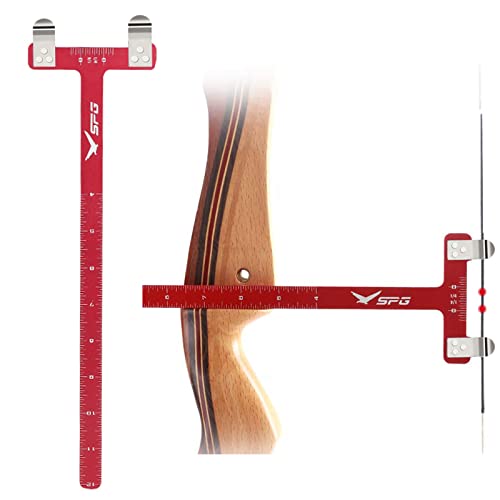
- A square, ruler, or bow square for basic alignment checks
- A bright light for looking at vane, rest, and cable clearance
- Paper tuning setup for a close-range tear check
- If available, a draw board or a helper to observe cam timing
- Your owner’s manual for rest-specific centershot and nocking-point references
Arrow orientation by setup
Use this table first. It separates handedness, rest style, and the most likely orientation error. For most horizontal rests, the index vane should clear the rest and cable side cleanly; for whisker biscuits, vane contact is more forgiving but still matters. If the symptom is broadhead drift, check setup before changing the arrow spine.
| shooter handedness | rest type | vane/index vane position | likely symptom if wrong | first correction to try |
|---|---|---|---|---|
| Right-handed | Horizontal drop-away | Index vane up unless the rest or cable path needs a different clocking | Vane contact, weak broadhead grouping, left/right impact scatter | Rotate nock so the index vane clears the rest first, then recheck paper |
| Right-handed | Whisker biscuit | Index vane up or slightly clocked for the cleanest passage through the biscuit | Fletching scraping, noisy launch, broadhead planing | Index the arrow so the vanes pass the biscuit with equal clearance |
| Right-handed | Shoot-through or shoot-over | Clock the vanes so the highest vane clears the opening and cables | One vane marks, one-sided tear, peep rotation that seems random | Check nock clocking and raise or lower the rest only if the manual calls for it |
| Left-handed | Horizontal drop-away | Mirror the clearance logic used for a right-handed setup | Same symptoms, but the error can show on the opposite side of the group | Match the index vane to the side that leaves the cleanest rest and cable clearance |
| Left-handed | Whisker biscuit | Clock for clean biscuit passage, then confirm the index vane is not dragging the launcher side | Scrape marks, steering at longer range, broadhead drift | Reclock the nock and confirm the rest is centered to the arrow shaft |
| Any handedness | Vertical or cable-contact-prone setup | Choose vane position that avoids the cable bundle and rest arm at full draw | Random vane wear, inconsistent left/right impact, peep rotation that changes from shot to shot | Inspect clearance marks, then correct the contact point before spine changes |
How should the fletching face?
Match the index vane or cock feather to the path of least contact, not to a universal “up” rule. On many horizontal rests, that means index vane up; on some shoot-through or cable-heavy setups, a different clocking clears better. Left-handed bows use the same logic, but the clearance side is mirrored.
Read the arrow, not the guess
Look for an index vane mark, wrap stripe, or a nock color index before changing anything. If the shaft has no visible mark, add one. That gives a repeatable reference for vane clocking, especially when several arrows need the same orientation.
Check the nock and feather type
Arrow fletching can be plastic vanes or feathers. Left-wing and right-wing feathers are directional and can look correct on the shaft while still clocking poorly for a given rest. Half-moon nocks, when used, also limit how much rotation you can make before the nock no longer sits correctly on the string.
How do you check nock and rest alignment?
Start with the string interface, then the rest. A nock that is too tight can pull the arrow off line as the string loads; one that is too loose can shift on the serving. Centershot and rest height come next, because a misaligned launcher can create the same left/right symptoms people blame on vane direction.
- Place the arrow on the string and feel for a firm but smooth nock fit.
- Check that the arrow sits squarely on the rest at brace height and does not rock.
- Inspect the D-loop for even tie quality and no creep in the serving knots.
- Set the rest to the bow maker’s starting centershot, then confirm the launcher is centered to the shaft.
- Verify rest height against the rest manual or bow manual; do not guess when the launcher design is model-specific.
- Look for vane, cable, or rest wear marks after a few shots.
A common first-timer mistake is blaming vane direction before checking the D-loop. If the loop creeps, the nock point can move enough to change launch angle and make the same arrow look “wrong.”
Why is the arrow still hitting left or right?
If the arrow still prints left or right after orientation is corrected, separate the cause into spine, timing, and form. Arrow direction can reveal a problem, but it does not create every problem. Broadhead drift, paper tears, and side impact can all come from dynamic spine, cam timing, or grip torque.
Check spine before changing vanes again
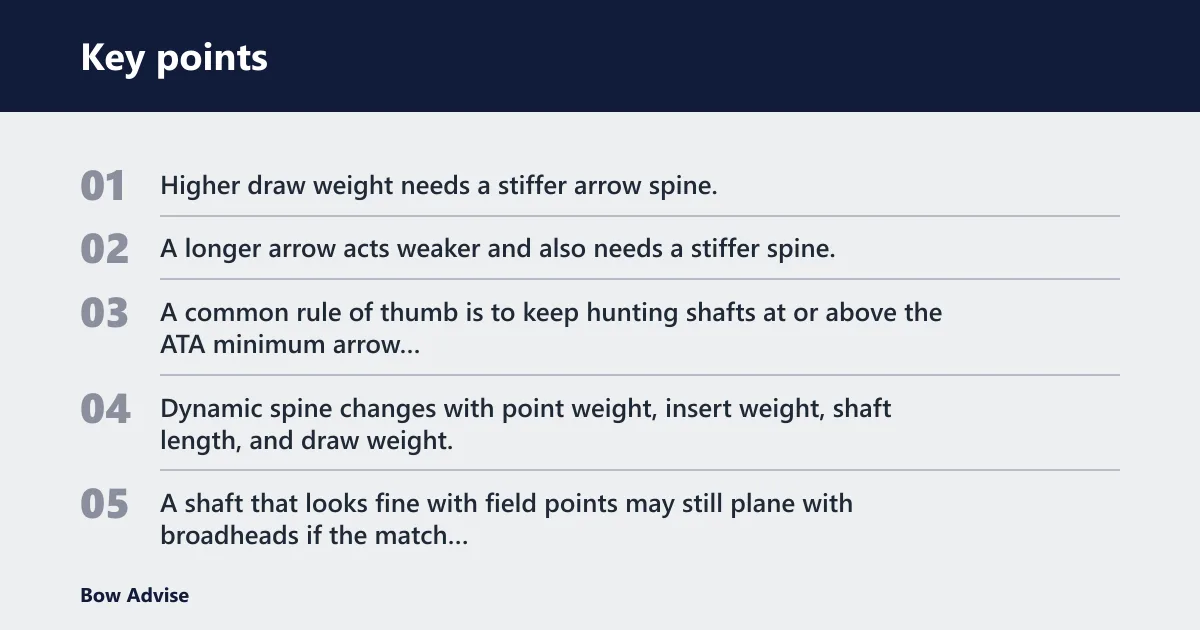
Higher draw weight needs a stiffer arrow spine. A longer arrow acts weaker and also needs a stiffer spine. A common rule of thumb is to keep hunting shafts at or above the ATA minimum arrow weight guideline of 5 grains per pound of draw weight; for a 70-pound bow, that means about 350 grains or more.
Dynamic spine changes with point weight, insert weight, shaft length, and draw weight. A shaft that looks fine with field points may still plane with broadheads if the match is off. That is why broadhead tuning is a final check, not the first diagnosis.
Check timing before chasing paper tears
Cam timing is the moment both cams reach their stops together. Timing drift can create paper tears that won’t fix with rest adjustments. A draw board is described as the only honest timing check. On single-cam bows, some models use a small hole in the cam wheel, and the cable should run centered through that hole at brace.
Each full twist on a typical compound cable changes length by about 1/8 inch, so use small changes and recheck after each one. If the bow has dual cams, compare stop contact and cable synchronization before changing the rest again.
Check form and peep rotation last
Grip torque and release issues can mimic a bad arrow setup. If the peep rotates differently from shot to shot, that can point to uneven loop tie, twist in the string set, or a bow that is still out of timing. Fixing vane direction will not cure that.
Suppose a right-handed shooter sees broadheads 3 inches left at 40 yards while field points group well. If the bow also shows visible vane scuffing, the first correction is not a new broadhead; it is to confirm rest clearance and nock clocking, then verify timing and spine.
What causes arrow fishtailing after release?
Fishtailing usually means the shaft is leaving with a bad launch angle, not that the fletching is wrong by itself. The most common causes are nock fit problems, cam timing drift, poor centershot, or a spine that is too weak for the bow and arrow length. Fletching may only be exposing the issue.
Use this failure tree
- Check for vane contact marks on the rest, cables, or riser.
- If contact exists, correct arrow orientation and rest clearance first.
- If contact is clean, check nock fit and D-loop stability.
- If nock fit is stable, confirm centershot and rest height to the manual.
- If the tear remains, verify cam timing on a draw board.
- If timing is correct, move to arrow spine and broadhead tuning.
Picture a shooter using a whisker biscuit with a broadhead shaft that shows a clean paper tear at 5 yards but opens up at 30 yards. That often points to a tune or spine issue that the biscuit had been masking, not a vane-direction error.
Common mistakes
Changing vane direction before the bow is tuned is the biggest trap. The arrow may be clocked correctly and still fly poorly because the rest is out of line or the cams are not in sync.
- Using broadheads to diagnose every issue at once
- Ignoring arrow weight and spine match
- Skipping nock fit checks after changing D-loop length
- Assuming left-right impact means the arrow is clocked wrong
- Chasing paper tears before checking timing on a draw board
Prevention is simple: mark one vane on every hunting shaft and keep that orientation consistent after any string or rest change. That makes drift easier to spot, especially when broadheads start to plane at distance.
Frequently asked questions
How do I know if my arrow is oriented correctly on a compound bow?
The arrow is generally oriented correctly when the index vane clears the rest, cable, and launcher without contact, and the nock sits consistently on the string or D-loop. Shoot a close-range paper tear and inspect the shaft for scrape marks. If the marks are clean and repeatable, the clocking is likely correct.
Which way should the fletching face on a compound bow rest?
For many horizontal rests, the index vane points up. That is a starting point, not a rule for every setup. If the rest, cable guard, or launcher arm creates contact, clock the nock so the vanes pass cleanly, then verify with a few close-range shots.
Does arrow orientation change broadhead flight on a compound bow?
Yes, but mainly when orientation causes contact or hides a tuning problem. Broadheads are commonly reported to expose launch errors more than field points. If broadheads drift while field points group, check vane clearance, then spine, then timing. Do not start by changing the broadhead tip or blaming the sight pin.
How do I stop arrows from hitting left or right?
First confirm the arrow is clocked for clean clearance. Then check nock fit, centershot, and cam timing. If those are sound, move to grip torque and release. Left-right impacts are often a setup chain problem, not one single fault, so change one thing at a time and recheck.
How do nock fit and spine affect arrow direction?
A loose or overly tight nock can shift launch consistency. Spine affects how much the shaft bends under the force of the shot, and a weaker shaft can behave even weaker when the arrow is longer. If the bow is heavy for the shaft, direction changes often show up first at broadhead distance.
What arrow spine do I need for my draw weight and arrow length?
Use the shaft maker’s spine chart for your draw weight, point weight, and arrow length. Higher draw weight needs a stiffer spine, and a longer arrow usually needs a stiffer spine too. For hunting setups, also check that total arrow mass meets the 5 grains per pound guideline.