Arrow Direction: Strike Plate, Shelf, Centershot
Start by checking contact, then centershot, then strike-plate thickness: a clean arrow should leave the bow without shelf rub, and repeatable launch issues are easiest to spot with close-range bare-shaft checks first. Bad diagnosis wastes arrows, bends tune around the wrong problem, and can hide shelf contact that keeps the bow noisy and inconsistent. This guide shows whether the strike plate, shelf, or centershot is steering the arrow on a recurve or longbow.
This guide is part of our Arrow direction guide for archers series.
Arrow direction and tuning triangle


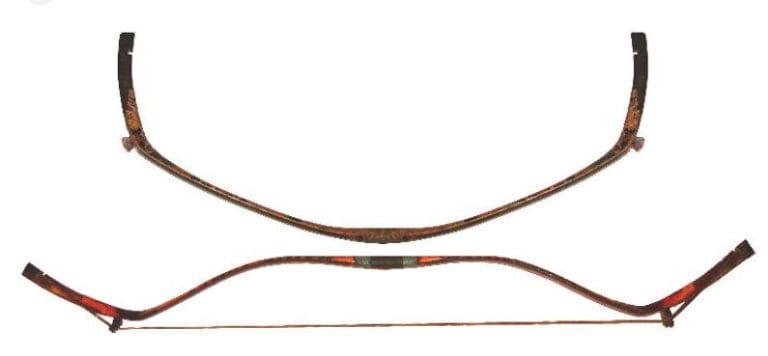
A traditional arrow shelf is the bow surface where the arrow rests before release. A good shelf keeps the shaft in the same place shot after shot, cuts the chance of drift, keeps the arrow off the riser, and gives a steady launch point.
Those benefits only appear when the strike plate, shelf cut, and centershot match the arrow’s dynamic spine. On a traditional bow, the arrow bends around the riser in archer’s paradox, and finger release adds sideways input that a mechanical release does not. That means a setup can look “off” even when the bow is behaving normally.
What the three parts control
The strike plate sets the arrow’s starting line. The shelf supports the shaft and decides how much room it has to clear the riser. Centershot sets how far the shaft begins from the string line. Change one of them, and the others may need adjustment too.
In many traditional setups, deeper shelves can widen spine tolerance because the arrow sits closer to the bow’s centerline and gets more support. Side-cut shelves and recessed shelves change that support in different ways, while synthetic shelf material resists warping and cracking better than wood. A straight shelf is flat, while side-cut and recessed shelves remove or recess material to different degrees.
Why finger release changes the picture
Finger release introduces lateral input at the string. That makes paradox more visible on a traditional bow than on a compound with a cleaner mechanical release. Recovery speed matters because broadheads punish slow recovery more than field points do.
FOC means front-of-center. Easton recommends 10-15% F.O.C. for hunting setups. More point-forward balance can help an arrow recover from paradox faster, which is why EFOC and Ultra-EFOC often come up in traditional tuning discussions.
What you’ll need
- A matched set of arrows with the same shaft, insert, nock, and point weight
- Two point weights to compare, such as a hunting point and a lighter target point
- A ruler or tape measure for centershot checks
- Paper, bare shafts, or a close-range target face for diagnosis
- Transparent tape or temporary shelf material for short-term plate changes
- Markers or small labels for keeping arrow groups separate
How do you read left and right misses?
Left and right impacts tell you more than a miss by itself. On a right-handed archer, a left impact can come from an arrow that starts too stiff for the setup, too much centershot, or a bow that is set too far toward true center shot for the arrow length and point weight. A right impact can come from weak dynamic spine, too little centershot, or contact that pushes the shaft off line.
Do not stop at target impact. A bow-hand twist or a pluck can send a good tune left or right and mimic a bad arrow. The key is repeatability: if the miss repeats with the same arrow, same distance, and same release, it is more likely to be setup than form.
Left impact on a right-handed archer
A left impact often points to a setup that is acting stiff. That can mean the arrow spine is too stiff, or the bow is set too far toward true center shot for the arrow length and point weight. It can also happen when the bow hand rolls the riser outward.
Right impact on a right-handed archer
A right impact often points to a weak dynamic spine. That may come from a soft shaft, heavy point weight, too little side support, or a shelf/strike-plate line that starts the arrow too far from the string. A pluck can create the same picture, so check the release before changing shafts.
Arrow direction tuning checklist
| Symptom | Likely cause | Quick test | Correction |
|---|---|---|---|
| Left impact on a right-handed bow | Too much strike-plate thickness or too much centershot | Shoot the same arrow after removing 1 mm of plate thickness | Reduce plate thickness or move the arrow slightly farther from center |
| Right impact on a right-handed bow | Weak dynamic spine | Swap to a point 20-30 grains lighter | Keep the lighter point or move the arrow support farther inboard |
| Repeated fletching contact | Shelf rub or clearance problem | Dust the fletching with chalk and inspect the shelf | Change plate shape, shelf surface, or rest height |
| Shelf bounce or slap | Arrow settling too hard on the shelf | Shoot one bare shaft at close range and watch the launch | Use a softer contact surface or reduce shelf harshness |
| Weak spine mimicry | Heavy point weight or too little side support | Drop point weight and compare bare-shaft impact | Lower point weight first before changing shafts |
| Torque-induced false positive | Bow hand pressure or grip twist | Mark grip pressure points and shoot a relaxed follow-through group | Fix hand pressure before changing tune |
| Arrow kicks left, then recovers late | Recovery speed too slow for the setup | Compare field points with broader heads at the same distance | Increase FOC slightly or reduce point weight |
| Arrow leaves clean but groups open | Centershot and spine do not match | Check bare shafts at 6-10 yards | Move point weight first, then centershot |
| Noise and vibration with good aim | Arrow contacting shelf or plate | Listen for repeatable slap on each shot | Improve contact surface and verify clearance |
| Good bare shafts, bad fletched arrows | Fletching contact or broadhead sensitivity | Check vane marks and compare bare versus fletched | Fix clearance before changing spine again |
How do strike plate, shelf, and centershot work together?
Strike plate thickness changes the arrow’s starting line. A thicker plate pushes the shaft farther out from the riser and can make the setup act weaker. That is useful when the arrow is too stiff, but it can also hide a real shelf or spine issue if used first.
Shelf depth matters because deeper shelves add support and side clearance. On a side-cut or recessed shelf, the arrow may tolerate a wider range of spine before contact starts. A traditional longbow with a simple shelf often shows more paradox than a recurve with a cutout shelf and a cleaner launch path.
True center shot versus near-center shot
True center shot aligns the arrow with the string. Near-centershot moves closer to that line without fully centering the shaft. On traditional bows, true center shot is not always best, because finger release and shelf geometry can make a slightly outside starting line tune better and forgive more release variation.
More centershot usually asks for stiffer spine. That is why a bow can tune cleanly at near-centershot and become harder to tune when moved all the way to center. The arrow may start straighter, but paradox changes, and the shaft may no longer match the bow’s launch conditions.
Step-by-step tuning sequence
- Set a baseline centershot. Start with the arrow aligned just outside true center, then measure from the bow’s string line to the shaft with a ruler.
- Verify shelf clearance and contact. Dust the shelf and strike plate lightly, shoot once, and inspect for rub marks on the shaft, fletching, or shelf.
- Adjust point weight before changing the strike plate. Move in 20-grain steps if the arrow is clearly weak or stiff, then recheck bare shafts at 6-10 yards.
- Only then fine-tune plate thickness. Add or remove 1 mm of strike-plate thickness, then shoot the same arrow again.
- Recheck with fletched and bare shafts. Match impact, flight, and contact marks before calling the bow tuned.
Suppose a right-handed archer shoots a 40-pound recurve with a 125-grain point and gets right impacts plus visible shelf rub. Dropping to a lighter point first may straighten the launch line without changing the plate. If the shaft still rubs, then the shelf or plate is the real issue.
A common first-timer mistake is building out the strike plate to cure every weak-looking arrow. That can hide a spine mismatch for a while, but it also changes the launch line and may create a new left impact or more contact later.
When should you change spine, point weight, or plate thickness?
Use point weight to move dynamic spine first. A heavier point generally makes the arrow act weaker; a lighter point generally makes it act stiffer. That is the cleanest adjustment when the bow is close and the tear is small.
Change actual arrow spine when point weight, centershot, and plate thickness no longer bring the bow into line. Use strike-plate thickness only for fine-tuning or to cover a small mismatch. It should not be the first answer to a large spine problem.
If that didn’t work, try this next
- Return the setup to the baseline centershot you measured in the first pass.
- Swap to a point weight 20 grains lighter if the arrow acts weak, or 20 grains heavier if it acts stiff.
- Recheck bare-shaft impact at the same distance before touching the plate again.
- If the tear persists, change shaft spine rather than adding more plate material.
Common mistakes
Chasing centershot before verifying spine usually wastes time. A bow can be mechanically centered and still tune poorly if the shaft, point weight, and shelf geometry do not match.
Mistaking torque for weak arrows is just as common. If the miss changes with grip pressure, bow hand angle, or release clean-up, it is a form issue first. If the pattern stays the same across calm shots, look at the setup.
Another mistake is ignoring shelf cut and arrow rest geometry. On some traditional bows, an arrow rest replaces shelf contact entirely, and side plate changes alter how the arrow leaves the bow. That matters more than many archers expect.
Frequently asked questions
How do strike plate thickness and shelf position change arrow flight on a traditional bow?
Strike plate thickness changes where the arrow starts, and shelf position changes how much support it gets as it leaves the bow. A thicker plate can make the setup behave weaker, while a deeper or more recessed shelf often improves clearance and forgiveness. Both should be checked together, not separately.
Does a deeper shelf mean I need a stiffer or weaker arrow spine?
Usually, a deeper shelf widens spine tolerance instead of forcing one direction. It supports the shaft closer to the bow centerline, so minor spine errors are less dramatic. The final answer still depends on point weight, centershot, and whether the bow is a recurve or a longbow.
How far should the arrow sit from center on a traditional bow?
There is no single number that fits every traditional bow. A near-centershot setup often tunes better than true center shot on finger-released bows, because the arrow needs room to flex through paradox. Start just outside center, then adjust by impact and clearance, not by a fixed rule alone.
Why does a true center shot sometimes make tuning harder on traditional bows?
True center shot can demand a stiffer dynamic spine and reduce the room the shaft has to flex around the riser. That can make launch behavior less forgiving, especially with a finger release. Near-centershot often leaves more room for paradox recovery and a cleaner broadhead tune.
Should I build out the strike plate to fix weak arrow spine?
Only as a fine adjustment. If the arrow is clearly weak, lighter point weight is usually the first cleaner correction, and a different shaft spine is the next step when the setup is out of range. A thicker plate can help, but it should not hide a major mismatch.
What causes a traditional arrow to fishtail or kick left/right after release?
Fishtailing usually comes from a mismatch between dynamic spine, point weight, centershot, and shelf support, with finger release adding sideways input. Left or right kick can also come from torque or plucking. The fastest check is a bare-shaft comparison at close range with the same form and same distance.