How to Control Bow Torque at Full Draw
Control bow torque at full draw by putting pressure in the web of the bow hand, keeping the fingers relaxed, and checking the same anchor every shot; if left-right misses keep changing, check grip first, then draw length, then anchor. If you ignore it, arrows drift left or right, groups open, and tuning problems stay hidden at the shooter instead of the bow. This guide gives a repeatable full-draw self-check sequence to spot grip error, draw-length mismatch, and anchor inconsistency.
What you’ll need


- A bow hand reference you can feel in the thenar eminence
- A wrist sling for compound or recurve use if the fingers will not stay relaxed
- A short target distance and a safe backstop
- Your normal release aid for compound or your fingers for recurve
- The same arrows and point setup you use for normal shooting
- A mirror or a partner if you need to check hand rotation and anchor repeatability
Why bow torque changes at full draw
Bow torque is rotational force through the grip, and it can create horizontal scatter and left-right arrow deflection. At full draw, that force often shows up when the bow hand closes, the wrist changes angle, or the anchor shifts as the archer tries to settle the sight picture. The result is often blamed on the sight when the hand or fit is the real cause.
What torque does to arrow flight
When the bow rolls in the hand, the string and riser no longer line up the same way shot to shot. That changes launch direction. A left-right miss that appears only after settling into anchor is a strong clue that the issue is at full draw, not at the target face.
Why full-draw pressure changes the grip
Full draw should feel stable, with steady back tension and clear face references. If the bow fit is off, the archer often compensates by squeezing harder or twisting the wrist to make the anchor feel normal. That extra pressure is what turns a clean hold into torque.
How do I control bow torque at full draw?
Start by setting the bow in the web of the hand, not across the palm, then draw to full anchor without clenching. Keep the fingers relaxed, confirm the same face reference every shot, and let the bow sit on the sling if one is needed. If the bow still rolls or twists, check fit before you change the sight.
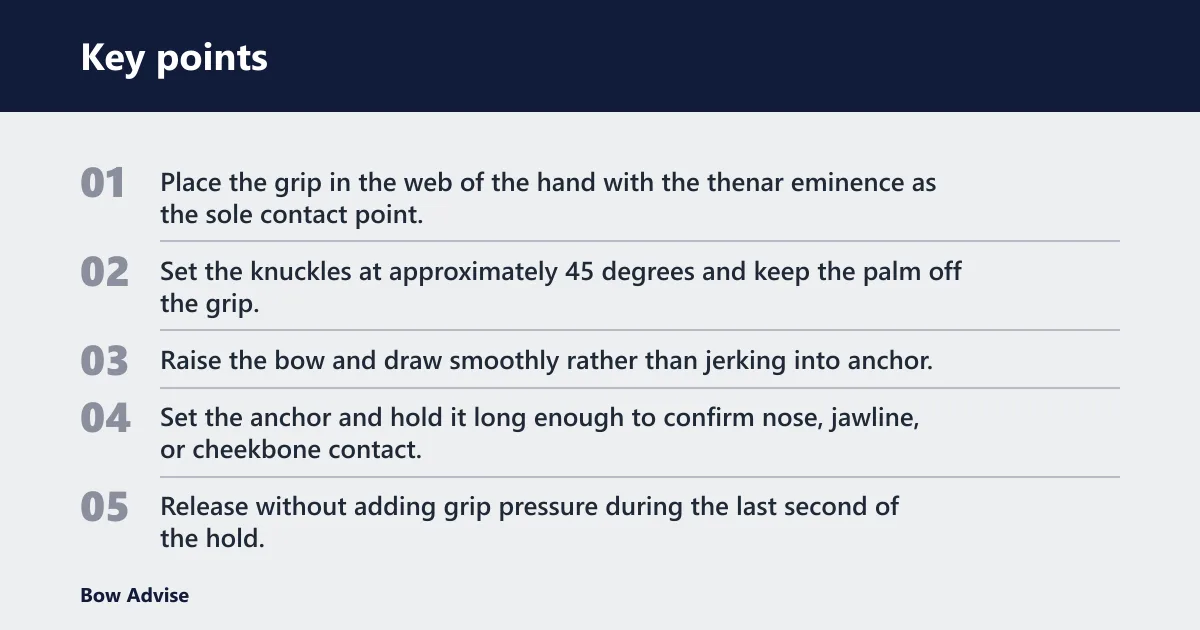
- Place the grip in the web of the hand with the thenar eminence as the sole contact point.
- Set the knuckles at approximately 45 degrees and keep the palm off the grip.
- Raise the bow and draw smoothly rather than jerking into anchor.
- Set the anchor and hold it long enough to confirm nose, jawline, or cheekbone contact.
- Release without adding grip pressure during the last second of the hold.
A common first-timer mistake is to settle the sight with the palm wrapped around the riser. That feels secure, but it adds torque the moment the bow is at full draw. A wrist sling is the right answer when the fingers will not stay relaxed, because it lets the bow leave the hand without a death grip.
Bow torque diagnosis table
| Symptom at full draw | Likely cause | Fix |
|---|---|---|
| Bow rolls inward as anchor settles | Grip squeeze or palm wrap | Move pressure to the thenar eminence and relax the fingers |
| Groups move left or right shot to shot | Bow torque causing horizontal scatter | Use a wrist sling and keep consistent, minimal pressure |
| Arrow drifts only after the face contact is reached | Anchor drift or draw-length mismatch | Reset anchor point and verify draw length before retuning |
| Release feels clean but the bow still twists | Hand pressure, not release error | Check bow hand position before changing sights |
| Recurve arrows kick left or right after anchor | Finger tension or anchor inconsistency | Use a repeatable corner-of-mouth or under-chin reference |
| Compound group shifts appear with peep and sight lined up | Grip torque or anchor drift after setup alignment | Keep the bow hand light and airy, then confirm nose and jaw reference |
How do I know if I am torquing my bow grip?
If the bow changes roll at full draw, if the sight pin moves when the hand settles, or if horizontal misses appear only when the anchor is reached, the grip is likely torquing. Bow torque shows up as a hand problem first and a target problem second. A stable sight picture with an unstable grip is still an unstable shot.
30-second range-side self-check
- Stand at short range and set the bow in the thenar pad.
- Open the fingers and keep the palm off the grip.
- Draw smoothly to full draw and stop at anchor.
- Watch for any roll, twist, or wrist correction before release.
- Repeat twice. If the bow position changes each time, fix hand position before changing anything else.
If a compound shooter sees the peep and sight housing aligned, but the bow still drifts left as the jaw reference is reached, that points to hand pressure or draw-length fit, not the sight. The same pattern on a recurve often comes from finger tension or a moving anchor point.
Can draw length cause torque?
Yes. Draw length must fit the archer, because a poor fit can force compensating grip pressure and change anchor consistency. If the bow feels cramped, the hand often squeezes. If it feels overextended, the shoulder and wrist may twist to keep the anchor in place. Either problem can look like torque at full draw.
How draw fit changes grip pressure
When draw length is too long, the archer may lean into the string, lose clean face contact, and tighten the grip to keep from collapsing. When it is too short, the hand often crowds the face and the anchor drifts forward or down. The bow hand then becomes the brace that hides the fit problem.
Compound bow checks
- Set the peep and sight housing first, then draw to full anchor.
- Confirm string-to-nose contact and any jaw reference without forcing the head forward.
- If the face contact changes every shot, adjust draw length before changing the sight.
Recurve bow checks
- Set the three-finger string grip with a relaxed hand.
- Anchor at the corner of the mouth or under the chin, and keep the string-to-nose reference the same.
- If the anchor is hard to repeat, check whether the draw length or stance is forcing the shoulder position.
Common mistakes
Gripping with the palm instead of the thenar pad is the fastest way to add torque. So is changing wrist angle from one shot to the next. Another common error is chasing sight movement before fixing the hand. That only hides the real cause. String plucking and shoulder collapse can also move arrows left or right, but they show different signs than grip torque.
If a beginner archer with a compound bow moves the sight two clicks to chase a left miss, then the next three arrows move right, that pattern often points to changing hand pressure, not a bad sight setting. Fix the hand first, then return to the sight only after the full-draw hold is repeatable.
If that didn’t work, try this next
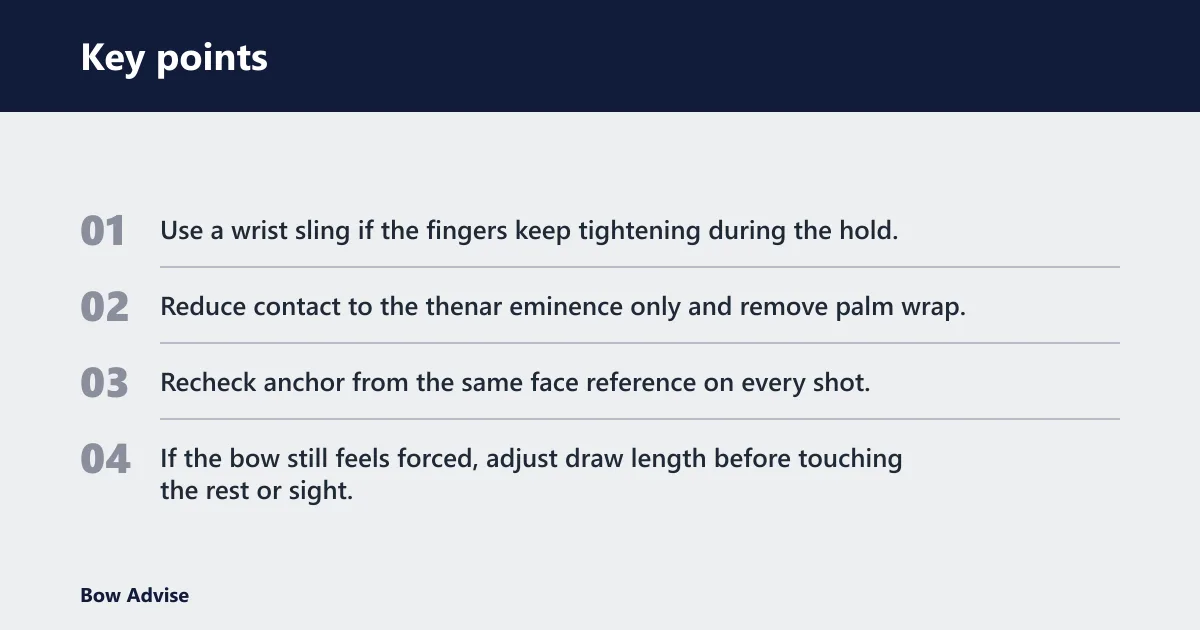
- Use a wrist sling if the fingers keep tightening during the hold.
- Reduce contact to the thenar eminence only and remove palm wrap.
- Recheck anchor from the same face reference on every shot.
- If the bow still feels forced, adjust draw length before touching the rest or sight.
When should you stop tuning and fix fit first?
Stop tuning and address fit first if the bow only shoots left or right when you settle into anchor, or if the grip seems to change as the string reaches the face. That means the shooter and the bow do not fit each other yet. Tune after the hand position and draw length are repeatable.
Decision rule for fit versus tune
- If the bow hand position changes shot to shot, stop and correct grip.
- If the anchor cannot be repeated without strain, adjust draw length before tuning.
- If the compound bow line-up is steady but the groups still move, then check tuning.
Prevention
Use the same grip shape, same anchor references, and same draw cycle every session. A light and airy compound bow grip, or a clean recurve anchor, prevents the hand from becoming the place where fit problems hide.
Frequently asked questions
What grip pressure should I use at full draw?
Use consistent, minimal pressure. The thenar eminence should be the sole contact point, and the fingers should stay relaxed. If the bow feels like it will jump out of the hand, a wrist sling is the better fix than squeezing harder.
How does bow torque affect arrow flight?
Bow torque changes the launch angle through the grip, which can push groups left or right. The effect often looks like a sight issue because the misses are horizontal, but the cause is usually hand input or anchor drift, not the pin itself.
Can draw length cause bow torque problems?
Yes. A poor draw-length fit can force extra grip pressure and make the anchor inconsistent. If the face reference changes as the bow settles, adjust fit before trying to tune around the miss. That rule applies to both compound and recurve bows.
Should I use a wrist sling to reduce grip torque?
Yes, if the fingers cannot stay relaxed. A wrist sling lets the bow stay in an open-hand grip without needing to clamp down after release. It is especially useful when the bow feels unstable only because the hand is trying to hold too much.