
How Did Native Americans Keep Bowstrings Dry and Tensioned?
Native American archers kept bowstrings usable by matching string material to climate, then adding wax or grease, dry storage, and careful drying near gentle heat. Sinew needed the most protection. Rawhide and plant fiber handled moisture better when treated. If ignored, a wet string stretches, loses cast, slips at the nocks, or fails in cold damp weather. This piece covers material choices, coatings, storage, field drying, and emergency fixes for tensioned strings.
How did wet weather affect bowstrings?
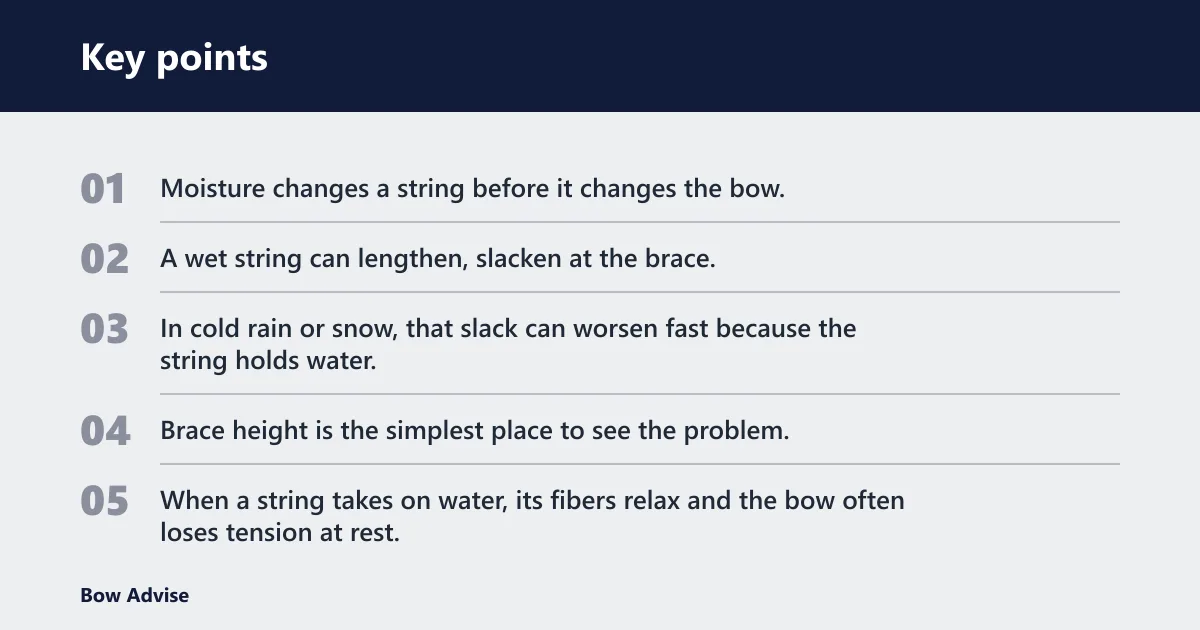


Moisture changes a string before it changes the bow. A wet string can lengthen, slacken at the brace, and shift the nocking point enough to affect arrow flight. In cold rain or snow, that slack can worsen fast because the string holds water, then stiffens or freezes before it dries evenly.
What moisture does to brace height and tension
Brace height is the simplest place to see the problem. When a string takes on water, its fibers relax and the bow often loses tension at rest. That lower brace height can make the bow feel dead, reduce cast, and let the string slap harder against the bow arm.
Wet strings also behave badly at the nocks. A string that swells, creeps, or softens may sit differently in the groove, which matters most on self bows and other simple setups. A small change in length can be enough to alter point of impact at hunting distance.
Why slack, creep, and mildew matter
Slack is an immediate field problem. Creep is slower, but just as damaging, because the string can keep lengthening after repeated damp exposure. Mildew and rot matter over time, especially for sinew and plant cordage that are left damp in a pouch or wrapped against wet hide.
For historical archers, the answer was never one trick. It was a system: choose a string material that fit the region, finish the wood, keep spare cordage dry, and dry the working string as soon as conditions allowed. That combination mattered more than any single coating.
Why climate changes the answer
Humid forests, dry high plains, coastal rain, and winter freeze-thaw do not punish cordage the same way. A string that works well in a dry interior climate may need more care in wet country. Regional history matters here, because Native bowmaking was local, not uniform.
Picture a damp coastal hunt where a sinew string is left strung overnight. By morning it may feel softer and sit lower on the bow. In a dry camp, the same string might recover quickly. Climate changes how fast the problem shows up and how much margin the archer has.
Native bowstring materials
Native bowstrings were made from plant fiber, rawhide, or sinew, with the exact choice shaped by local materials and use. Plant fibers were described as the highest quality bowstring choice because they would not stretch out over time, but they took more work to prepare. Sinew was the most readily available bowstring material in many accounts, and rawhide was the next most available.
Sinew strings and moisture sensitivity
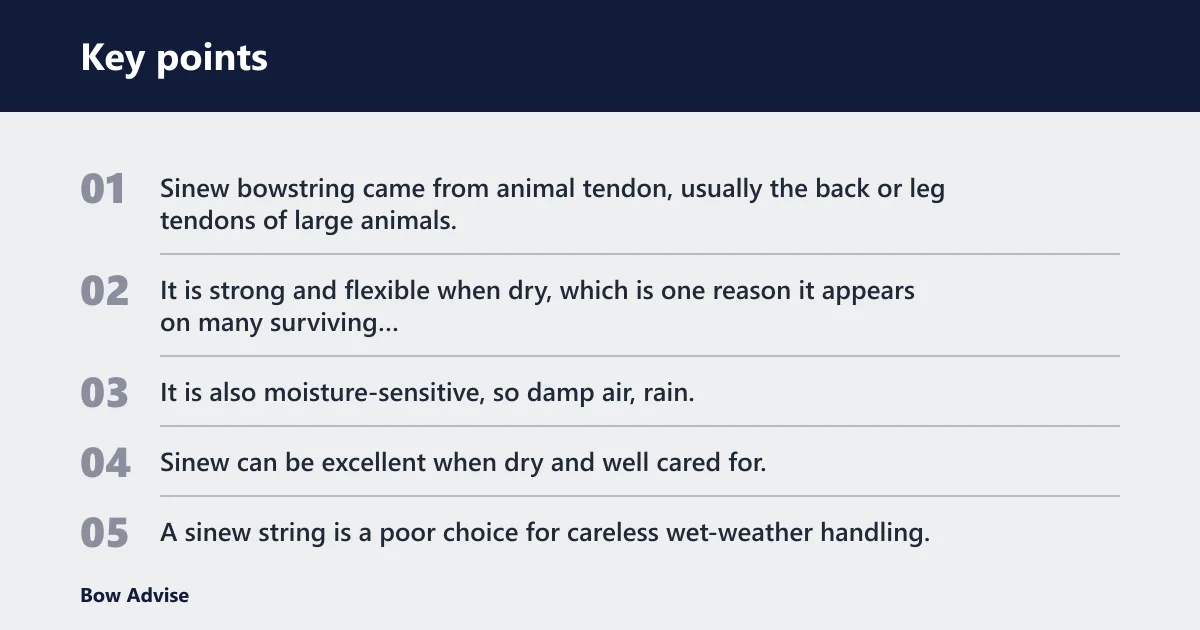
Sinew bowstring came from animal tendon, usually the back or leg tendons of large animals. It is strong and flexible when dry, which is one reason it appears on many surviving Native-American bows. It is also moisture-sensitive, so damp air, rain, and snow can change its length and feel quickly.
That sensitivity is the tradeoff. Sinew can be excellent when dry and well cared for, but it asks for more storage discipline than many modern synthetics. A sinew string is a poor choice for careless wet-weather handling, and it needs closer checking after any exposure.
Rawhide cordage and regional limits
Rawhide bowstring was made from hide, often soaked and twisted into cordage. Deer hide is the common reference point, though some hide types hold up better than others, and elk hide is often noted as a stronger alternative in certain uses. Rawhide is still a natural string option, but it is not the same as a modern waterproof line.
Rawhide can behave better than sinew in some damp conditions, yet it still absorbs water and can lose consistency. It is useful where hide was accessible and repair material had to be made from what was on hand. It also fits a repairable bow system because it can be replaced or retwisted in camp.
Plant fibers, local availability, and labor
Plant-fiber bowstrings came from nettles, milkweed, inner bark, or yucca. These fibers were valued in regions where the plants were available and where the labor to process them made sense. The work input is high, but the result can be very stable when the cordage is properly prepared and kept dry.
Plant fibers were described as less prone to stretching over time, but that is not the same as saying they never move. Humidity, abrasion, and repeated use still matter. The practical advantage is that a well-made plant-fiber string can hold its length better than many other natural options.
How did native americans table
This table ranks the main string types by practical moisture behavior. It is a guide, not a universal rule, because regional materials and exact construction change the result.
| String type | Moisture resistance | Stretch behavior | Field repairability | Best climate |
|---|---|---|---|---|
| Sinew | Low unless well protected | Can slacken quickly when damp | High if spare sinew is available | Dry climates with careful storage |
| Rawhide | Moderate in light damp, lower in steady rain | Can swell and change length | High if hide cordage can be retwisted | Mixed climates with short exposure |
| Yucca, nettle, milkweed, inner bark | Moderate when kept dry and finished well | More stable than sinew in many uses, but not immune to creep | Moderate, depending on local plant access | Areas with steady plant supply and dry storage |
| Modern substitutes | High | Usually the most stable | High if a spare is carried | Wet, cold, and mixed-weather use |
Modern substitutes are included for comparison only. They do not belong to the historical system, but they help a modern traditional archer judge what the old materials were up against. If the goal is reconstruction, the historical tradeoffs matter more than raw convenience.
How were strings dried and stored?
Strings were kept dry by combining preparation, storage discipline, and quick drying after exposure. A spare string stored in a dry pouch helps, but storage alone does not fix a wet working string. The point was to keep moisture out as much as possible, then restore tension before the next shot.
Seasoning before use
Seasoning was part of the broader build process. Wood was left to dry slowly over a fire to finish seasoning, and that same slow approach fits string care. In bow making, haste risks warping, cracking, and unstable performance. The build could take several weeks, and shafts could be dried for about three to eight months before use.
The slow approach also mattered for shaping. Heat and steam bending were used to form the bow, but the work had to be done slowly to avoid cracking. In some cases, the shaping stage itself could take about a week or more, especially when the wood needed careful straightening and gradual set.
Keeping spare strings dry in camp
Spare strings were best kept away from wet ground, wet hide, and direct contact with damp gear. A dry pouch, wrapped bundle, or elevated storage spot reduces the risk of mildew and accidental soaking. The exact storage method varied, but the goal stayed the same: preserve tension before the string ever went on the bow.
Say your camp is wet from overnight rain and the spare sinew string is stored in a hide bag on the ground. The string may pick up enough moisture to go slack after stringing. Raise the bag, dry the pouch, and inspect the cord before trusting it on the bow.
What storage did and did not solve
Good storage slowed damage. It did not make a moisture-sensitive string waterproof. Once a string was wet through, the only reliable answer was to dry it carefully and recheck brace height before shooting. Storage reduces risk; it does not erase it.
That distinction matters for historical reconstruction. A museum-safe dry string may look fine in a case, but a field-used string must survive a different set of conditions. Humidity, rain, and repeated wet-dry cycles are part of the real problem.
How did they protect the bow itself?

The bow itself was protected with finishing and patient shaping, not just with a string choice. Animal fat or oil finish was applied to wood surfaces to help repel moisture and season the bow. A leather grip wrap was often the final step before or after stringing, and it helped with comfort and hand purchase in wet conditions.
Animal fat and oil finishes on wood
Animal fat or oil was used on the wood to slow moisture uptake and support the seasoning process. It does not make the bow immune to weather, but it helps reduce surface wetting and can slow minor swelling. That matters because a wet bow can shift shape, especially if it was not fully seasoned first.
This finish belongs to a wider maintenance system. The same bow that gets dry storage and slow drying also gets surface protection. Each step reduces movement in the wood and helps the string stay in a consistent working position.
Leather grip wraps and wet-hand control
The handle wrap improves comfort and can reduce hand slip when the bow is wet. The final wrap also helps protect the grip from sweat and rain. The sourced material says leather was the final step before stringing, though in practice the exact order could vary by maker and region.
Wet hands matter because a slippery grip changes the shot even if the string is fine. A secure handle gives the archer more control while the bow dries. It is a small part of the system, but it helps keep the whole setup usable.
Why slow shaping and drying mattered
Slow shaping mattered because wood that is bent too quickly can crack or keep a bad set. Heat and steam bending had to be controlled, then followed by drying time. The same patient method that makes the bow stable also helps the bow stay predictable when humidity rises.
Hide glue and sinew lashings also fit this repairable approach. Hide glue and sinew ties secured points, fletching, and other parts, which made field repair easier. A system that can be mended in camp is a system that can survive weather better than one that depends on a single unfixable part.
What to do if the string gets wet
If a string gets wet, the first job is to stop using it hard and let it dry under gentle heat or moving air. Do not yank shots through a slack string. Recheck tension, brace height, and nock fit before resuming. If the string has mildewed, kept stretching, or lost its twist, replace it.
- Wipe off surface water with dry cloth or dry hide.
- Move the bow and string away from direct flame.
- Dry near gentle heat, not intense heat.
- Check for slack, twist changes, and soft spots.
- Re-string only after the line feels stable.
- Retire the string if it stays uneven, fuzzy, or weak.
A common first-timer mistake is to hang the string too close to a fire. That can make the outer fibers brittle before the inside is dry. Gentle heat is safer than fast heat, and a slow recovery is better than a cracked string.
When to unstring and recheck tension
Unstringing makes sense when the bow has soaked up rain, snow, or long damp exposure. Once unstrung, the bow and string can dry without pulling against each other. After drying, recheck the tension instead of assuming the old brace height is still correct.
Suppose a sinew string has sagged after a wet morning hunt and the bow feels flat at the brace. Dry the string first, then test the set before shooting again. If the string still creeps lower after drying, it has moved beyond safe use for that session.
When to replace rather than repair
Replace the string if it shows repeated slackening, visible mildew, broken fibers, or a twist that no longer holds. Field repair helps with small problems, but not with a string that has lost structure. A damaged natural string can fail without much warning once it is loaded hard.
That is especially true for sinew in wet weather. It can be excellent when dry, but once it has been overexposed and stays soft, the safest move is usually replacement. A repaired string is only as good as its weakest section.
Frequently asked questions
How did Native Americans keep bowstrings dry?
They used a practical moisture-control system: choose the right fiber for the region, store spare strings in dry places, coat wood with fat or oil, and dry a wet string gently before reuse. No single step solved the problem. The system worked because each part reduced the same risk.
What did Native Americans use to protect bowstrings from moisture?
Historical practice varied by region, but the broad tools were dry storage, careful seasoning, and a protective finish on the bow itself. Sinew needed the most attention. Plant-fiber cordage and rawhide could handle some dampness, but they still needed drying and inspection after wet use.
Did Native American bowstrings shrink, stretch, or slacken in humidity?
Yes. Humidity could make a string slacken, creep, or change brace height, especially with sinew and rawhide. Plant fiber often held length better, but it was not immune to weather. That is why string care was part of bow care, not a separate afterthought.
What materials made the most weather-resistant Native American bowstrings?
For historical materials, plant fibers often gave the best long-term stability, especially where they were carefully made and the climate stayed manageable. Sinew was strong and flexible, but more moisture-sensitive. Rawhide sat between them in many uses. The best choice still depended on local climate and available labor.
How were sinew bowstrings stored before use?
They were kept dry, protected from damp ground, and separated from wet gear. A spare sinew string needed the same care as a finished bow, because storage conditions could change its length and feel before it ever touched a bow. Dry storage was part of the build, not just the field routine.
How did Native Americans keep a bow from warping in wet weather?
They relied on slow seasoning, careful shaping, and surface finish. The wood was dried slowly, sometimes over a fire, and bent with heat or steam only as carefully as the material allowed. Animal fat or oil helped repel moisture, while a leather grip protected the handle and improved control.
What happens to sinew or rawhide bowstrings when they get wet?
They can absorb moisture, lengthen, and lose tension. Sinew usually reacts more sharply, while rawhide may swell and shift more gradually. Both can change brace height enough to affect shooting. If the string stays slack after drying, it should be retired or replaced.
How were Native American bows cared for after hunting in rain or snow?
They were dried slowly, not blasted with heat, and inspected for slack, cracking, and grip wear. The string was checked first, then the bow surface. If the hunt left the gear soaked, the best next step was controlled drying, followed by a fresh look at tension before the next outing.