How to Travel with an Archery Bow by Car or Plane Without Damage
Travel with a bow in a hard case. Remove or secure every accessory, pad the cam and limb pockets, and keep arrows in a separate tube. For flights, treat the bow as checked sporting equipment, then follow the airline’s case and lock rules before you leave. Poor packing can bend cams, chip limbs, fray strings, and turn a routine trip into a repair bill.
Before you pack your bow


Start with the bow type, the case you own, and the trip method. A compound needs more room around cams and cables. A recurve often breaks down more cleanly, but its limbs and string still need abrasion control. Car travel allows more flexibility than flying, yet temperature swings and cargo shift can still damage gear.
What you’ll need
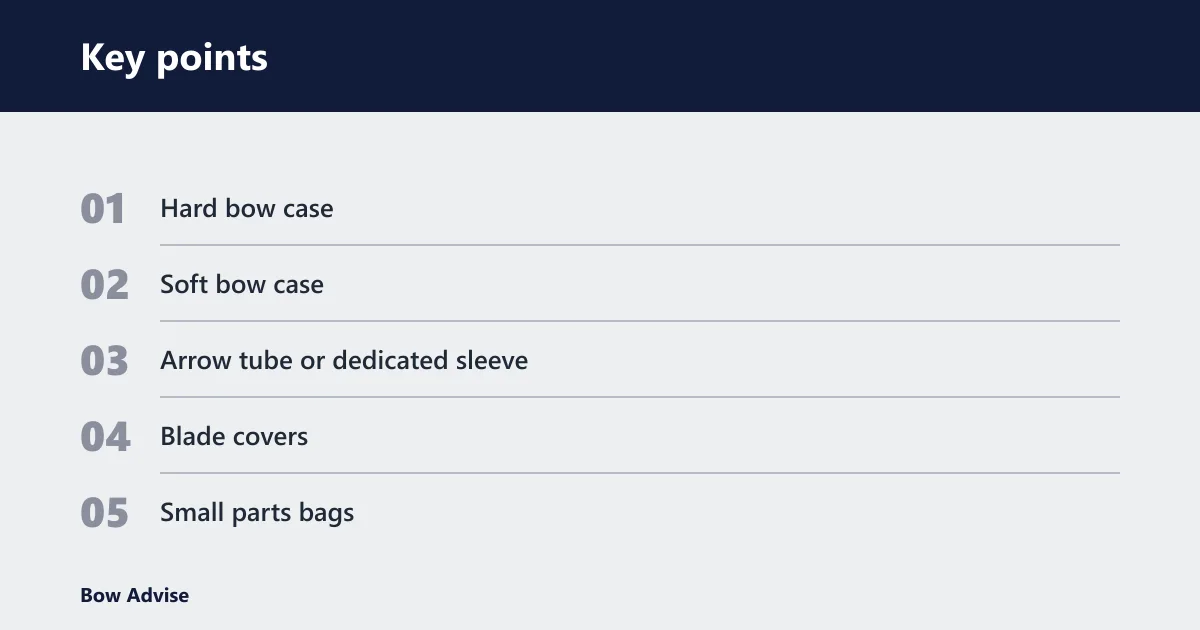
- Hard bow case with a rigid shell, interior foam or strap system, and lockable latches.
- Soft bow case only for car travel, with extra padding around hard edges and accessory pockets emptied.
- Arrow tube or dedicated sleeve for arrows stored away from the bow.
- Blade covers for broadheads.
- Small parts bags for sight screws, stabilizer pieces, rests, dampeners, and bolts.
- Padding such as foam sleeves, cloth wraps, or case inserts.
- Desiccant pack for humid trips.
- Lock that matches the airline and local security rules for your checked case.
Choose the right case
A hard case is the safer choice for flights because it resists crush loads and sudden impacts. It should fit the bow after accessories are removed, with no pressure on cams, limb tips, or string loops. A soft case is often fine for short car trips, but it needs extra protection from sliding cargo and sharp objects.
Check airline and destination rules before you start
Airline and security rules vary. Bow cases are often checked rather than carried on, and many carriers require sporting equipment to be declared at check-in. Use a lock that the airline accepts; some destinations and carriers allow lock types that can be opened by security if needed, while others set their own rules. Check the carrier’s current policy and local laws before travel.
How do you pack a compound bow?
Pack a compound so nothing presses on the cams, cables, or string path. The axle-to-axle length matters because a case that is too short can load the cams or force the limbs into the foam. Remove or protect the sight, rest, quiver, and any loose add-ons before the bow goes in the case.
Remove accessories that can take a hit
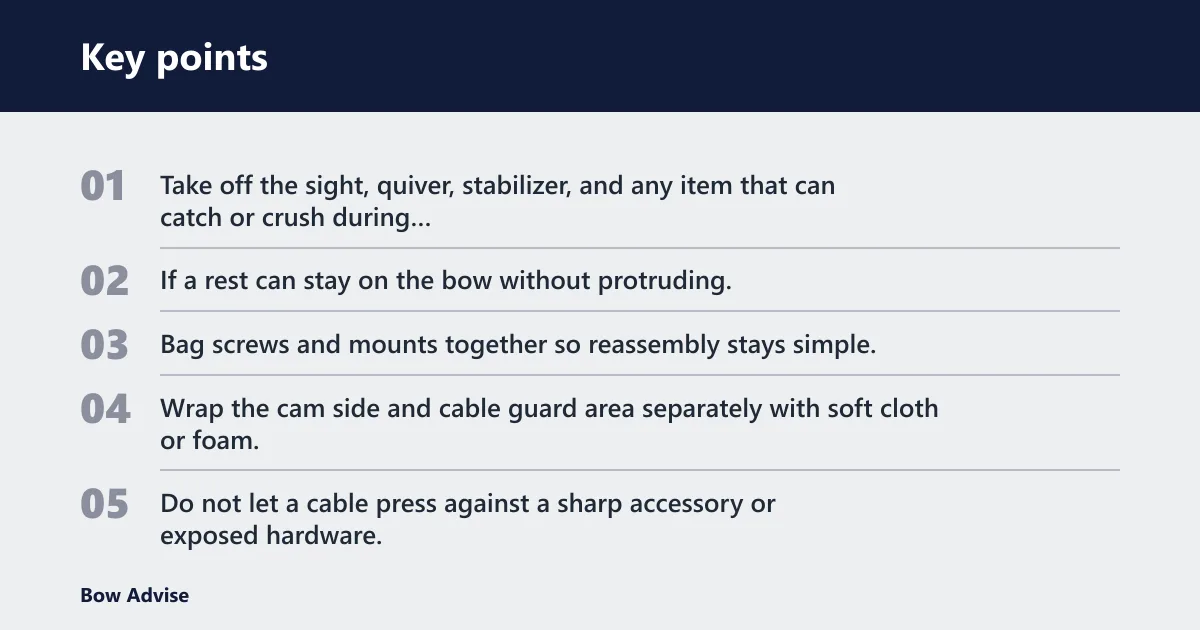
Take off the sight, quiver, stabilizer, and any item that can catch or crush during transit. If a rest can stay on the bow without protruding, protect it with foam and confirm it does not touch the case wall. Bag screws and mounts together so reassembly stays simple.
Protect cams, cables, and string contact points
Wrap the cam side and cable guard area separately with soft cloth or foam. Do not let a cable press against a sharp accessory or exposed hardware. Keep the string untwisted, dry, and clear of abrasive surfaces. Heat, compression, and rubbing are the main risks here.
Lay the bow in the case so nothing presses on the limbs
Set the bow into the foam or strap system first, then place padded accessories in open spaces. The bow should not rock when the case is closed. If the limb pockets or cam edges touch the shell, add padding before closing the lid.
Say your compound has a long stabilizer and a large sight housing. Remove both, bag the mounting screws, and leave only the bare bow in the case. That lowers the chance of cam pressure and keeps the sight from being crushed by a hard latch or a packed arrow tube.
How do you pack a recurve bow?
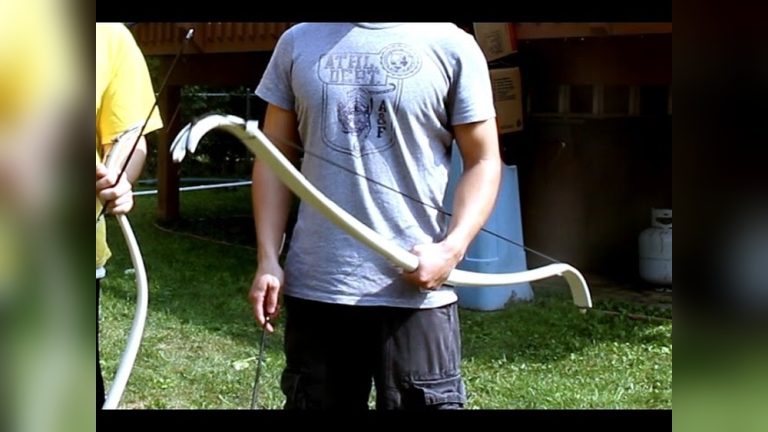
A takedown recurve is usually simpler to travel with than a compound, but the limbs still need protection from bending, edge wear, and string abrasion. Remove the limbs if the bow is designed for takedown use. The string should be protected from rubbing against hard hardware, zippers, or bare limb edges.
Break down takedown limbs before travel
Separate the limbs from the riser if the bow is made for that process. Wrap each limb on its own so the tips do not knock together. Put the riser in the center of the case or in a padded slot where it cannot shift into the limb pockets.
Wrap the string so it cannot rub
Stow the string dry, untwisted, and away from sharp edges. A simple sleeve or cloth wrap is enough if it keeps the string from rubbing on metal or rough foam. Do not let it sit under tension from gear stacked on top of it.
Pad the riser and limb tips separately
Use separate padding for the riser, limb tips, and any limb bolts or hardware. That keeps the tips from getting nicked and keeps the riser finish from being marred by accessories. A takedown recurve usually packs smaller than many compounds, but the parts still need separation.
How do you pack arrows and accessories?
Arrows should be packed separately from the bow. Broadheads should have blade covers or a dedicated blade-safe holder before they are stored or packed away. Accessories should be bagged or padded so they cannot shift and strike cams, limbs, or the string during bumps, loading, or baggage handling.
Store arrows in a separate tube or sleeve
Use an arrow tube or a dedicated sleeve for all arrows. Keep the nocks and fletching from rubbing against hard parts. For broadheads, cover the blades before stowing the arrows, then secure the arrow bundle so it cannot rattle.
Bag sights, rests, quivers, stabilizers, and dampeners
Keep small hardware in labeled bags. Wrap a sight so the aperture and pins do not take a side impact. Pad rests and dampeners so they do not compress against the bow. Put each item where it cannot slide into the limb pockets or cam area.
Add moisture control without direct metal contact
Place a desiccant pack inside the case on humid trips. It helps control moisture, but it should not rub directly on metal parts if that can be avoided. Keep the pack in a pocket or cloth wrap so it stays effective without scuffing finishes.
Bow travel packing checklist
Use this as the final packing sequence. The order matters because loose parts become impact points once the case starts moving. Car trips tolerate a little more flexibility than flights, but the bow still needs separation, padding, and restraint in both cases.
| Car trip | Flight |
|---|---|
| Remove sight, quiver, stabilizer, and any loose add-ons if they can strike the case wall. | Remove sight, quiver, stabilizer, arrow rest, and any item that could be crushed or snagged. |
| Wrap cams, limb pockets, and exposed hardware with soft foam or cloth. | Wrap cams, limb pockets, and exposed hardware with thicker padding and keep them centered in the case. |
| Place the bow in the case first, then fit padded accessories around it without pressure points. | Place the bare bow in the case first, then add only padded items that do not press on limbs or cams. |
| Store arrows in a separate tube or sleeve outside the bow cavity. | Store arrows in a separate tube or sleeve; cover broadheads before closing the tube. |
| Use a soft case only if it will ride in a controlled cargo area and not slide. | Use a hard case with lockable latches and airline-accepted locking hardware if required. |
| Check that the case will not sit in heat or direct sun. | Check that the case can be declared and checked as sporting equipment. |
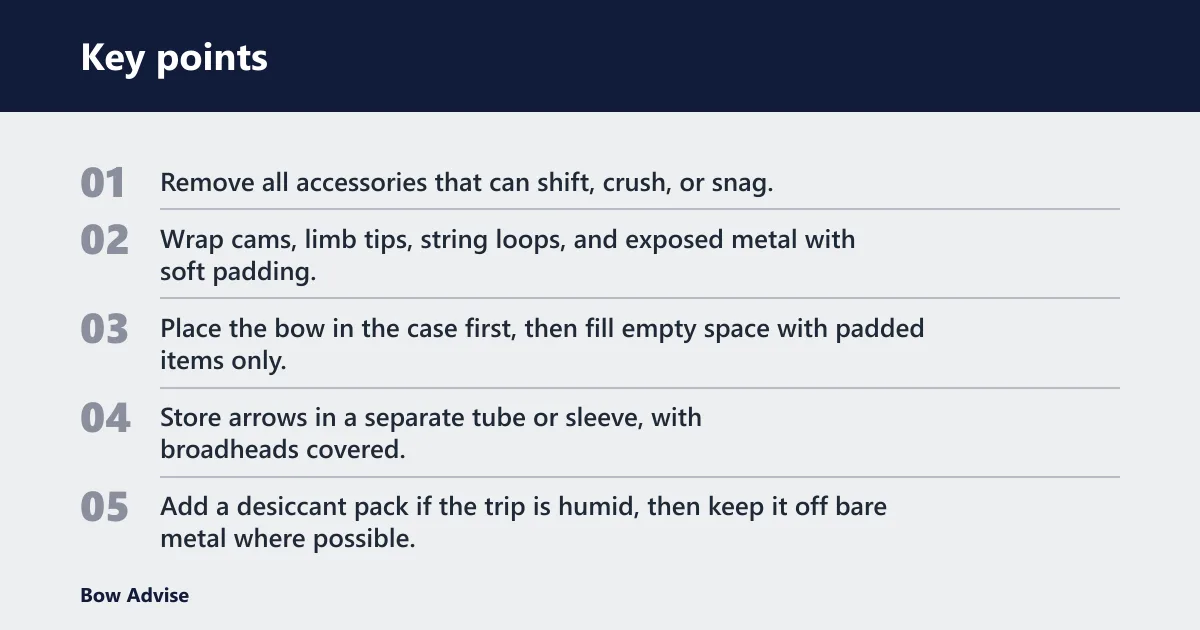
- Remove all accessories that can shift, crush, or snag.
- Wrap cams, limb tips, string loops, and exposed metal with soft padding.
- Place the bow in the case first, then fill empty space with padded items only.
- Store arrows in a separate tube or sleeve, with broadheads covered.
- Add a desiccant pack if the trip is humid, then keep it off bare metal where possible.
- Close the case, shake it gently, and reopen it if anything moves.
- For flights, declare the sporting equipment at check-in and use the lock the carrier allows.
- For car trips, secure the case so it cannot slide, tip, or sit in heat.
Final pre-departure inspection: the bow should be dry, the string untwisted, the cams clear of pressure, the limbs protected, the sights and rests bagged or removed, and the arrows separated from the bow. If anything shifts when the case is moved, repack it before leaving.
Common mistakes
Leaving a bow in a hot vehicle is one of the fastest ways to invite trouble. Heat can affect strings, limbs, and adhesives. It can also soften case padding enough for parts to move. Never let the case sit in direct sun or in a closed car for long periods.
Another common problem is packing arrows loose with broadheads uncovered. That creates blade damage and can cut the string, case lining, or your hand during unpacking. Keep broadheads covered and arrows in their own tube or sleeve, never mixed into the bow cavity.
Letting accessories press against cams, limbs, or the string is another failure point. A sight housing or stabilizer tube can crush finish, chip a limb edge, or create a hard point that transfers shock. If the case closes with pressure, reopen it and repack.
Suppose a recurve rider packs a takedown bow, a quiver, and loose arrows into a soft case for a summer drive. If the case is left in a warm trunk and the arrows slide into the limb tips, the result is usually scuffed limbs and a string that needs inspection before shooting.
Prevention: repack after any change in temperature, load, or case layout. If the bow will ride in a car for hours, keep it out of the cabin heat and strap the case so it cannot move.
Frequently asked questions
How do I travel with an archery bow without damaging it?
Use a hard case for flights, a padded case for car trips, and separate the bow from arrows and sharp accessories. Remove anything that can shift or crush, then pad the cams, limb tips, and string contact points. If the case rattles, reopen it and repack before you leave.
Can I fly with a compound bow or recurve bow?
Yes, if the airline accepts sporting equipment and you follow its check-in process. The bow normally travels as checked baggage, not carry-on. Use a rigid case, declare it at the counter, and confirm the lock rule with the carrier before you arrive at the airport.
Should I remove arrows and accessories before flying with a bow?
Yes. Arrows should go in a separate tube or sleeve, and broadheads need blade protection. Remove or pad the sight, quiver, stabilizer, rest, and dampeners so they cannot press into the bow or break during handling. That reduces crush risk and keeps sharp parts contained.
Do I need a hard case for an archery bow on a plane?
For flights, a hard case is the safer choice and is the standard recommendation because it resists impact and compression better than soft fabric. The case should fit the bow after accessories are removed. Check the airline’s size, lock, and declaration rules before travel.
Can I put an archery bow in checked luggage?
Yes, that is the normal way to fly with a bow. Place it in a dedicated case, declare it as sporting equipment if the airline requires that, and use the lock type the carrier allows. Do not put the bow loose in ordinary checked luggage.
How do I pack a bow case for a long road trip?
Use the same order as for flying, then add car-specific protection: keep the case out of heat, strap it so it cannot slide, and avoid stacking heavy cargo on top. A soft case can work in a car, but only if the bow cannot be crushed or bounced around.
What airline rules apply to archery equipment?
Airlines set their own sporting-equipment rules, and security rules can vary by airport and destination. Check the carrier’s policy for declaration, checked-bag handling, and lock requirements before leaving home. If you need a U.S. customs ownership form for an international trip, confirm that with the destination and airline directly.
How do I protect bow limbs, cams, and sights during travel?
Keep each part from touching hard edges. Pad the limbs and cam area separately, remove the sight if it can be hit, and make sure the bow sits in the case without pressure points. If anything reaches the shell or shifts when moved, add padding before closing the case.