Bow Measurement Chart: Key Specs Explained
A bow measurement chart should list each spec, the exact point of measurement, and the common error that skews it. For draw weight, use a bow scale and the bow’s adjusted setting. Bad measurements lead to wrong arrow spine, poor fit, noisy shooting, and avoidable tuning problems. This guide covers axle-to-axle, brace height, draw length, draw weight, let-off, ATA speed, tiller, and common bow-model specs with the right measuring points.
Measurement matrix


| Spec | Exact measuring reference points | Required tool | Normal range | Common beginner error | What the number changes in real use |
|---|---|---|---|---|---|
| Compound draw weight | Peak draw force on the scale as the bow is drawn; compare the marked setting at the cam or limb bolts | Bow scale | Minimum to maximum poundage listed by the maker | Confusing peak draw weight with full-draw holding weight | Arrow spine choice, effort to draw, and hunting or target suitability |
| Compound draw length | Measured at full draw to the archer’s anchor; check the module or cam setting that sets that position | Draw board or measuring arrow | Bow-specific adjustable span in inches | Buying by height alone or ignoring cam limits | Fit, anchor comfort, release hand position, and consistency |
| Axle-to-axle length (compound) | Distance between the top and bottom cam axles | Tape measure | Short compact bows around 28-31 inches; longer bows around 33-35 inches | Measuring the riser instead of axle centers | Maneuverability, stability, and forgiveness |
| Brace height (compound) | Distance from the grip to the string at rest | Tape measure | Varies by model | Measuring from the wrong point on the grip | Speed, noise, and forgiveness |
| IBO speed | Factory rating based on a 70 lb, 30-inch draw, 350-grain arrow setup | Manufacturer listing | Listed in feet per second | Treating the rating as real-world speed for every setup | Gives a comparison point for bow efficiency |
| Let-off percentage | Percent reduction in holding weight at full draw | Manufacturer listing | Common modern range is 75-90% | Assuming higher let-off changes draw weight instead of holding weight | How heavy the bow feels while aiming |
| Physical bow weight | Bare bow mass only, before sights, rest, stabilizer, quiver, or other accessories | Scale | Varies by model | Comparing bare weight to a fully rigged bow | Carry comfort and steady aim |
| Recurve bow length (AMO) | Nominal bow length along the bow, tip to tip, under the AMO spec | Manufacturer listing or tape measure on the finished bow | Common sizes include 62, 64, 66, 68, and 70 inches | Assuming string length and bow length are the same thing | String choice, draw feel, and forgiveness |
| Bow string length | String spec that matches the bow type and AMO length, not the bow’s overall length | Manufacturer string spec or string ruler | Varies by bow model | Ordering by bow length only | Brace height, fit, and shooting performance |
| Draw length measurement | Archer’s personal draw length from the draw-side reference to the anchor position | Measuring arrow or draw board | Personal fit number, not a bow spec | Using height alone instead of actual draw length | Bow selection, module setting, and anchor comfort |
| Takedown recurve configuration | Riser plus short, medium, or long limbs | Manufacturer listing | Common starter platform | Ignoring how limb choice changes both length and draw weight | Fit, holding comfort, and draw feel |
How do you measure bow specs?
Start with the spec that changes fit, then move to the specs that change handling and tuning. For most buyers, that means draw length first, then draw weight, then bow length or ATA, then brace height, string length, and weight. Check the maker’s listing before buying, since adjustment ranges and module limits decide what the bow can actually be set to.
Start with the point that affects fit
Draw length comes first because it affects anchor position, string angle, and release hand alignment. Height alone is only a rough shortcut. Two archers of the same height can need different draw lengths because arm span, shoulder width, and stance differ.
A simple at-home check uses a measuring arrow or a tape measure and a wall. Stand relaxed, draw to your normal anchor, then measure from the pivot point to the nock point and add 1.75 inches for a rough draw length estimate. Confirm that number against the bow maker’s chart before buying.
Check the maker’s limits
Compound bow specs are not free-form. Draw length range is the bow’s adjustable draw length span in inches, and module or cam limits can cap what is possible. Draw weight range is the minimum and maximum poundage a bow adjusts to, so a wide adjustment range usually gives more versatility.
Use the right tool for each spec
A tape measure is fine for ATA, brace height, and recurve length. A bow scale is needed for draw weight. A measuring arrow or draw board is best for draw length. Manufacturer listings are still useful for IBO speed, let-off, and string spec, because those numbers are model-specific.
How do you measure draw length?
Draw length is the primary fit number for bow selection. Measure that first, then compare the bow’s available adjustment range and cam or module settings. If the number is off, the bow can feel cramped, stretched, or unstable even when the rest of the specs look right.
A simple at-home method
Stand naturally with your arms extended, measure arm span fingertip to fingertip, then divide by 2.5 for a rough estimate of draw length. For a more useful check, draw a bow or use a draw board and measure to your anchor position. The goal is a number that matches the bow setting, not a guess based on height.
Say your arm span is 70 inches. A rough estimate gives a 28-inch draw length. If a compound’s module tops out at 27.5 inches, that bow is too short for the fit you need.
Why height alone is only a shortcut
Tall archers do not always need longer draw lengths, and shorter archers do not always need shorter ones. Shoulder rotation, chest width, and anchor style change the number. That is why draw length should be checked before comparing model ranges.
Which compound bow numbers matter most?
For a compound, draw length and draw weight matter first because they set fit and controllability. After that, ATA, brace height, let-off, IBO speed, and physical weight help you choose between a hunting bow, a target bow, or a general-purpose setup. Shorter bows are more maneuverable, while longer bows are usually steadier and more forgiving.
Draw weight and target draw weight
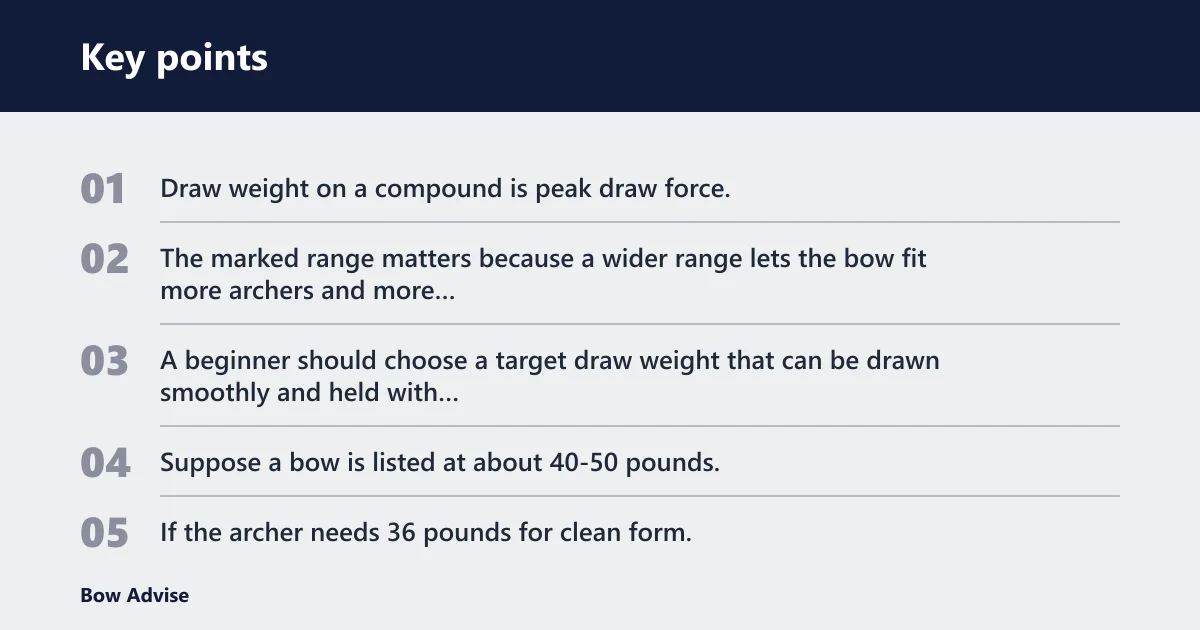
Draw weight on a compound is peak draw force, not the lower weight you hold at full draw after let-off. The marked range matters because a wider range lets the bow fit more archers and more uses. A beginner should choose a target draw weight that can be drawn smoothly and held with control, not the heaviest bow that can be managed once in a while.
Suppose a bow is listed at about 40-50 pounds. If the archer needs 36 pounds for clean form, that bow may still work if the minimum setting is low enough. If the minimum is too high, the bow is the wrong choice even if the top end looks attractive.
Axle-to-axle length, brace height, let-off, speed, and weight
Axle-to-axle length is the distance between the top and bottom cam axles. On compact compound bows around 28-31 inches, handling in tight blinds or treestands is easier. On longer bows around 33-35 inches, steadiness and forgiveness usually improve.
Brace height is the distance from the grip to the string at rest. A shorter brace height usually means more speed, while a longer brace height usually means more forgiveness. Let-off is the percentage reduction in holding weight at full draw, and modern hunting bows commonly sit in the 80-90% range, with 75-90% also common overall.
IBO speed is listed in feet per second and uses a 70 lb, 30-inch draw, 350-grain arrow setup. That is a test standard, not a promise of your real speed. Physical bow weight is the bare mass of the bow; once sights, rests, and stabilizers are added, the rigged bow typically feels heavier.
Which recurve measurements matter most?
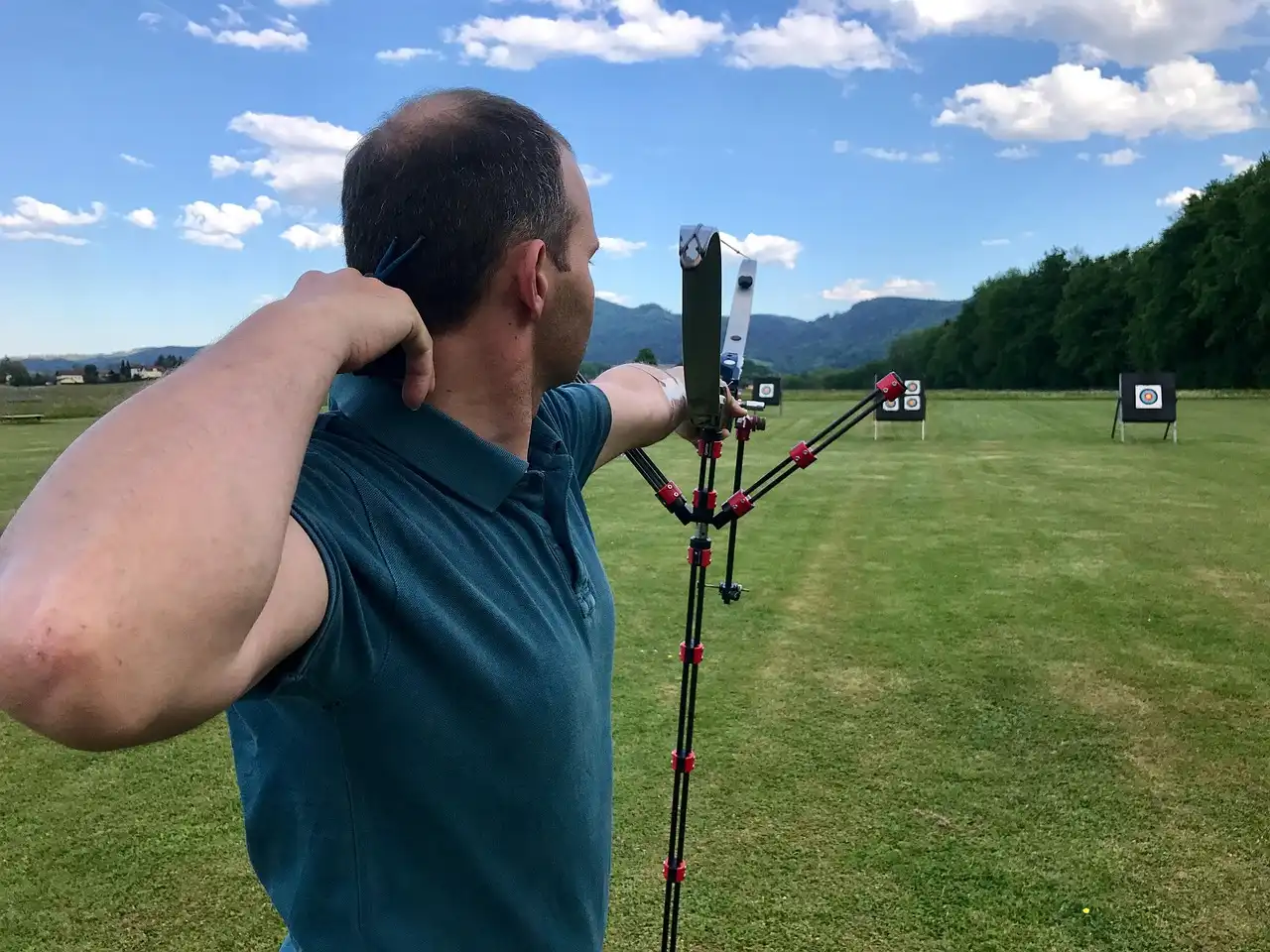
For a recurve, AMO bow length and string fit matter first, then limb configuration. Recurve sizing is less about cam limits and more about matching the bow length, limb set, and string spec to the archer’s draw length. Longer recurves are usually more forgiving, and the common sizes include 62, 64, 66, 68, and 70 inches.
AMO length and common sizes
Recurve bow length is the AMO length, which is the nominal size the maker lists for that riser and limb combination rather than a finished-bow tape measurement. A 68-inch recurve is a common target recurve length. A 28-inch draw is commonly paired with a 68-inch recurve in the sizing rule, which is why that length often appears in beginner setups.
String length and limb fit
Bow string length is related to bow length, but it is not the same thing. The string must match the bow type and AMO spec. If the string is too short, brace height rises and the bow can feel harsher; if it is too long, brace height drops and performance can suffer.
A common first-timer mistake is ordering a string by the recurve’s overall length instead of the string spec listed by the maker. That small mismatch can change brace height enough to alter sound, speed, and arrow flight.
Takedown recurve limb options
A takedown recurve uses a riser plus short, medium, or long limbs. That setup is popular for starters because it can change both bow length and draw weight without replacing the whole bow. Limb choice should follow the archer’s draw length and the intended use, since a longer limb set often feels smoother at anchor.
How do you read a bow string size?
String size should be read from the bow’s spec sheet, not guessed from the bow’s overall length. For recurves, the string spec must match the AMO bow length and the limb setup. For compounds, string and cable lengths are model-specific and often tied to the cam system, so the maker’s listing matters most.
What happens when the string is wrong
An incorrect string can move brace height away from the intended setting, which changes the way the bow behaves. That can affect speed, noise, nock travel, and hand shock. On a recurve, the wrong string can also make the bow feel too stiff or too soft at brace.
How to measure a bow string is mostly a matter of reading the correct spec and verifying the finished string against the model’s listed size. When in doubt, the owner’s manual or maker’s chart is the right source for that number.
How to find the right size bow
The right size bow starts with draw length, then shifts to the style of shooting. Hunting setups often favor shorter, more compact compounds for easier maneuvering, while target setups usually benefit from longer bows that hold steadier. For recurves, a longer AMO length is often more forgiving, especially when the draw length is on the longer side.
Use this quick order of checks
- Measure draw length first.
- Check the bow’s listed adjustment range.
- Confirm draw weight range and target draw weight.
- Compare ATA or AMO length to the use case.
- Check brace height, let-off, and physical weight.
- Verify string size and limb or cam limits before buying.
How to measure bow size depends on the bow type. For compounds, bow size usually means ATA. For recurves, it usually means AMO length. How to determine bow length depends on whether the bow uses cams or limbs, so the reference points must match the design instead of being mixed together.
Hunting versus target use
For hunting, compact compounds are easier to move in tight spaces, while enough let-off helps with aiming comfort. For target work, longer bows and longer brace heights often feel calmer at full draw. That does not mean every target bow must be long, only that forgiveness and steadiness usually matter more than compact size.
A common beginner mistake is buying the bow before checking draw length. Another is choosing too much draw weight because the number sounds useful for hunting. Clean fit should come first. Power can come later.
Frequently asked questions
How to measure bow length
For a compound, bow length usually means axle-to-axle distance measured between the top and bottom cam axles. For a recurve, bow length means AMO length, which is the nominal bow size listed by the maker. Do not use limb tips, riser length, or string length as a substitute unless the maker’s spec says to.
How to measure bow draw weight
Use a bow scale and draw the bow to the intended draw length. On a compound, draw weight is the peak force before let-off reduces the holding weight at full draw. That number should match the bow’s adjusted setting, not the lower force you feel while aiming.