Instinctive Shooting Tips for a Traditional Bow Hunter
To improve instinctive shooting with a traditional bow, I run each drill with a small set of arrows and keep one consistent anchor. I correct only the cause: aim errors usually mean I moved my body or changed the gap, while form errors mean my release or posture changed. When I skip this, I get inconsistent arrow flight, and my hunting shots disappear.
This guide is part of our Native American bows and arrows guide series.
- See Samick Sage 62-inch takedown recurve bow 25 lb on Amazon
- See 500 spine carbon arrows 30 inch for recurve bow on Amazon
- See 18-inch foam archery target block for traditional bow on Amazon
What makes instinctive shooting work with a traditional bow?
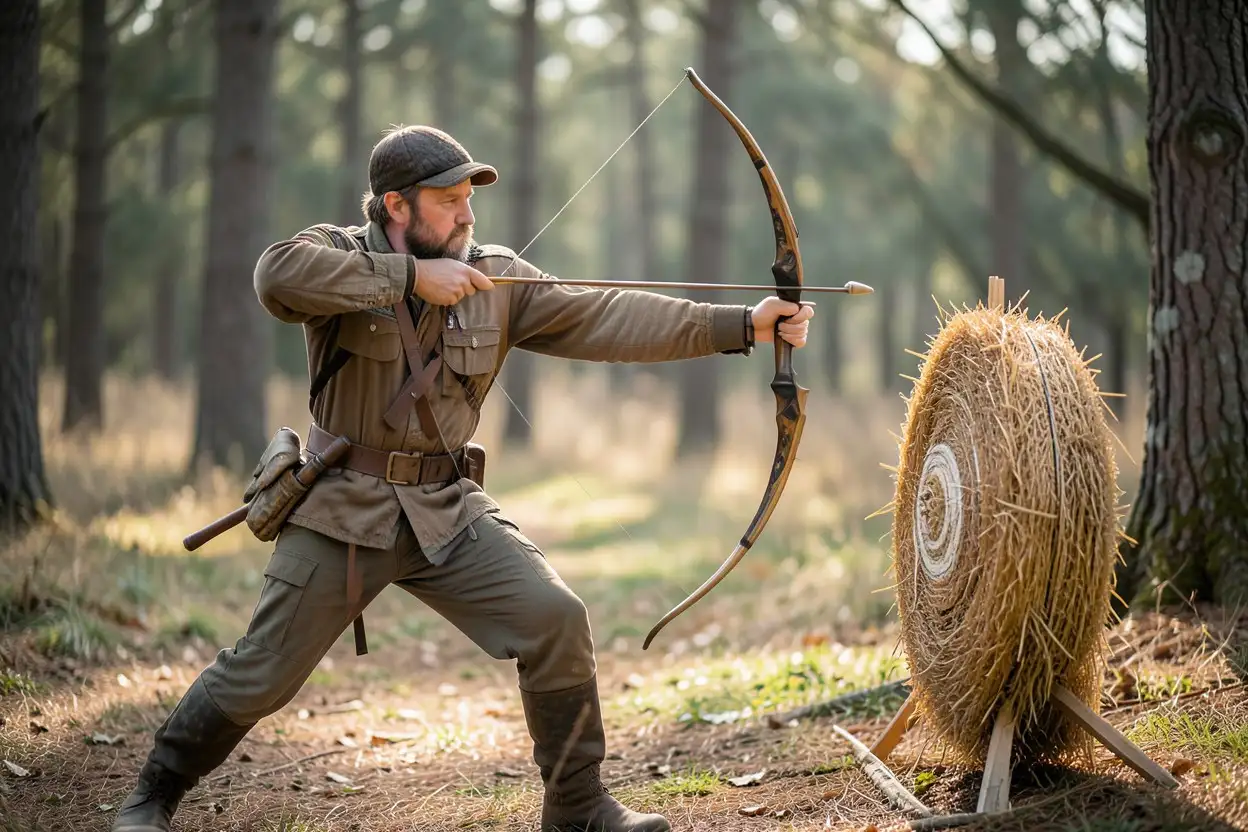
Instinctive shooting means shooting without sights while still using subconscious aiming and repeatable body references. It works with a traditional bow when my anchor, grip tension, and follow-through stay the same shot to shot. Calibration still matters, because my point-on shifts with setup and distance, even when I feel “aimed” the same.
I learned this the hard way when I treated instinctive shooting like a pure mental trick. My mind calmed down, but my arrow grouping didn’t tighten. The fix was mechanical repeatability, anchor at the corner of my mouth, relaxed bow hand, and stable release timing.
Point-on distance is the bridge between “subconscious” and hits. Point-on is the distance where the arrow tip lands where I’m trying to shoot for my current setup. I don’t assume it stays fixed. Draw, brace height, and even grip comfort can move it.[3]
According to How to Aim a Traditional Bow — Hunt. Learn. Share. — One writer says instinctive shooting took time to feel comfortable past 15 yards. (source)
What form mistakes create the biggest instinctive accuracy problems?
When those happen, the subconscious gets the wrong input, so the group spreads even when I feel smooth.
Anchor drift breaks the subconscious input
If my jaw or mouth reference moves between shots, my “aim” changes without me noticing. My arrow tip can leave the bow on a slightly different line, and impacts spread across the target. I check it like a checklist, same corner of the mouth or the same tip-of-nose reference each shot.
Overholding and rushed release change timing
Overholding usually adds tension, while rushing shortens the rhythm. Either way, my arrow departure timing shifts, and impact either climbs or fans out.
Bow-hand torque comes from gripping hard or twisting
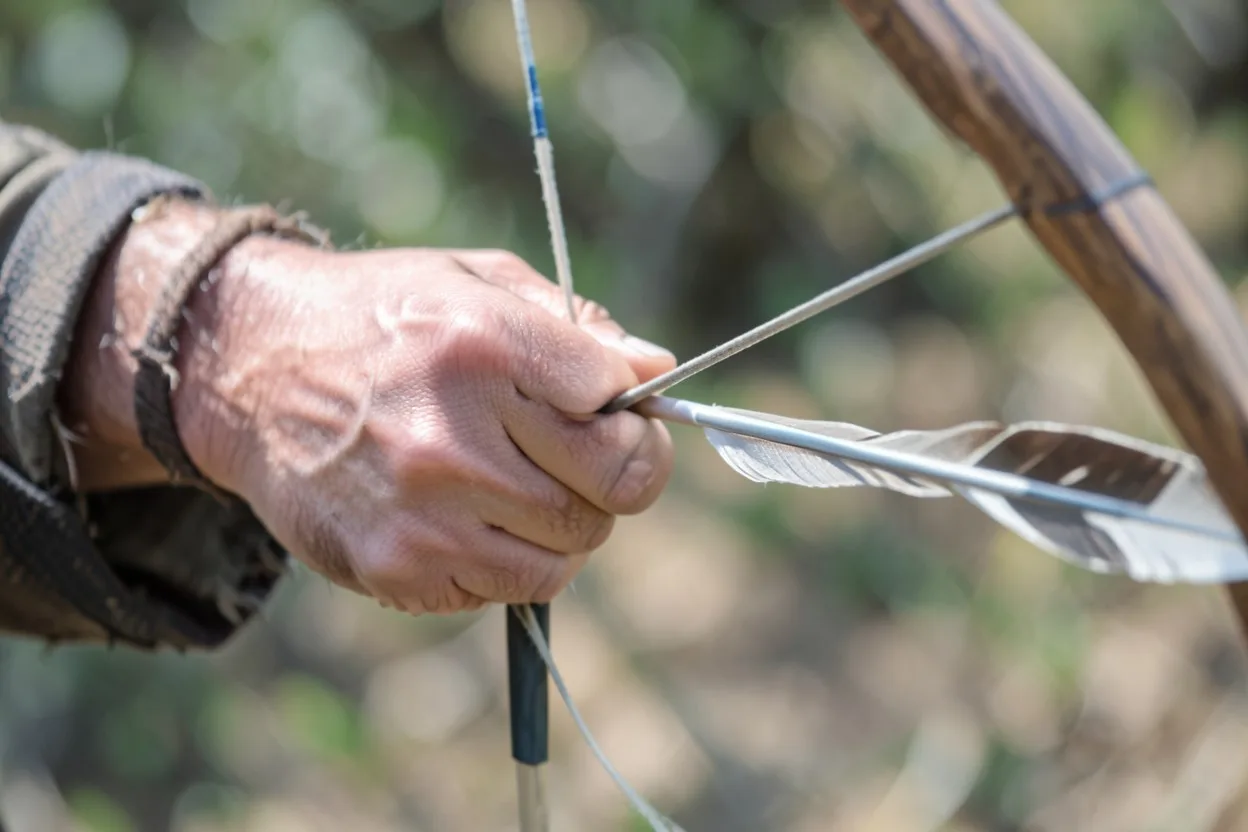
Traditional bows punish torque. When I squeeze to “control” the arrow, my bow hand twists at full draw. That twist changes how the bow reacts, and instinctive accuracy suffers because my hand is driving variability instead of my subconscious.
Bear Archery also recommends a relaxed grip rather than gripping too tightly, and I’ve seen the same effect on my own targets, calmer grip equals calmer groups.
Winging the bow arm and changing face setup
When my bow arm drops or rotates, my anchor shifts and the shot line changes. If my face setup changes, I’m teaching my subconscious a moving target for what “straight” feels like. Consistency beats chasing a “better feeling” shot.
How do you dial your point-on distance the repeatable way?
Point-on distance is where my arrow tip lands on the target spot for my current setup, and I recalibrate it because bow setup and my mechanics influence the flight. In practice, I confirm a fresh baseline close, then verify as I move back so distance training doesn’t chase a stale calibration.
Use a clear definition of point-on
Point-on is simple: at a specific distance, where does my arrow tip impact relative to my intended aiming point. It’s not a sight setting, and it’s not universal. With traditional bows, changes in draw, brace height, arrow batch, and even how I mount the string can nudge it.
Confirm point-on before you trust groups
My rule is straightforward. I check point-on every time I change arrows, meaningfully change tuning, or after I feel my form has “drifted” during a session. Then I build the next steps on that confirmed baseline.
Blank bale to spot shooting: the first 30 minutes that actually matter
I start close with blank bale practice so my only job is repeatable form and a consistent release. I use a very short range for blank bale work to build anchor stability and bow-hand tension control with low aiming pressure, then I transition to a short spot-shooting distance to read early errors without getting lost in distance.
Step 1 setup: blank bale at 3–5 yards
Blank bale means I’m shooting a close, safe practice bale without trying to “aim hard.” I pick a large safe backstop. I keep the aiming reference simple by using one constant anchor.
- Goal: same anchor, relaxed bow hand, identical release rhythm.
- My checklist: before every shot, I confirm my anchor touch point and that my bow grip stays soft.
Step 2 transition: spot shooting at 10–15 yards
Now I can read impacts. Spot shooting at 10–15 yards teaches me how early errors show up before they become huge mistakes. I keep the same anchor and the same body setup, I just let the target tell me what changed.
- Use the same aiming anchor: corner of mouth or tip of nose example must stay consistent shot to shot.
- Shot count: 5 arrows per drill, then stop and interpret.
Walk-back practice: how to build distance awareness without guessing
Walk-back practice starts close and moves farther back in measured steps while I try to hit one single spot. The win is distance awareness and a real map of my point-on behavior. I start where hits are repeatable, then move back only when I can keep impacts tight at the current distance.
Single-spot requirement
I pick one spot I can clearly see. My job is to hit it, not to “see where it wants to go.” Walk-back practice is distance calibration training, so I need a consistent target point to compare impacts.
Move back after consistent hits
Walk-back practice can start at 5 meters and move back after consistent hits. I keep it mechanical. If my impacts are scattered for a reason, I fix that reason first, then I move back.
How you decide it’s ready for confirmation
When my group shape stays similar across steps and my anchor and bow hand feel the same, I’m ready to confirm at hunting-distance realism. That’s where traditional bows earn trust for actual shots.
A 4-step instinctive shooting checklist with weekly progression
I run the same sequence regularly, letting the order do the work: blank bale for form consistency, spot shooting for early error reading, walk-back for point-on calibration, then hunting-distance confirmation. Each step uses 5 arrows per drill and a troubleshooting rule that tells me what to fix.
- Blank bale at 3–5 yards: check anchor repeatability and bow-hand torque.
- Spot shooting at 10–15 yards: read impact and confirm early consistency.
- Walk-back calibration to point-on: hit one spot across distances while tracking where your arrow tip lands.
- Hunting-distance confirmation: verify practical accuracy at realistic ranges, then stop on a good note.
| Weekly step | Drill | Distance | What to check (measurable) | Success target | Troubleshooting: common misses |
|---|---|---|---|---|---|
| 1 | Blank bale | 3–5 yards | Anchor stays fixed, bow-hand stays relaxed, release rhythm identical | 5 arrows into the same “comfort zone” repeatedly with no obvious climb/spread pattern |
Overholding: impacts rise or spread late. Anchor drift: group rotates or shifts away from your expected spot. Torque: left-right bias changes when you “try harder.” |
| 2 | Spot shooting | 10–15 yards | Early impact consistency after one constant anchor | Impacts show the same trend as step 1, just farther back |
Target panic feel: your groups open when you get “nervous” near the trigger moment. Rushed release: vertical stringing shows up. |
| 3 | Walk-back practice (single spot) | Start near 5 meters, move farther back after consistent hits | Where your arrow tip lands relative to the chosen spot across steps | Hits cluster on one spot at each step before you progress farther |
Point-on mismatch: repeated misses that “logically” miss high/low at the same distances. Anchor drift reappears: you fix it at close range, then it creeps in farther back. |
| 4 | Hunting-distance confirmation | Use your realistic hunting distance; many ranges may fall somewhere from very close to long range. | Practical confidence at your hunting range, not a fantasy “perfect” distance | Comfortable 5-arrow sequence that you’d trust on game |
Fatigue: your bow hand tightens late in the sequence. Tune limit: consistent form with erratic dispersion suggests arrow/tune mismatch. |
Do you need bow tuning and arrow matching before instinctive practice improves?
Yes, you need a consistent tune before you can judge instinctive accuracy. If your arrows aren’t matching in spine and flight quality, groups can look like “instinctive form” problems when the real limiter is arrow flight variation.
Tune for confidence first, then train the subconscious
I start with a broad, reliable tune so arrow flight stays consistent enough to learn from.
Arrow spine and batch consistency matter for repeatability
When arrow shafts aren’t matched well, impacts can spread even with the same anchor and the same grip. That pushes you toward “aim” corrections with your body, and that ruins the whole point of subconscious aiming that relies on stable inputs.
How to tell if tuning is the limiter versus form
If you repeat your anchor, relax your grip, and your release feels identical, but your impact pattern stays inconsistent, tune is more likely the limiter. If the pattern changes right when you change your anchor pressure or bow hand tension, form is more likely the cause.
Bear Archery’s guidance on relaxed grip matches what I see when I try to separate form issues from flight problems. Your hands should feel calm before you read arrow impacts as “instinctive” error.
How do I improve instinctive shooting with a traditional bow?
Shoot 5 arrows per drill with one constant anchor. I do blank bale at 3–5 yards to stabilize form, then spot shooting at 10–15 yards to read early errors. Use walk-back practice to confirm point-on distances, then finish with hunting-distance confirmation. Correct only the cause: aim errors move your body, form errors change your release or setup.
What practice distance is best for instinctive archery?
For most traditional archers, the best practice distance is the one that lets you repeat the same anchor while still learning from impact. Start at blank bale distance (3–5 yards) to build consistency, then use spot shooting (10–15 yards) for early feedback. Confirm with walk-back and then hunt-real distances.
Should I use blank bale practice or target practice?
Use both, in order. Blank bale practice builds clean form with low aiming pressure, which makes it easier for me to catch anchor drift and bow-hand torque. Target practice then shows what those mechanics do at distance. If I start with only target practice, I end up training tension before I learn repeatability.
How long should I hold at anchor when shooting instinctively?
I keep anchor timing consistent rather than “long.” I aim for a steady rhythm across shots, because overholding tends to add tension and rushing changes release timing. If my groups rise late or spread vertically, I shorten or slow my sequence until my release timing feels the same every time.
Do I need a coach to get better at traditional bow shooting?
A coach speeds up error detection, but I’ve seen measurable progress happen on my own when I follow a structured sequence. Use 5-arrow drills, compare impact patterns, and isolate variables, anchor drift, bow-hand torque, release timing, and tune consistency.
What form issues hurt accuracy in instinctive archery?
Anchor drift, overholding, rushed release, bow-hand torque, and changing face setup hurt instinctive accuracy most. Traditional bows amplify small body changes because there’s no sight picture to cover them. Your subconscious needs a stable reference, so keep the anchor fixed and keep the bow hand relaxed through the shot.
Is instinctive shooting better than gap shooting for hunting?
Fair chase discussion often notes gap shooting can be more precise at longer ranges because it adds an aiming reference. I treat instinctive shooting as a confidence method that works best when my point-on is recalibrated and my hunting distance matches my training. If my hunting distances run long, I compare both using real-world practice.
How do I tune a bow for instinctive shooting?
I tune for consistent arrow flight before I judge instinctive accuracy. I start with a broad tune so arrows behave predictably, then I verify spine match and overall setup stability. In practice, if I see erratic dispersion while my anchor and grip are steady, tune is more likely limiting me than any “subconscious aiming.”