What Targets Work Best for Wooden Bows and Primitive Arrows?
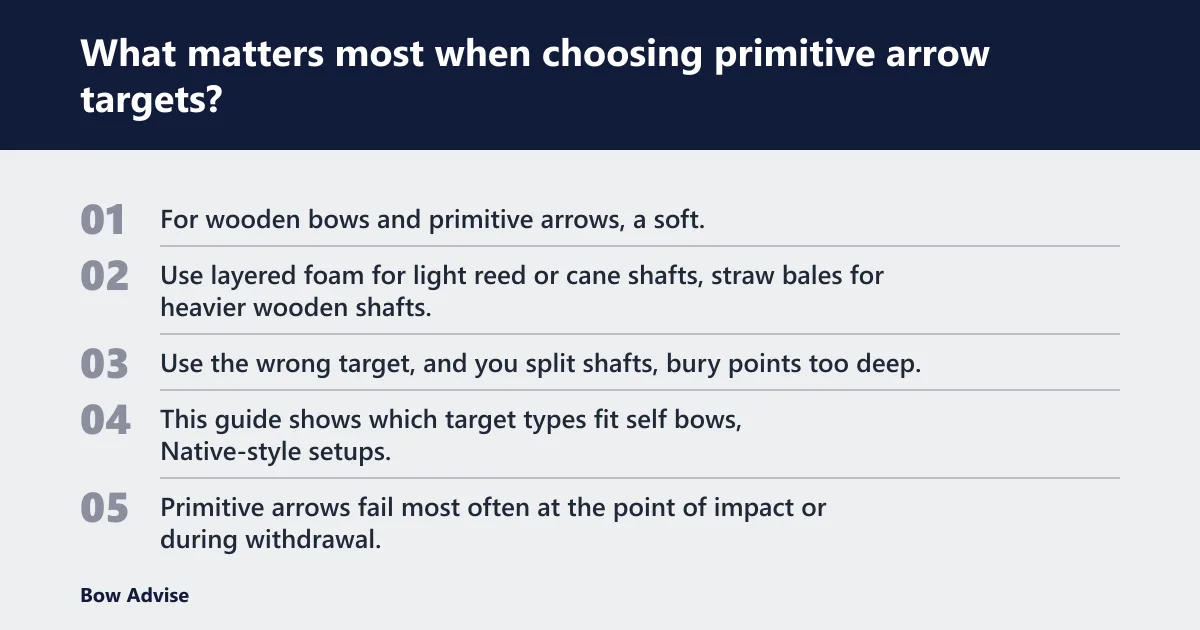
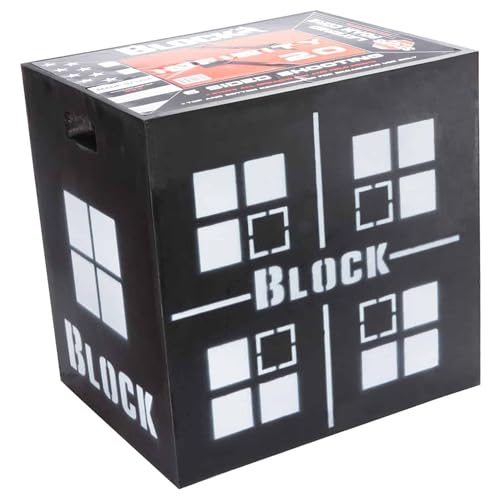
For wooden bows and primitive arrows, a soft, high-drag face with roughly several inches of stopping material is a good target. Use layered foam for light reed or cane shafts, straw bales for heavier wooden shafts, and a backing that stays dry in humid weather. Use the wrong target, and you split shafts, bury points too deep, and wear out arrows fast. This guide shows which target types fit self bows, Native-style setups, and different humidity conditions, plus which shaft reinforcements hold up best.
What matters most when choosing primitive arrow targets?

Match the target to the shaft, not the speed
Primitive arrows fail most often at the point of impact or during withdrawal. That makes target choice a durability decision, not a style choice. A hard face can crack cedar, split bamboo, and loosen footings even when the bow itself is well tuned.
For lighter arrows, a layered foam face or dense bag target slows the shaft without slamming the point into a rigid stop. For heavier wooden arrows, straw bales usually give better deceleration and easier pullout than thin foam layers.
Why soft, deep backstops reduce shaft breakage
Deep stopping material spreads impact over distance. That matters because primitive shafts often have less margin for error than modern carbon arrows. Straightness, spine match, and point weight all matter, and a forgiving backstop still protects the front end from shock loading.
Straw works well when it is tightly packed and kept dry. Wet straw compresses unevenly, gets heavy, and can let arrows punch through. A dry backing also matters in humid regions, where stored targets can soften and lose consistency.
When a target face is too hard for wooden arrows
A target is too hard when points stick only a little, shaft ends bounce, or the arrow stops with a sharp slap instead of a slow sink. Rocky ground is worse. It can crack nocks, chip shafts, and destroy footing glue on impact.
Suppose a beginner is shooting moderate-draw self-bow arrows into compact dirt with scattered stones. The shafts may survive a few hits, but repeated landings will flatten points, bruise the front end, and shorten arrow life quickly.
Which arrow materials fit wooden bows best?
Wooden shafts, bamboo arrows, and Tonkin cane shafts all work with primitive bows, but they behave differently. The best choice depends on shaft straightness, spine match, break resistance, and how traditional the setup needs to feel. None of these materials is universal.
Wooden shafts: straightness, spine, and species variation
Wooden arrows are the easiest place to start when matching a self bow, but only if the shafts are straight, consistent, and close in spine. Species varies more than many beginners expect. Cedar is common, but hardwood shafts can be heavier and more durable front to back.
Look for shafts that roll true, have minimal runout, and hold point alignment after tapering. Straightness matters because even a good spine can fly poorly if the shaft is warped or inconsistent along its length.
Bamboo arrows: where they work well and where they do not
Bamboo arrows are a distinct traditional arrow topic, and they bring useful durability. They tend to be resilient for their weight and can handle repeated use well, especially with traditional bows that do not punish a shaft with abrupt release. They are not a casual substitute for any wooden shaft.
Bamboo works best when the bow, point weight, and nock fit are already sorted. If the shaft is too stiff for the bow, the result is a harsh launch. If it is too weak, it can kick hard and magnify tuning problems.
Tonkin cane shafts: traditional use and flex characteristics
Tonkin cane shafts are a separate category from bamboo arrows. They are valued in traditional archery because they combine lively flex with low mass, which can suit lighter self bows and classic field setups. Their character is different from straight-grain wood.
Tonkin cane often fits best where smooth cast and moderate point weight are priorities. It can be a strong choice for primitive-style shooting, but it still needs a correct spine match and a target that will not shred the shaft on entry.
Do you match arrows to bow wood or draw weight?
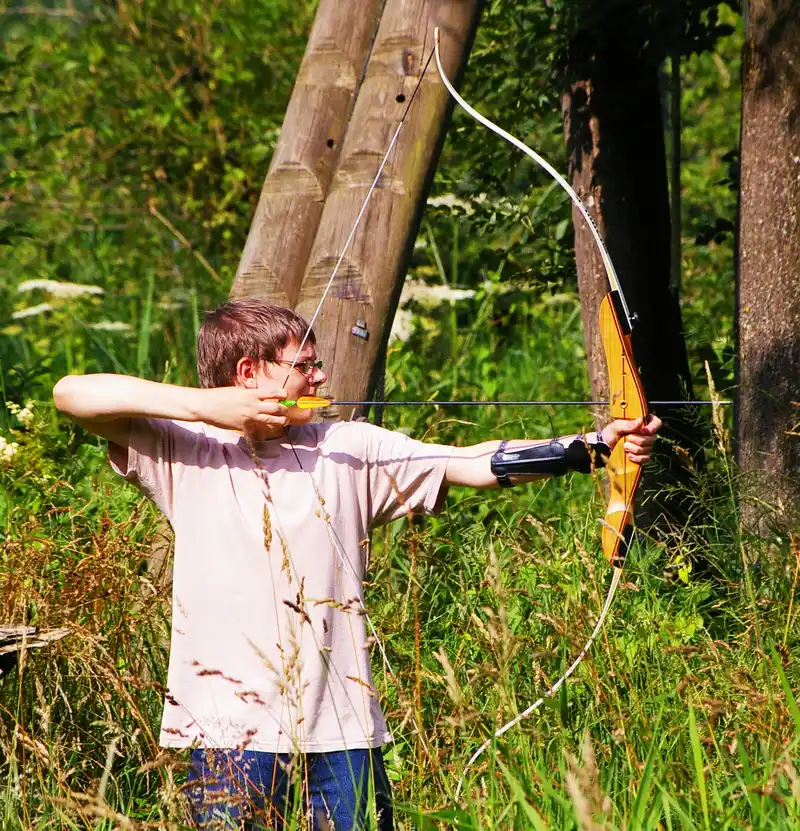
Start with draw weight and arrow spine, then adjust for bow wood and casting style. Bow wood matters because it changes recovery speed, string follow, and how forgiving the bow feels. A well-matched shaft for one self bow can be wrong for another at the same draw weight.
Why draw weight and arrow spine come first
Arrow spine is the main fit check. Too stiff or too weak, and the arrow leaves the bow poorly no matter how traditional the setup looks. Draw weight sets the stress on the shaft; point weight and shaft length refine the final match.
A common first-timer mistake is choosing a shaft only because it “looks right” for a Native-style bow, then adding a heavy point later. That extra front weight can push the arrow into a weak dynamic spine even if the bare shaft seemed close.
How bow wood affects cast, recovery, and string follow
White wood bow woods such as hickory, elm, white oak, and sweetgum can behave differently with moisture and load. Hickory is often valued for compression strength and toughness. Elm is known for dependable bending behavior. White oak and sweetgum can work well, though each may respond differently to humidity and set.
F1 matters here: regular white wood bows can be weakened by moisture absorption. At about 10% moisture, white wood bows can develop notable string follow, and the same page says 55% humidity is enough to trigger that moisture level. Drying damp wood to 6% moisture can improve performance.
White wood bow woods in practical terms
White woods are a broad group, but the practical takeaway is simple: keep them dry, expect moisture sensitivity, and do not assume the same arrow tune will hold across seasons. A bow that feels crisp in winter may act slower and less forgiving in humid weather.
Fire-hardening is described as making white woods hydrophobic, and fire-hardened bows are said to work well in humid eastern U.S. climates. The same source also says wooden bows were seasoned over fire. That does not replace good tillering or arrow tuning, but it can help with shape stability.
How does humidity change primitive bow and arrow performance?
Humidity changes moisture content in both bow limbs and arrow shafts. That can soften wood, shift spine, and increase string follow in the bow. In humid regions, setup that works in dry air may start acting weaker, slower, or less consistent after storage or field use.
Moisture content and its effect on shaft stiffness
Wooden shafts absorb and release moisture as conditions change. A damp shaft usually acts weaker than a dry one, so spine can drop in humid weather. That matters most for long wooden shafts and thin hunting arrows, which respond quickly to moisture swings.
Because of that, consistent storage is part of tuning. Keep arrows dry, sort shafts by stiffness, and re-check point fit after weather changes. A shaft that was perfect in dry air may fly weak after a wet week.
Humidity effects on white woods and string follow
White woods are especially relevant because the bow itself can change shape under moisture load. String follow makes the bow less lively and can change arrow behavior enough to expose an otherwise borderline spine match. That is why climate and bow wood should be considered together.
Fire-hardening may help, but only as a moisture-management layer. It does not correct a shaft that is way too stiff or too weak. It also does not fix a bow that is already overstrained.
Dry, mixed, and humid climate setup choices
Dry climates usually reward slightly lighter shafts and more exact spine matching because wood stays stable. Mixed climates call for consistent storage and moderate reinforcement on the front end. Humid climates often benefit from more caution with white woods, tougher front-end construction, and slower, softer targets.
In humid eastern conditions, a fire-hardened white wood bow may keep its shape better than an untreated one, but the arrow still needs to match the actual cast on the day it is shot.
Should you use footings or fire-hardening?
Use footings for impact resistance and fire-hardening for moisture resistance and shape retention. They solve different problems. A hardwood footing strengthens the front of the arrow. Fire-hardening changes how the wood handles moisture and surface stress, but it does not add the same impact protection.
Hardwood footings for front-end durability
Hardwood footings are a front-of-shaft reinforcement that help resist splitting at the point end. Archers Review discusses hardwood footings for wooden arrows, and that idea fits primitive setups well when heavy points or hard targets are involved. A footing can be especially helpful on softer shaft woods.
Footings are most useful when arrows hit straw, dense foam, or mixed field edges where front-end shock is common. They do add weight, so point balance must be checked afterward. More protection is good only if the arrow still flies cleanly.
Fire-hardening for moisture resistance and shape retention
F5 says fire-hardening is described as making white woods hydrophobic. That can help with moisture resistance and shape retention, especially where damp air is routine. F6 adds that fire-hardened bows are said to work well in humid eastern U.S. climates.
That said, fire-hardening is not a cure-all. It cannot fix poor tiller, bad spine, or a target that is too hard. It is a support treatment, not a substitute for proper build choices.
What each method can and cannot fix
Use footings when the front end needs more impact strength. Use fire-hardening when the bow wood needs better moisture resistance and surface stability. If both the shaft and bow are marginal, neither treatment will rescue the setup by itself.
- Confirm the bow’s draw weight and actual cast.
- Choose a shaft category that matches the climate.
- Set point weight before trimming shafts.
- Add footings only if impact resistance is needed.
- Test flight on a soft, deep target.
- Recheck after humidity changes.
Beginner arrow selection table for six primitive bow setups
This table gives a beginner-friendly starting point for six common primitive bow scenarios. It is not a universal tuning chart. Use it to narrow choices, then refine by shaft straightness, point weight, and the bow’s actual cast in your local weather.
| Bow setup | Recommended shaft material | Footing choice | Climate suitability |
|---|---|---|---|
| Light reed or cane self bow, dry climate | Tonkin cane or straight bamboo | Usually none; light tip wrap only if needed | Best in dry to mixed weather |
| Medium-weight hickory self bow | Straight wooden shafts with consistent spine | Hardwood footing on the front end | Works in dry and mixed climates |
| Elm hunting bow, humid region | Wooden shafts or bamboo with careful spine match | Hardwood footing recommended | Humid climates if stored dry |
| White oak bow with heavier points | Stiffer wooden shafts or reinforced cane | Strong front reinforcement advised | Mixed climates with dry storage |
| Sweetgum bow for short-range practice | Wooden shafts with moderate spine | Light footing if front damage appears | Dry climates preferred |
| Fire-hardened white wood bow in humid east | Wooden shafts or bamboo, matched carefully | Hardwood footing for field use | Humid eastern conditions |
Reading the table by bow type, draw weight, and weather
Use the bow type first, then adjust for draw weight and weather. A heavier draw usually calls for stronger shaft spine and more front-end protection. A humid climate pushes the choice toward stable storage, dry targets, and materials that stay consistent after repeated moisture exposure.
Quick recommendations for first-time arrow builders
Start with straight wooden shafts or cane that match the bow without forcing the spine. If the setup will see rough field use, add a hardwood footing. If the bow lives in a damp region, give more attention to storage, drying, and target choice than to exotic materials.
Broken shafts are common in field use. That is normal. The goal is not to eliminate breakage completely, but to reduce it with proper matching, impact protection, and a target that absorbs energy instead of sending it back.
What happens when arrows are too stiff or too weak?
When an arrow is too stiff, it resists bending around the bow and tends to leave the bow poorly. When it is too weak, it flexes too much, can strike unstable, and is more likely to break on a hard launch or bad landing. Both problems show up fast in primitive setups.
Too stiff: left impact, poor clearance, and hard cast feel
A stiff arrow often groups left for a right-handed archer, especially on a bow that is already quick or has a narrow window. It may also feel harsh because the shaft does not absorb enough of the release. Clearance problems can appear at the shelf or handle area.
Too weak: right impact, excessive bend, and break risk
A weak arrow usually flexes visibly and may strike right for a right-handed archer. The shaft can whip, lose speed, and hit the target at an angle that promotes splintering. That is especially risky with heavy points and hard target faces.
A quick failure checklist before field use
- Shafts are visibly straight when rolled on a flat surface.
- Point weight has not pushed the arrow into a weak dynamic spine.
- Arrow flight is not drifting sharply left or right.
- Front ends show no cracks around the footing or taper.
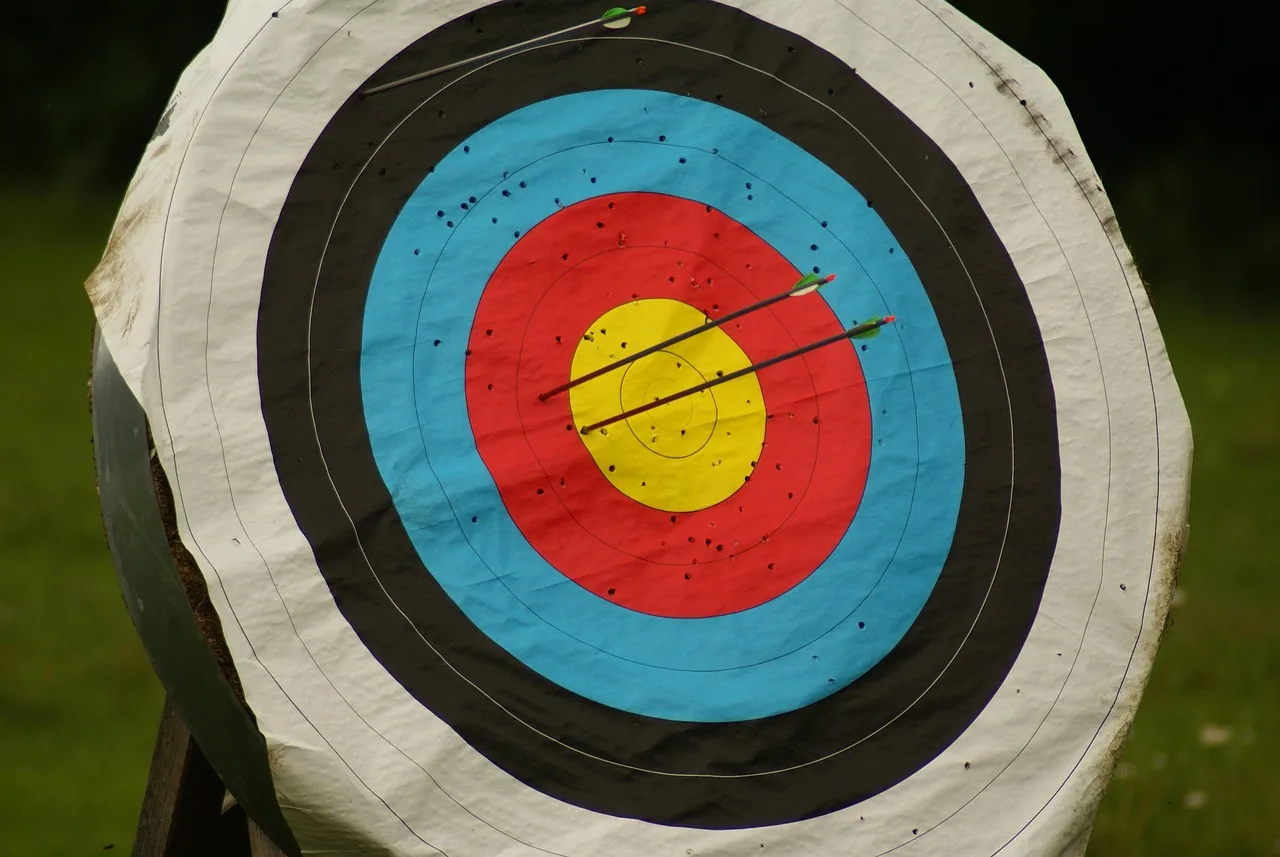
- Targets are soft enough to stop the shaft without shock damage.
- Storage has kept shafts dry and consistent.
Picture a beginner with a 50-pound Native-style bow, cedar shafts, and a heavy point added after the shafts were cut. The first sign of trouble is a right kick and a bent launch. A hardwood footing may help the front end survive, but the real fix is a better spine match.
Frequently asked questions
What wood works best for wooden bows and primitive arrows?
There is no single best wood for every setup. Hickory, elm, white oak, and sweetgum are all white woods that can work well for bows, but each reacts differently to moisture and compression. For arrows, straightness and matched spine matter more than species alone.
Should primitive arrows be matched to bow wood or draw weight?
Match arrows to draw weight and spine first, then adjust for bow wood and cast. Bow wood changes how the bow recovers and how sensitive it is to humidity, but the shaft still has to bend correctly under load. A good spine match is the core decision.
Does humidity change arrow spine or bow performance?
Yes. Humidity changes moisture content in wood, which can soften shafts and increase string follow in white woods. F1 through F4 point to a clear effect: moisture weakens performance, about 10% moisture can bring notable string follow, and drying to 6% moisture can help.
Are bamboo shafts better than cedar for primitive arrows?
Not always. Bamboo arrows are durable and traditional, but they are a separate material choice with their own flex and weight behavior. Cedar is familiar and easy to source, yet bamboo may handle repeated use better in some setups. The better choice depends on bow, spine, and climate.
What point and footing materials are best for wooden arrows?
For wooden arrows, a hardwood footing is a strong option when front-end impact is a concern. It adds durability at the point end and helps resist splitting. Point weight should stay balanced with the shaft spine; otherwise, the arrow may tune weak even if the footing is strong.
How do I choose arrows for a Native American style bow?
Start with the bow’s draw weight, then choose straight shafts with a spine that fits the actual cast. For Native-style bows, wood, bamboo, and Tonkin cane can all work if they are matched carefully. Use a soft target and avoid rocky ground, since primitive shafts break more easily there.
What happens if my arrows are too stiff or too weak for my bow?
Too stiff usually means left impact for a right-handed archer, poor clearance, and a harsh feel. Too weak usually means right impact, visible excessive bend, and greater break risk. If either symptom appears, change spine, point weight, or shaft length before blaming the bow.
Can fire-hardening improve wooden bow performance?
Yes, but only in a limited way. Fire-hardening is described as making white woods hydrophobic and can help with moisture resistance and shape retention, especially in humid climates. It cannot fix poor tiller, bad arrow spine, or an overly hard target. Proper matching still comes first.