How to Warm Up Your Shoulders and Back Before Archery Practice
Do a 5-minute warm-up of shoulder circles, band pull-aparts, thoracic rotations, scapular squeezes, and hip hinges before shooting. Skipping it often leaves the upper back tight, shortens draw length control, and makes the first arrows feel heavy and inconsistent. This guide gives a simple, step-by-step sequence tied to archery mechanics so you know exactly what to do before the first arrow.
This guide is part of our Archery basics: beginner guide to bows and shooting series.
What you’ll need


- A light resistance band or exercise tube
- A bow-safe area with enough space to move your arms
- A wall, post, or open floor space for stance checks
- A timer or watch
- Optional: a foam roller or rolled towel for upper-back mobility
Shoulder and back checklist
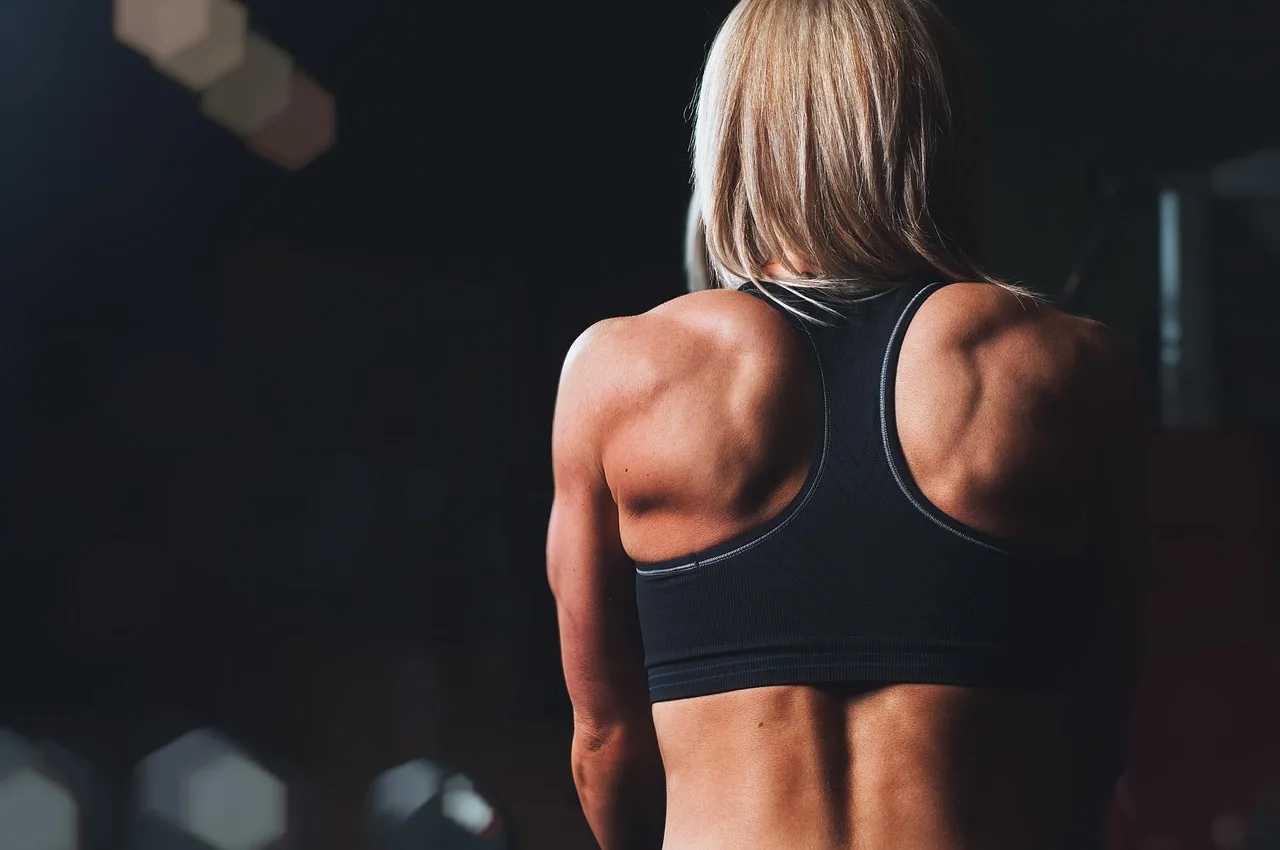
This checklist gives a fast pre-practice sequence you can repeat in the same order every time. For compound bow shooting, start with feet shoulder-width apart and hips square to the target, then warm the shoulders before the first draw. That setup helps reduce off-target shots and keeps the anchor point easier to repeat.
| Move | Target area | Hold / reps | Common mistake | Problem it prevents |
|---|---|---|---|---|
| Neck turns and chin tucks | Neck muscles | 5 slow turns each side, 5 chin tucks | Forcing the head far back | Tension that pulls the sight picture off line |
| Arm circles | Shoulders and rotator cuff | 10 forward, 10 backward | Using speed instead of control | Stiff draw start and rough shoulder motion |
| Band pull-aparts | Upper back and scapular muscles | 12 controlled reps | Rib flare and shrugging | Poor scapular retraction at full draw |
| Scapular squeezes | Upper back posture support | 5-second hold, 6 reps | Arching the lower back | Collapsed posture at anchor point |
| Wrist circles and open-close drills | Forearms and grip muscles | 10 circles each way, 10 open-close reps | Clenching the fingers hard | Over-gripping and wrist stiffness |
| Hip hinge and stance check | Hips, balance, alignment | 5 slow hinges and 2 stance resets | Turning the torso toward the target | Twisting, poor repeatable aim, and rushed anchor |
Five-minute warm-up sequence
This version works well before a normal practice session. It covers the neck, shoulders, upper back, forearms, and stance in a short run-through, which is enough to reduce the “first arrows feel heavy” problem for many beginners. Keep each movement smooth and under control. Move at a steady pace.
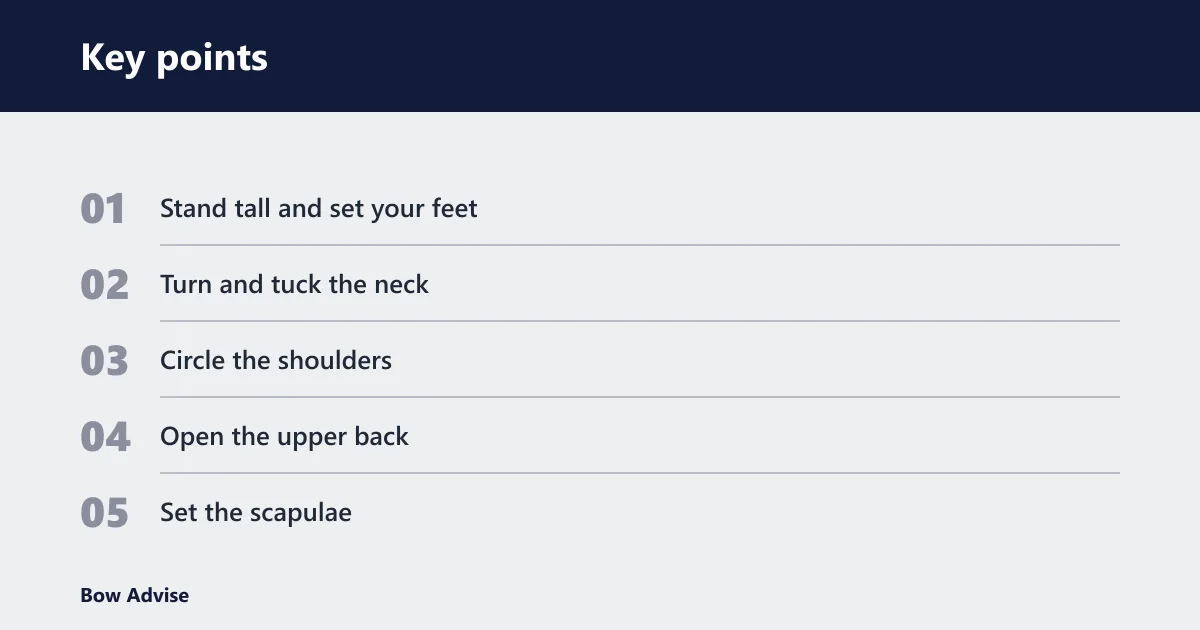
- Stand tall and set your feet. Put your feet shoulder-width apart, then square your hips toward the target. This gives a stable base before any draw work.
- Turn and tuck the neck. Rotate left and right five times, then do five slow chin tucks. This eases neck tension and keeps the head from creeping forward at anchor.
- Circle the shoulders. Make 10 forward circles and 10 backward circles. Keep the motion small and precise so the shoulder joint stays smooth instead of loose and sloppy.
- Open the upper back. Do 12 band pull-aparts with straight but soft elbows. Squeeze the shoulder blades together without shrugging.
- Set the scapulae. Hold a relaxed draw line posture for 5 seconds and repeat it 6 times. Think elbows and bow shoulder in a T position.
- Wake up the forearms. Do 10 wrist circles each way and 10 open-close hand reps. Finish with 3 slow breaths, then take your first shot.
A common first-timer mistake is skipping the upper back because the shoulders feel like the main problem. Say your bow arm feels steady but your drawing side lifts at full draw. That often points to poor thoracic mobility, not just a weak shoulder. Keep the band pull-aparts and scapular squeezes in the sequence, even on short days.
10-minute version for stiff mornings
Use this longer version when the shoulders feel sticky, the upper back feels locked, or the first movement of the day is your practice session. It adds more rotator cuff activation and thoracic rotation before any draw work. The extra time helps the body settle into shooting posture without forcing the bow arm.
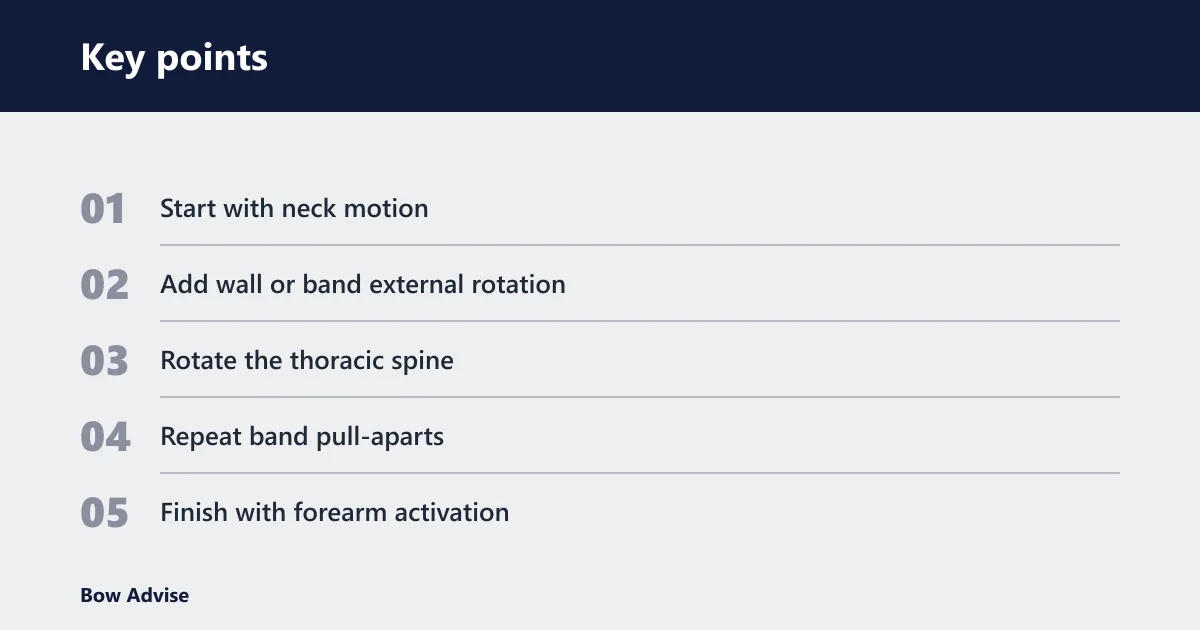
- Start with neck motion. Do 8 slow head turns and 8 chin tucks, pausing for one breath at center each time.
- Add wall or band external rotation. Keep the elbow close to the side and rotate the forearm outward for 8 reps each side. This wakes up the rotator cuff before drawing.
- Rotate the thoracic spine. Do 6 open-book rotations per side or 6 standing trunk rotations each side. Keep the hips square so the movement comes from the upper back.
- Repeat band pull-aparts. Do 15 reps, then hold the last rep for 5 seconds. This supports scapular retraction at full draw.
- Finish with forearm activation. Do 10 wrist circles each way, 10 hand opens, and 10 gentle fist squeezes. Then rest the fingers completely before your first arrow.
- Rehearse the anchor point. Raise the bow or a trainer, settle into anchor, and breathe out once before letting the shot process continue.
Suppose a beginner starts practice with a tight neck and a stiff upper back, then notices the sight picture drifting left and right before the release. That is a common sign that the body is fighting the draw instead of supporting it. A longer warm-up usually helps more than adding extra sight correction at that point.
How do I know whether tightness is normal?
Normal tightness feels like stiffness that improves after movement, not sharp pain. If the shoulders, upper back, or forearms loosen within the warm-up and the draw starts to feel smoother, that is usually a sign to continue. Pain that changes your motion, makes you avoid the draw, or gets worse with each shot is a stop signal.
Watch for warning signs: a sharp pinch in the front of the shoulder, numbness, pain that radiates down the arm, or a neck spasm that changes head position. If the bow shoulder cannot stay down and back without strain, stop shooting and rest. Tightness that only shows up on cold mornings is common; pain that stays through the sequence is different.
If that didn’t work, try this next
First, cut the warm-up load in half and repeat the easier drills. Then remove any movement that triggers pain, such as large arm circles or deep rotations. If the same pain returns at full draw, stop practice and avoid increasing weight, volume, or hold time that day.
Should you stretch before or after shooting?
Before shooting, use dynamic movement and activation. After shooting, longer static stretching can fit better if the shoulders and upper back still feel tight. Before practice, the goal is to prepare the joints and muscles for drawing, not to relax them so much that stability drops.
That means the warm-up should move the neck, shoulders, upper back, and forearms through controlled reps. Save longer holds for the end of practice or later in the day. If a static stretch makes the shoulder feel less steady right before shooting, it belongs after the session instead.
If that didn’t work: use a shorter pre-shot sequence
Use a shorter pre-shot sequence: about 5 neck turns, 10 band pull-aparts, and 5 scapular squeezes before the first end. After practice, hold each stretch for 20 to 30 seconds and keep breathing slow. That split keeps the warm-up useful without making the bow arm feel loose.
Can breathing help you aim better?
Yes. A calm breathing pattern steadies the aiming process, reduces upper-body tension, and helps the release happen without a rush. A simple exhale before anchor, then a brief pause at the end of the breath, gives many beginners a cleaner shot sequence than holding the breath early.
Keep the breath low and smooth. Do not lift the shoulders while inhaling. As you settle into the anchor point, let the breath slow the body rather than freeze it. That works well with a relaxed stance and square hips because the torso stays quieter while the sight settles.
If that didn’t work: count one slow inhale through
Count one slow inhale through the nose and one longer exhale through the mouth before each shot. If the sight still jumps, shorten the hold at full draw and return to the breath on the next arrow. The goal is a repeatable rhythm, not a long hold.
Common mistakes
- Skipping the upper back. Tight thoracic muscles can limit scapular retraction and make full draw feel crowded.
- Over-gripping the bow. Tight forearms feed wrist stiffness and can twist the bow hand at release.
- Rushing through arm circles. Fast swings do not prepare the rotator cuff well for drawing.
- Letting the hips open. Turning the hips away from square adds torso twist and makes the anchor point less repeatable.
- Starting with a bent stance. A poor base makes balance worse and can move the sight picture before the shot breaks.
- Ignoring shoulder pain. Pain that changes your form is not the same as ordinary tightness.
What muscles should archers warm up most? Start with the shoulders, upper back, neck, and forearms. The shoulders need mobility before drawing, the upper back supports posture and scapular retraction, the neck helps keep alignment, and the forearms help with grip endurance and wrist relaxation. Those four areas do most of the work before the first shot.
Frequently asked questions
How do I warm up my shoulders before archery practice?
Use 10 forward arm circles, 10 backward arm circles, then 8 to 12 band pull-aparts. Keep the elbows soft and the movement controlled. Finish with a few slow scapular squeezes so the shoulder blades can support the draw instead of shrugging upward.
What stretches should I do for my back before shooting a bow?
Use thoracic rotations, band pull-aparts, and scapular squeezes before practice. These moves open the upper back and help the shoulder blades move well at full draw. Save long static back stretches for after shooting, when the goal is recovery rather than readiness.
How long should an archery warm-up take?
A normal warm-up can take about 5 minutes. On stiff mornings, give yourself 10 minutes so the neck, shoulders, upper back, and forearms are ready before the first shot. If the bow feels heavy or the sight picture stays shaky, use the longer version.
What stance helps reduce tension while aiming a compound bow?
Stand with feet shoulder-width apart and keep your hips square toward the target. That setup gives a stable base and reduces twisting through the torso. A relaxed stance also helps the bow shoulder stay down instead of creeping up during the hold.
How do I avoid shoulder pain when drawing a bow?
Warm up the shoulders before aiming, keep the upper back active, and avoid starting practice cold. If pain shows up as a sharp pinch, numbness, or changing form, stop shooting. If the discomfort eases with movement and does not worsen, reduce volume and recheck the warm-up order.
Is it normal to feel tight in the upper back before shooting?
Yes, mild stiffness is common, especially before the first few shots. The upper back often loosens with thoracic rotation and scapular work. If the tightness turns into sharp pain, blocks the draw, or changes your posture, stop and reassess before continuing.
Can breathing help me aim better with a compound bow?
Yes. Slow breathing reduces upper-body tension and helps the sight settle. Take a controlled inhale, then let the exhale slow the body as you reach anchor. A steady breath also makes the release feel less rushed and helps concentration on the shot process.