5 Best Bow Accessories for Beginners (2026): Research Shows
A beginner typically needs about 4 essentials on day one: a properly fitted arm guard, finger protection or a release aid matched to the bow type, a simple target, and a basic bow stringer for recurve bows. Skipping the wrong gear wastes money and can cause poor form, string slap, or inconsistent release. This guide ranks must-buy accessories, good-to-have upgrades, and what to skip until your shooting proves it belongs.


Top beginner accessory picks
The top pick for recurve beginners is a finger tab or shooting glove, because it protects the drawing fingers and helps keep the release cleaner. The top pick for compound beginners is a release aid, because compound bows are normally shot with a mechanical release rather than bare fingers. For safety and practice, a target and backstop come before almost everything else.
Top pick for recurve beginners
For a recurve or longbow setup, finger protection belongs on the first-buy list. A tab is usually the better choice for most beginners because it creates a consistent string feel, while a glove is a reasonable alternative if the shooter prefers a simpler fit.
Top pick for compound beginners
For compound archers, a release aid is the first accessory that changes how the bow is shot. A wrist-strap release is the most common beginner choice, while a thumb release is usually a later comfort and control upgrade.
Top pick for safety and practice
A safe target and a reliable backstop are not optional if practice happens at home. If arrows can miss the target, the stop behind it needs to catch them cleanly, and the practice area still has to fit local rules, property limits, and safe shooting distance.
Quick picks
Beginners need far less gear than most ads claim. Match the first kit to the bow type, then cover safety, string handling, and a clean release before spending on extras.
- Recurve starter list: finger tab or shooting glove, arm guard, bow stringer, target, and 6-12 arrows.
- Compound starter list: release aid, arm guard, basic bow sight, arrow rest, target, and 6-12 arrows.
- Universal must-haves: properly fitted bow, safe target, backstop, and enough arrows to practice without stopping every few shots.
How we chose
The ranking here follows first-day necessity, bow-type fit, safety, and budget. That means the list starts with gear that keeps the bow usable and the shooter protected, then moves to accessories that help once the first few sessions make the next problem obvious.
Budget matters because beginner kits get expensive fast when advanced gear lands in the cart too early. A sight, a release, a rest, a target, and finger protection can cover a lot of ground; stabilizers, custom strings, and specialty parts can wait.
Beginner accessory matrix
| Accessory | Who needs it | Buy now or later | What problem it solves | Rough first-kit spend |
|---|---|---|---|---|
| Target and backstop | Every beginner | Buy now | Stops arrows safely and makes home practice possible | $50-200+ |
| Arm guard | Every beginner, recurve and compound | Buy now | Prevents string slap on the bow arm | $10-20 |
| Finger tab | Recurve and longbow shooters | Buy now | Protects draw fingers and supports a cleaner release | $15-40 |
| Shooting glove | Recurve and longbow shooters | Buy now or later | Gives finger protection if a tab feels awkward | $10-30 |
| Bow stringer | Recurve and longbow shooters | Buy now | Lets the bow be strung safely without stressing the limbs | $5-20 |
| Release aid | Compound shooters | Buy now | Replaces fingers on the string and keeps release pressure more consistent | $30-150+ |
| Arrow rest | Compound shooters; some recurve setups use simple rests | Buy now for compound | Supports and guides the arrow during the shot | $10-60+ |
| Bow sight | Most compound shooters | Buy now or early | Helps line up the shot; pin sights are the common beginner type | $20-120+ |
| Peep sight | Compound shooters using a sight | Buy now or early | Helps align the aiming system | $5-30+ |
| Quiver | Any bow type | Later | Keeps arrows organized during practice and movement | $15-60+ |
| Stabilizer | Mostly compound; sometimes recurve | Later | Helps balance the bow, but beginners do not need it right away | $20-100+ |
| Arrow puller | Any beginner shooting a firm target | Later | Makes arrow removal easier and helps prevent shaft bending | $5-15 |
This matrix keeps the first kit simple. A recurve beginner can start with finger protection, an arm guard, a stringer, and a target; a compound beginner needs a release, a rest, a sight, and a target before extras enter the cart.
What bow accessories do I actually need as a beginner?
Most beginners need only the accessories that make the bow safe to shoot and easy to control. That means arm protection, the correct hand protection for the bow type, a safe place to catch arrows, and a stringing tool for recurve bows. Everything else should earn its place later.
A common first-timer mistake is buying a quiver, stabilizer, and extra sights before the shooter has a safe target. That order wastes money and does nothing to fix the first real problems: string slap, inconsistent release, and arrows leaving the bow without a proper stop in front of them.
For a recurve bow
Recurve and longbow shooters should start with a finger tab or shooting glove, an arm guard, and a bow stringer. A simple arrow rest may already be part of the riser, but the key point is that the draw fingers need protection from day one.
Quality finger tabs for beginners can cost about $15-40, and that range is enough for a usable first purchase. A glove is the alternative when the shooter prefers finger coverage over a tab’s flatter string contact.
For a compound bow
Compound beginners usually need a release aid first, plus the basic parts that let the bow send an arrow in a straight line. A usable compound setup normally includes an arrow rest from the start, and a bow sight is a key aiming accessory rather than a luxury add-on.
Compound beginners often use a release aid instead of fingers, and that release can be wrist-based or thumb-based. The wrist style is easier for many new shooters to manage, while a thumb release generally makes more sense after the archer understands anchor, hold, and trigger pressure.
For home practice
Home practice needs a safe target and a backstop that can actually stop an errant arrow. If the target is mounted too close to a wall, fence, vehicle, or neighbor’s property, the setup is wrong even if the target itself is good.
Suppose a beginner is shooting a 20-yard practice lane in a backyard with a 36-inch target face. If the backstop is only a thin sheet or a bare fence, a missed shot can pass through, so the setup needs a proper stopping system and enough clear space behind the target.
Which accessories are essential for a recurve bow beginner?
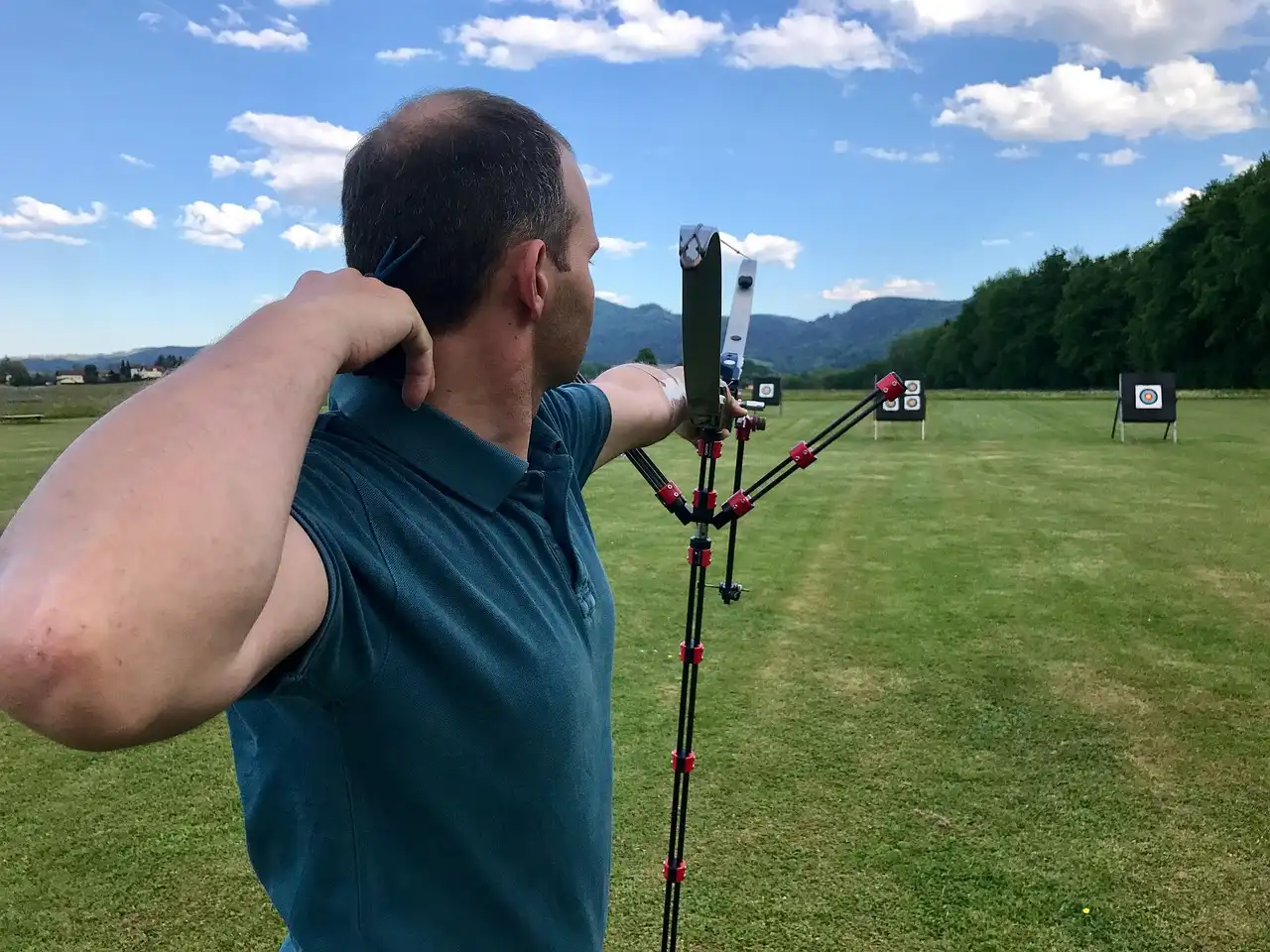

A recurve beginner’s essential list is short: finger protection, an arm guard, a bow stringer, and a safe target. Those items solve the main early problems, which are finger pain, string slap, limb stress during stringing, and unsafe practice conditions.
The bow stringer matters because recurve and longbow limbs can be damaged by poor stringing methods. A beginner kit commonly includes a bow stringer, and that is one reason traditional bows should not be treated like compound bows with built-in cocking or release hardware.
Finger tab or shooting glove
Choose a finger tab if the goal is a cleaner, more repeatable release. Choose a glove if comfort and simple wear matter more than tab feel. Either way, the protection belongs in the first kit rather than on a later upgrade list.
Arm guard
An arm guard is a simple beginner accessory, but it solves a real problem. It prevents the string from slapping the bow arm, and beginner guidance commonly treats it as a $10-20 investment.
Bow stringer
A recurve bow stringer is not optional in the same way a quiver is optional. It is the safer way to string a recurve or longbow, and it helps avoid stressing the limbs during setup and takedown.
Which accessories are essential for a compound bow beginner?
A compound beginner should start with a release aid, a proper arrow rest, a sight, an arm guard, and a safe target. The rest and sight are part of a usable setup from the start; they are not “later” items if the bow is going to be shot correctly.
The release aid replaces fingers on the string, and that matters because compound bows are commonly shot with a mechanical release. The two common beginner styles are wrist-strap and thumb-release models, and the wrist-strap version is usually the easier place to begin.
Release aid
The release aid is the central beginner accessory on a compound bow. Without it, the shooter is using the wrong interface for the bow type, which can make anchor point, tension, and release timing harder to learn.
Arrow rest

A compound beginner normally needs an arrow rest from the beginning, not after weeks of shooting. The rest supports arrow flight and keeps the shaft positioned consistently as the bow fires.
Drop-away rests are popular among bow hunters, but they are not the default beginner answer for every new shooter. Many first-time compound buyers do better with whatever rest the bow ships with, as long as it is installed correctly and matches the setup.
Bow sight and peep sight
A bow sight is a key compound accessory, and pin sights are the most common type for new shooters. The peep sight works with the front sight to help align the aiming system, but neither item replaces the release or the rest.
Do not treat a sight as a fix for poor form. If anchor point, draw length, or release tension is wrong, a better sight only makes the mistake easier to repeat.
Do you need a sight or stabilizer yet?
A beginner usually needs a sight earlier than a stabilizer, especially on a compound bow. A stabilizer can help balance the bow, but Archery Supplier says beginners do not need stabilizers right away, so it belongs in the later-upgrade column for most shooters.
Bow sight priority
For compound beginners, the sight is a real setup piece, not a cosmetic extra. A pin sight gives a simple aiming reference, which is why it is the common first choice.
For recurve beginners, a sight is not the first accessory for most people unless the bow and discipline are set up for that style. The first task is usually clean form with finger protection and safe release.
Peep sight priority
The peep sight only makes sense when a compound setup already uses a sight. It helps the aiming system line up, but it does not solve basic shooting errors and should not be bought before the bow is ready for it.
Stabilizer priority
Do not buy a stabilizer just because ads make it look standard. Beginners do not need stabilizers right away, and many shooters learn better when the bow stays simple until they can feel the balance issue that a stabilizer would solve.
Do you need a stabilizer as a beginner? Usually no. It is a later tuning and balance tool, useful once the shooter can explain what problem it is supposed to fix.
Which accessories should wait?
Quivers, arrow pullers, advanced sights, and custom setup gear can wait until the bow reveals a real need. The goal is not to buy the most hardware; it is to make the first sessions safe, repeatable, and affordable.
Quiver
A quiver is helpful, but it is not an absolute essential. A bow-mounted or hip quiver makes arrows easier to keep track of, yet a beginner can practice without one until handling and movement become a problem.
Arrow puller
An arrow puller is a cheap convenience accessory. It helps remove arrows from a dense target and reduces the chance of bending shafts, but the first priority is still a target that is easy enough to pull from by hand if needed.
Advanced sights and weights
Specialized sights, extra weights, and tuning parts should wait until the shooter knows what the bow is doing. A beginner who cannot yet explain target bounce, anchor inconsistency, or release collapse does not need advanced hardware.
Custom setup gear
Custom strings, specialty arrow systems, and fine-tuned balance parts belong later. First, the archer needs a bow that fits, a safe stop for arrows, and the right hand interface for the bow type.
How many arrows should a beginner buy?
Beginner archers may start with 6-12 arrows. That range is enough to practice, recover from the occasional broken shaft, and keep shooting without spending more than the first setup needs.
Buying too few arrows slows practice because every miss becomes a pause. Buying too many before the bow weight and arrow length are settled can waste money if the arrows need to be replaced after the setup changes.
Picture a new compound archer with 6 arrows and a safe target in the garage. That is workable for short practice sessions, but once the shooter starts sending arrows through a cleaner group, moving to 12 arrows can make practice flow better without changing the bow setup.
What accessories should I buy first with my beginner bow kit?
Start with the items that make the bow safe and usable on day one. For a recurve or longbow, that means a finger tab or glove, an arm guard, a bow stringer, and a target. For a compound bow, that means a release aid, an arm guard, an arrow rest, a sight, and a target.
- Confirm the bow type: recurve, longbow, or compound.
- Buy the hand protection that matches that bow type.
- Add the safety item that prevents string slap: an arm guard.
- Make sure the bow can be strung safely, especially for recurve and longbow setups.
- Set up a target and backstop before any home shooting.
- Only then add convenience gear like a quiver or arrow puller.
Say a beginner buys a compound bow with a sight but skips the release aid. The setup may look complete, but it is still missing the tool that makes the bow shoot the way it was designed to be shot.
Frequently asked questions
Do I need a stabilizer as a beginner?
Usually no. Stabilizers help balance the bow, but beginner guidance says they are not needed right away. It is better to learn a clean anchor, a steady hold, and a repeatable release before adding extra weight to the bow.
Do I need a sight, peep sight, or release aid to start archery?
Compound beginners generally need all three pieces in the system over time, but the release aid comes first because it is the shooting interface. The sight and peep help aiming, yet they do not replace the release or the correct rest.
What accessories are optional until later in archery?
Quivers, arrow pullers, stabilizers, advanced sights, and custom setup parts are usually later buys. They help once the beginner can point to a specific problem, such as awkward arrow handling, a front-heavy bow, or difficult target removal.