Native American Archery Release Aids: History vs Myths
Native American “release aids” were primarily hand-based release methods and string aids, with thumb or finger release supported by rings, cords, or hooks, instead of modern metal trigger releases. My decision rule is simple: if a trigger mechanism is involved, I treat it as a later invention. When people mislabel these tools, they copy the wrong equipment and their shot falls apart, a smooth group turns into a flinch-and-fail pattern, and they blame the bow. I separate documented historical release techniques from romanticized claims, then I map what modern traditional archers can borrow safely.
This guide is part of our Native American bows and arrows guide series.

What do people mean by “release aids” in archery?
People mean two different things when they say “release aid.” One is technique, meaning how you draw and let the string go, plus what your hand does for the final fractions of a second. The other is a modern device, meaning a metal trigger or mechanical sear that holds and releases the string. When people slap that device label onto historical Native archery, it usually creates an anachronism.
Technique-based release habits vs modern mechanical release aids
On traditional bows, release “aids” are often about timing and repeatability at full draw. Thumb draw and finger release are technique, and “hand relaxation” is also technique because it comes down to what your hand is doing exactly as the shot separates.
Modern mechanical releases work by controlling the trigger and sear, which changes what you ask from your fingers. That’s why “release aid” becomes a dangerous phrase for history, it steers people toward compound-bow assumptions.
According to Bow and Arrow Spread into North America | History — EBSCO says the bow and arrow spread throughout North America by about 700 C.E. (source)
Did Native Americans use thumb rings or modern release devices?
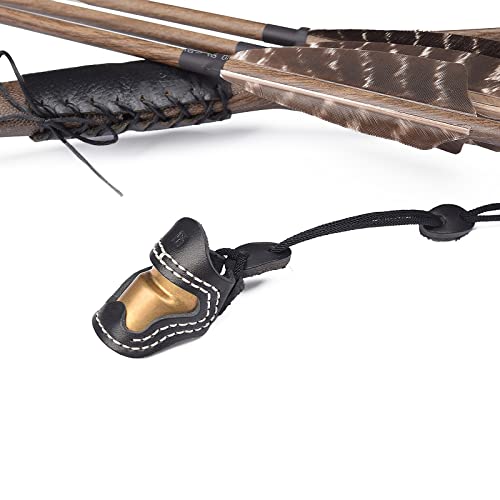
Thumb rings are often claimed as a universal Native feature, but the evidence doesn’t support that blanket idea. Documented accounts and ethnographic observations commonly describe thumb or finger release mechanics, including thumb-based drawing. They also mention that a particular archer did not use a thumb ring. “Modern release devices” with triggers are a different category entirely.
Thumb rings are a gear claim, thumb draw is a technique claim
A thumb ring is an object you wear on the thumb, and it claims a consistent gear solution across many archers. Thumb draw is what you do with your hand at full draw and on release. Those can overlap sometimes in Eurasia, but in Native North America the surviving record is more often about draw and release behavior than about a widely standardized thumb ring.
What surviving evidence tends to show
Where the record is specific, it usually frames release in terms of how the string is drawn and then let go, and how the bow hand behaves during separation. That includes relaxation and controlled movement at separation. It rarely supports a claim that “every archer used X device.”
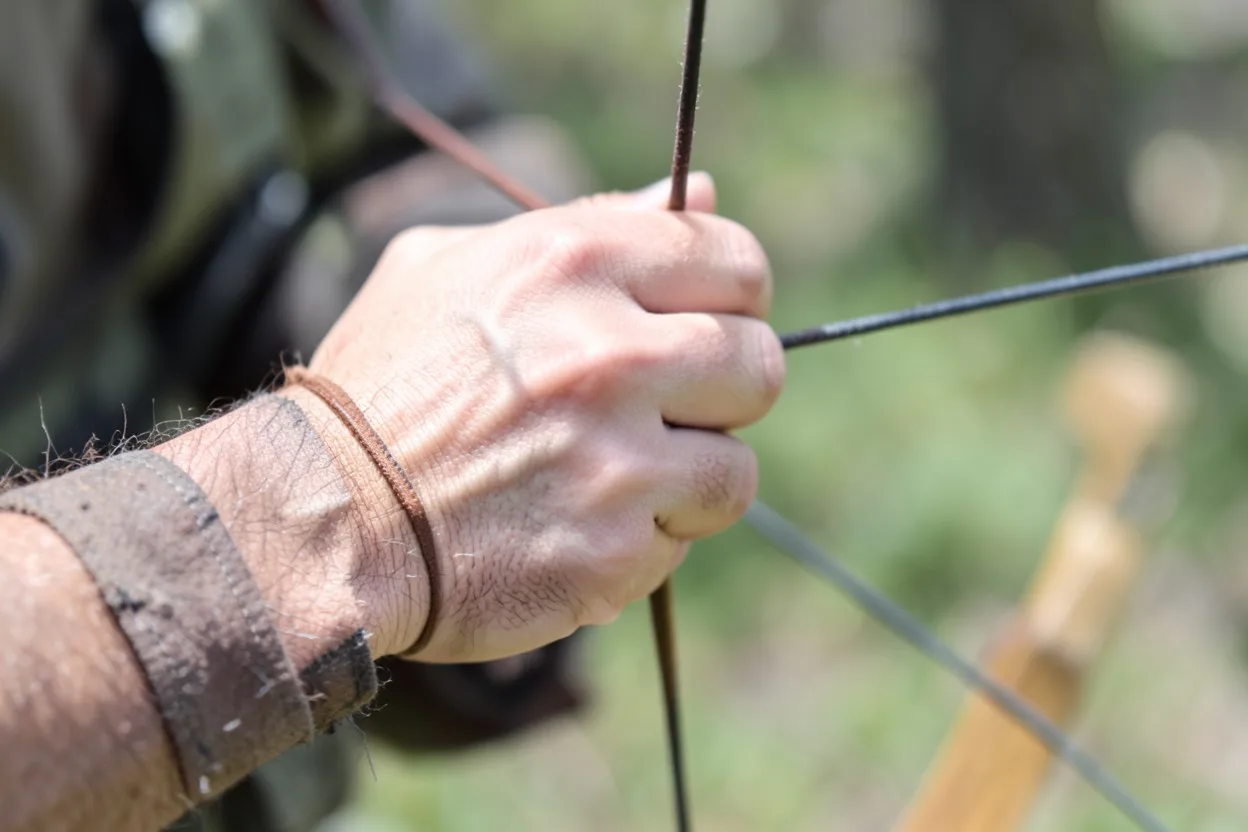
What was the historical release technique in Native American archery?
Documented Native release technique is usually described as thumb draw and/or finger release, paired with bow hand relaxation at the moment of release. Some descriptions also include the bow hand letting the bow rotate slightly as the string departs. Regional variation matters, so I talk about practices and mechanics based on sources instead of claiming one “Native” universal method.
Thumb draw mechanics and what “release” means in that context
In thumb-draw systems, the thumb typically comes to the string for hooking and drawing rather than using a finger loop approach. The “aid” is your controlled relationship to the string through that thumb action, plus consistent follow-through.
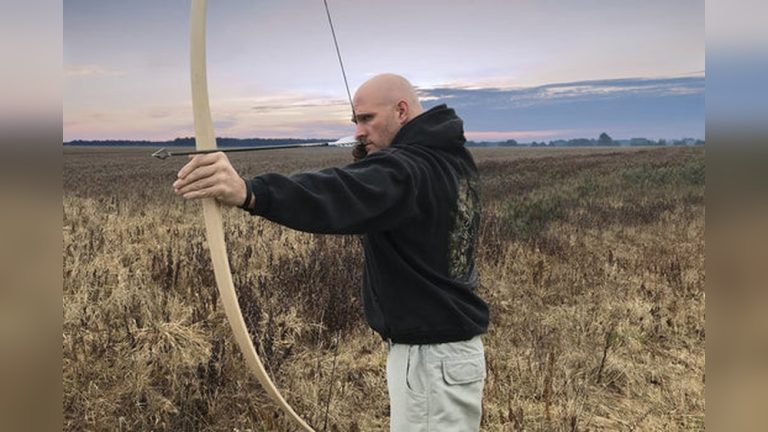
World Archery’s notes on Ishi describe a thumb-based release variant where Ishi used the thumb to draw the string. They report that he did not use a thumb ring. They also describe him relaxing his bow hand on release, then allowing the bow to rotate in the hand.[1]
Finger release patterns and bow hand relaxation
Finger release is a technique where fingers help draw and release the string. Across bow types and regions, the timing difference usually shows up in how much you hold versus how much you let go through the shot cycle. Bow hand relaxation keeps coming up because it reduces tension-induced steering at separation.
Regional variation and why “one method” is an assumption
North America wasn’t one hunting culture with one bow shop. Different regions used different bow construction methods, different string materials, and different shot styles, and those choices can affect what the bow does at the instant of release. Assuming one standardized Native release method across tribes ignores that variability.
Evidence table: documented Native release methods vs modern myth claims
I build my understanding from documented descriptions of draw and release behavior, then I compare those to common myth claims about “release aids.” The table below separates what sources actually show from what they do not prove, including the big claim that every traditional Native archer used one standardized release device.
| Region / tribe (or case) | Evidence type, what the source actually shows, and what it does not prove |
|---|---|
| North America (general) | Evidence type: multi-source compilation from ethnographic and historical descriptions. Shows: Native archery is consistently described using hand-based release mechanics (thumb draw and/or finger release) and attention to what the bow hand does at release. Does not prove: that one identical “Native American release aid” device existed for all tribes and all regions. |
| Ishi (Yahi archer case) | Evidence type: archival/ethnographic description as reported in World Archery notes. Shows: a thumb-based release variant; Ishi used the thumb to draw the string; World Archery says he did not use a thumb ring; he relaxed his bow hand on release; the bow rotated in the hand. Does not prove: that this was the standard practice for all Native archers across North America. |
| “Thumb rings as universal Native gear” claim | Evidence type: common modern myth claim without consistent primary documentation across tribes. Shows: that thumb rings appear in some Eurasian archery traditions (separate context). Does not prove: that Native Americans uniformly used thumb rings as standard equipment or that a thumb ring explains Native release mechanics in general. |
| Mounted archery on the Plains (context) | Evidence type: historical description of Plains equipment and mounted hunting/war practices (contextual survival). Shows: speed and maneuverability pressures that affect how archers time and control the shot cycle. Does not prove: a universal mounted-release device used by all mounted groups; it supports timing and handling priorities, not a single gear answer. |
| Bowstring materials across regions | Evidence type: historical material descriptions and ethnographic/recorded accounts. Shows: sinew or plant fiber used as bowstring materials, plus feathers for fletching; these material choices change the feel during draw and at separation. Does not prove: that a material alone replaces the need for technique-based release control. |
| Thumb draw vs “modern mechanical release” | Evidence type: category comparison between hand-release technique and trigger-mechanism tools. Shows: thumb draw and hand relaxation act within your control; the “release” happens from your hand’s timed separation. Does not prove: that historical Native archery used trigger releases, or that any handheld “device” is required for accuracy. |
How does Mongolian release compare to Native thumb draw claims?
Mongolian-style release discussions often center on thumb draw without using a thumb ring, which can sound similar to how World Archery describes Ishi’s approach. That comparison can help you understand plausible mechanics, but it does not prove a direct shared tradition. “Same motion” is not “same lineage.”
What “thumb draw” and “no thumb ring” mean in the comparison
In Asian archery comparisons, thumb draw means the thumb hooks and draws the string. The “no thumb ring” detail is a gear absence claim, while “thumb draw” is the technique claim. World Archery notes Ishi did not use a thumb ring, and they describe thumb-based drawing and release behavior.
Evidence limits: similarity of technique vs proof of shared tradition
Even when two regions share a hand motion, the similarity can reflect convergent solutions. Bows, string materials, and hunting contexts can push archers toward similar release behaviors without implying identical teaching lines or direct contact for each technique element.
World Archery does link North American bow tradition to Asia via the Bering Strait in broader terms, but you still have to keep technique similarity separate from proof of exact transmission. Shared heritage talk is not the same thing as “this exact release method traveled intact and standardized.”
Ishi’s release: what we know about the Yahi archer and what it suggests
For Ishi (Yahi), the documented release approach is thumb-based with thumb drawing, no thumb ring, bow hand relaxation on release, and bow rotation in the hand. That tells us what at least one Native archer did. It does not automatically mean every Native archer elsewhere used the same thumb mechanics or the same release follow-through style.[3]
What his documented release looked like
World Archery’s notes say Ishi used the thumb to draw the string and had a thumb-based release variant. They also state he did not use a thumb ring. On the moment of departure, they describe bow hand relaxation, then bow rotation in the hand.
Whether this reflects a broader Native standard
When you see a detailed description of one person’s shooting, you learn technique vocabulary, timing cues, and what to watch. What you should not do is treat one well-described archer as a census of all tribes and all bow traditions.
Thumb ring myth: where it shows up, why it sticks, and what’s missing
The thumb ring myth sticks because thumb rings exist in Eurasian archery traditions, so people assume the Native story must match. The missing piece is consistent Native evidence across regions that thumb rings were standard gear. A single absence-or-presence detail from one documented case cannot fill gaps across whole continents.
Contrast Eurasian thumb ring use with Native American evidence gaps
Eurasian traditions include thumb ring concepts, and that gives modern writers an easy explanation for any thumb-draw description. Native archery evidence often lands on draw and release behavior rather than on universal thumb ring gear. World Archery’s Ishi notes explicitly report no thumb ring.
Common reasoning errors
One error is “it exists elsewhere, so it must be everywhere.” Another error is skipping evidence type. “I saw a picture” or “a modern re-enactor does it” is not the same as museum notes describing a historic example, an ethnographic account describing technique, or a documented observation of a specific archer.
I’ve seen beginners copy a thumb ring setup after reading a myth, then struggle to keep clean release timing. When they switch to technique-first training, groups tighten, because the hand action and relaxation matter more than the idea of wearing the “right” object.
How do bow design and string materials change the feel of release?
Traditional bow construction and bowstring material can change the release “feel” so much that people start inventing gear explanations for what is really a timing-and-tension sensation. World Archery and other record summaries describe bowstring materials like sinew or plant fiber, and those materials behave differently under load and at separation than modern synthetic strings.
Traditional Native American bows and why release feels different
Native archery often used self-bows and sinew-backed designs, with regional differences in how the bow may have been shaped and braced. Different recurve and decurve designs change how the bow stores and returns energy, and you feel that energy during follow-through. When a bow rotates in the hand, as World Archery describes for Ishi, relaxation and steering timing become even more important.
Bowstring materials: sinew, plant fiber, rawhide, and release feel
EBSCO identifies sinew or plant fiber as bowstring materials and says feathers were used for fletching. Those material choices affect string thickness, stretch character, and how “alive” the string feels at draw and on release. Some strings feel fast and crisp; others feel smoother. That’s why the same shooter can describe two bows as requiring different “release aids” even when the underlying technique stays the same.
On the range, changing how the hand relaxes at separation on a training recurve can make the release feel steadier immediately. It reminded me that “aid” often means “I compensated for the wrong part of the sequence.”
Mounted archery: release timing on horseback in the Plains context
Mounted archery on the Plains appears to have favored shot cycles that prioritize speed, balance, and short-bow practicality. That changes release work because the archer must keep consistent timing while moving. The bow hand already manages motion, and the bow must come off the string without added tension control.
Why speed and maneuverability change how shooters manage the shot cycle
When I’ve watched mounted work, the shot is rarely a calm, measured pause. Release timing becomes part of the balance plan. A small hitch in bow hand control turns into a steering effect at separation, and that turns into misses you cannot afford.
What survives in accounts about technique emphasis
While the record varies by source and region, the context points to maneuverability needs and short-bow practicality after horses arrived in the 1500s. EBSCO says Plains bows were shortened after horses arrived in the 1500s. The Buffalo Bill Center says Plains bows were often short, about 42 to 48 inches, and often reflexed in a gull-wing profile.
Those bow behaviors influence how the shot window feels, so release timing and bow hand relaxation remain the real tools, not universal mechanical “aids.”
Reader questions about Native bows vs European gear and “handles on bows”
Many modern bows come with handles because modern tooling and shooting styles often separate bow grip from the rest of the structure. Native bows are often shown and described in forms where the grip, bracing, and bow profile produce a different hand relationship. The comparison is less about Europeans adding “technology” and more about different traditions built around different shot needs.
Why do many modern bows have handles when Native American… — Amateur bowyer/archer question: why yall put handles on when Indians didn’t?
Modern handle shapes help many shooters create a consistent grip angle, especially with Western bow designs and modern stabilizer habits. Native bows may look different because their grip and brace relationship were built into the form from the start. Evidence descriptions focus on bow behavior and hand mechanics, not on a single universal handle standard.
Did europeans and native Americans invent bow… — Or did the vikings bring the technology to the native americans?
The historical record supports that bows and arrows spread widely across North America and developed in local forms, with regional adaptations in bow materials, construction, and hunting contexts. EBSCO says the bow and arrow spread throughout North America by about 700 C.E. That timeline makes “Vikings bringing the technology” an unsupported leap for most people’s claims, since the technology is already present long before later contacts.
Are release aids part of Native American archery traditions today?
Some traditional archers today still use hand-based release approaches that match older descriptions: thumb or finger release plus intentional relaxation. What changes is the label and sometimes added gear for comfort. When someone says “release aid” today, I ask what the aid does: does it control the trigger, or does it support the hand action you already learned?
What “survival” usually means for release practice
Survival tends to mean technique survival more than keeping a fixed piece of modern-looking equipment. Bow design choices and string materials can differ today, but hand mechanics like relaxation at separation remain teachable and consistent.
What is the difference between a thumb release and a modern compound release aid?
A thumb release is a technique where the thumb draws and/or releases the string, with timing and bow hand behavior carrying the control. A modern compound release aid is a mechanical device that holds and releases the string with a trigger mechanism. If you’re switching between them, your form adjustments should focus on hand relaxation and follow-through, not on copying a trigger step.
Why beginners get hurt by the wrong comparison
When people assume a mechanical release is “the same concept” as a thumb ring or a finger release, they often tense up the bow hand to compensate for lost control. I’ve done my own testing rounds where that tension showed up as a flinch pattern within groups. It took intentional training to fix it.
Which Native groups used thumb draw or Mongolian-style release methods?
It’s easy to overclaim here. The safest answer is that thumb draw and thumb-based release mechanics are documented in specific cases and described in comparisons. The evidence does not support a single list that covers every tribe with one identical method. Use the evidence table approach: documented case descriptions show what those shooters did, not that all groups used the same technique.
Keep the claim tied to evidence type
For example, World Archery’s Ishi description supports thumb drawing and thumb-based release behavior in that documented case. It also states no thumb ring. Mongolian comparisons can help interpret mechanics, but they do not automatically map to each Native group’s lived tradition.
How did Ishi release his bowstring?
World Archery describes Ishi using a thumb-based release variant. They say he used the thumb to draw the string, did not use a thumb ring, relaxed his bow hand on release, and then allowed the bow to rotate in the hand. In plain terms, his release is a hand-timing event, not a trigger-device event.
Bow hand rotation as a clue to technique priorities
That bow rotation detail matters because it implies the hand was not locked rigidly at separation. Relaxation and letting the bow move where it wants are part of the release mechanics, which can be a key learning cue for modern traditional archers.
Is the idea of a universal Native American release aid a myth?
Yes, the universal “one release aid for all Native Americans” idea is a myth. The surviving record points toward region-by-region practices and technique differences rather than a continent-wide standard device. When you force one explanation onto all tribes, you flatten bow construction differences, string material differences, and different hunting contexts that shape release timing.
Where the myth comes from
It’s usually a mix of three things: blurred evidence types, Eurasian gear analogies without Native standardization evidence, and the tendency to treat one well-described case as if it represents the whole continent.
What modern archery habits get incorrectly projected onto Native bows?
People project compound habits onto traditional bows in two main ways. First, they assume that because modern archers use trigger releases, historical archers must have had similar triggers. Second, they assume every thumb-based shooter must have worn a thumb ring. Both projections break when you focus on what the sources actually describe: draw mechanics, bow hand relaxation, and release follow-through.
Projection turns into bad training
I’ve also seen beginners chase “authentic gear” instead of fixing release timing and relaxation, and the result is persistent misses and inconsistent grouping.
Frequently asked questions
Did Native Americans use release aids like thumb rings or tabs?
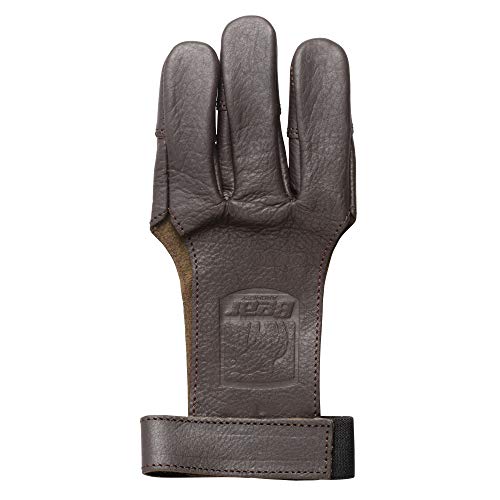
Thumb rings are sometimes claimed, but the evidence does not support a universal Native thumb ring requirement. Thumb draw and finger release are repeatedly described as techniques, and specific documented cases can note the absence of thumb rings. Tabs show up in modern archery habits as protective tools, but evidence-based discussion should focus on draw and release mechanics rather than assuming a single universal accessory.