How to Choose the Right Nock Size for Smooth Arrow Release
Choose the nock that snaps onto the serving with a light click and holds the arrow when the bowstring is gently shaken, but releases cleanly without pinching; on many setups that means matching the nock throat to the serving diameter and trying a smaller or larger size if the fit is too loose or too tight. A bad fit causes erratic release, nock pinch, and poor arrow flight. This guide shows how to judge nock fit by symptoms, serving size, and bow type.
This guide is part of our Archery basics: beginner guide to bows and shooting series.
An arrow nock is the rear string interface. It must fit the serving, not fight it.
How to choose the right nock size


The right size is a release-quality decision, not only a compatibility check. A nock that feels fine in hand can still drag on release, index poorly, or grip too hard on a recurved string. A compound setup may expose that problem faster because the release aid removes finger variation from the shot.
What you’ll need
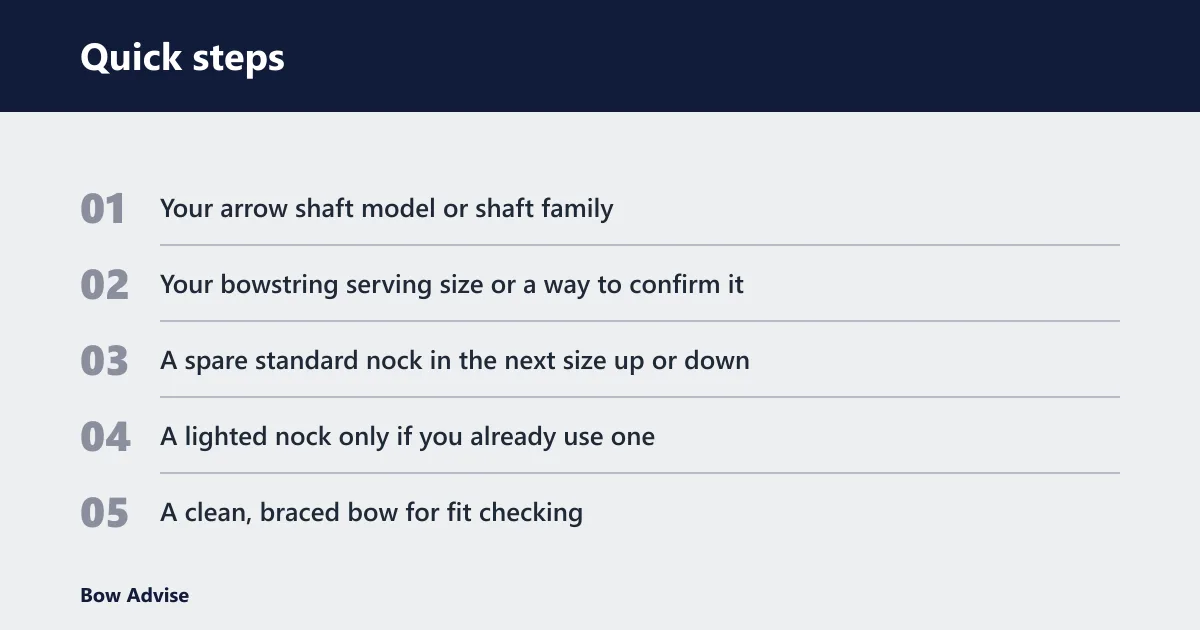
- Your arrow shaft model or shaft family
- Your bowstring serving size or a way to confirm it
- A spare standard nock in the next size up or down
- A lighted nock only if you already use one
- A clean, braced bow for fit checking
- A damaged nock remover or a small heat source only if the nock is glued in
- The maker’s compatibility chart for the shaft and nock system
What nock size do I need?
Start with the shaft family, then match the groove to the serving. A 4 mm carbon shaft often uses a different nock system than a 5 mm shaft, and larger carbon shafts may use different fittings. The nock should fit the shaft system and the string serving at the same time.
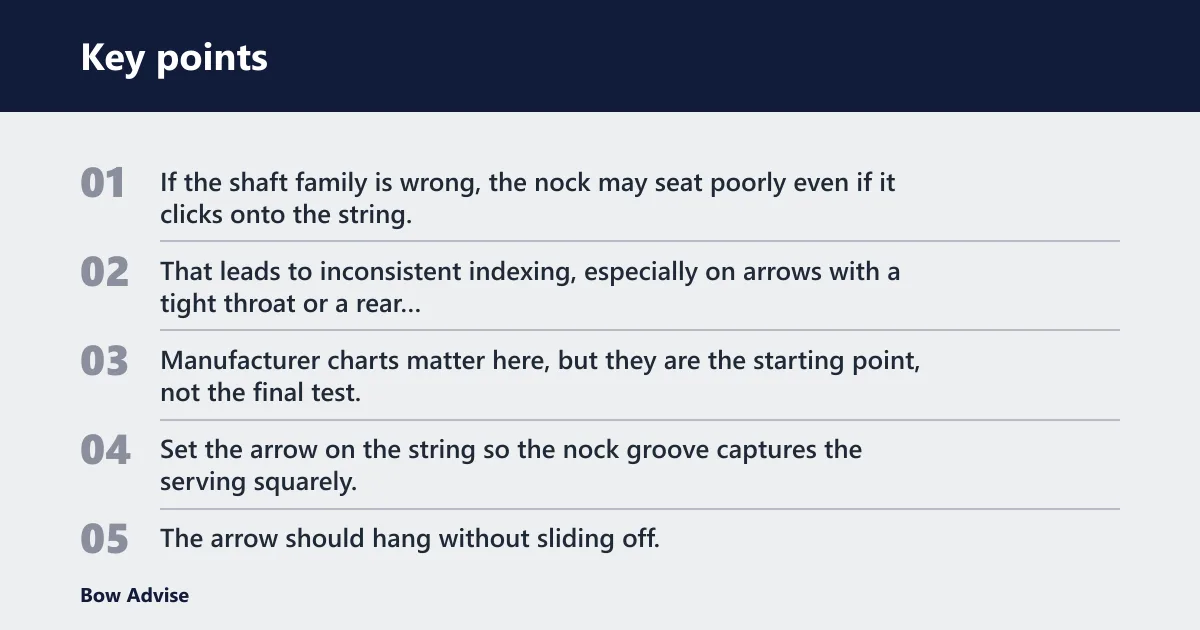
If the shaft family is wrong, the nock may seat poorly even if it clicks onto the string. That leads to inconsistent indexing, especially on arrows with a tight throat or a rear insert system that leaves little room for error. Manufacturer charts matter here, but they are the starting point, not the final test.
How to nock an arrow
Set the arrow on the string so the nock groove captures the serving squarely, then press until you hear or feel a light snap. The arrow should hang without sliding off, but it should not need force to rotate on and off. On a recurve, finger shooters should also check nocking point height and brace height, because both change the feel of pinch.
What is an arrow nock groove size?
The groove size is the throat that grips the serving. It must be close enough to hold the arrow in place, but open enough that the string can release without binding. If the groove is too tight, the nock can pinch the serving and delay launch. If it is too loose, the arrow may rotate or slip before the shot.
How do you test nock fit?
Use a braced bow and test fit by feel, not by guesswork. A proper nock is commonly reported to make a light, even click onto the serving, stay in place when the bow is gently moved, and release without drag when the arrow is removed and re-seated. Repeat the check after any serving change.
This is where nock fit becomes a release test. On a compound, a crisp release aid can reveal drag or sticking that a finger shooter might miss. On a recurve, finger release is more sensitive to pinch, brace height, and nocking point consistency.
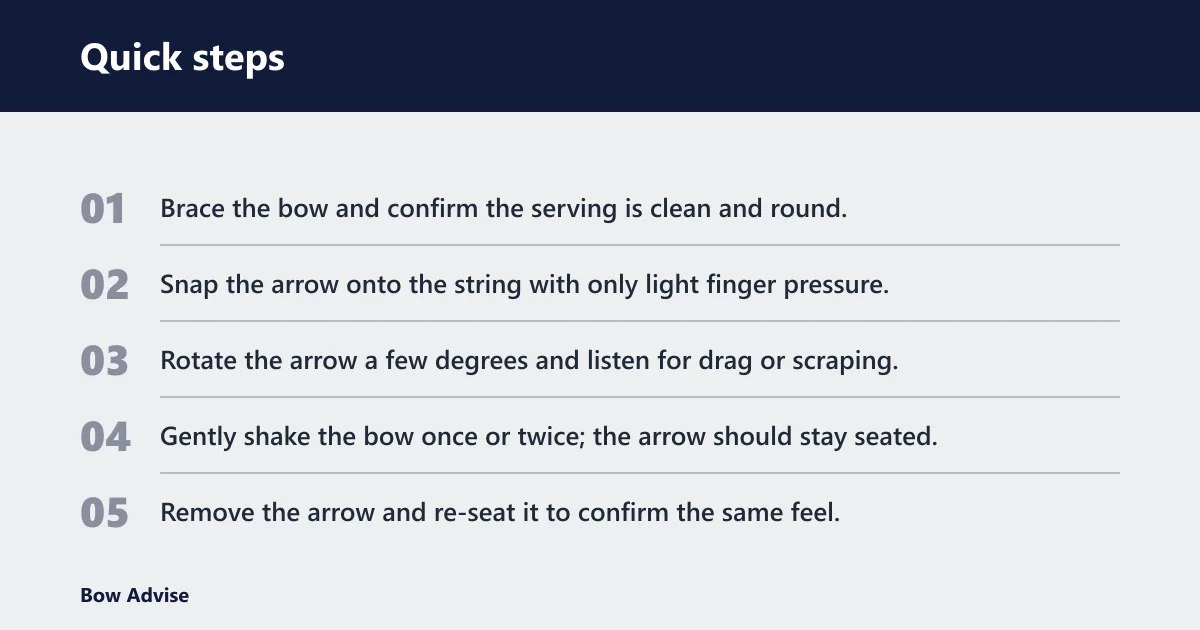
- Brace the bow and confirm the serving is clean and round.
- Snap the arrow onto the string with only light finger pressure.
- Rotate the arrow a few degrees and listen for drag or scraping.
- Gently shake the bow once or twice; the arrow should stay seated.
- Remove the arrow and re-seat it to confirm the same feel.
- If fit changed after serving wear or replacement, retest before changing nock size.
How do you measure a nock for Easton arrows?
For Easton arrows, match the shaft model first, then confirm the nock system listed for that shaft. Easton shaft families are commonly grouped by diameter and nock system, so the label on the shaft or the model chart is more reliable than a visual guess. Use the shaft chart and compare the serving fit afterward.
Choose a nock size in 4 steps
Work from the shaft, then the serving, then the shot feel. If the fit is wrong at any step, fix the cause that is actually changing the release before moving to another nock size. That avoids masking a worn serving or a tuning issue with a different groove.
- Identify the shaft family: 4 mm, 5 mm, or larger carbon shafts need the correct nock system.
- Confirm the serving diameter by chart or by comparing to the maker’s stated range.
- Check snap-on feel and retention on a braced bow; aim for a light click, not a hard shove.
- Replace worn parts first: serving, cracked nocks, or damaged inserts before changing size again.
Say your arrow has a 4 mm shaft and a nock that clicks hard onto a fuzzy serving. The arrow may look compatible, yet the release feels sticky because the serving has swollen from wear. Replacing the serving often fixes that before any nock change does.
Suppose a compound shooter swaps to a different vane setup and the rear weight changes, but the nock fit stays the same. The arrow can still group worse because the balance moved, not because the nock throat suddenly became wrong. That is why nock choice and tune need to be checked separately.
Do lighted nocks fit the same?
Not always. A lighted nock must match the shaft diameter and the insert system, and the battery unit can add rear weight. That extra weight can change balance and make a marginal fit feel different at release, especially on lighter hunting arrows.
Check the lighted model against the same shaft family you would use for a standard nock. The groove still has to fit the serving correctly, but the physical body may be larger and the fit standard may differ. If the lighted version changes the rear profile, retest snap-on feel on the braced bow.
How to replace arrow nocks
Remove a push-in nock by pulling it straight out with a nock tool or by gripping it carefully with fingers or pliers wrapped in tape. Then press the replacement in until it seats fully. For glued nocks, soften the adhesive only as the shaft maker allows, then install the new nock squarely.
How to remove arrow nocks
Most push-in nocks come out with straight pull pressure. Do not twist hard, because that can split the shaft rim or deform the groove. If a nock is cracked, remove it before shooting again; a split throat may catch the serving and change release timing.
Common mistakes
Most nock problems are not solved by guessing a different size. The usual error is changing the nock to cover up a worn serving, a poor tune, or an incompatible shaft family. Another common mistake is treating recurve pinch and compound release behavior as the same problem.
- Using a tight nock to fix a worn serving: retest after replacing the serving, not before.
- Assuming sticky release means bad spine: check nock fit and serving first, then tune.
- Mixing recurve and compound symptoms: finger shooters feel pinch sooner than release-aid shooters.
- Leaving cracked nocks in service: replace any split throat or deformed groove immediately.
- Skipping the braced-bow test: a fit that looks correct off the bow can still bind under string tension.
Nock fit decision table
Use the symptom first. Then check the likely cause, run the quick test, and apply the fix before changing arrow spine or tune. A nock can be technically compatible and still release poorly if the serving or groove fit is off.
| Symptom | Likely cause | Quick test | Fix |
|---|---|---|---|
| Hard snap onto the string | Tight nock | Seat the arrow on a braced bow; if it takes firm pressure and drags on rotation, the groove is too small | Try the next larger groove size |
| Arrow slips or rotates loosely | Loose nock | Gently shake the braced bow; if the arrow moves or drops off, retention is weak | Try the next smaller groove size |
| Fits changed after some shooting | Worn serving | Compare the serving where the nock sits to a fresh section higher or lower on the string | Replace the serving, then retest the same nock |
| Good fit on one shaft, poor on another | Incorrect shaft family | Check the shaft label against the maker chart for 4 mm, 5 mm, or larger carbon compatibility | Use the nock system made for that shaft family |
| Extra rear weight and odd release feel | Lighted nock fit or balance change | Swap in a standard nock on the same shaft and compare retention and launch feel | Confirm lighted model compatibility and adjust only if the shaft accepts it |
Can the wrong nock size affect accuracy?
Yes. A nock that binds, slips, or indexes inconsistently changes how the arrow leaves the string, and that can show up as left-right spread, poor grouping, or inconsistent launch timing. The nock does not replace proper arrow spine and bow tune, but it can make both problems look worse.
A tight nock may hide a serving problem for a few shots, then start sticking again as the string changes. A loose nock may look harmless at rest and still produce a sloppy launch. Check fit first, then tune, then spine.
Frequently asked questions
What nock size do I need for my arrows?
Use the shaft maker’s chart first, then confirm the serving fit on a braced bow. The right nock matches the shaft family and makes a light click onto the string without pinch. If the fit is borderline, compare one size smaller and one size larger against the same serving.
How do I know if my nock fit is too tight or too loose?
Too tight nocks typically require force to seat and may drag when the arrow rotates on the string. Too loose nocks can feel sloppy, shift easily, or fail to hold during a gentle shake. The best check is a braced-bow fit test, not just a look at the packaging.
Why does my arrow stick on release?
Sticky release usually points to a tight nock, a worn or swollen serving, or a mismatch between nock groove and shaft family. Start by testing the same arrow on a clean section of serving. If the drag remains, try the next larger groove size before changing spine or tune.
Do lighted nocks fit the same as standard nocks?
Often they fit the same shaft family, but not always the same way in the hand. The battery unit can add rear weight, and some lighted versions use a different body shape or insert system. Confirm the exact shaft compatibility and retest snap-on feel before shooting.