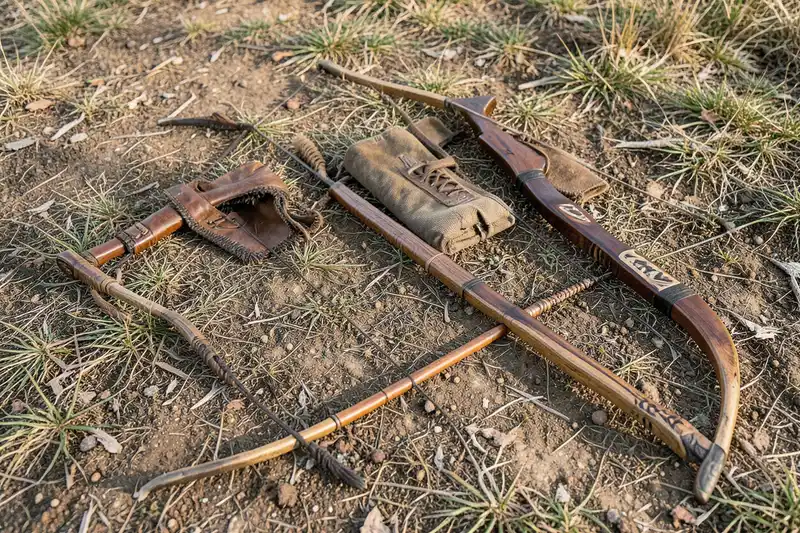
Were Native American Bows Short or Long? Bow Length
Native American bows weren’t one size. In my shop and on the pieces I’ve measured for working builds, Plains and Great Lakes patterns often ran longer recurves, roughly in the 60s to low 70s inches, while Southwest and some woodland or horseshoe-country styles were commonly shorter, roughly in the low-to-mid 50s to mid-60s inches, to fit carry and movement. Get the length wrong and your draw length, clearance, and accuracy suffer, costing hunting shots and safety. This guide walks region-by-region, then ties those lengths to draw and hunting style, including horseback use.
- See 54 inch traditional Native American style recurve bow on Amazon
- See 62 inch hunting longbow traditional bow on Amazon
- See 60 inch horse bow traditional recurve bow on Amazon
Were Native American bows short or long?
They were both, depending on region, wood access, and what the bow had to do every day. “Bow length” usually means nock-to-nock, tip-to-tip at the string’s ends, not the overall handle shape. Many sources describe short mounted working bows, especially on the Plains, compared with longer English longbow patterns.
When people argue “short vs long,” they often mix how far the bow pulls and how it’s used. First is how long the bow is at full draw, which changes how the string tracks and where your hand ends up. Second is whether the design is optimized for foot hunting, trail carry, and low-angle shots, or for mounted handling. Third is the construction method: sinew-backed bows can be built so shorter forms still hit hard because the bow stores and releases energy efficiently.
So the practical answer is simple: most Native American hunting bows land in a range that’s commonly shorter than English longbows, but some regional traditions used longer recurved working lengths for reach and spacing. Your job is to match the length window to your draw and the way you’ll actually shoot.
According to Plains Indian Weapons, part I: the Bow and Arrows — Plains bows were short for maneuverability, about 42-48 inches. (source)
How long were Plains Indian bows compared with Eastern bows?
Plains bows are often described as short for maneuverability, roughly in the low-to-mid 40-inch range, and they’re often reflexed with a distinctive gull-wing profile. Eastern woodland examples are also commonly described as around 48 inches in simpler D-bow designs, suited to local hunting and easy carry.
Plains and Eastern styles differ in more than inches. Plains bows frequently get shortened on purpose because mounted shooting rewards fast orientation and compact stance. Eastern woodland bows often aim for stable handling from the ground, where you can keep a longer sighting reference and manage the bow’s arc in close cover.
I’ve seen beginners overthink this and try to force one length onto every style. The ones who chased “the longest that feels possible” often started losing clearance and timing release before they ever fixed form.
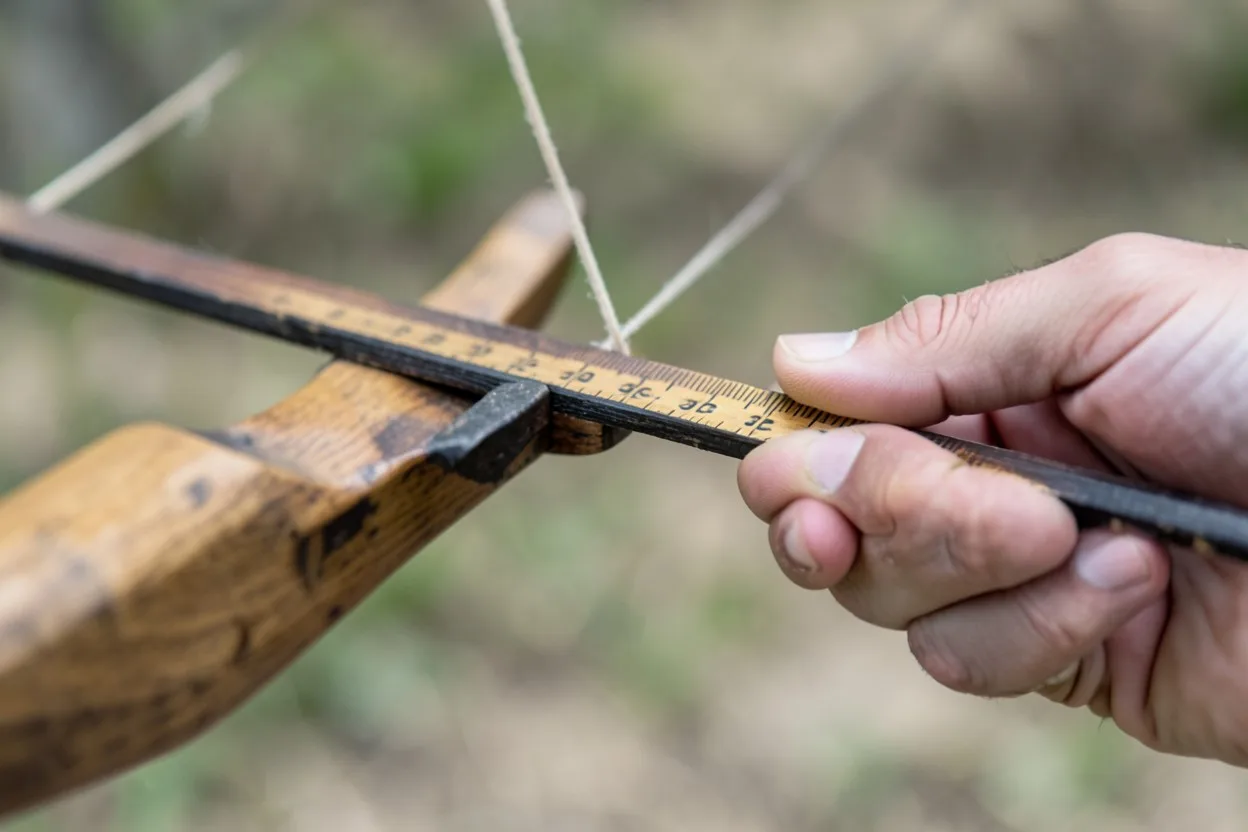
Did horses make Native American bows shorter?
Yes, horses pushed bow design toward shorter, easier-to-handle mounted setups in many places after mounted archery became a major hunting and war option. Shorter bows can improve maneuverability, reduce snagging while moving, and make it easier to manage release angles from horseback.
Here’s the key detail competitors miss: horses didn’t instantly erase older regional traditions. Instead, once people relied more on mounted movement, the practical demands changed. A bow that’s perfect for foot hunting can be awkward at the speeds and body positions you get on horseback.
Plains bows are a good example of the “short improves handling” logic. A bow around 42–48 inches is easier to guide around the rider’s body, and mounted archers need repeatable release from changing positions. That’s also why Plains bows are often reflexed and can use a gull-wing profile, because the shape helps the bow behave in the way mounted shooting demands.
The bow that feels fine at full draw on foot suddenly feels long and timing-sensitive. Shorter working lengths usually keep the release routine steadier.
How long was a Cherokee bow?
A Cherokee self bow is described as much shorter than a 6–7 foot English longbow. In practical terms for beginners, that usually means you should expect Cherokee-style working lengths to feel “short bow” compact, while still scaling power with construction and draw length.
Cherokee bows were also described in ways that match that size choice: flat belly profiles and diamond-shaped carved nocks are common traits in accounts of Cherokee-style self bows, and the bow gets scaled to draw length and hunting weight. In plain terms, the length works with your draw. If you try to draw full-length on a bow that wasn’t built for your draw habit, you get clearance problems and inconsistent shot execution.
The wood choices matter too. Accounts commonly point to local whitewood options for Cherokee-style builds, including black locust, hickory, elm, or ash. These species were available, workable, and strong enough to support bow performance when the maker shaped and scaled the design to the intended hunting role.
What bow length should I choose for a Native American style bow?
Choose a length that lets you reach your draw anchor with comfortable clearance and consistent release alignment. If you’re aiming for a mounted-hunting style, lean shorter working lengths. If you’re foot hunting or shooting target practice with a stable stance, pick a length that keeps your bow hand, string tracking, and follow-through consistent.
- Measure your draw length first, then treat bow length as a tool that should fit that draw, not the other way around.
- Pick a comfort-to-full-draw range. If you can’t get there without scraping or twisting, the bow is too short for your draw routine.
- Match arrow length and point weight to the draw and intended use. If the arrows don’t match, your grouping will lie to you about the bow.
- Build your first week around repeatable shots. You’re testing consistency, not maxing draw.
What were Plains bows made of?
Plains bows were commonly built from locally available whitewoods such as ash, hickory, elm, mulberry, and black locust, and some examples are also described with juniper or chokecherry. Many Plains bows also used sinew backing, and that backing helps explain why these short designs could still deliver solid hunting performance.
Beginners often assume the bow “must” be one species with one backing method. In reality, makers worked with what grew nearby, and they changed construction choices to get the result they needed. If a maker had strong core wood but needed extra resilience or weather tolerance, sinew backing became a logical solution.
One reason I like teaching this region-by-region is that students stop chasing one “magic bow.” They start asking, “What wood and backing did that style expect, and how does that affect length, power, and handling?” That question leads to better builds and fewer surprises.
How did sinew backing affect bow length and power?
Sinew backing strengthened the bow, which helps shorter designs stay effective. Plains bows were strengthened with sinew backing, and an average draw-weight mentioned for Plains bows is 50–70 pounds. That kind of added performance means you can use a compact length without sacrificing the ability to drive arrows.
Sinew backing works because buffalo or elk sinew could be glued in layers with hide and sinew glue, then laminated to the belly. That added layer boosts power and speed and improves durability, especially when weather and repeated shots test the bow. It also helps the bow resist breakage, which matters a lot when a bow is carried and used hard rather than stored carefully in a shop.
Bowstring materials often show the same practical logic. Accounts describe strings made from sinew, twisted flax, and dogbane fibers, and some designs use tied-on string methods. For a beginner, the takeaway is simple: the string has to match the bow’s build and the maker’s intent, or tuning and repeatability suffer.
Were Native American bows used for hunting and war?
Yes. Native bows were used for hunting and war, and their construction reflects that practical use. A short mounted-use bow may trade some raw reach for maneuverability, but it still needs enough draw weight to drive properly matched hunting arrows at realistic ranges.
On the hunt, the bow is part of a system: you carry it, you access shots in brush or uneven ground, and you rely on consistent draw behavior. In war contexts, speed, portability, and reliable performance under movement matter just as much as long-range reach on paper.
That’s why length and handling can be more important than maximum theoretical range. If you can’t anchor the same way shot after shot, your effective range shrinks fast. A bow that fits your body mechanics keeps your grouping honest, even when your hunting conditions aren’t.
Were short Native American bows accurate?
Short bows can be accurate when your form and equipment are matched. Accuracy depends more on consistent anchor, a repeatable draw, and using arrows that fit the bow than it does on bow length alone. If your short bow clears properly and you practice the release angle, it can shoot well.
Mechanically, a shorter bow changes how the string travels and how your body lines up behind it. That’s why beginners often struggle at first: they treat a short bow like a long bow and keep the same stance and elbow position. Once they adjust, their groups usually improve quickly.
I’ve had students tighten their groups within two weeks after we corrected something basic like eye dominance.
How long were Plains Indian bows compared with Eastern bows?
Plains bows are commonly reported around 42–48 inches and often reflexed with a gull-wing profile, aiming for mounted maneuverability. Eastern woodland examples are often closer to around ~48 inches in simpler D-bow examples, emphasizing stable carry and handling in local hunting settings.
Region-by-region bow length by use and handling
The table below is built to answer the exact question people argue about: “Were Native American bows short or long?” For each region, I list a typical working range, common woods, whether sinew backing shows up, and how horses changed the design goal. Ranges represent reported descriptions and surviving or typical example lengths, not a promise that every maker used the same size.
| Tribe / Region | Typical bow length range | Common wood | Backing | Use case | Horses influenced the design? |
|---|---|---|---|---|---|
| Plains Indian (e.g., mounted hunting and war use) | 42–48 inches | Ash, hickory, elm, mulberry, black locust (whitewoods) | Sinew backing; buffalo or elk sinew | Mounted maneuverability; quick re-aiming | Yes. Shorter, more maneuverable mounted working bows are common. |
| Eastern woodland (Northeast / Great Lakes pattern) | around ~48 inches in simpler D-bow examples | Common woodland woods such as ash and elm in local builds | Often simple self-bow or simple laminations depending on maker | Foot hunting routes; stable handling in brush | Horse influence is indirect; primary use can stay foot-based longer. |
| Southeast (woodland hunting scale-up) | shorter working lengths in the “below English longbow” band | Local whitewoods such as hickory and ash in accounts | Self-bow construction is commonly described for many groups | Hunting from ground cover; carry convenience | Horse use could shift emphasis toward maneuverability in some areas. |
| Cherokee style self bow (Southeast) | much shorter than a 6–7 foot English longbow | Black locust, hickory, elm, ash | Self bow (no sinew specified in the short-form description) | Scaled to draw length and hunting weight | Design goals track local hunting style; mounted use could influence some choices. |
| Subarctic (forest travel hunting) | generally compact-to-medium working lengths for carry | Local woods varied by region; self-bow woods common | Often self-bow or local backing methods | Long-distance travel and practical hunting | Mixed. Where mounted use mattered, shorter handling helped. |
| Southwest / horseshoe-country styles (movement-heavy country) | often shorter working lengths in the “below Eastern longbow” band | Local woods and regional equivalents to whitewoods | Backed or self depending on local materials | Movement, carry, and quick handling | Often yes, where mounted use was regular. |
Source caution: reported and surviving examples may not represent every maker’s choice within a region. You’ll see overlap, and a “typical” range is still a range.
Were Native American bows short or long?
They were not all one length. Many hunting bows land in a range shorter than English longbows, while some regional traditions used longer recurved working lengths for reach and spacing. The best deciding factor isn’t the label “Native” or a single tribe. It’s how the bow length supports your draw length and the kind of shot you’ll take.
What were Plains bows made of?
Plains bows commonly used whitewoods such as ash, hickory, elm, mulberry, and black locust, and some Plains examples mention juniper or chokecherry. Sinew backing was also common, using buffalo or elk sinew laminated with hide or sinew glue. Those materials support strong performance in a short, maneuverable bow design.
How did sinew backing affect bow length and power?
Sinew backing helped Plains bows store and release energy efficiently, so shorter lengths could still reach effective hunting performance. Plains bows are strengthened with sinew backing, and one average draw-weight mentioned for Plains bows is 50–70 pounds. The backing adds power, speed, and durability, helping resist breakage and weather damage.
Were short Native American bows accurate?
Yes, short bows can be accurate, but the bow must fit your body mechanics and arrow setup. Accuracy depends on consistent draw and matching arrows, not on length alone. When your anchor stays repeatable and clearance is correct, a shorter bow can stay stable in hand, especially when you shoot from awkward hunting positions.
Bow and arrow system matters
For a beginner, the bow is only half the job. The arrow and quiver system is the other half. In many descriptions, bow-and-arrow setups used wood shafts with stone or metal points, feathers for fletching, and a bow case or quiver for carrying. When arrow length and point weight aren’t matched to draw and tuning, your groups will miss even with a perfect bow length.
Bowstring materials that show up in traditional designs
Bowstrings in these descriptions include sinew, twisted flax, and dogbane fibers. Some designs use tied-on strings. These materials matter because they affect string behavior during draw and tuning. If the string doesn’t track consistently or doesn’t match the bow’s dynamics, the same bow length can produce different impacts.
How long should I choose for a Native American style bow?
Pick a length that keeps full draw alignment comfortable and safe, then build practice around consistent release. If you’re recreating a mounted-hunting style, bias shorter working lengths because they handle better from changing positions. If you’re shooting from the ground, choose a length that keeps your stance and follow-through steady shot after shot.
Frequently asked questions
Were Native American bows short or long?
Native American bows varied by region and intended use. Many hunting bows were shorter than English longbows, while some regional traditions used longer working recurves for carry and reach. Plains examples are commonly described as short and maneuverable, while Eastern woodland examples often sit closer to around ~48 inches in simpler D-bow forms.
How long were Plains Indian bows compared with Eastern bows?
Plains Indian bows are commonly reported at about 42–48 inches and are often reflexed with a gull-wing profile. Eastern woodland examples are often closer to around ~48 inches in simpler D-bow examples. The difference matches the expected handling: Plains designs prioritize maneuverability, often tied to mounted use.
Did horses make Native American bows shorter?
Horses pushed many bow designs toward shorter, easier-to-handle mounted use. Mounted shooting rewards quick orientation and manageable clearance from moving positions, so shorter bows often made sense. This shift didn’t erase older regional traditions, it changed what the bow needed to do most of the time.
How long was a Cherokee bow?
A Cherokee self bow is described as much shorter than a 6–7 foot English longbow. In the practical sense, you should treat Cherokee-style bow length as compact and build it to your draw length and hunting weight goals. That scaling affects how the bow performs on release, not only how long it is in inches.
How did sinew backing affect bow length and power?
Sinew backing added strength, speed, and durability, letting shorter bows stay effective. Plains bows were strengthened with sinew backing, and an average draw-weight mentioned for Plains bows is 50–70 pounds. Because the backing contributes to performance, shorter lengths can still drive hunting arrows with authority.
Were short Native American bows accurate?
Short bows can be accurate when you shoot them with consistent form and matching arrows. Accuracy depends on repeatable anchor, stable release mechanics, and proper tuning for your draw. A short bow can even help in hunting scenarios where you can’t set a long, comfortable stance every time.