Best Bow Accessories for Hunters (2026): We Compared
For most compound bowhunters, the core essentials are a sight, rest, release aid, and broadheads matched to the arrows. Everything else can wait. Miss one of those, and you give up accuracy, quiet handling, or a clean recovery when a shot window opens. This guide ranks each accessory by how much it affects the shot, how much risk it adds in the field, and how well it fits the hunt.
| Decision factor | Must-Haves | Nice-to-Haves | Winner |
|---|---|---|---|
| Shot-critical impact | Directly affect aiming, arrow launch, and arrow choice | Support the shot, but usually after the shot is already executable | Must-Haves |
| Field risk | Reduce avoidable misses, contact, and lost-arrow problems | Can add noise, bulk, or distraction if chosen poorly | Must-Haves |
| Budget efficiency | Fix the largest problems first | Pay off only after the core setup is already sound | Must-Haves |
| Best-fit use case | Best for new hunters, tighter budgets, and limited time before season | Best for tuning comfort, trimming weight, or filling a specific hunt need | Must-Haves |
| Mobility and clutter | Usually lean and necessary | More likely to add profile, parts, or setup decisions | Must-Haves |
How we chose
The ranking starts with shot-critical impact. A quality sight is one of the first accessories recommended for hunters, and a reliable rest comes next because both affect where the arrow goes before it leaves the bow.
Field risk came second. Noise, clearance problems, dropped arrows, and lost gear can turn a workable rig into a liability. That matters more in a tree stand, a blind, or a steep western basin than it does on a square range.
Budget order matters too. New hunters should buy the parts that keep the bow accurate and repeatable first, then add gear that improves comfort, recovery, or transport.
Must-have vs nice-to-have by hunt style
| Accessory | Whitetail timber | Western big game | Budget beginner | Mobile hunter |
|---|---|---|---|---|
| Bow sight | Must-have, fiber optic pins and low-light visibility matter in shade; common failure mode is a dim pin or a crowded pin stack | Must-have, pin count and a readable level help on angle shots; common failure mode is overcomplicated yardage choices | Must-have, start here before extras; common failure mode is buying a weak sight and chasing impact shifts later | Must-have, keep it light and readable; common failure mode is a bulky housing that hangs up in brush |
| Arrow rest | Must-have, drop-away or full containment keeps arrows quiet in a stand; common failure mode is fletching contact at draw | Must-have, hunting reliability and clearance matter on uneven shots; common failure mode is poor timing or vane slap | Must-have, it affects accuracy more than most add-ons; common failure mode is choosing a cheap rest that drifts | Must-have, secure capture helps when moving through cover; common failure mode is extra bulk or noise |
| Quiver | Nice-to-have, but useful, detachable quivers are common in stands; common failure mode is rattling or a wide profile | Must-have if stalking, otherwise nice-to-have, arrow retention matters; common failure mode is a loose grip or loud hood | Nice-to-have, buy later if budget is tight; common failure mode is spending here before sight and rest | Nice-to-have, detachable helps when packing light; common failure mode is snagging on brush |
| Stabilizer | Nice-to-have, vibration reduction helps, but length can catch on railings or branches; common failure mode is a long rod in tight timber | Nice-to-have, useful for balance and hand shock reduction; common failure mode is too much length or front weight for long carries | Optional, wait until core gear is set; common failure mode is adding weight before accuracy problems are solved | Nice-to-have, short setups are easier to pack; common failure mode is extra front weight with little payoff |
| Release aid | Must-have, consistency matters more than style; common failure mode is a trigger that changes anchor pressure | Must-have, wrist-strap, thumb release, or hinge choice should match control and discipline; common failure mode is an unfamiliar release under pressure | Must-have, this is part of the shot process, not an accessory add-on; common failure mode is cheap travel-grade hardware | Must-have, compact and consistent beats flashy; common failure mode is a release that slows setup in cold weather |
| Rangefinder | Nice-to-have, but very helpful from elevated stands; common failure mode is guessing distance in dim timber | Must-have, angle compensation matters on steep shots; common failure mode is ranging the horizontal distance wrong | Nice-to-have after sight and rest; common failure mode is buying one before solving arrow flight | Must-have if shots vary by terrain; common failure mode is slow target acquisition at close range |
| Broadheads | Must-have, fixed or other styles must fly with the setup; common failure mode is dull blades or poor practice tuning | Must-have, durability and cut consistency matter on larger game; common failure mode is a head that opens or bends early | Must-have, arrows are incomplete without the right heads; common failure mode is field-point practice only | Must-have, keep them sharp and matched to the bow; common failure mode is a mismatched head causing flight issues |
| Bow case | Nice-to-have, unless the bow rides in a truck daily; common failure mode is foam that does not protect cams and sights | Nice-to-have, weatherproof transport helps on long trips; common failure mode is poor padding or wet gear | Nice-to-have, useful, but not the first dollar spent; common failure mode is storage damage between hunts | Nice-to-have, good for transport protection; common failure mode is a case that adds bulk without weather sealing |
| Safety gear | Must-have, harness, first aid kit, communication device, and headlamp reduce field risk; common failure mode is leaving them in the truck | Must-have, remote hunts need a real emergency plan; common failure mode is no light, no way to call, no first aid | Must-have, cheap compared with a preventable injury; common failure mode is assuming a short hunt needs nothing extra | Must-have, pack it every time; common failure mode is relying on daylight and a full phone battery |
| Binoculars | Nice-to-have, 8x or 10x class is common for glassing lanes; common failure mode is oversized glass that stays at home | Must-have on open country hunts, magnification and lens size help with low-light spotting; common failure mode is poor glass in last light | Nice-to-have, useful, but after core bow gear | Nice-to-have, smaller glass is easier to carry; common failure mode is weight creep |
Bow sight: best for low-light aiming
A bow sight is one of the first accessories a hunter should buy because it directly affects where the arrow lands. Fiber optic pins help in dim timber, a bubble level helps keep the bow upright, and a circular pin guard can make the sight picture easier to center under pressure.
Fiber optic pins, level, and pin guard
Low-light visibility matters most when the woods turn gray. Larger peep sights are generally better for hunting in low light, and many hunters favor 3/16 or 1/4 inch peep sights. Sight makers commonly offer .010, .019, and .029 pin sizes.
A top-mounted level is easier to read at full draw. That matters when a hunter is half-twisted in a tree stand or leaning around a trunk and needs a fast read on bow cant.
Single-pin vs multi-pin
Single-pin sights make yardage changes simple and clean. Multi-pin sights are faster when shots can happen at several pre-set distances, which is why many whitetail hunters prefer them in tight cover.
Some single-pin sights also use 2- or 3-pin options on a vertical plane. That setup gives a middle ground for hunters who want fewer pins without giving up all speed.
Why pin count matters
More pins do not always mean better hunting. In low light, too many pins can crowd the housing and blur the sight picture. Fewer pins can help, but only if the hunter is comfortable with dialed yardage or a very short set of common distances.
TRUGLO RANGE-ROVER Series Single-Pin Moving Bow Sight: best for adjustable aiming

This sight fits hunters who want a clean single-pin setup with easy yardage changes. Based on the manufacturer’s specs and published product details, the zero-in dial and toolless micro-adjust windage are the main selling points, and over 80 pre-marked yardage tapes are included.
The main drawback is simple: a single-pin sight asks the hunter to make a yardage decision before the shot. That can be slower in thick timber or on a moving animal, and the left-handed configuration limits who can use this exact model.
Arrow rest: best for hunting reliability
Do I need a drop-away rest for bowhunting? For most hunting setups, yes. Drop-away rests are described as ideal for hunting because they support the arrow at draw and then clear the vanes as the shot breaks, which helps with fletching clearance and repeatable flight.
Drop-away vs full containment
A drop-away rest is popular because it combines support with clearance. Full containment rests keep the arrow seated during movement, which helps in stands, blinds, and spot-and-stalk travel, but the rest still has to release cleanly at the shot.
Shoot-through options can help with containment, but they are only useful if they do not touch the fletching or add drag. Hunting reliability depends on how cleanly the rest releases under real draw-and-fire pressure, not on how impressive it looks in a product photo.
Why fletching clearance matters
Fletching contact is a common failure mode. When the vane clips the rest or launcher, the broadhead may group poorly, and a hunter can spend days chasing a problem that starts with a tiny touch point.
Suppose a bow is tuned on field points at 20 yards, but broadheads suddenly hit left at 40 yards. The rest may be the first thing to inspect, because a clearance problem often shows up more clearly as distance grows.
SOPOGER Bow Stabilizer for Hunting: best for vibration control

This stabilizer is for hunters who want a simple vibration-damping add-on without a complicated setup. Based on the manufacturer’s specs and published product details, the built-in dampers and CNC aluminum alloy body are the core appeal, and the 5/16-thread fit makes installation straightforward.
The drawback is that any stabilizer can become dead weight if the length does not suit the bow or the hunt. A longer front setup can be awkward in tight timber, and extra weight in front may not help a light, compact hunting rig.
Length and weight tuning
Stabilizers do two jobs: reduce vibration and help the bow hold steadier. The right length depends on shooting position, bow balance, and how much brush the hunter expects to move through.
Shorter setups usually fit mobile hunters better. Longer setups can calm the bow more, but they can also catch on railings, straps, and branches.
Do you need a rangefinder?
Do I need a rangefinder for bowhunting? Not for every hunt, but it becomes a strong buy when distances change often, shots come from elevation, or a hunter wants to avoid guesswork. A rangefinder with angle compensation is important because steep uphill or downhill shots can fool plain yardage estimates.
Angle compensation for steep shots
Angle compensation is a key feature. A steep treestand shot and a steep mountain shot do not present the same effective distance, even if the line-of-sight number looks identical.
Low-light use and display clarity
Rangefinders fail when the target is dark, the display is hard to read, or the unit takes too long to lock. That matters most at last light, which is exactly when many hunts become possible.
Distance accuracy at hunting ranges
At bowhunting distances, small ranging errors can still matter. A few yards can shift impact enough to miss the vitals if the arrow setup is already marginal. That is why a reliable display and fast read are worth more than extra features most hunters never use.
Bow accessory matrix
Use this matrix to sort accessories by hunt style, not by marketing order. The same item can move from optional to essential when the terrain, shot angle, or carry distance changes.
| Accessory | Whitetail timber | Western big game | Budget beginner | Mobile hunter |
|---|---|---|---|---|
| Bow sight | Priority: must-have. Reason: low-light pins and a readable level help in shade. Failure mode: pin clutter or dim fiber. | Priority: must-have. Reason: shot angles vary and yardage decisions must be clean. Failure mode: wrong pin count or unreadable bubble. | Priority: must-have. Reason: accuracy starts here. Failure mode: buying cheap and chasing drift. | Priority: must-have. Reason: light, fast, and compact matters. Failure mode: bulky housing snagging on brush. |
| Arrow rest | Priority: must-have. Reason: quiet containment helps in close cover. Failure mode: vane contact at draw. | Priority: must-have. Reason: reliable clearance on awkward angles. Failure mode: timing problems or poor tune. | Priority: must-have. Reason: it protects arrow flight. Failure mode: inconsistent launch. | Priority: must-have. Reason: secure arrow control while moving. Failure mode: extra noise. |
| Quiver | Priority: nice-to-have. Reason: detachable quivers help in a stand or blind. Failure mode: rattles. | Priority: must-have if stalking, otherwise nice-to-have. Reason: arrow retention matters on the move. Failure mode: loose arrows. | Priority: nice-to-have. Reason: buy later. Failure mode: overspending too early. | Priority: nice-to-have. Reason: removable gear trims bulk. Failure mode: snagging. |
| Stabilizer | Priority: nice-to-have. Reason: less hand shock, but keep it short. Failure mode: length in tight cover. | Priority: nice-to-have. Reason: helps hold and smooths the shot. Failure mode: extra front weight. | Priority: optional. Reason: add after core gear. Failure mode: weight before function. | Priority: nice-to-have. Reason: short balance aid only. Failure mode: bulk. |
| Release aid | Priority: must-have. Reason: consistency drives accuracy. Failure mode: poor anchor or trigger flinch. | Priority: must-have. Reason: control matters under pressure. Failure mode: unfamiliar release style. | Priority: must-have. Reason: it is part of the shot. Failure mode: cheap hardware. | Priority: must-have. Reason: repeatability in cold conditions. Failure mode: slow setup. |
| Rangefinder | Priority: nice-to-have. Reason: handy in a tree stand. Failure mode: bad low-light reading. | Priority: must-have. Reason: angle compensation matters. Failure mode: incorrect effective distance. | Priority: nice-to-have. Reason: buy after core setup. Failure mode: prioritizing electronics over tune. | Priority: must-have. Reason: distances shift fast. Failure mode: slow acquisition. |
| Broadheads | Priority: must-have. Reason: arrow choice must match game. Failure mode: dull blades. | Priority: must-have. Reason: durability and tuning matter more on larger game. Failure mode: poor flight. | Priority: must-have. Reason: field points are not enough. Failure mode: no practice with hunting heads. | Priority: must-have. Reason: travel and impact resistance matter. Failure mode: mismatched head weight or flight. |
| Bow case | Priority: nice-to-have. Reason: protect transport if the bow rides in a vehicle. Failure mode: crushed accessories. | Priority: nice-to-have. Reason: weatherproofing helps on long hauls. Failure mode: exposed cams and sights. | Priority: nice-to-have. Reason: useful after essentials. Failure mode: storage scuffs. | Priority: nice-to-have. Reason: transport protection without extra fuss. Failure mode: bulk. |
| Safety gear | Priority: must-have. Reason: stand hunting needs a harness, light, first aid, and a phone or radio. Failure mode: no emergency access. | Priority: must-have. Reason: remote country demands a real emergency kit. Failure mode: no communication plan. | Priority: must-have. Reason: cheap insurance against a bad day. Failure mode: leaving it behind. | Priority: must-have. Reason: small gear is still real risk gear. Failure mode: assuming short hunts are safer. |
| Binoculars | Priority: nice-to-have. Reason: useful for lane checking, especially at dusk. Failure mode: heavy glass left at home. | Priority: must-have. Reason: magnification and lens size help in open country and low light. Failure mode: poor image at last light. | Priority: nice-to-have. Reason: buy after the bow is ready. Failure mode: weight before basics. | Priority: nice-to-have. Reason: compact glass fits mobile hunts better. Failure mode: size and weight creep. |
What should you buy first: sight, rest, or quiver?
Start with the sight, then the rest, then the quiver. The sight shapes aiming, the rest affects arrow launch, and the quiver adds field convenience. That order keeps money on the parts that change accuracy before the parts that change convenience, as long as the bow is already in basic tune.
Buy the sight first
A sight with usable pins, a readable level, and enough low-light visibility should come before almost anything else. It is the first point of reference for the shot.
Buy the rest second
The rest must launch the arrow cleanly. If a rest causes fletching contact, no amount of quiver convenience will fix the group.
Buy the quiver third
A quiver matters most for actual hunting use. Detachable quivers are popular because they can be removed in a stand or blind, but they should not crowd out the core tune of the bow.
What else belongs in a hunting setup?
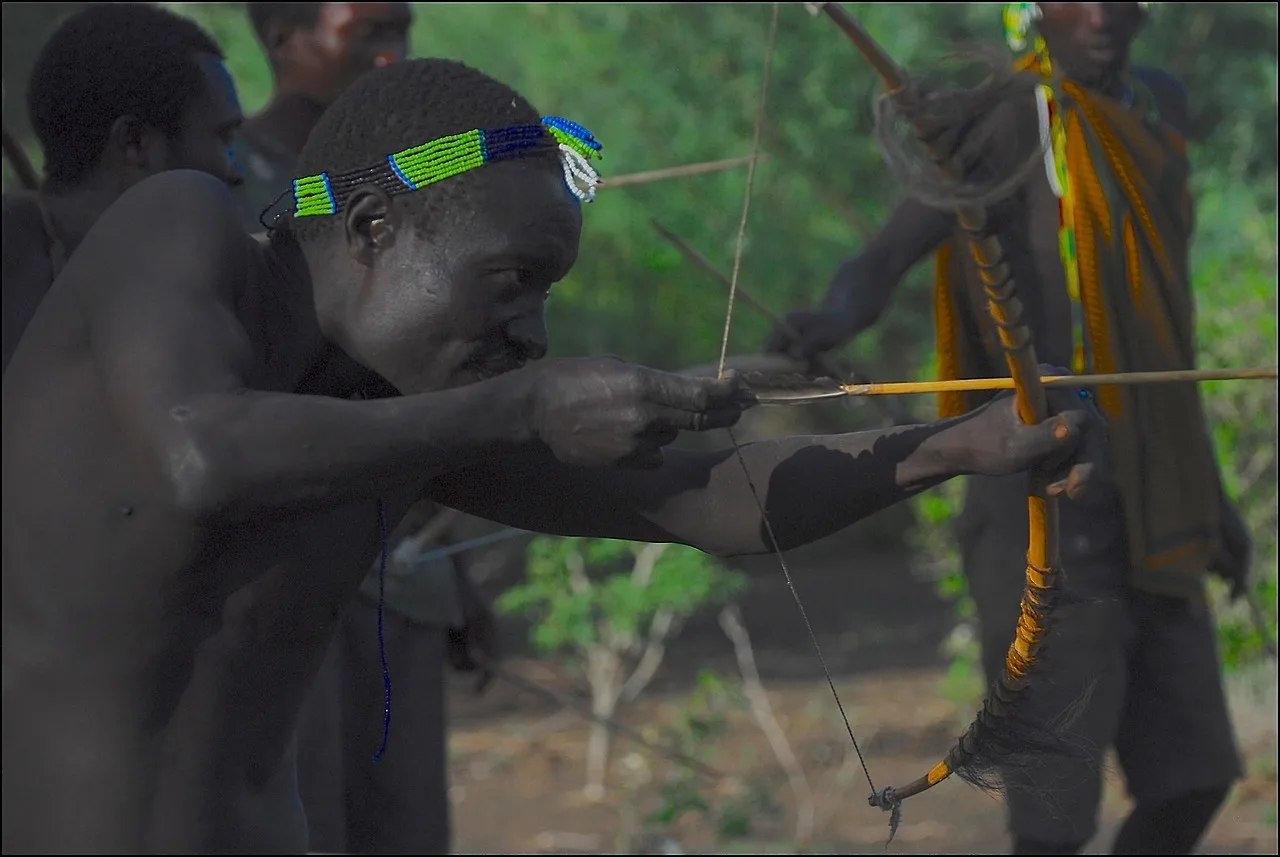
What gear is essential besides the bow and arrow? A release aid, broadheads, safety gear, and a way to find distance or light the way. After that, quiver, stabilizer, case, and binoculars become hunt-style upgrades rather than bare necessities.
Quiver, stabilizer, and release aid
The release aid belongs in the must-have pile because it affects consistency every time the bow fires. A quiver matters more in the field than on the practice line, and a stabilizer is mainly about vibration reduction and hand shock reduction once the core setup is already sound.
Broadheads and practice tuning
Broadheads should match the game and the bow’s tune. Fixed broadheads are still a common hunting choice, but whichever style is used, it needs to fly cleanly with the actual hunting arrows.
Bow case and binoculars
A bow case protects the setup during transport and storage. Binoculars are most useful when the hunt involves longer glassing sessions or low-light animal spotting, especially in open terrain.
Safety gear for the field
Tree strap or harness, first aid kit, communication device, and headlamp belong in the pack. A headlamp that does red or green light is useful, and another common wind-check tool is milkweed instead of powder. Those details sound small until a hunter needs them in the dark.
Picture a whitetail hunter in a 15-foot ladder stand at last light. A small sight pin, a quiet detachable quiver, and a headlamp with red or green light are more useful than a long stabilizer or oversized binoculars.
Choose Must-Haves if…
Choose Must-Haves if the bow still needs basic accuracy, if the budget is tight, or if the hunt involves unpredictable shot windows. Must-Haves win for most new hunters because they solve aim, launch, and recovery problems first.
Choose Nice-to-Haves if the core bow is already tuned, the hunter has a clear use case, and the extra gear solves a real field problem. That is where a stabilizer, rangefinder, quiver style, or bow case earns its place.
Which one should you buy?
If the setup is incomplete, buy the must-have items first: sight, rest, release aid, broadheads, and safety gear. If the bow already groups well, spend next on hunt-specific helpers like a rangefinder for steep shots, binoculars for open country, or a detachable quiver for tree stand work.
For a whitetail hunter in thick timber, the best first dollar usually goes to a clear sight and a quiet rest. For western big game, a rangefinder with angle compensation moves much higher on the list because shot distance and slope change so often.
Frequently asked questions
What bow accessories are must-haves for hunting?
For most hunting setups, the must-haves are a sight, rest, release aid, broadheads matched to the arrows, and basic safety gear. A rangefinder, quiver, stabilizer, and bow case are useful, but they usually come after the core shot equipment is sorted.
Do I need a drop-away rest for bowhunting?
Most hunters do well with a drop-away rest because it supports the arrow at draw and clears fletching during the shot. It is not the only workable design, but hunting reliability improves when the rest avoids vane contact and stays consistent under real field conditions.
Which bow sight is best for whitetail hunting?
Whitetail hunters usually benefit from a sight with fiber optic pins, a readable bubble level, and enough low-light visibility for shaded woods. Many hunters prefer fewer pins in timber because crowded pin stacks can slow the sight picture in dim cover.
Is a stabilizer really worth it on a hunting bow?
Yes, if the bow feels jumpy or front-heavy. A stabilizer can reduce vibration and hand shock and help balance the bow, but it should fit the hunt. Long rods can be awkward in tree stands and brush, so short hunting setups often make more sense.
Do I need a rangefinder for bowhunting?
Not for every hunt, but it becomes very helpful when shots come from elevation or the terrain changes often. A rangefinder with angle compensation is the version that matters most, because steep uphill or downhill shots can make plain distance guessing unreliable.
What accessories help most for tree stand bowhunting?
Tree stand hunters benefit most from a quiet sight, a reliable rest, a detachable quiver, a headlamp, and a safety harness. A compact stabilizer can help, but noise control, low-light visibility, and emergency readiness usually matter more in the stand.