How to Measure Bow Stabilizer Rod Length
Measure bow stabilizer rod length from the riser mounting face to the rod’s functional tip; if you need the full assembled length, add any fixed weight stack or built-in dampener, since the rod itself is just the shaft. Measure it wrong and you can buy a stabilizer that sticks out too far, clears poorly, or feels nothing like the setup you expected. This guide shows the exact measuring points for long rods, side rods, V-bars, and rod systems with hidden extra length.
Bow stabilizer rod length is the rod’s physical length in inches or centimeters, but manufacturers do not always label the same thing. Some manufacturers list rod-only length, while others include the dampener, end cap, or quick disconnect in the assembled number. That difference matters when comparing products, especially for hunting bows with tight clearance.
What stabilizer rod length actually means
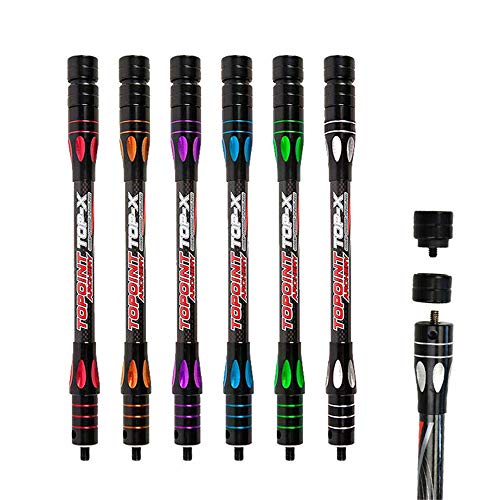


Also separate the stabilizer type before measuring. A front rod, side rod, and rear rod are different parts with different jobs and different usable lengths. Do not compare them as if they were interchangeable.
Listed length, assembled length, and usable length
Listed length is the number on the package or product page. Assembled length is the full length of the stabilizer assembly once the dampener, weights, end cap, or mount hardware are attached. Usable length is what actually sticks out from the bow in your setup.
That last number is the one that matters in a blind, a treestand, or a narrow target lane. A rod that looks short on paper can become awkward once a quick disconnect or V-bar adds projection.
Start at the riser mounting face or the face of the quick disconnect if that part stays on the bow, then measure to the rod’s functional tip. Use the point that actually sets the bow’s length in the field, not the center of a weight stack or the end of a rubber dampener shell. Record the result in inches or centimeters.
Keep the method consistent. If you compare one stabilizer with its quick disconnect installed and another without one, the numbers will not mean the same thing.
Step-by-step measuring method
- Confirm which stabilizer you are measuring: front, side, or rear.
- Identify the mounting face on the riser or on the quick disconnect that remains attached to the bow.
- Run a straight measure to the outermost functional end of the rod.
- If a dampener or fixed weight changes the total length, note whether you included it.
- Write down the result as listed length, assembled length, or usable length so the number is not confused later.
Picture a 10-inch hunting rod with a quick disconnect that adds extra projection. The rod may still be sold as 10 inches, but the setup can occupy more space on the bow than the label suggests. That is why the reference point matters more than the package number.
How weights, dampeners, and mounts change the number
Weights change balance without changing rod length, so they must be tracked separately from the rod measurement. A dampener may add length if it sits beyond the rod tip, and some manufacturers include that added section in their stated length. Quick disconnects and V-bars can also change the usable number by moving the assembly farther from the riser.
One calculator advises weighing each rod assembly off the bow for accuracy. That is useful because the mass of the assembly affects balance, even when the rod length stays the same.
What counts as part of the assembled length
If the part changes how far the stabilizer reaches from the bow, include it in assembled length. That usually means end weights, dampeners that extend past the shaft, and mount hardware that adds projection. If the part only changes mass and not length, record it as weight only.
A 1-ounce weight on a 10-inch rod does not make the rod longer. It does make the setup behave differently, which is why the worksheet later in this article separates length from load.
When mounts change usable length
A quick disconnect can make a short rod behave like a longer one in practice because it adds stand-off distance from the riser. A V-bar can do the same for side rods, especially on target compounds and Olympic recurves. In a tight blind or tree stand, that extra offset can be the difference between a clean draw and a rod that bumps gear or brush.
Say your bow fits a 10-inch stabilizer on paper, but the quick disconnect pushes it forward and the dampener adds more reach. The installed setup may now be too long for a small treestand platform even though the product listing looked safe.
Stabilizer length for your bow setup
Set the length by discipline first, then check clearance and balance. Compound hunting setups commonly use front rods of 6–10 inches, and many hunting setups use a single front rod with no side rod. Target compound setups commonly use front rods of 24–36 inches. Olympic recurve setups commonly use front rods of 28–33 inches.
3D or field archery setups commonly use front rods of 8–12 inches. Those numbers are starting points, not fixed rules. Portability, draw cycle, and bow weight still matter.
Compound hunting setup
Compound hunting bows usually favor short, compact stabilizers that stay out of the way in blinds, trucks, and treestands. A short front rod gives some forward steadiness without creating excess moment arm or snag risk. Many hunters stop at a single front rod because that keeps the bow simple and easy to carry.
For this setup, usable length matters more than catalog length. A 10-inch label can be too much if a mount, dampener, and weight stack make the installed setup longer than expected.
Target compound setup
Target compound bows usually use longer rods because steadiness matters more than portability. A long front rod, often paired with side rods, helps the bow sit calmer at full draw. The tradeoff is transport space and more sensitivity to the exact mount geometry.
Here, compare the front rod and side rod as separate measurements. A side bar can be 4–15 inches depending on discipline and mount style, but the real question is how the full assembly balances against the riser.
Olympic recurve setup
Olympic recurve setups typically use longer stabilizers than hunting bows and are more sensitive to how the mass is spread. A longer front rod can encourage a stronger forward fall after the shot, while side rods help distribute balance around the riser. Small measurement errors matter more because the whole system reacts more visibly.
On a recurve, note whether the front stabilizer and side rods are mounted through a V-bar or another offset system. That offset changes usable length and the way the bow sits at full draw.
Front rod, side rod, and torque ratio
Front rod length affects forward moment arm. Side rod length counterbalances that moment, especially when a V-bar or side mount is used. To compare setups, use the same simple concept the calculators use: balance ratio = front weight times front length divided by side weight times side length. A ratio of 1.0 is described as neutral balance.
That ratio is a comparison tool, not a magic setting. It helps show whether the front side of the setup is dominating the side rod or whether the balance is closer to even.
Why length changes feel at the riser
The riser pivot point is the reference point for the bow’s moment. A longer front rod moves mass farther from that point, which increases its effect on balance. That is why the same weight feels different on a 6-inch rod than on a 12-inch rod.
Longer does not automatically mean better. It means more moment, more reach, and usually more sensitivity to movement and clearance.
How to compare front and side rod lengths
Do not compare a front rod and a side rod by length alone. A 10-inch front rod with heavy weights can behave very differently from a 10-inch side rod mounted off a V-bar. Use the rod’s length, the weight attached, and the offset from the riser together.
One practical rule: if the side rod is intended to cancel front-heavy torque, measure its usable length from the same mounting reference every time. That keeps the ratio meaningful.
Bow stabilizer measurement worksheet
Use this worksheet to separate what the package says from what the bow actually carries. Fill it out before buying or before changing parts. That prevents the common mistake of assuming listed length equals usable length in a blind, treestand, or compact target lane.
| Stabilizer | Listed length | Assembled length | Usable length in your setup | Accessory note |
|---|---|---|---|---|
| Front rod | 10 in | 11.5 in | 11.5 in | Weight included, dampener included, no quick disconnect |
| Side rod | 8 in | 9.25 in | 9.25 in | Weight included, V-bar included |
| Rear rod | 6 in | 6 in | 6 in | No added hardware |
Discipline checklist
- Hunting: check blind clearance, treestand rail clearance, and whether a single front rod is enough.
- 3D: check carry length, brush clearance, and whether a short front rod or a light side rod is more practical.
- Target compound: check front and side rod lengths separately, then confirm the V-bar angle and total projected length.
- Recurve: check front rod length, side rod offset, and whether the balance feels correct with the full weight stack attached.
Buying checklist before you choose a stabilizer
- Measure the space your bow must fit into, including blind walls, stand rails, or lane clearance.
- Decide whether you need a front rod only or a front-and-side setup.
- Check whether the listed number is rod-only length or assembled length.
- Confirm whether the dampener, quick disconnect, end cap, or V-bar is included in the stated length.
- Compare usable length, not just the label, before ordering.
A common first-timer mistake is buying a short-looking rod and then adding a quick disconnect, a dampener, and a heavy weight stack without rechecking the space the setup occupies. That turns a compact hunting bow into a rig that catches brush or crowds the blind wall.
Frequently asked questions
How do I measure a bow stabilizer rod length?
Measure from the riser mounting face, or the face of the quick disconnect if it stays on the bow, to the rod’s functional tip. Record whether you measured rod-only length or the assembled setup. That keeps the number useful when comparing brands and disciplines.
What size stabilizer is best for bow hunting?
Compound hunting setups commonly use front rods of 6–10 inches, and many hunting setups use a single front rod with no side rod. The best size is the one that clears your gear, fits your shooting position, and still leaves enough length for a stable hold.
How do I choose a bow stabilizer length for my setup?
Choose by discipline, then by clearance. Hunting bows usually favor shorter front rods, target compounds usually favor 24–36 inch front rods, and Olympic recurves commonly use 28–33 inch front rods. After that, check whether mounts and dampeners change usable length.
How do I measure compound bow stabilizer length?
For a compound bow, measure the front rod separately from any side rod. Start at the mounting face and end at the functional tip. If a quick disconnect or V-bar is part of the setup, include its added reach when judging usable length.
How do I measure recurve bow stabilizer length?
For a recurve, measure each stabilizer bar from its mounting point to its functional end, then note the V-bar offset if one is used. Olympic recurve setups commonly rely on longer front rods and carefully matched side rods, so assembled length matters as much as the label.
How does stabilizer length affect bow balance?
Longer stabilizers move mass farther from the riser pivot point, which increases moment and changes how the bow settles. That can improve steadiness, but it can also make the setup more sensitive to movement and clearance. Use length and weight together when comparing balance.
How long should a hunting stabilizer be?
Most hunting stabilizers stay short enough to keep the bow compact, with common front rod lengths of about 6–10 inches and some setups using about 6–12 inches. The right length is the shortest one that still gives the balance you want without creating clearance problems.
What should I measure before buying a stabilizer for my bow?
Measure the space the bow must fit into, the mounting point on the riser, and the full projected length once weights, dampeners, quick disconnects, or V-bars are attached. Also note whether you need a front rod only or a front-and-side setup, since those are not interchangeable measurements.