How to Measure a Bow String Length
Then check brace height and limb fit before you shoot. A string that is too long can drop brace height, open up groups, and strain the bow. This guide gives the standard measurement and the fit check that confirms the string is correct.
What bow string length means
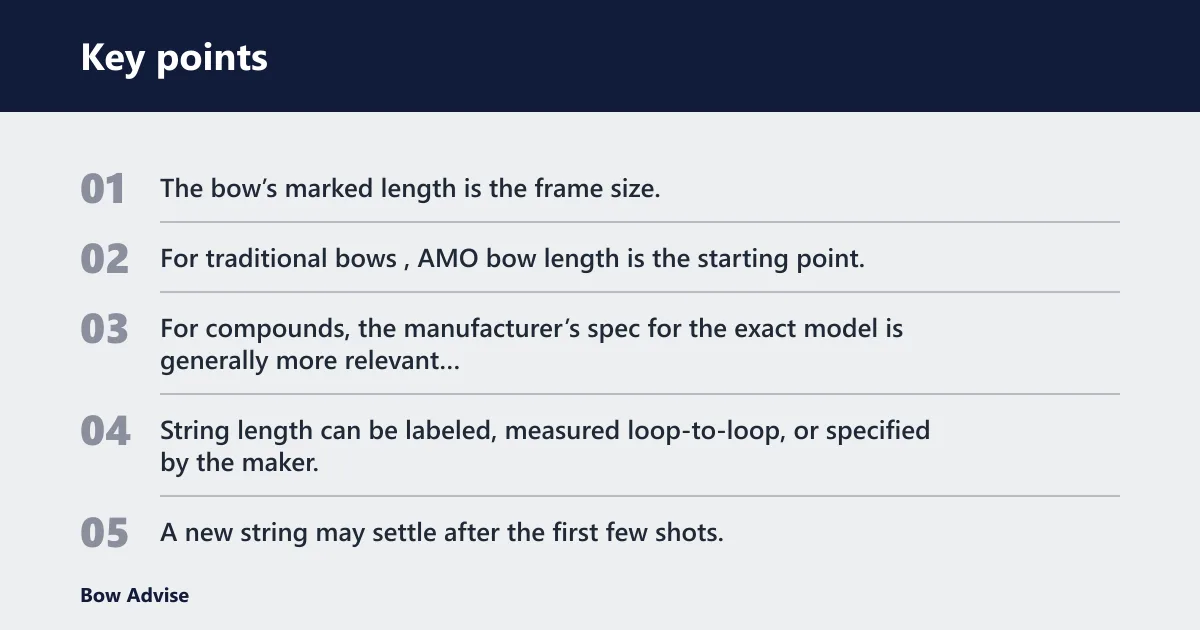

Bow length and string length are different. The bow’s marked length is the frame size; the string’s length is the part that actually fits the limbs, grooves, cams, and axles. For traditional bows, AMO bow length is the starting point. For compounds, the manufacturer’s spec for the exact model is generally more relevant than a generic subtraction rule.
String length can be labeled, measured loop-to-loop, or specified by the maker, and those are not always interchangeable. String material also changes the real fit. A new string may settle after the first few shots, while a worn string can measure long and still be wrong.
How the standard measurement works
A traditional bowstring is measured on 1/4-inch pegs at 100 pounds of tension for 20 seconds. The measurement is taken from the outside of one peg to the outside of the other peg. That gives a repeatable reference, but it does not replace the bow’s fit check after installation.
For recurve and longbow sizing, the common shortcut starts with AMO length. 60X says a recurve or longbow string should be 3 inches shorter than AMO bow length. CTRL Calculator gives the common modern rule as AMO bow length minus 4 inches, and notes a longbow rule of thumb as AMO length minus 3 inches. That is a starting point, not the final proof.
What you’ll need
- A tape measure marked in inches
- The bow’s model name or AMO marking, if present
- Paper or notes for the measured length
- The old string, only if it was known to fit well
- A bow press, only for compound verification by a qualified person or shop
- A clear view of the string grooves on a recurve or longbow
How do I measure a bow string length?
Start with the bow type, then use the right reference. Traditional bows usually begin with AMO length and a short subtraction rule. Compounds should follow the factory string spec for that exact model, because the string path runs around cams and axles rather than straight limb tips. Finish by checking brace height and how the string seats.
- Find the bow’s AMO marking or model spec.
- Use the manufacturer’s listed string length first, if it exists.
- If you only have AMO length on a traditional bow, subtract 3 to 4 inches as a starting point.
- Measure a known-good old string only if it was already correct and not badly worn.
- Install the replacement and check brace height before shooting.
Suppose a 66-inch recurve is marked 66 AMO. A starting string length of 63 inches matches the common 3-inch subtraction rule. If the string fits in the grooves but the brace height sits low, the string may still be too long, or the bow may need a different factory-recommended size.
How do I measure a recurve bow string length?
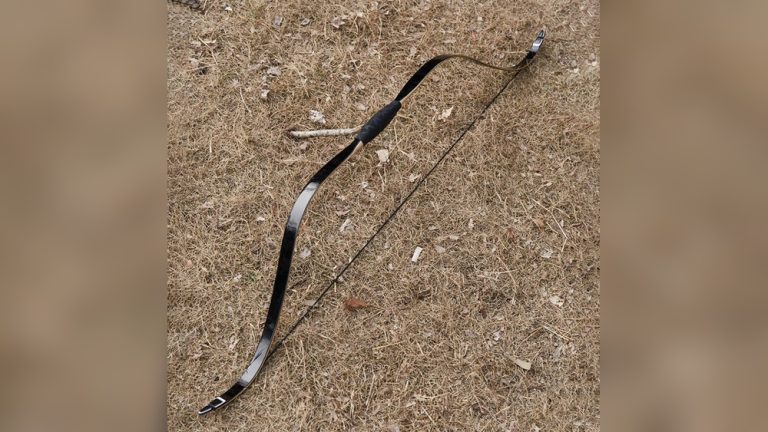
Use the bow’s AMO length first, then confirm with the grooves and brace height. For a recurve, the string usually runs shorter than the bow length. If no label is visible, measure from string groove to string groove along the limbs, not straight tip to tip. A tape measure helps verify the string or a replacement order.
Traditional bow sizing steps
- Read the AMO marking on the bow, if present.
- If there is no marking, measure from string groove to string groove.
- Use the common starting rule: AMO length minus 3 to 4 inches.
- Compare that result with the maker’s recommendation.
- After installation, check that the string sits cleanly in both grooves and the brace height lands in spec.
One example says a bow that measures 57 inches but is marked 58AMO needs a 55-inch string. That kind of mismatch is why the label, the measured bow, and the final fit all need to agree before ordering.
How do I measure compound bow string length?
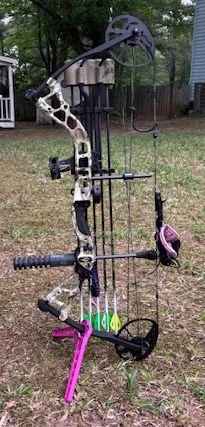
Use the exact bow model and the factory string specification. Do not apply recurve math to a compound bow. ArcheryPower says a compound bow string is measured by placing the bow in a bow press, and that the job calls for a tape measure, marker, string or twine, and a bow press. The safer takeaway is simple: confirm the model spec, then use a shop or maker reference for the exact string or cable.
Compound sizing checks
- Identify the exact model and year, if possible.
- Look up whether the part needed is the string or a cable set.
- Use the maker’s listed length, not a traditional bow formula.
- Have a qualified person or shop confirm the bow press measurement.
- After installation, verify cam timing and brace height against the factory spec.
A compound string path runs around cams and axles, so a length that looks right on paper can still be wrong on the bow. If the bow needs a press to inspect or replace the string safely, stop at the factory spec or a verified shop measurement rather than guessing from bow length alone.
Is your bow string the right length?
| Bow type | Measurement method | Expected result | Common failure sign | Next action |
|---|---|---|---|---|
| Recurve | AMO length minus 3 to 4 inches; confirm groove-to-groove fit | String seats in both grooves and brace height matches the bow’s spec | Brace height is low, string slips in the grooves, or the limbs look uneven | Check the maker’s chart, then size down if the bow calls for a shorter string |
| Longbow | AMO length minus 3 inches is a common rule; confirm with the maker | String installs cleanly and the bow holds a proper brace height | Brace height is too high or too low after installation | Compare the bow’s marking with the string label and adjust to the listed spec |
| Compound | Exact model spec; press-based verification by a qualified person or shop | String follows the cam path and factory timing stays within spec | Cam timing is off, brace height is wrong, or the string does not sit correctly | Use the factory string spec and have the bow checked in a press |
| If brace height is off, do this | Check the installed string against the bow’s listed spec | Brace height returns to the maker’s range after the correct string is fitted | Low brace height usually points to a string that is too long; high brace height can point to a string that is too short | Stop shooting, verify the spec, and replace or retest before continuing |
How do I know if my bow string is the right length?
Brace height is the fastest fit check. If the string is correct, the bow should land in the maker’s brace-height range and the string should sit cleanly in the grooves or cam path. If the brace height is off, the string may be the wrong length even if the number on the package looks close.
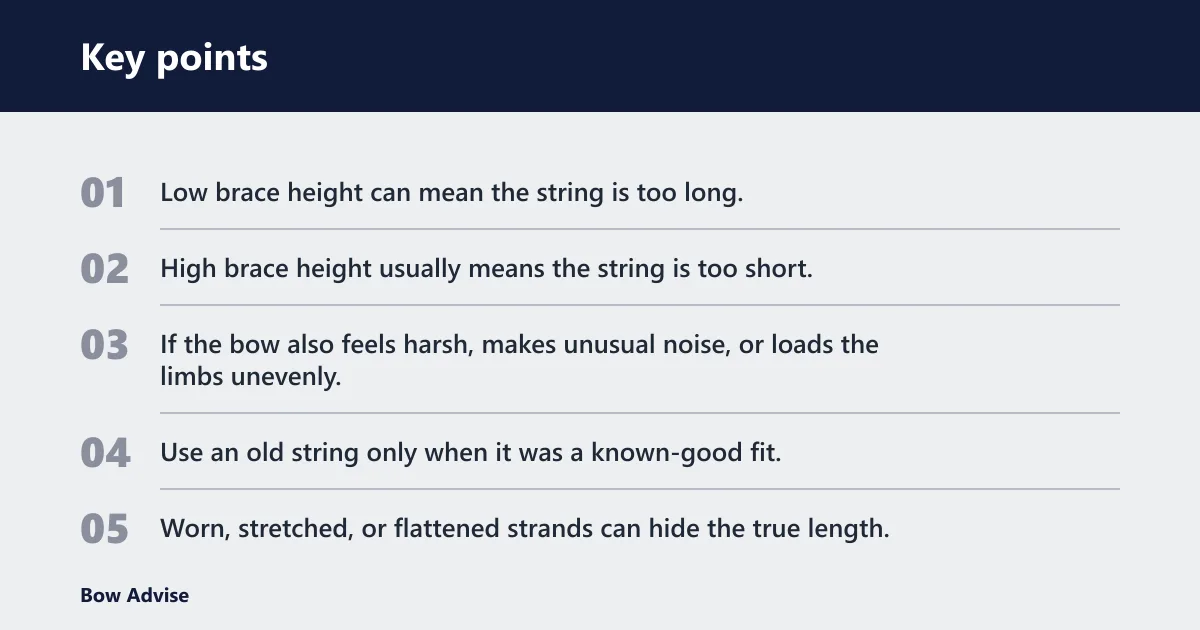
Low brace height can mean the string is too long. High brace height usually means the string is too short. If the bow also feels harsh, makes unusual noise, or loads the limbs unevenly, stop and recheck the size before shooting more arrows.
How to use an old string without being misled
Use an old string only when it was a known-good fit. Worn, stretched, or flattened strands can hide the true length. Measure it, but treat the result as a clue rather than a final answer. If the bow has no marking, the old string can help narrow the range, then the brace height check decides whether it actually fits.
Say your old recurve string has been on the bow for years and looks stretched. A tape measure may still give a neat number, but that number can be longer than the string was when new. In that case, the bow maker’s spec and the brace-height result matter more than the old string’s length alone.
Common mistakes
- Using bow length as string length. The two numbers are not the same.
- Applying recurve or longbow subtraction rules to a compound bow.
- Trusting a stretched or worn old string as the only reference.
- Measuring straight tip to tip instead of using string grooves on a traditional bow.
- Skipping the brace-height check after installation.
- Ordering by a loop-to-loop number when the maker lists a different labeled length.
If the fit still looks wrong
- Recheck the bow’s model marking or AMO length.
- Confirm the string label against the maker’s chart.
- For a traditional bow, compare the installed brace height with the bow’s stated range.
- For a compound bow, stop and have the bow checked in a press by a qualified shop.
- If the bow has no marking or the spec is unclear, ask a bow shop before ordering another string.
Most fit problems show up at the brace height first, not on the package label. A string can measure correctly by one method and still be wrong for the bow if the wrong rule was used or the old string had already stretched.
Frequently asked questions
How do I determine bow string length from AMO length?
For traditional bows, AMO length is the starting number. A common rule is AMO minus 3 to 4 inches. The same source gives AMO minus 4 inches for most modern recurve and longbows, while 60X gives 3 inches shorter for recurve or longbow strings. Use the bow maker’s spec if it differs.
How do I measure a bow for string length if there’s no marking?
Measure a traditional bow from string groove to string groove, not straight tip to tip. If an old string was known to fit, measure it too, but treat that number as a reference only. If the bow type or model is unclear, a shop can match the spec before you order.