How to Keep Your Bow Shoulder Down and Avoid Target Panic
Drop the bow shoulder before the draw starts, then keep it there through anchor and release. If it creeps up, let down, reset, and draw again. A rising bow shoulder shortens the string path, shifts anchor height, and can feed target panic by making the shot feel rushed and unstable. This guide shows how to spot shoulder creep, reset your setup, and build a repeatable shot cycle for compound and recurve bows.
What you’ll need


- Bow and arrows
- Safe short-range target or blank bale
- Release aid or finger tab
- Notebook for the shoulder check
Why does my bow shoulder come up?
A bow shoulder usually rises for one of three reasons: poor posture, upper-body tension, or panic around aiming and release. The clue is timing. If the shoulder lifts during set or draw, posture is usually part of it. If it creeps at anchor, tension or target panic is more likely.
Proud posture vs. upper-body tension
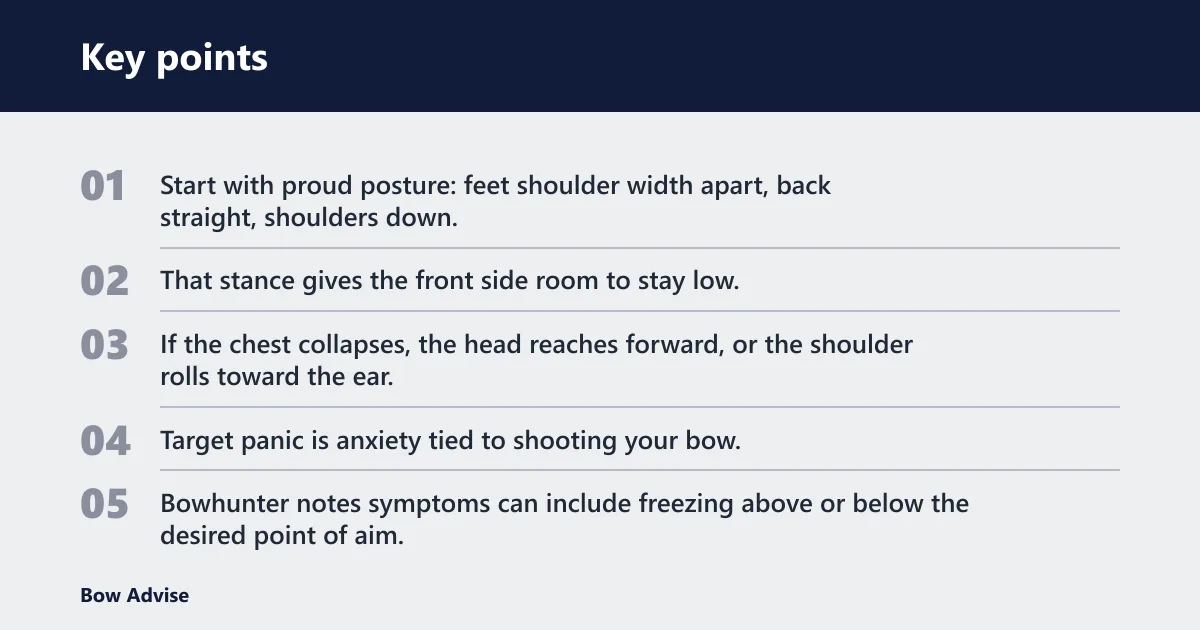
Start with proud posture: feet shoulder width apart, back straight, shoulders down, chest lifted up. That stance gives the front side room to stay low. If the chest collapses, the head reaches forward, or the shoulder rolls toward the ear, the draw line gets shorter and the bow arm does more work than it should.
How panic changes the draw cycle
Target panic is anxiety tied to shooting your bow. Bowhunter notes symptoms can include freezing above or below the desired point of aim, and punching the trigger is also common. When the shot feels urgent, the front shoulder often rises with the urge to end the shot fast.
What shoulder creep looks like at anchor
At anchor, the shoulder should feel set low and steady, not floated upward. Shoulder creep often shows up as a tighter neck, a shorter string picture, or a pin that jumps when the archer tries to settle. On a compound, it may pair with trigger punching. On a recurve, it often shows up as a strained bow arm and rushed expansion.
How to keep your front shoulder down while shooting archery
Keep the front shoulder low by setting it before the draw, then checking it again at anchor and during release. Make shoulder position part of the shot process, not a last-second fix. If the shoulder rises, let down and restart instead of forcing the shot through it.
Step 1: set proud posture
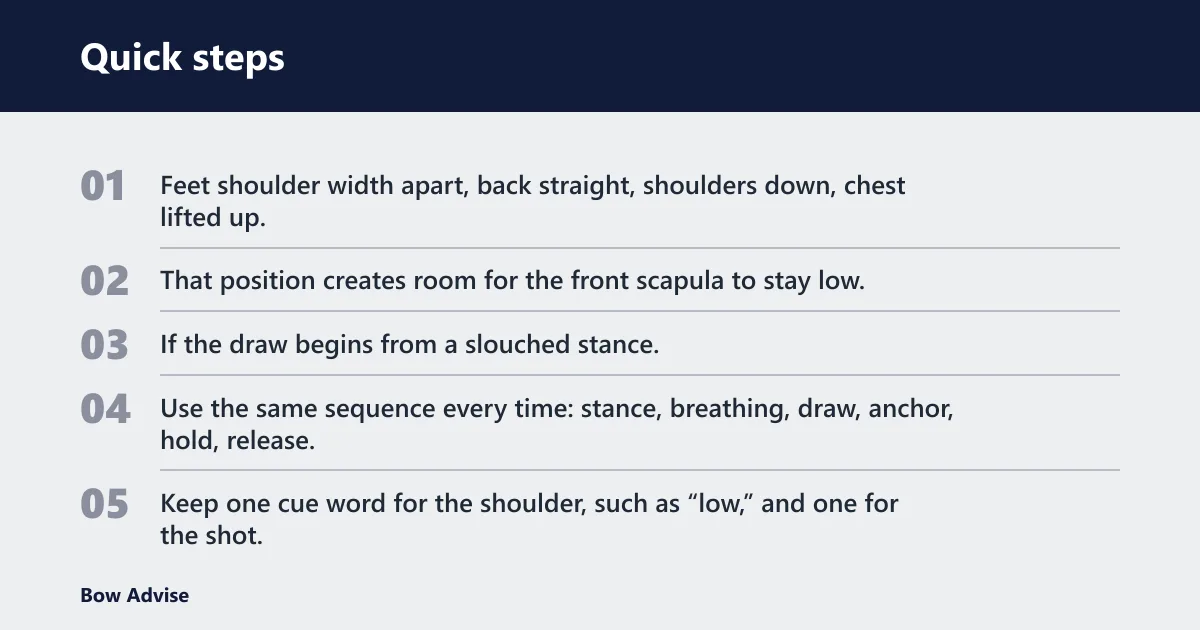
Start upright. Feet shoulder width apart, back straight, shoulders down, chest lifted up. That position creates room for the front scapula to stay low. If the draw begins from a slouched stance, the shoulder usually has to climb to reach full draw.
Step 2: build a calm shot process
Use the same sequence every time: stance, breathing, draw, anchor, hold, release. Keep one cue word for the shoulder, such as “low,” and one for the shot, such as “smooth.” Cue words should slow the shot, not speed it up. At full draw, take one slow exhale before release.
Step 3: anchor with the shoulder quiet
Lock in a repeatable anchor point and stop there long enough to check the front side. If the bow shoulder rises while you search for the string reference, the anchor is not settled yet. Reset the shot rather than chasing the sight picture with a higher shoulder.
Shoulder check worksheet
Use this table as a phase-by-phase check. It separates posture problems from tension and panic-driven rush. Mark the right column honestly. If more than one box is yes, fix the earliest phase that failed before adding more aiming time.
| Shot phase | What the shoulder should feel like | Common failure signal | Panic-driven rush? | Form tension? | Poor posture? | Reset action |
|---|---|---|---|---|---|---|
| Set | Low, wide, and relaxed | Neck tight before the draw starts | No | Yes | Yes | Reset feet to shoulder width apart and lift the chest without shrugging |
| Draw | Front side stays stacked as the bow comes back | Shoulder jumps toward the ear | Yes | Yes | Yes | Let down, rebuild posture, and draw again at a slower count |
| Anchor | Anchor point feels repeatable and settled | Head reaches, string picture changes, or pin freezes | Yes | Yes | No | Hold, exhale, and verify the same facial reference before aiming longer |
| Release | Shoulder stays down through follow-through | Trigger punch, flinch, or sudden collapse | Yes | Yes | No | Shorten the hold, slow the exhale, and switch to a surprise release drill |
How can blank bale practice help?
Blank bailing removes aiming pressure that often feeds target panic. Standing just a few yards from the target lets the archer focus on execution instead of the spot. GOHUNT suggests getting closer and using a big target first, and MeatEater describes blank bailing as standing just a few yards from the target.
Use close-range shots to remove aiming pressure
Start at 20 yards or less if distance is part of the problem, then move closer if the shoulder still climbs under pressure. For recurve shooters, blank bailing helps expose hand position and shoulder lift. For compound shooters, it shows whether the release is being punched instead of expanded through.
Add draw-down reps for panic control
Drawing down trains the brain that drawing does not force a shot. Draw to anchor, hold for a short count, then let down safely. Repeat the same sequence several times before live shooting. That simple reset weakens the link between full draw and an automatic release.
Use a short progression
- Stand at a close blank bale with no scoring face.
- Draw, anchor, hold for 2 seconds, then let down.
- Repeat 5 times before shooting one arrow.
- After each live arrow, return to about 2 more draw-down reps.
What mistakes feed target panic?

The most common mistakes are punching the trigger, rushing to anchor with a high shoulder, and staying at full draw too long. Those habits teach the body to expect urgency. They also make the bow shoulder feel like part of the problem when the real issue is often a shot process that never settled.
Trigger punching on a compound
With a trigger-style release aid, the thumb or index finger can fire the shot before expansion starts. That can worsen target panic unless the release hand stays wrapped and the trigger pressure stays steady. MeatEater also notes that a controlled loop and surprise release can help reduce this pattern.
When back tension fits
Back tension release aids reduce the urge to punch because the shot fires from continued expansion instead of a hard trigger press. They are useful when the hold is stable but the release hand keeps attacking the trigger. They are less useful if the root problem is poor posture, because a bad stance still lifts the shoulder.
When a trigger aid still works
A trigger-style release aid can still work if the finger stays wrapped and the trigger pressure is added steadily, not slapped. The release is the problem when the shot always breaks as soon as the pin lands. In that case, a different release style may help expose the timing flaw.
Suppose a compound archer stands at 12 yards, pin hovering above the dot, and the bow shoulder creeps up every time the sight settles. The first fix is not more aim time. It is a let-down, a slower setup, and one clean blank-bale rep before the next shot.
A common first-timer mistake is drawing down too late, after the shoulder has already climbed. That turns the let-down into a panic response instead of a training rep. Start the draw-down drill from the same stance you use to shoot, then stop at full draw on purpose and let down on command.
If that didn’t work, try this next
- Shorten the hold at full draw to about 2 seconds.
- Move closer to the target until the pin stops driving the shot.
- Switch to a blank bale for 10 arrows.
- If you use a trigger release, return to a steadier surprise-break style and keep the finger wrapped.
- Rebuild the shot with one slow exhale before release.
Frequently asked questions
What is target panic and how do I stop it?
Target panic is anxiety tied to aiming or releasing, and it often shows up as freezing above or below the spot, punching the trigger, or flinching under pressure. Stop it by changing the shot process: shorter holds, blank bailing, a slower exhale, and let-down practice when the shoulder starts to rise.
Should I use back tension to fix target panic?
Back tension can help if trigger punching is the main problem, especially on a compound bow. It is not a universal fix. If the shoulder lifts because of poor posture or rushed setup, the first correction is stance and draw sequence, then a surprise-shot style release aid if needed.
What release aid is best for target panic?
A back-tension style release aid is often the better choice when punching is the issue, because it removes the obvious trigger press. A trigger-style aid can still work if the finger stays wrapped and pressure is added steadily. The best choice is the one that slows the shot and reduces the urge to slap.
Can breathing and posture reduce target panic?
Yes. Proud posture keeps the front side from collapsing, and slow breathing cuts the sense of urgency that often drives panic. Set feet shoulder width apart, keep the back straight, shoulders down, and chest lifted up. Then use one slow exhale at full draw before release.
How do I learn to draw down safely without shooting?
Start at a close blank bale, draw to anchor, hold for 2 seconds, and let down on purpose. Repeat 5 times before live shooting. Keep the bow pointed safely downrange or at the bale, and never try to “save” a bad shot by punching the release at the last second.
What drills help me hold at full draw without panic?
Blank bailing, short holds, and draw-down reps are the most direct drills. Begin at 20 yards or less, or stand just a few yards from a blank bale. Use a repeatable anchor point, one cue word for the shoulder, and a slow exhale before the shot breaks.