How to Aim With a Flatbow: Master Archery Precision Fast
Aiming with a flatbow is both art and science. The flatbow, known for its wide, flat limbs and simple design, has been used for centuries by hunters and archers across cultures. Unlike modern compound bows with sights and stabilizers, the flatbow relies on the archer’s skill, body mechanics, and understanding of instinctive shooting.
Many beginners find aiming with a flatbow challenging, but with the right approach, anyone can develop consistent accuracy. This guide will help you understand the process, avoid common mistakes, and improve your flatbow aiming skills step by step.
Understanding The Flatbow
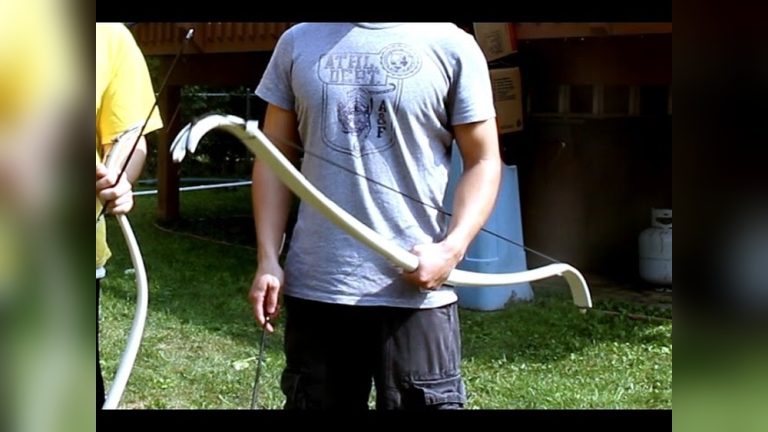
The flatbow stands out from other types of bows due to its wide, flat limbs and lack of high-tech accessories. Traditionally made from a single piece of wood, today’s flatbows may use laminates or modern materials, but the shooting principles remain the same. Unlike recurve or compound bows, the flatbow’s design offers a smooth draw and a forgiving release, but it also requires the archer to handle all aspects of aiming and shooting.
Flatbow Vs. Other Bow Types
Here’s a direct comparison between flatbows, recurve bows, and compound bows:
| Feature | Flatbow | Recurve Bow | Compound Bow |
|---|---|---|---|
| Design | Wide, flat limbs | Curved limbs | Pulleys and cams |
| Shooting Aid | None (barebow) | Optional sight | Sights, stabilizers |
| Learning Curve | Moderate to high | Moderate | Low (with aids) |
| Tradition | Ancient, traditional | Sport and tradition | Modern sport/hunting |
Understanding these differences helps you appreciate the unique challenges and rewards of using a flatbow.
The Basics Of Flatbow Aiming
Learning to aim with a flatbow starts with mastering the basics. There are no sights, so you’ll rely on body alignment, anchor points, and visual focus. Here’s what you need to know:
- Body Alignment: Good posture is the foundation. Stand with your feet shoulder-width apart and perpendicular to the target.
- Grip: Hold the bow firmly but not tight. Too much tension causes torque and reduces accuracy.
- Draw and Anchor: Pull the string smoothly to your anchor point, usually the corner of your mouth or chin.
- Focus: Look directly at the target spot, not at the arrow tip.
Instinctive Vs. Gap Shooting
Most flatbow archers use either instinctive shooting or gap shooting. Instinctive shooting relies on your body’s natural hand-eye coordination. Gap shooting uses the tip of the arrow as a reference point, adjusting the gap between the arrow tip and the target depending on distance.
| Technique | How It Works | Best For |
|---|---|---|
| Instinctive | Focus solely on the target; let muscle memory guide the shot | Quick shooting, hunting |
| Gap Shooting | Use arrow tip and adjust “gap” below/above target | Target practice, consistent distances |
Pro Tip: Beginners often switch between methods. Stick with one approach for at least a few weeks to build real skill.
Setting Up For Success
Aiming well starts before you even nock an arrow. Setting up your shooting environment and equipment can make a huge difference.
Choosing The Right Flatbow
Select a bow that matches your draw weight and draw length. Beginners should start with lower draw weights (20, 30 lbs) to avoid fatigue and injury. Make sure the bow feels comfortable in your hand and that you can draw it smoothly to your anchor point.
Selecting Proper Arrows
Use arrows that are the right length (at least one inch longer than your draw length) and spine (stiffness) for your bow. Incorrect arrows can fly unpredictably and make aiming much harder.
Safe Shooting Environment
Pick a target area with a clear backstop to catch missed arrows. Avoid distractions, and make sure no people or animals are in the shooting lane.
Stance And Posture: The Foundation Of Aiming
Your stance is the base for every shot. Many beginners overlook this, but it’s critical for accuracy.
- Open Stance: Stand with your feet shoulder-width apart, with the lead foot slightly forward. This gives balance and stability.
- Body Alignment: Your chest faces to the side, not the target. Keep your shoulders relaxed and level.
- Weight Distribution: Distribute your weight evenly, avoiding leaning forward or backward.
A strong, consistent stance allows for repeatable form, so every shot starts from the same position.
Common Mistakes In Stance
- Crossing your feet or standing too narrow leads to instability.
- Leaning toward the target often causes low shots.
- Tension in the shoulders or arms reduces control.
Pro Tip: Practice your stance without shooting. Use a mirror or record yourself to check alignment.
The Draw And Anchor: Consistency Matters
Drawing the flatbow smoothly and anchoring at the same spot every time is essential for accuracy.
How To Draw Correctly
- Raise the Bow: Point the bow at the target with your bow arm straight but not locked.
- Draw the String: Pull the string back in a straight line using your back muscles, not just your arm.
- Anchor Point: Bring your hand to a consistent spot, usually the corner of your mouth, cheekbone, or chin.
Why Anchor Consistency Is Key
A consistent anchor ensures the arrow leaves the bow the same way each time. If your anchor changes, your shots will scatter.
Pro Tip: Mark your anchor spot mentally or with a light touch. Some archers use a small face sticker for extra feedback.
Aiming Techniques For Flatbow Archers
The heart of flatbow accuracy is the aiming method. There’s no “right way”, what matters is consistency and practice.
Instinctive Shooting
This method involves focusing entirely on the target. You do not consciously aim with the arrow; instead, your brain and body work together.
- Look at the exact spot you want to hit.
- Draw, anchor, and release without thinking about the arrow’s path.
- With repetition, your body “learns” the trajectory.
This style is fast and ideal for moving targets or hunting.
Gap Shooting
Gap shooting adds a visual reference. You use the tip of the arrow as a guide.
- At full draw, align the arrow tip below, on, or above the target, depending on distance.
- The “gap” (space between arrow tip and target) changes with range.
- For example, at 20 yards, you might hold the tip 6 inches below the bullseye.
Gap shooting offers more precision, especially for fixed distances.
Split Vision And String Walking
Some advanced archers use split vision (blending both methods) or string walking (moving the fingers up and down the string). These methods are less common with flatbows but can help experienced shooters fine-tune their aim.
Choosing A Technique
Try both instinctive and gap shooting for a week each. Record your accuracy. Most archers find one method feels more natural, but it’s important not to switch too often at first.
The Release: Smooth And Controlled
A good release is as important as aiming. If you pluck the string or move your hand away, the arrow will veer off course.
- Relax your fingers at full draw and let the string roll off.
- Do not jerk or twist your hand.
- Follow through by keeping your bow arm up until the arrow hits.
Pro Tip: Many beginners think release is just about opening the fingers. In reality, it’s about relaxing the whole hand and letting the string do the work.
Practicing For Accuracy
Improvement comes with deliberate practice. Here’s how to structure your practice sessions for the best results:
- Warm Up: Start with stretching and a few close-range shots to loosen up.
- Focus Drills: Shoot groups of arrows at the same target spot, then analyze the pattern.
- Distance Changes: Practice at different distances (10, 15, 20 yards) to learn arrow drop and adjust your aim.
- Form Review: Film yourself or work with a coach to spot issues in posture, draw, or release.
- Mental Focus: Practice focusing your mind on the target and blocking out distractions.
Tracking Your Progress
Keep a shooting journal. Record your shot groups, distances, and any changes you make. Over time, you’ll spot patterns and areas for improvement.

Credit: archerygb.org
Reading Arrow Flight And Making Adjustments
One of the best ways to improve is by reading your arrow flight. This means watching where your arrows land and adjusting your technique.
Common Arrow Flight Problems
- Arrows hit left or right: Check grip and anchor consistency.
- Arrows hit high or low: Adjust your aim point or anchor. Make sure you are not leaning forward or backward.
- Arrows wobble in flight: Arrow spine may be too weak or stiff for your bow.
Adjusting Technique
If you notice a pattern of misses, make one change at a time, such as shifting your anchor point or adjusting your grip. Don’t change everything at once.
Environmental Factors Affecting Aim
Shooting outdoors with a flatbow means dealing with wind, light, and terrain. These factors can change your shot, even if your form is perfect.
Wind
Light winds can push arrows off course. Aim slightly into the wind to compensate. Heavier arrows are less affected by wind.
Light
Bright sun or deep shade can affect your focus and depth perception. Wear a brimmed hat or shoot with the sun behind you if possible.
Terrain
Shooting uphill or downhill changes the angle of the shot. For both, aim slightly lower than you think, as the true distance is shorter due to the angle.
Example: When I first shot on a windy day, I was surprised how much a light breeze moved my arrows. Adjusting my aim just a few inches made a big difference.
Building Muscle Memory And Consistency
Consistent aiming comes from muscle memory, the ability to repeat movements automatically. This is developed through regular, mindful practice.
- Short, focused sessions (20, 30 minutes) are better than long, tired ones.
- Repeat the same routine for each shot: Stance, nock, draw, anchor, aim, release, follow-through.
- Rest between shots to maintain quality.
Muscle memory also helps you shoot under pressure, such as in competition or hunting situations.
Tools And Accessories For Better Aiming
While flatbows are simple, a few tools can help improve your accuracy without adding high-tech gadgets.
Finger Tabs And Gloves
Protect your fingers and ensure a smooth release. Choose a tab or glove that fits well and does not interfere with your anchor.
Armguards
Prevent string slap, which can cause flinching and affect your aim. A light armguard is enough for most archers.
String Silencers
Reduce noise and vibration, helping you focus on the shot rather than the bow’s sound.
Bow Stringers
Use a bow stringer to string and unstring your flatbow safely. Improper stringing can damage the bow and affect performance.
Common Mistakes Beginners Make
Many new flatbow archers make similar errors. Avoiding these will speed up your progress.
- Changing anchor points: Consistency is more important than the exact spot.
- Gripping the bow too tightly: Causes torque and inaccurate shots.
- Overdrawing: Pulling past your anchor point ruins form.
- Aiming too long: Leads to muscle fatigue and shaky shots.
- Ignoring arrow selection: Wrong arrows fly unpredictably.
Pro Tip: Review your form and technique regularly, especially if your accuracy suddenly drops.
When To Seek Coaching Or Join A Club
Learning alone is possible, but joining an archery club or working with a coach accelerates your progress.
- Coaches spot subtle mistakes that are hard to see yourself.
- Clubs provide safe practice areas, competitions, and a supportive community.
- Feedback from others helps you stay motivated.
Many archers make rapid improvements after just a few coached sessions.

Credit: www.vintageprojects.com
Maintaining And Caring For Your Flatbow
Proper bow maintenance ensures your flatbow stays accurate and safe to use.
- Inspect the bow regularly for cracks or damage.
- Keep the string waxed to prevent fraying.
- Unstring the bow after each use to relieve tension.
- Store in a dry, cool place away from direct sunlight.
Well-cared-for flatbows can last for decades and remain consistent shooters.
Real-world Examples And Insights
In my experience, the biggest improvement in aim came not from changing equipment, but from tracking progress and making small adjustments over time. For example, after noticing most of my arrows landing low and right, I realized I was collapsing my bow arm on release.
Fixing this, along with a consistent anchor point, raised my accuracy by more than 20% over a month.
Another insight: many archers neglect physical fitness. Core strength and flexibility have a direct effect on your ability to hold steady and shoot accurately.
Credit: offthearrowshelf.com
Advanced Practice: Simulating Hunting Or Competition
Flatbows are popular in traditional archery competitions and hunting. Practice real-world scenarios to improve your adaptability.
- Shoot from different positions: Kneeling, sitting, or behind cover.
- Practice quick shots at varying distances.
- Use 3D animal targets for realism.
Adapting your aim under pressure is a skill that separates good archers from great ones.
Resources For Further Learning
To deepen your knowledge, explore books, online forums, and official guides from traditional archery organizations. For detailed historical and technical information, visit the Wikipedia Flatbow page.
Frequently Asked Questions
What Is The Ideal Draw Weight For A Beginner Flatbow Archer?
For most adults, a draw weight between 20, 30 pounds allows you to focus on form and aim without straining muscles. Youth and smaller-framed archers may need less. As your strength and technique improve, you can gradually move to higher weights.