How to Buy a Used Bow Without Getting Burned
Buy a used bow only if the riser, limbs, cams or wheels, strings, and cables are straight, the draw weight fits you, and the total cost stays about 30% below a comparable new setup. Skip that check, and a “cheap” bow can turn into repairs, parts replacement, or unsafe shooting. This guide shows how to inspect condition, fit, provenance, and total cost so you can separate a real deal from a bad buy.
Weighing risks and benefits of each buying path
Start with a pro shop or archery shop trade-in if you want the cleanest paper trail and the easiest path to setup help. Private sellers and local listings can be fine, but they carry more risk, and club swaps or forum sales sit in the middle: often knowledgeable, but still worth a careful inspection and ownership check.
Buying through a business is usually safer than dealing with strangers online. Trade-in is often the easiest resale channel, and a shop sale usually means more records, clearer ownership, and a direct path to setup help. Private sellers can still be legitimate, but they require more proof before money changes hands.
Pro shop or trade-in
Choose this path if you want the best chance of getting a bow that has already been seen by someone who works on bows. Ask whether the shop will confirm fit, inspect timing, and note any service needed before sale. That extra step matters more on compound bows than on recurves.
Private seller or marketplace
A marketplace listing can be a good price, but it is also where sketchy dealings show up. One resale risk is buying something that cannot connect because it was blacklisted, and the bow version of that problem is a stolen or mismatched item with no clear ownership history. Ask for a face-to-face meeting in a public place, the serial number in advance, and a written receipt at the time of sale. Avoid wire transfers, gift cards, crypto, and shipping money before inspection.
Club swap or forum sale
Club sales are often better than anonymous listings because members usually know bow setup terms and history. Even so, use the same checklist. A low price does not fix limb damage, bad cam timing, or a bow that does not fit your draw length.
Will this bow fit you?
Fit is a deal-breaker before condition is. A perfect-looking bow is still a bad buy if the draw length is wrong, the draw weight is too high, or the hand orientation is reversed. Left-hand and right-hand setup cannot be corrected cheaply, and let-off, axle-to-axle length, and grip shape can change how the bow feels and aims.
If the bow cannot be drawn safely and anchored with clean form, do not talk yourself into it because the price looks good. Fit problems can be more expensive than a string replacement, because they may require a different bow entirely.
Draw length and draw weight
Confirm both before you pay. For a compound bow, the advertised draw length range has to include your draw length, and the draw weight range has to be manageable for controlled holds and repeatable shooting. If the bow sits outside your range, it is not a bargain.
For a recurve, there is less mechanical adjustment, so limb weight and overall comfort matter even more. A used recurve that is too heavy will still be too heavy after purchase.
Left-hand or right-hand setup
Buy the correct hand orientation. Right-hand bows are not interchangeable with left-hand bows in normal use, and forcing the wrong setup is usually a mistake that can waste money quickly. This is one of the simplest checks, and one of the most overlooked.
Let-off, axle-to-axle, and grip fit
On a compound bow, make sure the let-off and axle-to-axle length match the way you want to shoot. Shorter bows can feel quick but less forgiving; longer bows often feel steadier. Grip shape also matters. A bow that torques in the hand will be harder to tune and harder to shoot well.
Used bow inspection checklist
Use this table before payment. Treat every fail as a price cut at minimum, and some as immediate walk-away issues. A bow-specific inspection matters because compound and recurve failure points are not the same.
| Product | Badge | Best for | Price | ||
|---|---|---|---|---|---|
 | Mougerk Digital Hanging Scales Portable Heavy Duty CraneMougerk | Our pick | $22.99 Price as of 14 Nov 2026 | View | |
 | Easton L Bow Square Aluminum Bow Measuring Tool with LaserEaston | Also great | Aluminum bow square · laser-etched scale · tuning tool | $14.99 Price as of 14 Nov 2026 | View |
 | CENWTY Compound Bow Press Archery Ratchet Bow Press PortableCENWTY | Also great | $34.99 Price as of 14 Nov 2026 | View | |
 | Bow Scale, Portable Heavy Duty Accurate Hand Held DrawVBESTLIFE | Also great | Handheld bow scale · 15–100 lbs · portable | $34.69 Price as of 14 Nov 2026 | View |
| Component | What to look for | Pass/fail signs | Likely repair cost | Deal-breaker? |
|---|---|---|---|---|
| Compound limbs | Straight limbs, no splinters, no edge lift, no cracks near limb pockets | Pass: smooth surfaces, even finish. Fail: cracks, splintering, delamination | Often high; limb replacement plus setup labor | Yes |
| Compound cam timing | Both cams hit the stops together, no hard lean, no visible synchronization issue | Pass: even stops, smooth draw. Fail: one cam ahead, harsh wall, timing marks off | Moderate; press time, cable adjustment, sometimes new parts | Sometimes |
| Compound strings and cables | Serving wear, fraying, fuzzing, creep, twist consistency, dry spots | Pass: even twists, intact serving. Fail: strands broken, serving separation, obvious creep | Moderate; full set replacement plus tune | Usually no, unless badly worn |
| Compound limb pockets and cams | No cracks, no play, no delamination, no bearing noise, no cam lean | Pass: tight hardware, smooth rotation. Fail: wobble, cracks, rough bearings | Moderate to high depending on parts | Yes if cracked |
| Compound serial number | Readable serial tag or stamp that matches paperwork or seller story | Pass: intact and verifiable. Fail: removed, altered, or missing | Low for check, high if ownership becomes disputed | Yes if provenance is unclear |
| Recurve limbs | Even limb alignment, no twist, no chips at the fades, no separation | Pass: straight limbs, even bend. Fail: twist, crack, delamination | Moderate to high | Yes for cracks or delamination |
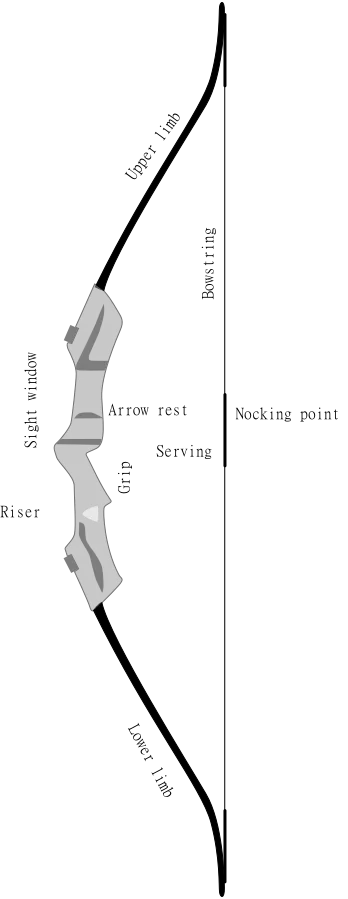
| Recurve riser | No cracks around the limb pockets, grip, or sight window | Pass: clean metal or wood surface. Fail: hairline cracks, impact marks, swelling | Often replacement, not repair | Yes |
| Recurve string | Serving wear, fraying, fuzzing, stretch, correct brace height, proper nock fit | Pass: smooth serving and stable brace height. Fail: loose nock fit, damaged servings, uneven brace height | Low to moderate; new string and setup | Usually no |
| Age and storage history | Dry storage, no heat damage, no basement moisture, known age | Pass: clear history, dry storage. Fail: unknown age, warped limbs, rust, mildew smell | Variable; sometimes full restring or limb replacement | Yes if history is unknown and damage is present |
| Total cost worksheet | Sale price plus strings, cables, press time, tuning, arrows, rest, sight, possible restring | Pass: total stays below comparable new setup by a wide margin. Fail: repairs erase the savings | Depends on missing parts and setup needs | Yes if total cost stops being a bargain |
Compound bow checks
For a used compound bow, pay close attention to limb condition, cam timing, string and cable wear, draw weight range, draw length compatibility, and the serial number. A bow press is often required for safe inspection and tuning, and that is not something to improvise with clamps, tools, or guesswork.
Recurve bow checks
For a used recurve bow, focus on limb alignment, riser cracks, string condition, brace height, nock fit, and age or storage history. Recurves have fewer moving parts, but a cracked riser or a set of damaged limbs still kills the deal. A clean-looking bow can still be unsafe if it has lived in heat or damp storage.
Say your local listing shows a 50-pound compound bow for a low price, but one cam is ahead of the other at full draw and the seller cannot explain the string age. That is not a minor tune issue. It can become a new string, cable set, and a timing correction before the bow is safe to shoot.
What should you check before paying?
Check the bow as a technician would, not as a bargain hunter would. Strings, cables, limbs, pockets, cams, and hardware all need a close look before money changes hands. If the bow includes a sight, rest, or release setup, confirm those parts work and are the correct style for the bow.
A used bow can look clean and still need a press, new strings, or a trip back into timing. Those costs matter because they can erase the savings you thought you found.
Strings, cables, and serving wear
Look for fraying, serving separation, fuzzing, and uneven twist consistency. On compounds, string and cable creep changes timing and can shift draw length. On recurves, string wear often shows up as a sloppy nock fit or a changing brace height. If the seller cannot say when the string was last replaced, assume it may be due soon.
A common rule of thumb is that worn strings and cables should be treated as a near-term replacement cost, not a cosmetic flaw. If the bow already needs fresh strings, price that in before you negotiate.
Limbs, pockets, cams, and hardware
Check for cracks, delamination, bearing wear, cam lean, and loose hardware. Limb pockets should hold the limbs tight without visible movement. Cams should rotate smoothly and stop evenly. Any crack in a limb or riser is a hard stop.
For compounds, a bow press is often needed to inspect certain parts safely. For recurves, the hardware is simpler, but a cracked riser or delaminated limb still makes the bow unsafe.
Arrow rest, sight, and release setup
Ask whether the bow includes the rest, sight, and, for compounds, a release aid or D-loop setup. Those parts are not always included in the sale price, and some are tied to the seller’s shooting style. Arrow compatibility also matters: spine match, shaft length, point weight, broadhead suitability, rest type, and nock fit all need to work together.
Suppose a seller includes arrows cut too short for your draw length and too stiff for the bow’s draw weight. The bow may still be sound, but the setup cost rises fast because the arrows no longer fit the new shooter.
What paperwork should you ask for?
Ask for the original receipt, service history, owner history, and the serial number if the bow has one. Provenance matters because stolen-property risk is real, and a bow with no clear background can become your problem after the sale. Serial verification does not make a bow perfect, but it does reduce uncertainty.
Business sellers often have better paperwork than private sellers, which is one reason they are usually safer. Still, do not skip the paperwork just because the seller has a storefront.
Original receipt and service record
A receipt helps confirm model, approximate age, and whether the bow came from a legitimate seller. Service records can show when strings, cables, or limbs were last replaced. If the seller has no paperwork at all, ask why.
Serial number and owner history
Match the serial number to the bow and ask who owned it before. A missing or altered serial number is a major red flag. The same is true when the seller’s story changes or the ownership trail is vague.
Stolen-property and transfer risk
Do not buy a bow if the seller refuses to discuss ownership, cannot explain where it came from, or pushes for a rushed cash-only handoff. Safe resale means more than a low price. It means you can reasonably believe the item is not stolen and is not tied to someone else’s sale history.
What will the real cost be?
The real cost is the sale price plus whatever the bow needs before it is ready to shoot. That can include strings, cables, tuning, press time, arrows, a rest, a sight, and maybe a full restring. If those additions erase the savings, the bow is no longer a bargain.
Use a total-cost worksheet before you commit. A bow that looks cheap at pickup can end up close to new-price territory once it is tuned and fitted to you.
- Sale price
- New strings or cable set, if needed
- Press time and tuning
- Arrows matched to draw weight and length
- Rest, sight, or nock point parts
- Possible limbs, cams, or hardware repairs
Price plus strings or cables
Strings and cables are often the first real added expense on a used compound bow. On a recurve, a new string is usually cheaper than compound string work, but it still affects the final price. A bow with visibly tired strings should be priced as a project, not as a ready-to-shoot rig.
Tuning, press time, and parts
Compound bows often need press time for inspection, timing, and replacement parts. That is why a used compound with good limbs but bad strings may still be worth buying if the overall cost stays low. If the repair list grows beyond a simple tune, walk through the math again before paying.
Arrows and setup extras
Arrow compatibility is part of the true cost. Wrong spine, wrong shaft length, or the wrong point weight can make a bow shoot poorly or dangerously. If the seller includes arrows, check whether they fit the bow and the shooter, not just whether they look new.
When should you walk away?
Walk away if you find cracks, delamination, cam damage, a serious fit mismatch, or missing history that makes the bow unsafe to trust. A cheap price does not rescue a bow with structural damage. If the seller wants you to ignore a problem, that is your signal to stop.
One bad sign may be negotiable. Two or more usually are not.
Cracks, delamination, or cam damage
Any crack in a riser or limb is a hard no. Delamination is also a hard no. Damaged cams, rough bearings, or visible cam lean can turn into expensive repairs and unsafe shooting. If these show up during inspection, do not rationalize them away.
Fit mismatch that cannot be fixed
If the bow is the wrong hand, too heavy to draw safely, or outside your draw length range, it is not the right bow for you. No amount of low pricing fixes that. Choose a bow that fits first and is affordable second.
Missing history or unsafe claims
If the seller cannot explain age, storage, service, or ownership, or makes claims that sound like they are hiding wear, step back. A bow that came from damp storage, has unknown string age, or lacks ownership proof can cost more than a safer alternative. That is especially true on private-sale deals.
Our picks by need
Budget weight check: Mougerk digital hanging scale
The Mougerk digital hanging scale is useful when you want a quick draw-weight check during a used-bow inspection. Based on the listed product details, it is a portable heavy-duty scale with 100 kg / 200 lb capacity and two AAA batteries not included. The drawback is obvious: it is a general hanging scale, so it does not tune a bow or replace proper setup work.
Use it as a screening tool, not as proof that a bow is safe. If a seller claims a draw weight that feels off, a scale helps confirm whether the bow is even in the right range before you spend money on strings, arrows, or a press.
Brace-height and nock-fit setup: Easton L Bow Square
The Easton L Bow Square is a simple aluminum measuring tool with a laser-etched scale. Based on the published details, it is meant for setting nocking point and brace height. The drawback is that it is a basic manual tool, so it helps with measurement but does not diagnose limb cracks, cam timing, or other hidden damage.
This is the kind of tool that helps confirm whether a recurve string is sitting where it should and whether a used bow is at a sensible brace height before a more detailed tune. It is light, cheap, and easy to keep in a range bag.
Compound press work: CENWTY compound bow press
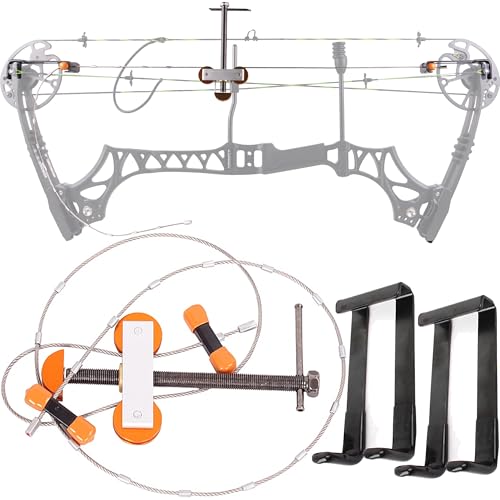
The CENWTY compound bow press is the relevant category of tool when a used compound bow needs safe inspection, string work, or tuning. Based on the product listing, it is a portable universal compound bow press. The drawback is that it is model-dependent equipment, so fit and safety depend on the exact bow design and correct use.
Do not improvise a press with random hardware. Many compound bow checks require a real press, and the wrong setup can damage the bow or injure the person doing the work. If the seller cannot show safe function because a press is needed, plan for a shop inspection.
Draw-weight screening: VBESTLIFE bow scale
The VBESTLIFE bow scale is a handheld option for recurve and compound bows, with a listed 15–100 lbs range. Based on the published details, it is portable and intended for draw-weight adjustment. The drawback is that it is still just a scale, so it tells you weight, not limb health, cam timing, or string condition.
This is the better choice when you want a hand-held way to confirm whether a used bow falls into a workable draw-weight range. It helps with fit decisions, but it does not replace a full inspection or a bow press where one is required.
Mistakes to avoid
Do not buy a bow because the price is low and the seller sounds confident. Do not skip the hand orientation check. Do not assume a compound is safe because it “looks fine.” Do not ignore the total cost after strings, cables, arrows, and tuning.
Also avoid paying before you have seen the serial number, asked about service history, and looked closely at limb pockets, cams, and serving wear. A used bow can be a good buy, but only when the bow itself, the fit, and the paperwork all pass together.
Frequently asked questions
How do I know if a used bow is stolen or unsafe?
Ask for the serial number, original receipt, service history, and a clear owner story. A missing or altered serial number, a seller who avoids questions, or a rushed cash-only deal are strong warning signs. Unsafe bows usually show cracks, delamination, or damaged cams, but stolen-property risk is a separate reason to walk away.
Should I buy a used bow from a shop or from a private seller?
A shop is usually safer because trade-in and business sales often come with better provenance and a more credible inspection path. Private sellers can be fine, but they require more checking and carry more risk. If the deal is in person, insist on a hands-on inspection and proof of ownership before paying.
What should I check on a used bow before buying it?
Check the riser, limbs, cams or wheels, strings, cables, limb pockets, hardware, and fit. For compounds, confirm draw length, draw weight, cam timing, and serial number. For recurves, check limb alignment, brace height, nock fit, and storage history. If any structural crack appears, treat it as a walk-away issue.
How much should I pay for a used bow?
A fair used bow should usually leave enough savings to justify any needed repairs, strings, cables, tuning, and arrows. The practical rule is simple: if the total cost is not at least 30% below a comparable new setup, the deal is weak. A cheap bow that needs major work is not cheap anymore.
What parts of a used bow wear out first?
Strings, cables, servings, and release-related hardware often show wear first on compounds. On recurves, strings and nock fit are common early issues, followed by limb storage damage if the bow was kept badly. Limb cracks, cam wear, and delamination are more serious because they point to structural trouble, not routine wear.
Can a used bow be repaired if it has problems?
Some problems can be fixed, such as worn strings, cable replacement, timing adjustments, and minor setup work. Other problems should end the sale, especially cracked limbs, cracked risers, or delaminated limbs. Repairable does not always mean worth repairing, so compare the fix cost against the savings before you buy.