Are Galaxy Takedown Bows Good? Galaxy Sage Review
Yes — Galaxy takedown bows, especially the popular Sage model, are good, well-built recurve bows that punch well above their beginner-friendly price. One thing worth knowing first: the Galaxy Sage and the Samick Sage share the exact same design lineage, since Galaxy Archery co-developed the bow and Samick has manufactured it under both names. Below, I break down the build quality, performance, and value so you can decide if one belongs in your quiver.
What Are Galaxy Takedown Bows?
Let’s start with the basics. Galaxy is a brand under Lancaster Archery Supply, a name most archers in the USA trust. Their takedown bows are recurve bows that you can disassemble into three parts: the riser (the handle) and two limbs. This makes them easy to store, transport, or upgrade. I remember the first time I took apart a takedown bow—it felt like magic, how something so powerful could pack down so small.
Galaxy offers several models, like the Sage, Aspire, and Bullseye, aimed at beginners, intermediates, and even some advanced archers. They’re designed for target shooting, hunting, or just having fun in your backyard. What I love about Galaxy is their focus on quality without breaking the bank. These bows are built to perform but won’t leave you eating ramen for a month.
Why Choose a Takedown Bow?
You might be wondering why a takedown bow is even worth considering. Well, let me share a story. A few years ago, I was traveling to a local archery tournament, and my old one-piece recurve was a nightmare to lug around. It barely fit in my car, and I was terrified of damaging it. That’s when I started looking at takedown bows, and Galaxy caught my eye.
Takedown bows are versatile. You can swap out limbs to adjust the draw weight as you get stronger or change your shooting style. They’re also portable, which is a game-changer if you’re hiking to a hunting spot or heading to the range. Plus, if a limb gets damaged, you don’t need a whole new bow—just replace the part. For someone like me, who’s always tinkering with gear, that’s a huge plus.
Build Quality and Design
When I first picked up a Galaxy Sage takedown bow, I was impressed by how solid it felt. The riser is often made of laminated wood or, in higher-end models, machined aluminum, giving it a sturdy yet lightweight feel. The limbs are typically fiberglass with a wood core, which makes them durable and smooth to shoot. I’ve dropped my Galaxy bow a couple of times (oops), and it’s held up like a champ—no cracks, no splinters.
The design is sleek but practical. Galaxy doesn’t go overboard with flashy colors, but their bows have a clean, professional look that I appreciate. The grip is comfortable, though I’ve heard some archers with smaller hands say it feels a bit bulky. If you’re worried about that, try holding one at a shop before buying. The takedown mechanism is simple—usually just a couple of bolts—and I’ve never had issues with limbs wobbling or misalignment, which can be a problem with cheaper brands.

Best Galaxy Sage Equivalent Pick
Samick Sage Takedown Recurve Bow 62in
Sold as Samick Sage on Amazon — the same Sage design Galaxy Archery co-developed and later rebranded, so this is the genuine equivalent to the Galaxy Sage this guide reviews.
- Best for: the exact Sage model this guide reviews and recommends
- Why we picked it: same design lineage and manufacturer as the Galaxy-branded Sage
- Main drawback: sold under the Samick name, not Galaxy, which can look confusing at checkout
Compare more options
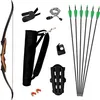 Option 1 Samick Sage Complete Bow and Arrow Set
| 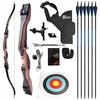 Option 2 Sanlida Noble Standard Beginner Recurve Bow Set
| 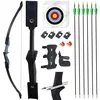 Option 3 SOPOGER Recurve Bow and Arrow Set (Budget)
|
As an Amazon Associate we earn from qualifying purchases.
Performance on the Range
Now, let’s talk about how these bows actually shoot. I’ve spent hours at the range with the Galaxy Sage and Aspire, and they’re a joy to use. The draw is smooth, with no jarring stacking (that’s when the draw weight spikes uncomfortably at full draw). I’ve shot 20-pound limbs for casual plinking and cranked it up to 40 pounds for hunting practice, and the transition felt natural.
Accuracy is where Galaxy shines for its price point. I’m no Olympic archer, but with a Galaxy bow, I can consistently hit the 10-ring at 20 yards after some practice. The bows are forgiving, meaning small mistakes in your form won’t ruin your shot as much as they might with a finicky high-end bow. For hunting, the higher draw weight options (up to 60 pounds on some models) pack enough punch for small to medium game, like deer or turkey, if you’re using the right arrows.
One thing to note: these bows aren’t whisper-quiet. You’ll get some string twang, especially if you don’t add a string silencer. I learned that the hard way when I spooked a rabbit during a backyard session. A quick fix with some cat whiskers or a dampener solved it, though.
Affordability and Value for Money
Let’s be real—archery gear can get expensive fast. When I was starting out, I winced at the price tags on some bows. Galaxy, though, keeps things reasonable. Most of their takedown bows, like the Sage, retail between $100 and $200, depending on the model and accessories. Compare that to premium brands like Hoyt or PSE, where you’re easily dropping $500 or more, and Galaxy starts looking like a steal.
You’re not just paying for the bow itself. Many Galaxy models come with essentials like a string, rest, and sometimes a sight or stabilizer. I remember unboxing my first Sage and being thrilled that I could start shooting right away without buying a ton of extras. For beginners or budget-conscious archers, this is a huge win. Even as an intermediate shooter, I appreciate that I can upgrade limbs or add a fancy sight without feeling like I’m breaking the bank.
Here’s a quick comparison of Galaxy’s popular takedown models:
| Model | Price Range | Draw Weight Options | Best For |
|---|---|---|---|
| Galaxy Sage | $120-$150 | 20-60 lbs | Beginners, Hunting |
| Galaxy Aspire | $150-$200 | 20-50 lbs | Intermediate, Target |
| Galaxy Bullseye | $100-$130 | 15-35 lbs | Youth, Beginners |
Ease of Use for Beginners
If you’re new to archery, the Galaxy Sage is one of the best starter bows out there. I’ve coached a few newbies at my local club, and I always recommend Galaxy for its simplicity. The takedown design means you can start with a lower draw weight (say, 20-25 pounds) to learn proper form without straining your muscles. As you get stronger, you can upgrade to heavier limbs without buying a new bow.
Setting up a Galaxy bow is straightforward. I’ve helped friends assemble theirs in under 10 minutes with just an Allen wrench. The instructions are clear, and there’s no need for a bow press or fancy tools. Plus, Galaxy bows are compatible with most standard accessories, like sights, plungers, and stabilizers, so you can customize without hassle.
One tip for beginners: invest in a good archery glove or tab. I learned the hard way that shooting without one can leave your fingers sore for days. Galaxy bows are gentle on the hands compared to some, but proper gear makes a big difference.
Durability and Maintenance
I’m not the most careful with my gear, so durability matters to me. Galaxy takedown bows are built to last. The fiberglass limbs can handle thousands of shots without losing their spring, and the risers hold up well against wear and tear. I’ve taken my Sage through muddy fields and rainy days, and after a quick wipe-down, it’s good as new.
Maintenance is minimal. Keep the string waxed, check the bolts for tightness, and store the bow unstrung when not in use. I’ve had my Galaxy for three years now, and it’s still shooting like the day I bought it. If you’re rough on your equipment like I am, you’ll appreciate that these bows can take a beating.
Customization Options
One of my favorite things about Galaxy takedown bows is how customizable they are. The International Limb Fitting (ILF) system on some models, like the Aspire, lets you swap limbs with other ILF-compatible brands. This means you can mix and match to get the exact feel you want. I’ve paired my Aspire riser with higher-end limbs for a custom setup that rivals pricier bows.
You can also add accessories to suit your style. I’ve decked out my Sage with a basic sight and stabilizer for target shooting, but for hunting, I strip it down to keep things light. Galaxy’s risers have standard mounting points, so you’re not stuck with proprietary gear. Just be sure to check compatibility if you’re mixing brands.
Comparing Galaxy to Other Brands
I’ve shot bows from Samick, PSE, and Hoyt, so I can tell you how Galaxy stacks up. Compared to Samick’s Sage (a close cousin), Galaxy’s version feels slightly more refined, with better fit and finish. PSE offers more power in their higher-end models, but you’ll pay double or triple the price. Hoyt is the gold standard for competitive archers, but their bows are overkill for most casual shooters or hunters.
Where Galaxy excels is value. You’re getting 80% of the performance of a premium bow for half the cost. If you’re an Olympic hopeful, you might outgrow a Galaxy in a year or two. But for most of us—hobbyists, hunters, or club shooters—it’s more than enough.
Who Are Galaxy Takedown Bows For?
Let me paint a picture. If you’re a beginner looking for an affordable, reliable bow to learn the ropes, Galaxy is perfect. If you’re an intermediate archer who wants a versatile bow for target practice or hunting, Galaxy has you covered. Even advanced shooters on a budget, like me, can appreciate the quality and customization options.
However, if you’re chasing world-class competition or need a bow for extreme conditions (like heavy-duty hunting in harsh weather), you might want to look at higher-end brands. Galaxy’s bows are fantastic all-rounders, but they’re not specialized for elite performance.
Real-World Experiences
I’ve taken my Galaxy Sage on countless adventures, from local 3D shoots to hunting trips in the woods. One memorable day, I was at a 3D range with friends, shooting at foam deer and bears. My Sage, with 40-pound limbs, was hitting targets at 30 yards with ease. My buddy, who had a pricier PSE, was impressed by how well it performed for the price.
On the flip side, I’ve noticed that Galaxy bows can feel a bit heavy for all-day shooting, especially the wooden-riser models. If you’re planning a long hunting trip, consider a lighter aluminum riser or take breaks to avoid fatigue. Also, while the included strings are decent, upgrading to a custom string can improve performance and reduce noise.
Tips for Getting the Most Out of Your Galaxy Bow
Here are a few tricks I’ve learned to make your Galaxy takedown bow shine:
- Tune Your Bow: Spend time adjusting the brace height and nocking point. It’s a pain at first, but it makes a huge difference in accuracy.
- Upgrade the String: A high-quality string, like a Flemish twist, can reduce vibration and noise.
- Practice Form: Galaxy bows are forgiving, but good form is key. Watch YouTube tutorials or join a local club to refine your technique.
- Experiment with Accessories: A simple sight or stabilizer can elevate your shooting without costing much.
The Community Perspective
I’ve talked to dozens of archers at my local range, and Galaxy has a solid reputation. Beginners love the price and ease of use, while seasoned shooters appreciate the ILF options for customization. Online forums, like ArcheryTalk, echo this sentiment—Galaxy bows are often recommended as the go-to for budget-conscious archers who don’t want to sacrifice quality.
That said, some folks wish Galaxy offered more color options or lighter risers. Others mention that the included accessories (like the sight) feel a bit basic. I get it—fancy gear is nice—but for the price, it’s hard to complain.

Final Thoughts
So, are Galaxy takedown bows good? In my experience, they’re more than good—they’re a fantastic choice for most archers. Whether you’re just starting out, hunting in the woods, or competing at a local club, Galaxy delivers quality, affordability, and versatility. I’ve loved every moment with my Sage, from the satisfying thwack of an arrow hitting the target to the ease of tossing it in my car for a weekend shoot.
These bows aren’t perfect. They’re not the lightest, quietest, or most prestigious option out there. But for the price, they punch way above their weight. If you’re in the USA and looking for a reliable, budget-friendly takedown bow, Galaxy is tough to beat. Grab one, hit the range, and let me know how it feels—I bet you’ll be as hooked as I am.
FAQs About Galaxy Takedown Bows
Are Galaxy takedown bows suitable for beginners?
Absolutely! Galaxy bows, like the Sage, are perfect for beginners. They’re affordable, easy to set up, and come with forgiving designs that help you learn proper form without frustration. Start with a lower draw weight, like 20-25 pounds, and you’ll be hitting targets in no time.
Can I use a Galaxy takedown bow for hunting?
Yes, many Galaxy models, especially those with draw weights of 40-60 pounds, are suitable for hunting small to medium game, like deer or turkey. Just make sure you’re using appropriate arrows and broadheads, and check local regulations.
How do I maintain my Galaxy takedown bow?
Maintenance is simple. Wax the string regularly, check the limb bolts for tightness, and store the bow unstrung in a cool, dry place. Inspect for cracks or wear before shooting, and you’ll keep it in great shape for years.
Are Galaxy bows compatible with other brands’ accessories?
Most Galaxy takedown bows use standard mounting points, so you can add sights, stabilizers, or rests from other brands. If you’re using an ILF model, like the Aspire, you can even swap limbs with other ILF-compatible brands.
Where can I buy a Galaxy takedown bow?
You can find Galaxy bows at Lancaster Archery Supply’s website or store, as well as other online retailers like Amazon or 3Rivers Archery. Local archery shops may also carry them, so check nearby if you want to try before you buy.