Face Pressure and String Contact in Arrow Direction Errors
If left-right misses change with anchor pressure or face contact, treat the launch as a contact problem first: any contact point that moves the nock by a few millimeters or so can shift impact side. Ignoring it sends tuning the wrong direction and hides grip torque or plucking. This guide maps each pressure point, shows how it moves the nock, and separates it from hand torque and string release errors.
This guide is part of our Arrow direction guide for archers series.
What you’ll need


- Bow set up safely with the sight, peep, and arrows you normally shoot
- Safe target face at close range
- Phone or camera for side and slightly rear video
- Notebook or scorecard for left-right impact notes
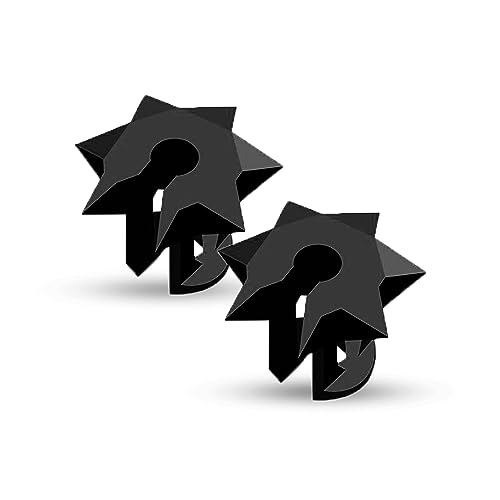
- Optional kisser button for a mouth reference
- Optional Bowmar Nose Button or similar nose reference
- One consistent draw check for repeatable anchor reference
Why face pressure changes arrow direction
String pressure on the face can create inconsistency. The release changes the bowstring path at the same moment the arrow starts moving, so a cheek, chin, or nose contact point that changes from shot to shot can steer the nock left or right. For right-handed archers, more pressure tends to miss left; less pressure can send the arrow right.
That side shift often shows up sooner with broadheads than with field points because broadheads react more sharply to launch errors. A centered sight does not cancel a bad launch. It only hides it until distance or wind gives the error room to show.
What bowstring-to-face contact should look like
Contact should be light and repeatable. For a release aid, the string should touch the tip of the nose lightly, not press hard into the face or push sideways across the nose. With a kisser, the corner of the mouth can help show whether face pressure is changing shot to shot.
Head movement matters too. Moving the head to find the peep can change face contact from shot to shot. Keep your head upright while aiming, then keep the string lined up the same way every shot.
How to map your miss pattern
Start at close range and write down where each arrow lands left or right. Then compare the same setup at a longer distance. If the side error grows as distance increases, the launch error is real, not just noise in the group. One common first-timer mistake is changing three things at once: anchor, sight, and grip.
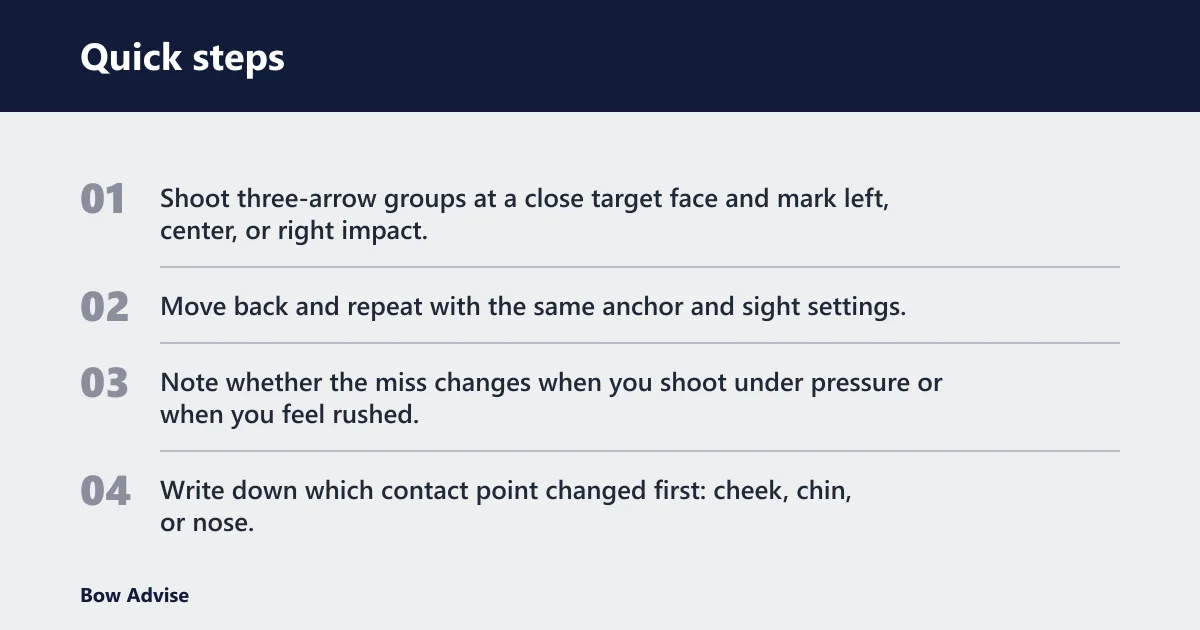
- Shoot three-arrow groups at a close target face and mark left, center, or right impact.
- Move back and repeat with the same anchor and sight settings.
- Note whether the miss changes when you shoot under pressure or when you feel rushed.
- Write down which contact point changed first: cheek, chin, or nose.
Face pressure diagnostic matrix
| Contact point | Observed miss direction | Most likely form fault vs equipment cause |
|---|---|---|
| Cheek | Right-handed: heavier cheek pressure often drives left; lighter cheek pressure often drifts right. Left-handed: reversed. | Form fault: head hunting the peep or cheek leaning into the string. Equipment cause: peep height or D-loop length forcing the face into the string. |
| Chin | Right-handed: heavier chin contact often drives left; lighter chin contact often drifts right. Left-handed: reversed. | Form fault: anchor floating low or jaw pressure changing at full draw. Equipment cause: anchor point set too high or too low for the release style. |
| Nose | Right-handed: more nose pressure usually drives left; less pressure can send shots right. Left-handed: reversed. | Form fault: nose reaching for the string or moving to find the peep. Equipment cause: inconsistent nose reference or a peep position that pulls the head forward. |
How to separate face pressure from grip torque
Bow-hand torque can look like a face-pressure problem because both move impact sideways. A tight grip can twist the handle and rotate the sight, while facial pressure moves the nock at release. Separate them before changing your anchor. If the front hand changes first, the face is not the first suspect.
- Set the front hand soft, with fingers relaxed and not squeezed against the bow.
- Watch the bow from the side and note whether the sight rotates at release.
- Keep the front arm pointed at the target through the shot and for a beat after.
- If the miss follows bow roll, fix the grip before touching the anchor.
Suppose a right-handed archer lands three arrows left at 40 yards, but the same bow groups centered at 20 yards. If the sight rotates on video as the hand clamps harder, that points to grip torque first. If the bow stays calm and the nose presses harder on the third shot, the face contact is the better lead.
How release style changes anchor pressure
Release type changes where the hand sits and how much facial pressure shows up. A wrist-strap index-finger release often anchors differently than a handheld hinge, thumb button, or resistance-activated release. The release hand should move straight back. If it sweeps out or down, it can change both face contact and nock travel.
Wrist-strap index release checks
- Set the wrist strap so the trigger finger reaches without curling the head forward.
- Anchor with the same jawbone and mouth references each shot.
- Use video to confirm the trigger hand stays behind the jaw at release.
Thumb button, hinge, and resistance release checks
- Set the grip so the hand settles behind the jaw, not against the face.
- Check that the release hand travels straight back, not outward around the cheek.
- Recheck the peep alignment after a dozen shots; fatigue often changes head position first.
Repeatability matters more than copying an exact-looking anchor shape. The anchor should use jawbone, nose, and mouth references that can be repeated shot to shot without forcing extra string pressure. Different faces and draw lengths need different contact points. A kisser button can help show whether the pressure is stable; a Bowmar Nose Button can expose when head position changes.
- Keep the head still while drawing to the peep.
- Set one light anchor reference and keep it identical for the next 6 arrows.
- Use side and slightly rear video to check whether the string touches the same points every shot.
- Adjust fit only after the contact pattern is clear; change one thing, then retest.
Say a left-handed archer gets right misses only after the third end, when the nose starts touching lower on the string. That pattern points to changing head position or fatigue, not a sight issue. A one-hole change in anchor can be enough to expose it on video, especially if the nose reference disappears on the last shot.
How do I tell if my string contact is causing left-right misses?
Start by checking whether the miss direction changes with face pressure, not with sight movement. If heavier contact shifts impacts one way and lighter contact shifts them the other way, the string contact is the lead suspect. Video from the side and slightly behind can show whether the nose, cheek, or chin contact changes at full draw or release.
Look for the same anchor references on every shot. If the peep stays lined up but the cheek or chin slides into the string differently, that is not a tuning problem first. It is a launch-variable problem.
Practical yes/no checklist for hunters and target archers
- Did the sight stay fixed while the side miss changed? Yes or No
- Did the nose touch the string the same way on every shot? Yes or No
- Did the release hand move straight back? Yes or No
- Did the front hand stay relaxed? Yes or No
- Did the peep line up without moving the head? Yes or No
Frequently asked questions
Can face pressure on the string make arrows hit left or right?
Yes. Inconsistent facial pressure can move the nock at release and shift impact side, even when the sight picture looks centered. For right-handed archers, heavier pressure tends to send arrows left and lighter pressure can send them right. Left-handed archers usually see the opposite pattern.
Why do my arrows move left when I press my face harder into the string?
Harder pressure changes the launch path before the arrow clears the bow. That extra contact can move the nock sideways, which is why the miss appears left for right-handed archers. If the sight and front hand are stable, check cheek, chin, and nose pressure next.
How much face pressure on the string is too much?
Too much is any pressure that changes from shot to shot or forces the head to chase the peep. The string should touch the tip of the nose with a release aid, and it should feel light, repeatable, and comfortable at full draw. Sideways mashing is too much.
What is the difference between nose contact and cheek pressure on the string?
Nose contact is usually a light reference that helps align the anchor. Cheek pressure is broader and more likely to vary with head tilt or peep hunting. Nose touch can help when it stays light; cheek pressure is more likely to create left-right spread if it changes between shots.
Can inconsistent anchor pressure cause broadhead misses?
Yes. Broadheads often reveal launch inconsistency sooner than field points because they react strongly to side-loading at release. If broadheads group away from field points and the gap changes with face pressure, check the anchor first, then the grip, then the release path.
How do I stop my string from pressing into my face at full draw?
Keep the head upright, set a repeatable jawbone or mouth reference, and avoid moving the head to find the peep. If a release aid is used, the string should rest lightly on the nose rather than pushing sideways. If needed, adjust peep height or D-loop length one step at a time and retest.