Arrow Direction Issues With Finger Release vs Mechanical
Finger release to mechanical release changes about one arrow width usually point to the release aid, nocking point, or center-shot, not the bow itself. Miss that, and you chase rest settings while your sight picture lies to you. I’ll map the left-right changes, then show what I check first on recurve fingers and compound release setups.
This guide is part of our Arrow direction guide for archers series.
| Decision factor | Arrow Direction Issues With Finger Release | Mechanical Release: What Changes | Winner |
|---|---|---|---|
| Lateral string movement at the shot | String rolls off three fingers and moves sideways | String separates in a near-straight line through a D-loop | Mechanical Release: What Changes |
| Sensitivity to bow hand torque | High, because the string and grip errors stack together | Lower, but torque still moves impact left or right | Mechanical Release: What Changes |
| Anchor reference changes | Face contact and tab reference matter a lot | Peep, kisser, and release hand geometry change the picture | Tie |
| First tuning check after a switch | Nocking point, center shot, and spine window | D-loop length, peep alignment, nocking point, and draw length | Mechanical Release: What Changes |
| Diagnostic clarity | Good for reading form faults, but less clean on the line | Cleaner split between form faults and tune faults | Mechanical Release: What Changes |
Arrow direction changes when you switch release styles
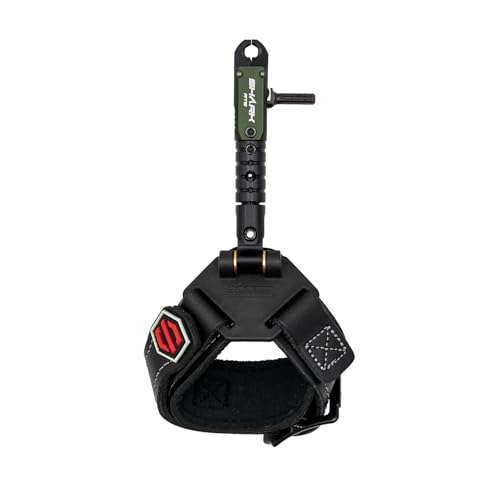

The shot changes because the string leaves the hand in a different way. With fingers, the string slips off three-finger contact and the arrow sees archer’s paradox; with a mechanical release, the string leaves through a D-loop with little lateral deflection. That shift can move your impact left or right even when the bow seems to be fine.
What changes at the shot: finger roll versus direct string separation
Finger release uses a Mediterranean draw and three-finger contact, so the string rolls off the fingers in sequence. That creates lateral string movement, and it makes the arrow react to small changes in anchor, hand pressure, and timing. Mechanical release aids open more like a direct connector than a hand with joints in the way.
Why the same bow can send arrows left or right after a switch
The bow is not seeing the same launch anymore. A finger setup can live with one kind of setup error because the string path already includes lateral movement, while a release aid can expose a nocking point or center-shot problem that finger shooting hid.
According to Thumb Release Archery: 7 Steps to Beat Index Trigger Punch — The thumb release article describes a blind bale drill at 3 feet.
Finger release vs mechanical release: what changes physically
Finger shooting adds string movement and archer’s paradox to the launch. Mechanical releases are commonly used with compound bows, and they reduce much of that side load while releasing the string more consistently than fingers. That does not erase torque, bad anchor geometry, or a poor tune. It just changes which fault shows up first.
Finger release: Mediterranean draw, three-finger contact, and lateral string movement
With fingers, the arrow bends around the riser and launches through archer’s paradox. That is normal when the shot is consistent. The problem starts when the release varies from shot to shot, because the string rolls off the fingers in a slightly different path every time and the arrow reads that change as left-right impact.
Mechanical release: D-loop, caliper, thumb, hinge, and tension-activated styles
A mechanical release hooks onto a D-loop tied to the bowstring. Caliper, thumb, hinge, and tension-activated styles all reduce the finger input that can twist the string, and wrist-trigger releases are the most popular style among compound shooters. The release aid still needs a clean anchor and clean execution; it only removes one source of error.
How back tension and punch risk differ across both
Back tension can help both systems because it keeps the shot moving cleanly and can reduce punching. On a compound, the wrong trigger style or a hard collapse can still throw arrows left or right. On fingers, a rushed loose hand or a plucked string shows up even faster because the string path is already moving sideways.

Why do my arrows hit left or right after changing release style?
Left-right impact after a release change usually means the release style changed the launch line, not the sight. If arrows move left after going to a release aid, I first suspect the anchor, the D-loop length, or a right-hand torque issue. If arrows move right after switching to fingers, I look hard at string roll, face contact, and spine window before I move the rest.
Left impact after switching to a release aid
Left impact often shows up when the new release aid shortens effective draw length or changes the anchor reference. A D-loop that is too long or too short can shift where the string sits at full draw. A hard grip can add bow hand torque too, so I do not blame the rest until I have checked hand pressure and peep alignment.
Right impact after switching to fingers
Right impact with fingers often points to a weaker launch line, a pluck, or a spine that no longer matches the new hand method. The arrow may be reacting to the added lateral string movement rather than a bad sight setting. If the release is clean but the misses stay right, I look at nocking point and center-shot before I start chasing point weight.
When bow hand torque is the real cause
Bow hand torque can move arrows left or right in both systems. Fingers make that error easier to see because the string already adds side motion, but a release aid does not cancel it. If the pattern shifts with grip pressure more than with anchor changes, I treat torque as the main suspect.
What setup changes should I re-check first?
I re-check anchor geometry first, then draw length, peep alignment, and the D-loop or tab reference. After that I look at nocking point and center-shot. That order saves time because it separates the human reference points from the bow tune and keeps me from moving the rest to cover a bad anchor.
Anchor point geometry and face references
Finger shooters often anchor with face contact, tab position, or string picture around the nose and chin. Release-aid shooters may use a peep and kisser or another compound reference frame. If the reference changes, the arrow direction can change even when the bow tune is still acceptable.
Draw length, peep alignment, and D-loop length
A D-loop changes the draw length reference, and a thumb release article says a D-loop may need to be slightly shorter than the old wrist-release setup. I treat that as a real check, not a theory. If the peep sits wrong or the draw feels cramped, the body compensates and the arrow follows.
Nocking point and center-shot sanity checks
These are my first bow-side checks after the shot sequence looks clean. A changed release style can expose a nocking point that was barely acceptable before. If the arrow leaves with a consistent paper tear that matches the miss, I fix that before I buy new shafts.
Do I need a different arrow spine for finger release vs mechanical release?
Sometimes, yes. Finger shooting often calls for a somewhat different spine window because the arrow has to clear the riser and handle the extra side load from finger release. A mechanical release can reveal a weak or stiff arrow that finger shooting may have hidden, so I go by the impact pattern and tune first rather than by habit.
When finger shooting often needs a different spine window
Finger shooting can favor a shaft that feels different than a release aid setup, because the arrow is reacting to archer’s paradox and lateral string movement at the same time. If a finger shooter changes to a release aid, the old shaft may still work, but it may no longer sit in the cleanest spine window.
When a release aid exposes a spine or tune problem
A release aid strips away some of the string roll, so a bad center-shot or weak spine can become obvious very quickly. That is why a compound can look fine with fingers and then blow left or right once a mechanical release is used. The new release did not create the problem; it exposed it.
How to decide before buying new arrows
I do not change arrows first. I check anchor, draw length, D-loop length, and the paper tear, then I compare close-range and longer-range group shape. If the miss pattern stays consistent after those checks, the spine may be wrong. If the pattern moves when I clean up the release, the arrows stay.
Switch-over diagnostic table: 8 failure cases
This is the map I want when someone switches release style and the group drifts. Start with the impact pattern, then read the likely cause, then make the first check. It keeps you from treating every left-right miss as a spine issue.
| Case | Observed pattern | Likely cause | First check |
|---|---|---|---|
| 1 | Left impact with finger release | Pluck, collapse, or bow hand torque | Check grip pressure and anchor consistency |
| 2 | Right impact with finger release | Weak launch line, string roll, or stiff spine | Check nocking point and center-shot |
| 3 | Left impact with mechanical release | D-loop length, draw length, or left torque | Check D-loop fit and peep alignment |
| 4 | Right impact with mechanical release | Collapsed front shoulder, punching, or weak release hand control | Check back tension and trigger hand position |
| 5 | High or low impact after the switch | Nocking point moved relative to the new reference | Check arrow level at full draw |
| 6 | Paper tear matches the miss | Tune issue, not sight issue | Check rest height and center-shot before spine changes |
| 7 | Group shift only at distance | Small form fault or marginal spine showing later | Check anchor repeatability and arrow weight consistency |
| 8 | Good indoor groups, bad field groups | Release aid or finger control breaks down under full aim time | Check back tension and target panic or punch |
What tuning changes are needed when moving from fingers to a release aid?
Start with the reference points, not the arrows. I check nocking point, peep alignment, and draw length first, then I walk into center-shot and paper tune. That order fits both recurve fingers and compound release setups, but the compound path needs the D-loop and release hand position added to the list.
Recurve fingers: what I re-check
On a recurve, finger tabs and gloves are the traditional release aids, and the string path still carries finger input. I re-check brace height, nocking point, and crawl or anchor repeatability before I touch arrow spine. If the face contact changes, the arrow can move even when the bow is tuned well.
Compound release aid: what I re-check
On a compound, I re-check the D-loop, release length, peep, and trigger style. If the release is an index finger model, punching can make the bow look out of tune when the real problem is execution. A hinge or tension-activated release often gives cleaner feedback, but it still needs a stable anchor.
What are the most common arrow direction mistakes when changing release style?
The most common mistake is to read every left-right shift as a spine problem. The second is to keep the old anchor picture after changing to a release aid, especially when the D-loop changes draw length. The third is to move the rest before checking grip torque and reference points.
How to read the pattern before moving equipment
I look for whether the miss pattern is repeatable. If it shifts with anchor and grip changes, it is form or reference. If it stays put after those checks, I tune the bow. That order is faster than changing three things and hoping the group tells the truth.
Choose Arrow Direction Issues With Finger Release if… / Choose Mechanical Release: What Changes if…
Choose Arrow Direction Issues With Finger Release if you shoot recurve with a Mediterranean draw, use three-finger contact, or want the arrow’s left-right behavior to tell you about hand pressure and anchor consistency. Choose Mechanical Release: What Changes if you shoot a compound with a D-loop and want a cleaner line into the shot, less lateral string input, and a clearer split between release error and tune error.
If you are moving from recurve fingers to a compound release aid, keep the diagnosis separate. The same arrow can work through the change, but only after anchor geometry, draw length, peep alignment, and center-shot all agree with the new release style. That is the clean path.
Frequently asked questions
Does arrow direction change when I switch from finger release to mechanical release?
Yes. The arrow often moves because the string leaves the hand differently, not because the bow changed. Finger release adds lateral string motion and archer’s paradox, while a mechanical release separates the string in a straighter line through a D-loop. That alone can move impact left or right.
How does a mechanical release affect arrow flight compared with fingers?
A mechanical release reduces lateral string input and makes the launch line cleaner. That usually makes bad anchor or torque easier to spot. It does not erase poor tune, and it does not fix a collapsing shot. It simply removes one source of movement from the system.
Can I use the same arrow setup for recurve fingers and compound release aid?
Sometimes the shaft will work, but the setup usually needs re-checking. Recurve fingers and compound release aid setups use different references, different release paths, and often different draw-length feel. Check nocking point, center-shot, and your anchor before assuming the old setup is correct.