How to Fix Arrow Direction Drift: Center Shot
Check center shot first, but only blame it for left-right drift after you verify nock point, brace height, spine, rest alignment, and grip torque; on compounds, start with the arrow centered at the berger hole or slightly outside it, then confirm bare shaft impact. Guessing wrong wastes tuning time and can send you toward the wrong rest or arrow change. This guide gives a step-by-step diagnostic order to separate poor center shot from spine, rest, nock, and torque problems.
What you’ll need
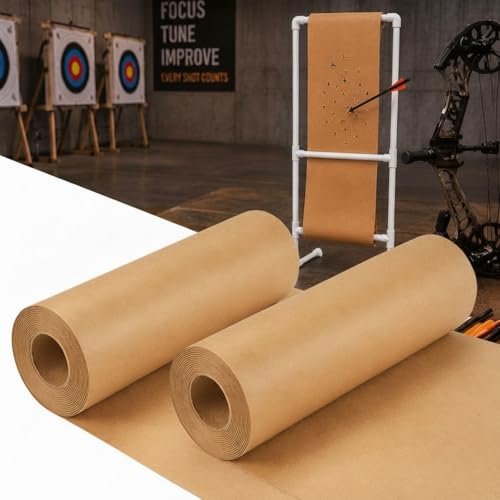


- Paper tuning frame or butcher paper
- Bare shafts and fletched shafts
- Arrow rest tool or bow wrench, if your rest needs one
- Tape measure or ruler for setup checks
- A small target at 6 to 10 feet
- Arrow shaft labels or tape for marking test arrows
Why arrows drift left or right
Steady left-right drift usually points to launch error, while random scatter usually points to form, grip, or inconsistent arrows. A sighted-in bow can still miss left or right because the sight only changes point of aim, not how the shaft leaves the bow.
Center shot affects the lateral launch line. It also works with rest position, nocking point height, and arrow spine. If one of those is off, the bow may group acceptably at one distance and drift at another.
Say your groups land 3 inches left at 20 yards with no up-down pattern change. That is different from a 6-inch circular group with no direction bias. The first pattern calls for a setup check; the second often needs form or consistency work first.
Is poor center shot the real cause?
Use a short-range test order before moving the rest. If paper tear, bare shaft impact, and group direction all point the same way, center shot becomes more likely. If those three disagree, spine, nock height, or torque is the better lead.
Do not move the rest first just because a sighted group drifts. Start at 6 to 10 feet, then compare paper and bare shaft. On compounds, broadheads can confirm the problem later, but they should not be the first proof.
What you’ll check first
- Verify the bow is safe and undamaged before tuning.
- Set the initial center shot reference from the bow type, not a guess.
- Check the nocking point and brace height before touching the rest.
- Shoot paper at about 6 to 10 feet, then compare the tear with bare shaft impact.
- Only then move the rest in about 1/32-inch steps and retest.
Center shot adjustment steps
Center shot is the lateral starting point for the shaft relative to the string and riser. On a compound, many bows often start near the berger hole; on a recurve, the shaft often starts slightly outside center. That starting point is not final tuning. It is only the baseline.
- Measure from the riser centerline to the arrow shaft and record the starting position.
- Set the rest so the shaft clears the riser and launch path cleanly.
- Set nocking point height before lateral changes; on compounds, confirm D-loop height and nock pinch are not forcing the shaft.
- Shoot three arrows, then read the result before changing anything else.
- If needed, move the rest 1/32 inch toward the tear correction and retest.
For a compound, a rest that sits too far in or out can mimic a spine error. For a recurve, the arrow shelf and rest type can change the feel of the correction. A drop-away, whisker biscuit, or spring-loaded rest also changes how much clearance you get at launch.
How do paper tears point to the problem?
Paper tuning at 6 to 10 feet can separate rest-height problems from center shot errors, but only if the shooter form stays clean. A left tear or right tear is a clue, not a final verdict. A bad grip can create the same tear pattern.
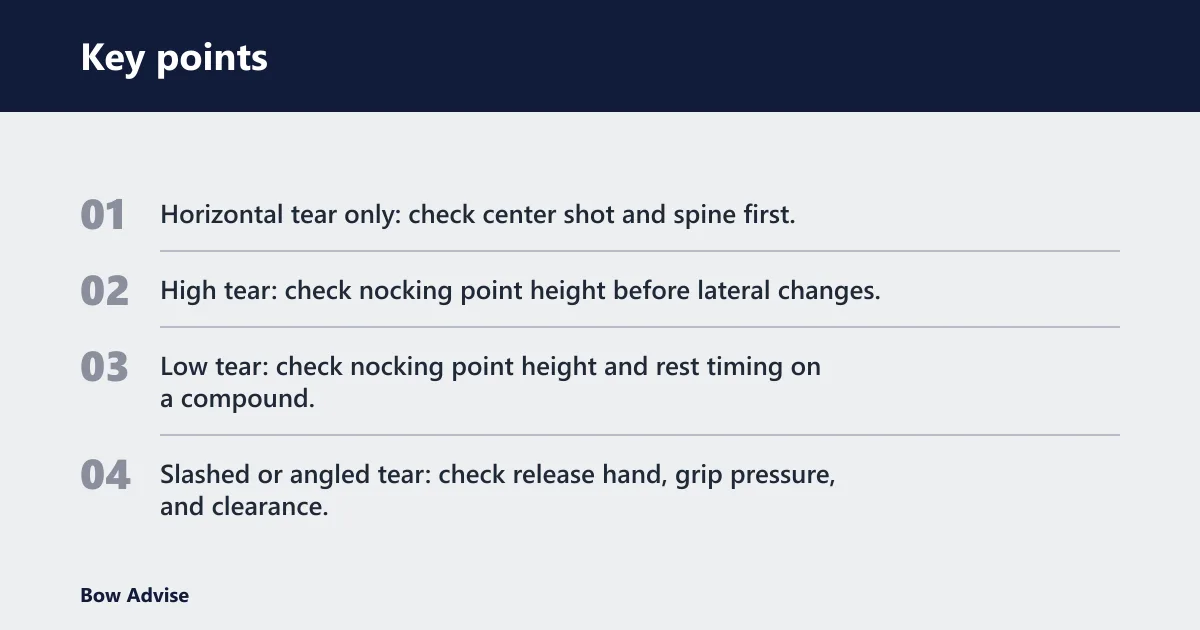
For a right-handed compound, a left tear often suggests the shaft is leaving weak or the rest is too far in; a right tear often suggests the opposite. For a recurve, the same tear can come from spine, nocking point height, or arrow tune, so the rest should not be blamed first.
Read the tear before moving the bow
- Horizontal tear only: check center shot and spine first.
- High tear: check nocking point height before lateral changes.
- Low tear: check nocking point height and rest timing on a compound.
- Slashed or angled tear: check release hand, grip pressure, and clearance.
Picture a compound that shows a clean left tear and a bare shaft landing left of the fletched arrow. If the grip is relaxed and the release is clean, that points to weak dynamic spine or a rest position that is too far in, not to the sight pin.
How do bare shafts and broadheads confirm it?
Bare shaft tuning is more sensitive than broadhead grouping at short range because the unfletched shaft shows how the bow launches the arrow before the vanes correct it. Broadheads can confirm a launch problem later, but broadhead mismatch alone does not prove center shot is wrong.
Watch for the fletching to recover a bad launch or fail to correct it. If the bare shaft stays left or right while the fletched arrow groups well, the setup may still be close, but the arrow is not leaving perfectly. If both drift the same way, the issue is larger.
Use this follow-up order
- Shoot one bare shaft and two fletched arrows from the same distance.
- Compare impact left-right, not just group size.
- On compounds, add broadheads only after bare shaft and paper agree.
- If broadheads hit left of the field points, recheck center shot and spine before chasing sight pins.
Arrow drift matrix
This matrix links the symptom pattern to the likeliest cause and the next test. Use it in order. Do not change the rest, nocking point, and arrow spine at the same time, or the result will be hard to read.
| Symptom pattern | Most likely cause | Next test | Adjustment order: compound | Adjustment order: recurve |
|---|---|---|---|---|
| Left misses with no paper tear match | Torque or weak dynamic spine | Relax grip, repeat paper at 6 to 10 feet, then shoot a bare shaft | Check grip first, then rest position | Check grip and spine before rest changes |
| Right misses with no paper tear match | Torque, stiff spine, or rest too far out | Shoot bare shaft with the same point weight and draw | Confirm rest alignment, then spine | Confirm nocking point and arrow length first |
| Left paper tear | Rest too far in or weak spine | Move rest 1/32 inch out and retest | Rest before point weight | Spine and nock height before rest movement |
| Right paper tear | Rest too far out or stiff spine | Move rest 1/32 inch in and retest | Rest before changing arrow length | Nock height and spine before rest changes |
| Bare shaft hits left of fletched | Weak dynamic spine or center shot too far in | Change point weight or rest by one step, then retest | Rest first, then point weight | Check spine, then nocking point |
| Broadheads hit left of field points | Arrow not recovering straight | Confirm paper and bare shaft before moving the sight | Rest and spine check | Spine and fletching check |
Common mistakes
Chasing center shot before checking spine wastes time. A 300, 400, or 500 shaft can behave differently once draw weight, arrow length, point weight, and release style are added. A stiff shaft can look like a wrong rest setting.
Changing rest and nocking point at the same time hides the cause. So does using a broadhead group alone as proof. Bow torque is another trap. A tight grip or wrist rotation can push impacts left or right and make a good setup look wrong.
Suppose a beginner with a 28-inch draw and a 400 spine shaft sees right impacts after a rest move. If the nocking point was also raised at the same time, the result tells you very little. Revert one change and repeat the same short-range test.
How do I fix arrow flight after adjusting the arrow rest?
After a rest change, retest at the same distance with the same arrow and grip. If the tear improves but does not disappear, keep the same arrow and move the rest only 1/32 inch in the same direction. If the result gets worse, go back to the prior setting.
- Reset the sight pin so point of impact stays visible.
- Shoot three arrows from 6 to 10 feet.
- Keep the best paper tear and bare shaft pattern, not the biggest group.
- Repeat the same setup before every new adjustment.
Can nock position or arrow spine make center shot problems worse?
Yes. A nocking point that sits too high or too low can create false left-right symptoms, especially when the rest height is also off. Arrow spine can do the same. A shaft that is too weak or too stiff can point to the wrong center shot even when the rest is close.
Check point weight, shaft length, and draw weight before changing the rest again. If the arrow length is long or the point is heavy, the dynamic spine weakens. That can make a proper center shot look wrong on paper and in bare shaft impacts.
How do I know whether the issue is center shot, rest height, or torque?
Center shot and rest height are setup issues. Torque is a shooter issue. If the tear changes when grip pressure changes, torque is the likely lead. If the tear stays the same with a clean grip and the bare shaft agrees, the setup is more likely at fault.
Use a simple rule: if form changes the result more than hardware changes, fix the shooter input first. If hardware changes produce the same correction twice in a row, stay with the setup path. That separation saves time.
What should I check first when arrows veer off target in a group?
Check the nocking point, then the rest, then spine, then grip. That order catches the most common false leads without moving hardware too soon. If the bow is a compound, confirm rest timing and cable contact. If it is a recurve, confirm brace height and nock fit.
Retest with the same arrow after each step. A single 1/32-inch rest move is enough for one round. More than that can hide the pattern and send you past the proper tune point.
Frequently asked questions
Why do my arrows drift left or right even after I sight in?
A sight only changes where you aim. It does not correct launch error. If the drift is steady, check center shot, spine, nock height, and torque in that order. If the drift changes shot to shot, the issue is usually form or arrow inconsistency.
How do I tell if poor center shot is causing arrow direction drift?
Match three signs: a similar paper tear, a matching bare shaft impact, and the same left-right group bias. If all three agree after a clean shot sequence, center shot is a strong suspect. If they do not agree, look at spine or grip before moving the rest.
What is the correct center shot for a compound bow or recurve bow?
There is no one number that fits every bow. A compound often starts near the berger hole, while a recurve often starts slightly outside center. Use the starting reference your bow type needs, then fine-tune by paper and bare shaft instead of forcing one fixed number.
Does broadhead tuning reveal a bad center shot setup?
It can, but broadhead impact alone is not enough. Broadheads should follow paper and bare shaft checks. If broadheads hit left or right while field points group well, recheck center shot, spine, and arrow recovery before changing the sight or blaming the head.