How Traditional Bows Are Made: Wood Stave to Finished Bow
Traditional bows are made by selecting a straight-grained wood stave, roughing it to shape with a drawknife, then tillering it down evenly with scrapers until both limbs bend equally at full draw. Rush the tillering step and the bow ends up with an uneven bend that stresses one limb until it cracks. This guide breaks down the 7-step process, from choosing traditional bows‘ wood to the final string. For a wood-selection-first walkthrough of the same craft, see our companion guide on how traditional bows are made. For more on this, see our guide on How to Adjust Draw Weight on Bear Youth Bow Easily and Safely. For more on this, see our guide on How to Make Horse Bow Bamboo.
The Art of Traditional Bow Making

The creation of a traditional bow is a journey steeped in history and refined skill. Unlike modern composite bows, traditional bows rely on the inherent properties of natural materials, primarily different types of wood, and sometimes horn and sinew. This process isn’t just about shaping wood; it’s about understanding the grain, the stresses, and the potential within each piece. The goal is to coax the material into storing and releasing energy efficiently and safely, resulting in a bow that is both a powerful tool and a work of art.
Step 1: Selecting the Right Wood
The foundation of any great traditional bow is the wood it’s made from. Not just any piece of lumber will do. Bowyers, the skilled artisans who make bows, spend a lot of time selecting the perfect stave. This often involves scouting for specific species known for their strength, flexibility, and resilience.
Commonly Used Woods:
- Osage Orange: Often called the “king of bow woods,” it’s incredibly strong and durable, making it a favorite for self-bows (bows made from a single piece of wood).
- Hickory: A very accessible and forgiving wood, great for beginners. It has good elasticity and is readily available.
- Yew: Famous for its combination of a strong, stiff heartwood and a flexible sapwood, allowing for powerful, recurved bows. Historically significant, especially in English longbows.
- Ash: Another strong and relatively flexible wood that performs well and is easier to work with than some others.
- Maple: Hard maples can be used for their density and strength, though they might be less forgiving than woods like hickory or osage orange.
The best staves are usually harvested in late fall or winter when the tree’s sap has receded, which can improve stability. The wood needs to be cured slowly and properly to prevent warping or cracking. This curing process can take anywhere from a few months to several years, depending on the thickness and type of wood. A piece of particularly straight-grained, knot-free wood with minimal run-out (where the grain lines don’t run parallel to the stave’s length) is ideal.
Step 2: Designing the Bow
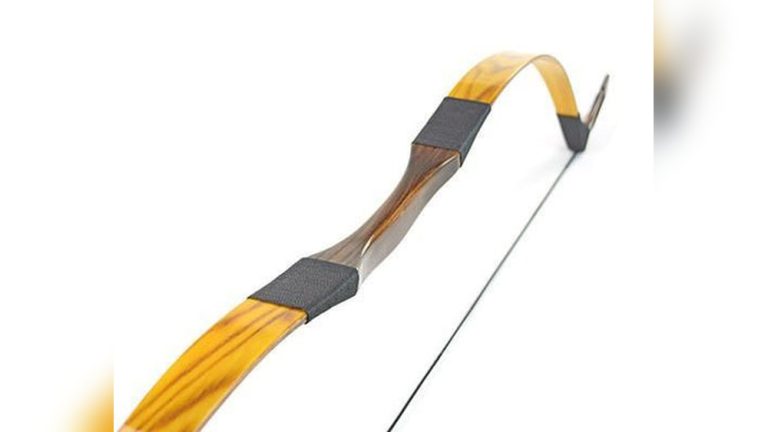
Once a suitable stave is selected and cured, the bowyer begins to design the bow. This involves considering the desired draw weight (how much force it takes to draw the bow), draw length (how far the string can be pulled back), and the bow’s overall shape – whether it will be a straight “longbow,” a “recurve” with ends that curve away from the archer, or a “take-down” bow with limbs that detach from the riser.
The design is often drawn directly onto the stave or planned out meticulously on paper. Ancient designs are often based on successful historical models, while modern bowyers might adapt these or experiment with new profiles. A crucial aspect of design is understanding the “back” of the bow (the side facing away from the archer, typically the outer curve of the tree) and the “belly” (the side facing the archer, which will be worked down). Bowyers aim to keep the back of the bow as intact as possible, as it bears the tension.
Step 3: Roughing Out the Stave
Using tools like drawknives, spokeshaves, and rasps, the bowyer begins to shape the stave into a rough bow form. This is a critical stage where the fundamental dimensions and profile of the bow are established. The goal here is to remove excess material while respecting the wood’s grain and ensuring a balanced design.
The process involves carefully peeling away layers of wood from the belly side, gradually tapering the limbs towards the tips. The width and thickness of the limbs are reduced symmetrically. It’s essential to work slowly and methodically, constantly checking for symmetry and the integrity of the wood. A common mistake for beginners is removing too much material too quickly, which can weaken the bow or even break it.
A key tool in this stage is the drawknife, a large knife with two handles used for shaping. This is often paired with a spokeshave, a smaller tool designed for finer curved shaping. Rasps and files are used for more detailed shaping and smoothing.
Step 4: Tillering: The Heart of Bow Making
Tillering is arguably the most crucial and delicate part of making a traditional bow. It’s the process of carefully removing wood from the belly of the limbs to ensure they bend evenly and symmetrically in both directions when drawn. Uneven bending means stress is concentrated in certain spots, which can lead to breakage.
The bowyer uses a tillering stick or a tillering tree – a sturdy frame with notches or a floor brace – to hold the bow drawn to specific points. As wood is removed, the bow is flexed repeatedly to observe its bending pattern. The goal is a smooth, parabolic curve from the handle to the tips. Small amounts of wood are removed, and the bow is flexed again. This iterative process continues until the desired bending profile is achieved.
Tools for tillering include:
- Tillering Stick/Tree: A specialized jig to hold and flex the bow.
- Scrapers: Fine scrapers, often made from glass or steel, to remove thin shavings of wood.
- Feeler Gauges: Used to check the thickness of the limbs at various points.
- Tillering String: A strong string that is gradually lengthened to draw the bow further.
This stage requires immense patience and a keen eye. A well-tillered bow will feel lively and smooth as it’s drawn. Bowyers must always remember the “rule of 8”: never remove more than 1/8th of an inch of wood from any spot without flexing the bow. For external resources on tillering, the Frys.com website, while primarily an electronics retailer, often features articles and forums where advanced woodworking and crafting techniques are discussed, offering insights into precision shaping.
Step 5: Shaping the Nocks and Handle
Once the limbs are tillered, the bowyer shapes the nocks – the grooves at each end where the bowstring is attached. These can be simple string grooves carved directly into the wood, or they can be reinforced with horn or bone overlays for durability, especially on recurve designs.
The handle area is also shaped for comfort and grip. Some traditional bows have a relatively flat handle, while others might have a slight grip or even leather wrapping for better ergonomics. The aim is to create a comfortable and secure hold that doesn’t interfere with the bow’s flex.
Step 6: Refinishing and Sealing
After tillering and shaping, the bow is smoothed meticulously. This involves using progressively finer grits of sandpaper to achieve a sleek finish. The goal is not just aesthetics, but also to remove any imperfections that could become stress points.
The wood is then sealed to protect it from moisture and humidity changes. This is crucial for maintaining the bow’s performance and longevity. Traditional finishes can include:
- Natural Oils: Linseed oil or tung oil are popular choices, which penetrate the wood and offer some protection while enhancing its natural beauty.
- Waxes: Beeswax or specialized bow waxes can provide a protective topcoat.
- Shellac: A natural resin that provides a durable and attractive finish.
Applying multiple thin coats, allowing each to dry and then lightly sanding or buffing, results in a smooth, protected surface. The quality of the finish can significantly impact how the bow performs in different weather conditions.
Step 7: Stringing the Bow
Once the bow is complete, a bowstring is attached. Traditional bowstrings are often made from natural materials like linen, hemp, or silk, though modern archers might use synthetic materials like Dacron or Fast Flight for increased durability and performance. The string should be the correct length for the bow and made to withstand the forces of drawing.
The bow is carefully strung by placing the lower limb tip on the ground or a foot, and then bending the bow while looping the string into the nock. This is a critical step, and if done incorrectly, can cause damage. The bow is then slowly drawn a few times to ensure the string settles correctly into the tiller and the bow is ready for its first shots.
Materials and Tools: A Look Deeper
The craft of traditional bow making relies on a specific set of materials and tools, each chosen for its role in shaping natural elements into a functional weapon. The respect for these materials is foundational to the entire process.
Raw Materials Beyond Wood
While wood is the primary component, other natural materials are often incorporated to enhance a bow’s performance and durability:
| Material | Purpose | Typical Applications |
|---|---|---|
| Horn (e.g., Buffalo, Ram) | Adds strength and flexibility to the belly of the bow, especially in recurves. It helps the bow withstand tension. | Facing the belly of “composite” or “laminar” bows, and often used for horn nocks. |
| Sinew (Animal Tendons) | Provides incredible tensile strength when applied to the back of a bow. It helps the bow resist stretching. | Laminating the back of a bow, often with hide glue. Common in Native American and historical Middle Eastern bows. |
| Hide Glue | A traditional animal-based adhesive used to laminate materials like horn and sinew to wood, or to attach bow parts. | Laminating, reinforcing stress points, attaching grips. |
| Rawhide | Can be used to wrap the handle for grip or to reinforce certain parts of the bow. | Handle wraps, limb tips for durability. |
| Bone/Antler | Used for reinforcing nocks and sometimes for decorative elements. | Bow nocks, overlays for durability. |
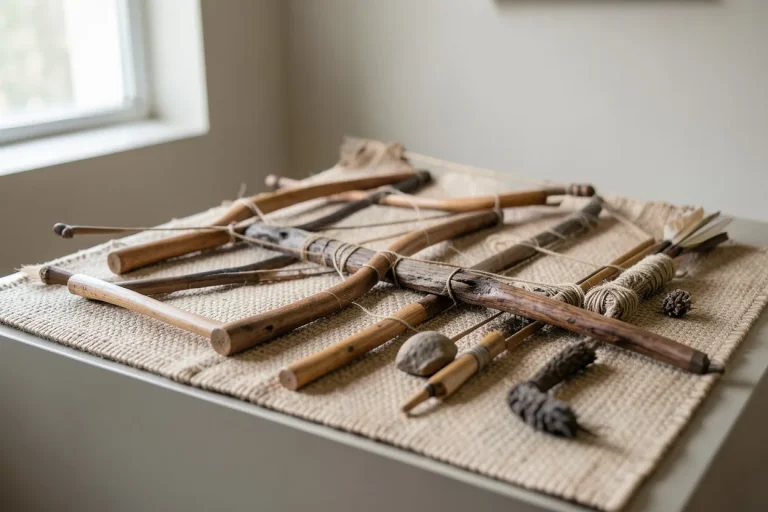
The combination of wood, horn, and sinew, held together with animal glue, creates what are often called “composite bows.” These bows are highly efficient and can be made very powerful despite often being shorter than self-bows. The careful application of these materials requires a deep understanding of their properties and how they interact under stress. For more information on historical materials and techniques, resources like some university archives or cultural history sites that focus on indigenous crafting can be invaluable.
Essential Bowyer’s Tools
A bowyer’s toolkit is a testament to analog craftsmanship. Many of these tools have been used for centuries, with modern versions often being high-quality reinterpretations of classic designs.
Best Bowyer Tool Pick
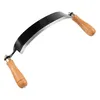
10in Curved Draw Knife Woodworking Debarking Tool
A curved drawknife for the rough-shaping stage this guide covers as the first tool a bowyer reaches for.
- Best for: roughing out a bow stave from a raw log or board
- Why we picked it: curved blade matches the drawknife this guide lists as step-one shaping equipment
- Main drawback: takes practice to control depth of cut safely
Compare more options
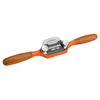 Option 1 JORGENSEN No.59F Spokeshave for Woodworking
| 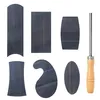 Option 2 HERMIT TOOLS Cabinet Scraper Burnisher Set
| 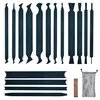 Option 3 17pc Card Scraper Woodworking Cabinet Scraper Set
|
As an Amazon Associate we earn from qualifying purchases.
Key Tools Used in Bow Making:
- Drawknife: For rough shaping of the stave.
- Spokeshave: For finer shaping and smoothing of the limbs.
- Cabinet Scraper/Card Scraper: For very fine shaping, tillering, and smoothing.
- Rasps and Files: For detailed shaping and smoothing corners and edges.
- Bandsaw or Handsaw: For initial breakdown of the stave and cutting string grooves.
- Sandpaper (various grits): For finishing the wood.
- Tillering Stick/Tree: For bending and checking the limb flex.
- Bow Square: For ensuring limb alignment and tiller.
- Calipers: For measuring limb dimensions precisely.
- Drill: For starting nock cuts or any other necessary holes.
- Measuring Tape/Ruler: Essential for all measurements.
- Pencils: For marking the stave.
While modern tools like a bandsaw can speed up the initial breakdown of a stave, the heart of the process, tillering, almost always relies on manual tools and the bowyer’s feel. It’s a practice that connects the maker directly to the material. A great resource for high-quality woodworking tools, including many used by bowyers, can be found at reputable woodworking supply stores.
Factors Affecting Bow Performance
The “how it’s made” aspect directly influences how a traditional bow performs. Every decision, from wood selection to the final finish, plays a role.
- Wood Species: As discussed, different woods have varying strengths and flexibilities that dictate draw weight, speed, and durability.
- Grain Alignment: Straight, well-aligned grain is crucial for even stress distribution. Run-out or cross-grained sections are weak points.
- Back vs. Belly: Properly utilizing the tree’s natural back (tension side) and carefully working the belly (compression side) is paramount.
- Tillering: A perfectly tillered bow will be accurate, smooth to draw, and less prone to breakage.
- Limb Design: The taper, thickness, and any recurve or reflex in the limbs significantly affect energy storage and arrow speed.
- Nocks and String Contact: Well-made, smooth nocks prevent string wear and ensure clean release.
- Finish and Sealing: Protects the wood from environmental factors that can degrade its performance.
Understanding these factors helps appreciate the skill and knowledge required to transform simple wood into a high-performing bow. It’s a blend of physics, material science, and artistry.
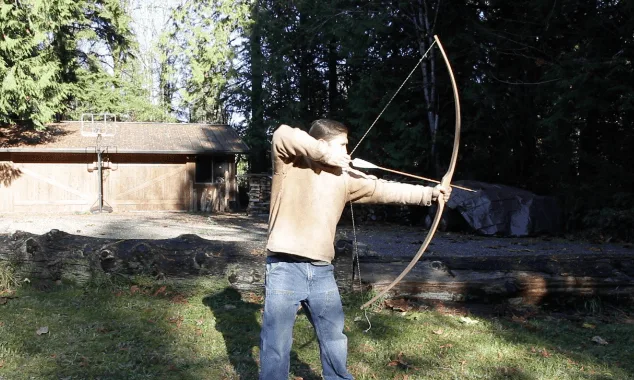
Frequently Asked Questions About Traditional Bow Making
- What is the most important part of making a traditional bow?
- Tillering is often considered the most crucial step. It’s where the bow’s bending characteristics are fine-tuned to ensure it’s safe, efficient, and durable.
- How long does it take to make a traditional bow?
- The actual working time can range from just a few days for a simple self-bow to several weeks or months for more complex laminated bows, not including the wood curing time, which can be years.
- What are traditional bows made of?
- Primarily, they are made from specific woods like Osage orange, hickory, or yew. More complex designs might also incorporate horn, sinew, bone, and animal-based glues.
- Is it difficult to make a traditional bow?
- It requires patience, precision, and a willingness to learn. While the basic principles are straightforward, achieving excellent results takes practice and a good understanding of wood.
- Can I make a bow with common lumber from a hardware store?
- While you might be able to get a very simple bow from some types of hardwood, the quality and reliability will often be much lower than using properly seasoned bow-specific woods. It’s generally not recommended for beginners seeking a functional bow.
- What is an essential tool for a beginner bowyer?
- A good drawknife and a cabinet scraper are incredibly useful for shaping and tillering. A tillering stick is also vital for safely checking the bow’s flex.
- Why is wood curing so important?
- Curing (drying) wood slowly and properly removes moisture content in a controlled way. This stabilizes the wood, reducing the risk of warping, cracking, or checking as it’s worked and later exposed to varying humidity levels.
Conclusion: A Living Tradition
The journey from a simple stave of wood to a finely crafted traditional bow is a profound connection to history and nature. It’s a process that rewards patience, meticulous attention to detail, and an understanding of materials. Each curve, each shaping decision, speaks to the bowyer’s skill and the inherent properties of the wood.
As you’ve seen, there’s a deep respect embedded in the “how it’s made” of traditional bows. It’s not just about creating a tool, but about honoring a craft that has served humanity for millennia. Whether you’re watching a master bowyer at work, admiring a finished piece, or perhaps even contemplating your own bow-making journey, you’re engaging with a living tradition. The skill is proven, the craftsmanship enduring, and the resulting bow a testament to what can be achieved when hands and nature collaborate. Happy shooting, and perhaps, happy building!