Best Release Aids for Compound Archery (2026): we compared
For compound archery competitions, the best release aid is usually a thumb release for experienced shooters, while hinge-style back-tension releases fit shooters managing target panic; index-finger releases suit most beginners. Choose the one that matches your shot execution and target-panic control. Pick poorly, and you lose repeatable anchor, timing, and points under scoring pressure. This guide compares release styles, trigger feel, back tension use, and competition fit so you can choose with confidence.
This guide is part of our Archery competitions: rules, formats and gear series.
Best overall for competition: thumb release
A handheld thumb release is the strongest all-around choice for many target archers because it gives direct control over shot timing without the full commitment of a hinge. It also keeps the release hand position compact, which helps repeat anchor points on scored ends.
Why handheld thumb releases suit scored ends
Thumb releases are a handheld design with a crisp trigger break. That matters in competition because the archer can build tension, settle the pin, and fire with less movement than a wrist strap release.
For target work, the big advantage is control without a finger-under-trigger feel. Many shooters may prefer that balance when they need to call a shot at medium distances and repeat it under time pressure.
3-finger vs 4-finger handles
Thumb releases come in 3-finger and 4-finger handles. A 3-finger body often feels lighter and shorter in the hand, while a 4-finger handle gives more contact and can help archers with larger hands or a longer draw cycle.
The right choice is about stability and hand span fit. If the handle forces the thumb too far forward or crowds the fingers, anchor repeatability usually suffers.
Trigger travel, let-off, and anchor repeatability
Target archers often prefer near-zero trigger travel because a long pull can create anticipation. The Spot Hogg Wiseguy is described as having zero trigger travel, which is the kind of spec that suits precision shooters who want a cleaner break.
Let-off also matters. A common competition range is about 65-80%, which affects how long the bow can be held at full draw before creep or collapse starts to show. Higher let-off can feel easier to hold, but it can also hide poor execution if the shot becomes too trigger-dependent.
| Product | Badge | Best for | Price | ||
|---|---|---|---|---|---|
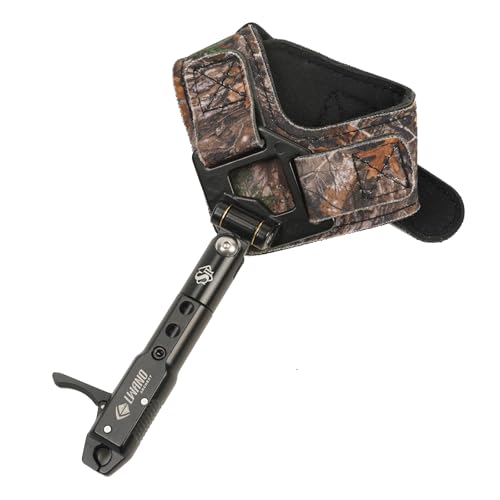 | LWANO 360° Adjustable Archery Compound Bow Release AidsLWANO | Our pick | 360° adjustable compound bow release trigger | $29.99 Price as of 9 Oct 2026 | View |
 | sntxmy Bow Release for Compound Bow, Archery Releasesntxmy | Budget pick | Aluminum 4-finger thumb release for compound bow | $28.99 Price as of 9 Oct 2026 | View |
This comparison matters most under scored ends, where fatigue and pressure expose weak shot execution. A release that feels fine on warm-up arrows can fall apart when anchor drift, target panic, or over-sensitive trigger travel enters the picture.
📊 The budget NIKA release is listed under $20. Source: 8 Best Archery Release Aids (October 2026) Expert Reviews.
How we chose
The comparison below focuses on trigger feel, shot execution under pressure, fit, comfort, and left-handed options. It also looks at D-loop compatibility, because the release and loop need to work together cleanly on a compound bow.
We also weighed repeatability. In competition, repeatable anchor and jaw alignment matter more than flashy adjustability.
Finally, we separated target use from hunting use. Those jobs overlap, but the priorities are not the same.

Thumb release: best for target archers who want control

The sntxmy 4-finger thumb release suits archers who want a handheld option with a firm, direct trigger feel. Based on the spec sheet and owner feedback, it fits competition-minded shooters who value a compact handle and a quick trigger response.
It stands out for its one-piece aluminum alloy casting and the 4-finger layout, which can help stability for a full draw cycle. The company also lists compatibility with 80-100 lb compound and recurve bows, though competition archers should still judge the release by fit, not strength claims alone.
The drawback is the same feature that helps some shooters: a quick trigger can become too sensitive under pressure. If a shooter already battles target panic, a fast thumb button can reward collapse or punching unless the shot process is disciplined.
Crisp trigger break and shot timing
A thumb button gives a crisp trigger break when the release is set correctly. For target archery, that matters because a clean break supports a surprise-like execution while still letting the archer control the moment of fire.
Trigger travel should be as short as practical. Many precision shooters prefer very little movement before release, because extra travel can disturb sight picture and timing.
Hand feel, finger count, and ergonomics
The choice between 3-finger and 4-finger handles comes down to hand geometry. A 4-finger release can feel more locked in for larger hands, while some smaller hands may find a 3-finger body easier to rotate and settle.
Thumb placement matters too. If the thumb lands at an awkward angle, the archer may press too hard or anticipate the shot.
When a thumb release helps or hurts target panic
Thumb releases often help archers who want a cleaner hand position than a wrist strap. They can hurt when the shooter uses the thumb like a panic button and fires the instant the pin floats off center.
A common first-timer mistake is setting the release too sensitive for indoor practice at 18 meters, then flinching when the sight pin moves at full draw. That usually leads to inconsistent breaks and low confidence.
Index wrist release: best for beginners and backup use
The LWANO 360° adjustable wrist release fits archers who want a simple trigger aid with a secure strap. It is especially useful for newer shooters, or as a backup release in a competition bag, because a wrist strap is easy to wear and hard to drop.
Its 360-degree rotation is useful for right- or left-hand shooters, and the soft-lined fabric is a comfort advantage during long practice blocks. The drawback is that wrist releases can become the limiting factor in competition when the archer wants finer shot timing and less movement in the release hand.
Wrist strap comfort and adjustability
Wrist strap comfort affects shot repeatability more than many archers expect. Padding, strap length, and breathability all change how steady the wrist feels across a long session.
If the strap is too stiff or too short, the hand can sit at a different angle every time. Loud Velcro can also be a problem on a quiet line, especially when the archer is rushing between ends.
Caliper jaw and trigger travel basics
Most wrist releases use a caliper jaw release with a trigger and jaw interface that clamps the D-loop. Closed-jaw and open-jaw styles both exist, but the real competition concern is how consistently the jaws seat and how much trigger travel the mechanism needs before fire.
Trigger travel adjustment matters because it changes the shot feel. Less travel usually means a cleaner break, while too much travel can make the shot feel slow and deliberate in the wrong way.
Rotating head variants and left-handed fit
Quiverranked notes that left-handed releases need mirror-image trigger placement and jaw orientation. That matters because awkward trigger placement can force the wrist into a twisted position and hurt consistency.
A 360-degree head helps here by letting the release line up with the D-loop instead of forcing the archer to twist around the strap. That said, rotation alone does not fix poor strap fit or sloppy anchor points.
Where wrist releases start to limit competition shooting
Wrist releases are good enough for many beginners, and they remain useful as a cold-weather or backup option. They start to limit competition shooting when the archer wants finer control over shot timing, cleaner anchor references, and less hand movement near release.
They also expose failure modes quickly. A trigger that is too light can cause accidental release, while one that is too heavy can encourage a hard punch and a flinch.
Back-tension release: best for target panic management
A back-tension release is often a good choice for archers who want to reduce target panic. It fires through a surprise break, so the shooter focuses on expansion and pulling through the shot instead of pressing a trigger at the wrong moment.
Hinge-style vs tension-activated mechanisms
Back-tension designs usually fall into hinge-style or tension-activated mechanisms. A hinge rotates until it lets go, while a tension-activated release fires once the pull reaches a set threshold.
The B3 Archery Ranger is described as a back-tension release, which places it in the class many target shooters use for cleaner execution and panic management.
Why the shot breaks as a surprise
The surprise break is the whole point. When the archer cannot predict the exact instant of release, anticipation drops and the bow is less likely to be punched or collapsed at the last second.
That benefit comes with a tradeoff. Back-tension releases require more execution consistency, because the archer must hold anchor, keep expansion moving, and trust the mechanism to fire without flinching.
Anchor consistency and execution demands
Back-tension releases reward the same anchor every time. If the hand position changes, the hinge angle changes too, and the shot will feel different from end to end.
That is why this style fits experienced target archers best. It can be excellent for target panic, but it is unforgiving when posture, anchor, or draw cycle drift.
What is the best release aid for compound archery competitions?
The best release aid for compound archery competitions is usually a thumb release for most experienced target archers, with a back-tension release as the strongest option for target-panic control. Beginners usually start with an index wrist release because it is simple, secure, and easier to learn under basic form work.
Best-fit competition scenarios
| Release style | Trigger feel | Execution style | Target-panic risk | Anchor repeatability | Best-fit competition scenario |
|---|---|---|---|---|---|
| Thumb release | Crisp, adjustable, often short travel | Controlled press or expansion | Moderate if trigger is too sensitive | High once anchor is repeatable | Indoor target, field rounds, experienced compound archers |
| Index wrist release | Trigger-calisper style, often heavier feel | Simple trigger pull | Moderate to high if punched | Good, but more strap-dependent | Beginners, backup use, casual tournament shooting |
| Back-tension release | Surprise break | Expansion and execution driven | Low once learned | Very high with disciplined form | Target panic management, advanced score-focused shooting |
Use that matrix as a scoring tool, not a popularity chart. A release that feels hardest to learn may be the one that fixes your score over a long season.
Should I use a thumb release or index release for target archery?
Most target archers should move to a thumb release once they want more control over execution and less dependency on a wrist strap. An index release is easier to learn, but a thumb release usually gives better shot timing and anchor consistency when the archer is ready for it.
Match the release to your shot process
If you draw, settle, expand, and execute with a deliberate hand position, a thumb release usually fits better. If you still need a simple, secure system while building form, the wrist release is more forgiving.
The wrong fit often shows up as trigger punching, creeping, or a wandering anchor.
Choose by division, distance, and experience level
Shorter target distances and entry-level events can tolerate a wrist release longer than elite scoring rounds can. As the archer moves toward more demanding target work, handheld releases usually offer better control over shot execution.
That is especially true for archers who have already built a consistent anchor and want finer release tuning.
What release aid do most competition compound archers use?
Most competition compound archers gravitate toward thumb releases or back-tension releases once they leave beginner stage. Wrist releases still appear in competition, but they are more common as starter tools or backup gear than as the main scoring release.
What features matter most in a competition release aid?
The most important features are trigger feel, trigger travel, D-loop compatibility, and fit. Comfort matters too, but comfort without repeatability does not score well.
Left-handed or ambidextrous designs deserve attention. If the trigger or jaw angle fights the bow hand, the release can feel different every time you draw.
How does trigger travel affect release aid accuracy?
Trigger travel affects accuracy because it changes how much movement happens between intent and fire. Near-zero travel often suits target archers who want a cleaner break, while longer travel can make the shot feel delayed and more likely to be punched.
Quiverranked says lighter triggers under 2 lbs suit target shooters, with mid-range tension at 2-3 lbs. Those ranges are useful starting points, but the best setting is the one that lets the archer execute without surprise flinching.
How do I choose a back-tension release for target shooting?
Choose a back-tension release by looking at mechanism type, anchor repeatability, and how predictable your draw cycle is. A hinge-style release works best when the archer can keep pulling through the shot without trying to force the break, while tension-activated styles suit those who want a more set threshold.
Failure modes to avoid
Do not over-tune the release so tightly that it becomes a guessing game. Too much sensitivity can cause surprise fires during draw or anchor setup, while too little sensitivity turns the shot into a stalled pull with poor follow-through.
Also watch for inconsistent jaw engagement on the D-loop. If the loop sits unevenly in the jaws, the shot can feel different from arrow to arrow.
Match it to your D-loop and let-off
Release choice has to match the D-loop and the bow’s let-off. A clean D-loop makes jaw seating more repeatable, while a let-off around 65-80% changes how long the archer can hold before creep shows up.
For target use, that means the release should support steady expansion, not force a desperate hold at full draw.
Is a wrist release good enough for compound competition?
A wrist release is good enough for some compound competition, especially for newer archers, but it becomes limiting when the archer needs finer control over trigger feel and anchor repeatability. It is a practical starting point, not the strongest long-term choice for score-focused target shooting.
Wrist strap comfort and shot repeatability
Comfort affects repeatability because a strap that shifts, pinches, or twists changes wrist angle. Breathable material and proper strap length help, but padding alone will not fix a poor fit.
The loud Velcro issue also matters on a line. Quiet gear reduces distractions for both the archer and the group.
When a wrist release is still the right answer
A wrist release makes sense when a shooter wants a simple backup, a low-cost entry point, or a secure option for long practice days. Quiverranked lists a 360° adjustable wristband release aid at $29.99, which shows how accessible this category can be.
But once the archer starts chasing tighter groups and cleaner shot feel, handheld options usually offer a better ceiling.
Can I use the same release aid for hunting and competition?
Yes, one release can cover both hunting and competition, but only if the archer accepts the tradeoff. A hunting setup often prioritizes speed, noise control, and cold-weather usability, while competition prioritizes shot execution, repeatability, and trigger refinement.
Do not blur the two use cases
Many pages blur hunting and competition needs together. That causes bad advice, because a release that is ideal in the woods may feel too bulky or too quick for a scored target round.
For example, a thumb release that is tuned for target precision may be less forgiving in gloves, while a wrist release that feels secure in hunting can feel crude on the line.
When one release can work for both
If the archer wants one device for both jobs, choose a model with adjustable trigger travel, a stable D-loop interface, and a fit that works with the same anchor every time. That gives the best chance of season-long use without constant swapping.
Still, many serious archers keep one release for practice and another for hunting so each setup stays tuned to its job.
What is the difference between a thumb release and a hinge release?
A thumb release fires with a thumb button or thumb barrel, while a hinge release fires by rotating through a back-tension motion. The thumb style gives more direct control; the hinge style gives more surprise and is often better for target-panic management.
Which one should you buy
If budget is tight and the archer is still learning form, the LWANO wrist release is the safer first step. If the goal is a competition-focused handheld release with stronger control and a 4-finger grip, the sntxmy thumb release is the better fit.
For archers fighting target panic, a back-tension model like the B3 Archery Ranger type is the better path, even if it takes longer to master. The right answer depends less on brand and more on how the shot breaks under pressure.
How to choose the right release for competition
- Match the release to your shot process. If you want direct control, choose thumb. If you want a surprise break, choose back-tension. If you want simple learning, start with wrist.
- Check D-loop fit and caliper jaw compatibility. A bad jaw-to-loop interface ruins repeatability faster than most new archers expect.
- Set trigger travel for the goal. Near-zero travel helps precision shooters; more travel may suit archers who need a little extra margin against accidental release.
- Account for left-handed fit. Mirror-image trigger placement and jaw orientation matter for comfort and consistency.
- Consider your draw hold and let-off. Around 65-80% let-off is common, and the release should support a steady hold without encouraging creep.
- Choose based on experience level and pressure response. If target panic shows up, move toward back-tension or a calmer thumb setup.
Which one should you buy
Buy the sntxmy thumb release if you want the stronger competition pick for a handheld setup and can handle a more direct trigger. Buy the LWANO wrist release if you need a beginner-friendly or backup option with easy wear and simple left-right versatility.
If you are still unsure, start with the release that matches your current shot behavior, not the one that looks most advanced. A release that fits your execution will score better than a release that only sounds technical.
Frequently asked questions
What is the best release aid for compound archery competitions?
The best release aid is usually a thumb release for experienced target archers and a back-tension release for shooters managing target panic. Beginners usually do best with an index wrist release because it is easier to learn and less demanding on anchor discipline.
Should I use a thumb release or index release for target archery?
Use a thumb release if you want better control over shot timing and a cleaner handheld feel. Use an index release if you are still building form, want a secure strap, or need a simple tool before moving into more exact target work.
What release aid do most competition compound archers use?
Many competition compound archers use thumb releases or back-tension releases once they move beyond beginner level. Wrist releases are common in entry stages, but they are less favored for precise scoring because they can limit fine control over the shot.
How do I choose a back-tension release for target shooting?
Pick a back-tension release that matches your anchor, draw cycle, and tolerance for surprise breaks. Hinge-style designs reward smooth expansion, while tension-activated models work well for archers who want a defined release threshold and strong target-panic management.
Is a wrist release good enough for compound competition?
Yes, for many beginners and backup setups. It becomes limiting when the shooter needs finer trigger control, quieter handling, or more consistent anchor behavior under scored pressure, which is why many archers eventually move to handheld options.
How does trigger travel affect release aid accuracy?
Trigger travel affects how much movement happens before the string lets go. Near-zero travel often helps target archers keep the shot clean and predictable, while more travel can increase the chance of punching the trigger or breaking form at the last second.