Archery Competitions: Rules, Formats and Gear Guide
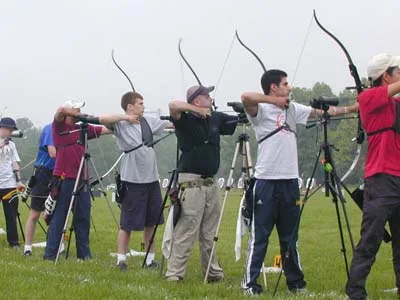
Most archery competitions come down to two calls: enter the right division for your bow setup, and learn the shooting rhythm, often 3 arrows per end indoors and 6 outdoors. Get either wrong, and you can be moved to another division, leak points on timing, or arrive without gear you need on the line. I’ll walk through how target and field events run, the line rules that actually bite beginners, how formats change gear choices, and the kit first-timers forget most often.
What do you actually need for your first archery competition?
You need three things first: a bow setup that fits the correct division, enough matched arrows for the round plus spares, and the line kit that keeps you shooting without delays. For most first-timers, the biggest misses are division mistakes, weak spare planning, and arriving without sight notes, scorecard items, or weather gear.
A bow setup that fits the correct division
Start with the class, not the bow bag. Recurve, compound, and barebow are separate competition divisions, and the accessories you bolt on decide where you belong. A hunting setup can be perfectly fine for practice and still be the wrong choice for the event you entered.
If you shoot a recurve with a sight and stabilizers, that usually puts you in recurve. If you shoot a compound with a release and sight, that points to compound. If you shoot a stripped recurve and use crawl marks, that points to barebow. Get this wrong and your whole day starts badly.
Arrows and sight or crawl references matched to the round
Field rounds punish vague prep. Marked distances tell you how far the target is. Unmarked distances do not, so your sight picture, gap system, or stringwalking references matter more. Recurve and compound marked distances run from 10 to 60 metres, and their unmarked distances run from 10 to 55 metres. Barebow marked distances run from 5 to 50 metres, and barebow unmarked distances run from 5 to 45 metres.
I tell first-timers to build a simple note card before event day: every known sight mark, every barebow crawl they trust, and a short list of awkward in-between distances. It saves points fast.
Your line kit: quiver, tab or release, paperwork, and scoring basics
Bring the items you handle every end: quiver, tab or release, armguard if you use one, water, pen, and whatever paperwork the host asked for. Also bring a bow case and a way to protect arrows on rough ground. In field archery, that matters more than most people expect.
If your handedness, peep alignment, or anchor is still unsettled, fix that before entering a tournament.
How does a competition day work from check-in to the final end?
A competition day usually follows a set order: registration, target assignment, equipment inspection if the event uses it, practice, qualification, and then elimination stages if your score gets you through. I tell beginners that results are not real until the arrows are scored cleanly, the cards are signed, and the host posts the standings.
Registration, target assignment, and equipment check
Show up early enough to stop rushing. At check-in, you usually confirm your division, receive a target or group assignment, and sort scorecards. Some events also inspect equipment. That is where the wrong-division error often gets caught.
If the event includes field archery, also check whether you are shooting marked, unmarked, or both. Beginners often assume “field” means the same thing everywhere. It does not.
Practice ends, whistle commands, and shooting rotation
Practice is where you confirm one thing: your first scoring arrow will land where you expect. Do not use those minutes to rebuild your bow. Learn the range commands, know exactly which whistle or verbal call sends you to the line and which one lets you walk forward to score, and know your place in the shooting rotation if the target or peg is shared.
On field courses, archers shoot from designated pegs. Recurve and compound archers shoot from red pegs. Barebow archers shoot from blue pegs. Forgetting that sounds basic, but I still see beginners walk to the wrong stake when nerves kick in.
Qualification, seeding, eliminations, and when results become official
In field competition, the qualification phase includes 24 marked and 24 unmarked targets. That stage creates the ranking used for seeding. After that, some archers go into pools, then matchplay brackets, depending on the event structure.
- Check in and confirm your division.
- Verify target assignment, scorecards, and any inspection requirement.
- Shoot practice and confirm marks or crawls.
- Shoot qualification and score every arrow carefully.
- Review posted rankings for your seed.
- If required, shoot pool matches.
- Advance to matchplay if your results carry you through.
- Sign cards and wait for official posting before packing up.
I have seen first-timers throw away good rounds by leaving before confirming signed scorecards. Stay until your part is official.
How do recurve, compound, and barebow divisions change the rules?
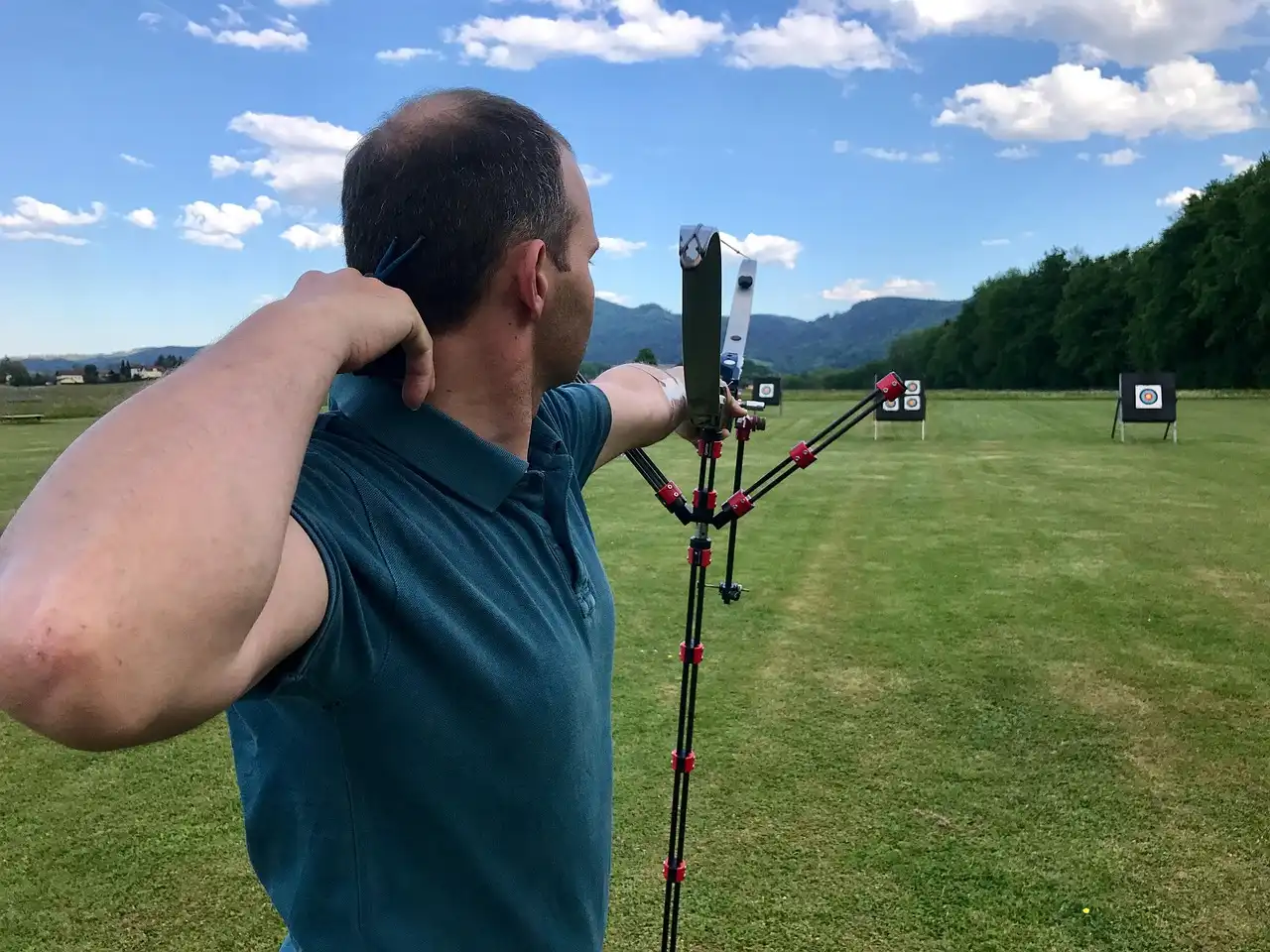
The division changes more than the bow name on the entry form. It affects legal accessories, peg color in field rounds, the distance ranges you face, and how you manage aiming references. Choose the class that matches the gear actually on your bow, not the label you prefer to use at your club.
Recurve division: common setup, field use, and event formats
Recurve competition usually means a sighted recurve setup with legal accessories for that class. In field archery, recurve archers shoot from red pegs, and they can appear in individual, mixed team, and team events.
For field rounds, recurve marked distances run from 10 to 60 metres, and unmarked distances run from 10 to 55 metres. That range makes sight-mark prep a real issue. If your sight tape is messy past mid-distance, the course will find it fast.
Compound division: common setup, field use, and event formats
Compound competition usually centers on a sighted compound with the accessories allowed in that class. Compound archers also shoot from red pegs in field archery, and compound can appear in individual, mixed team, and team events.
Beginners entering compound should prioritize control over speed, because bad execution under time pressure costs more than a little extra arrow drop.
Barebow division: blue peg distances, stringwalking considerations, and event formats
Barebow is where I see the most entry mistakes. Barebow archers shoot from blue pegs in field rounds. Their marked distances run from 5 to 50 metres, and unmarked distances run from 5 to 45 metres. Barebow can also appear in individual, mixed team, and team events.
Because many barebow archers stringwalk or use gap references, unmarked rounds hit differently. You need a repeatable crawl system and a plan for steep angles. A beginner who enters barebow with target-only expectations often gets surprised by how quickly distance judgment affects scores.
The wrong-division mistakes I see most often with beginners
- Entering barebow with a sight still mounted in the case and assuming it does not matter.
- Entering a field event with a hunting setup that fits local practice but not the division rules.
- Confusing target archery routines with field archery peg and distance rules.
- Showing up with no sight marks for the full distance range of the event.
Olympic Recurve vs Compound: Choosing Your Competition Class
Selecting the wrong bow class before your first tournament means learning the wrong rules, tuning methods, and scoring paths for months. Olympic recurve is built for Olympic-style target archery, relying on finger release and specific stabilizer setups. Compound bows use cams to deliver high let-off, making them easier to hold at full draw, and they pair with mechanical release aids for consistent accuracy.
Understanding these mechanical differences directly affects your gear budget, aiming technique, and which division you enter at club events. This detailed recurve versus compound comparison breaks down setup requirements, tuning steps, and beginner fit across three common competition scenarios so you can commit to the right class from day one.
Barebow or Recurve: Choosing Your Competition Class
Barebow and Olympic recurve follow different equipment rules, and choosing the wrong class means buying illegal gear or entering the wrong division at your first tournament. Barebow strips away sights, clickers, and long stabilizers for a simpler, lower-cost setup, while recurve allows those tools for a more equipment-driven scoring pathway.
Before you commit to a build, compare exactly what is legal in each division, how scoring expectations differ, and what changes on tournament day when officials check your bow. Our guide to barebow vs recurve competition breaks down legality, required equipment, learning curves, and the specific scenarios where one class makes more sense than the other for new competitors.
Recurve Sights vs Barebow Aiming: Choosing Your Reference Point
Choosing between a fixed recurve sight and barebow aiming directly affects your scoring consistency. Recurve sights provide a repeatable visual reference that steadies groups at distance, while barebow methods rely on body alignment and string walking, demanding tighter form control and significantly more practice time.
A mismatched setup leads to aim drift and avoidable misses during competition. The guide comparing recurve sights versus barebow breaks down how equipment changes, practice demands, and specific division rules influence your choice. It also includes a decision matrix to help you determine whether Olympic recurve hardware or barebow techniques better fit your current skill level and tournament goals.
How do competition formats work in field archery?
Field archery has a simple structure once you see it from the shooting line: qualification builds your total and seed, pool play filters part of the field in individual competition, and matchplay becomes head-to-head elimination. The hard part for beginners is that marked and unmarked targets change how you aim, pace, and recover from a bad arrow.
Marked versus unmarked distances and what the archer is told
Field archery uses targets at distances between 5 and 60 metres. In marked rounds, the distance is known by the archer. In unmarked rounds, you are not given that distance, so your estimation and sight system do the work.
This is where gear choices stop being abstract. A recurve archer with thin sight notes may survive target rounds and still struggle badly in field. A barebow archer with inconsistent crawl marks will feel that mistake all day.
Qualification phase: 24 marked and 24 unmarked targets for seeding
The qualification phase includes 24 marked and 24 unmarked targets. You build one running score across those targets, and that total creates the ranking used for seeding into later stages.
For a beginner, qualification is where composure matters most. One poor target does not end your day. A rushed correction often does.
Pool phase: who shoots it, who skips it, and why it matters
The pool phase applies to the individual event only. Lower seeds shoot matches within pools, while the top two seeds skip this phase. That matters because a strong qualification score can save you arrows and pressure later.
A field archery match can use 18 arrows in individual pool play. That is enough for one bad end to hurt, but still enough arrows to recover if you stay patient.
Matchplay phase for individual, mixed team, and team brackets
Matchplay is the cleanest format to understand: winner advances, loser is eliminated. That logic applies across individual, mixed team, and team events. Once brackets start, qualification stops helping except for the seed that got you there.
Team rounds reward communication and pace control. Mixed team adds a faster decision cycle because one weak arrow can change the pressure on the next shooter immediately.
Indoor vs Outdoor Archery: Key Differences
Indoor archery focuses on tight tune and clean execution at a fixed 20‑yard distance, whereas outdoor archery demands wind reads, variable ranges, and broader setup changes. The guide breaks down scoring differences, rule tweaks, and gear adjustments for both recurve and compound bows, then offers a step‑by‑step transition checklist and decision matrix for choosing the format that fits your season and tournament goals. Understanding these contrasts prevents you from spending practice on the wrong skills and lets you target the right competition format from day one. See the full comparison in our indoor vs outdoor archery article.
Choosing the Right Spotting Scope for Competition
A 20-60×80 angled spotting scope handles most competition distances, while a 15-45×60 straight model speeds up target pickup when you sit close to the shooting line. Selecting the wrong magnification or body style costs time between ends and makes it harder to locate arrow holes.
The guide on competition spotting scopes breaks down options by event format, distance, and shooting position. It compares budget models like the Vortex Crossfire HD 12-36×50 against mid-range choices such as the Athlon Ares G2 UHD, giving you a clear buying matrix so you bring only the glass you actually need to the line.
How are scores, targets, and shoot-offs handled?
Scores in field archery come from where each arrow lands on a six-ring yellow-and-black face, then those points build your qualification total or decide a match. If a head-to-head result is tied, archers go to a shoot-off or tiebreak procedure, and that changes how much each single arrow matters.
Field target faces, diameters, and 6-to-1 ring values
The field archery target has six concentric scoring rings. The four target diameters are 80, 60, 40 and 20 centimetres. The inner ring scores six points and the outer ring scores one. Yellow rings score six and five points. Black rings score four, three, two and one points. A miss scores zero points.
That color pattern helps beginners call arrows quickly when scoring. On uneven courses, I also tell newer archers to pause before walking in and agree on impact order if arrows are close.
Arrow count per target or match and how totals build
Your arrow count depends on the format. In target rounds, beginners often meet the familiar rhythm of 3 arrows per end indoors and 6 outdoors. In field qualification, you are shooting across 24 marked and 24 unmarked targets, so the day feels longer and more mental even before eliminations start.
In pool play, an individual match can use 18 arrows. Once you know the format, you can pack smarter. More arrows on the day means more chances for loose nocks, bent points, and small setup issues to become real problems.
Individual shoot-offs: one arrow, closest to centre
In an individual match, a shoot-off uses a single arrow. If both archers hit the same value, the arrow closest to the centre wins. That is why I tell beginners not to treat shoot-offs like normal scoring ends. You are no longer building a total. You are solving one shot.
Team and mixed team tiebreaks: total score first, then closest-to-centre
For team and mixed team ties, the comparison usually starts with total score, then moves to a closest-to-centre check if needed. If the tie still holds, the closest arrow to the centre decides it. That means every shooter still matters, but one arrow can become the decider after totals are matched.
How Scorecards Shape Tournament Flow and Results
Accurate scorekeeping determines everything from bracket seeding to final results publishing. The right scorecard system—whether paper or digital—keeps qualification rounds moving, prevents elimination bracket errors, and reduces disputes that stall the shooting line.
A detailed breakdown of archery tournament scorecards compares how different workflows handle each stage of an event, including tie-breaks and live scoring pitfalls. Choosing between paper cards and scoring software depends on your event size, volunteer capacity, and how quickly you need to publish results. Getting this wrong slows down the entire competition day and frustrates both shooters and organizers.
What target sizes and distances are used in field archery?
Field archery uses yellow-and-black targets in four standard diameters and places them across a broad distance spread. The short answer is simple: faces come in 80, 60, 40, and 20 centimetres, and the course runs from 5 to 60 metres, with the exact range changing by bow class and whether distances are marked.
Beginner competition checklist
| Bow class | Round type | Target size | Peg color | Distance range | Arrow count | Tiebreak rule |
|---|---|---|---|---|---|---|
| Recurve | Field qualification, marked | 80/60/40/20 cm | Red | 10 to 60 metres | Qualification across 24 marked targets | Seeding by total score |
| Recurve | Field qualification, unmarked | 80/60/40/20 cm | Red | 10 to 55 metres | Qualification across 24 unmarked targets | Seeding by total score |
| Compound | Field qualification, marked | 80/60/40/20 cm | Red | 10 to 60 metres | Qualification across 24 marked targets | Seeding by total score |
| Compound | Field qualification, unmarked | 80/60/40/20 cm | Red | 10 to 55 metres | Qualification across 24 unmarked targets | Seeding by total score |
| Barebow | Field qualification, marked | 80/60/40/20 cm | Blue | 5 to 50 metres | Qualification across 24 marked targets | Seeding by total score |
| Barebow | Field qualification, unmarked | 80/60/40/20 cm | Blue | 5 to 45 metres | Qualification across 24 unmarked targets | Seeding by total score |
| Any class | Individual pool match | Event face | By class | Event format | 18 arrows | If tied, single-arrow shoot-off; closest to centre wins |
| Any class | Team or mixed team match | Event face | By class | Event format | Varies by match | Total score first, then closest-to-centre |
One-page first tournament decision guide
- Look at the bow exactly as you will shoot it. Sight, stabilizers, release, crawl marks, and rest choice all matter.
- Match that setup to the division before you register.
- Check whether the event is target, field, or both. Do not assume your club round matches the tournament round.
- Confirm whether distances are marked, unmarked, or mixed.
- Build sight marks or crawl references for the full distance range of your class.
- Pack enough matched arrows and spare nocks to finish the day.
- Carry scorecard items, water, weather layers, and tools in one competition-only bag.
Must-have

CVLIFE 62-inch recurve bow set
Based on the spec sheet, owner feedback, and our range experience, this CVLIFE setup makes sense for a beginner who needs a simple takedown recurve for club practice before entering a local event. The compact three-piece layout is easier to transport than a one-piece bow, and the 62-inch format is manageable for many adult starters.
The drawback is obvious: it is sold as a hunting and target starter set, so you still need to match the actual setup to the division you plan to enter. A starter bundle rarely solves class legality by itself.
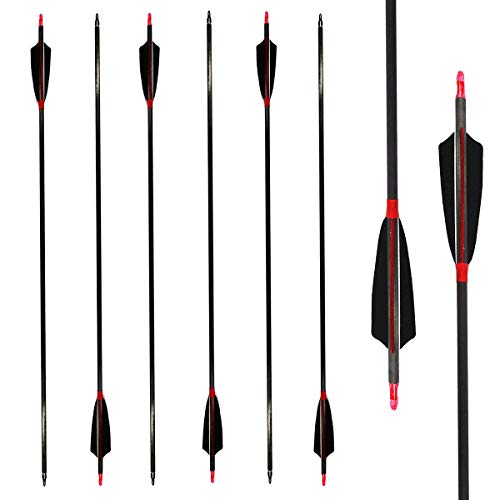
Letszhu carbon arrows 500 spine
Arrows are where many first tournaments come apart. We compared this 12-pack on specs and reviews, and the appeal is clear: carbon shafts, real feathers, and enough quantity to cover losses or damage on a long practice cycle. For a new competitor, having matched spares matters more than owning fancy accessories.
The drawback is fit. A 500 spine and 29-inch length will not suit every draw length or bow weight, so do not buy arrows by title alone. Match them to your setup first.

KRATARC finger tab and arm guard set
This kind of basic protection kit earns its place because it solves two common beginner errors: forgetting arm protection and showing up with a worn tab. Based on specs and reviews, the KRATARC set looks practical for club use and first events, especially if you do not yet own separate pieces you trust.
The drawback is that combo kits are compromise pieces. If you already know your tab shape, finger spacer preference, or armguard fit, you may outgrow a budget set quickly.
Nice-to-have

Hawkeye Archery round 48-inch foam target
You do not carry a target to a tournament, but you do need a reliable way to prepare at home or at the club. We compared this Hawkeye target on specs and reviews, and the replaceable core stands out for anyone shooting enough arrows to wear the center hard.
The drawback is size and cost. At $349.95, it is a commitment, and it makes more sense for regular home practice than for a casual archer who can use club butts.

SOPOGER 5-pin bow sight
This one needs a warning label for division choice. Based on the listing, it is a low-cost sight option for practice on a compatible bow, especially for someone learning basic pin use and adjustment. The windage and elevation knobs are useful in principle for dialing a setup.
The drawback is class fit and bow fit. A 5-pin hunting-style sight is not a universal competition answer, and it may suit local practice better than the event you have entered. Make sure the bow class and host rules line up before you rely on it.
Rain gear, stool, binoculars, and shade items
I would rather leave a spare shirt in the truck than miss rain gear on a wet field course. Add a small stool if the venue allows it, plus binoculars for target confirmation and something for sun. These items do not score arrows, but they protect your focus.
Notebook, backup small parts, and foot care
A small notebook helps more than people think. Use it for sight changes, crawl tweaks, target order reminders, and anything the morning taught you. For field events, I also pack blister care and a way to keep arrows visible in leaves or grass.
Consumables and spares
What I pack differently for one-day shoots
For a short local event, I still carry extra nocks, points if they match the shaft system, finger tape, string wax, serving thread, a lens cloth if needed, snacks, and more water than I think I need. Local shoots are where people under-pack because home feels close.
What changes for longer events
If the event runs longer or includes travel, I add duplicate release or tab gear, extra batteries for any accessory that needs them, more vanes, and a fuller tool roll. The goal is simple: no avoidable DNF because a cheap small part failed.
Budget setups
| Tier | Use case | Suggested pieces from this list | Price shown |
|---|---|---|---|
| Starter | New recurve archer entering local club rounds | CVLIFE recurve bow set + Letszhu arrows + KRATARC tab/arm guard | $106.99 + $49.50 + $13.99 |
| Mid | Compound practice setup before first event | Letszhu arrows + KRATARC tab/arm guard or your release + SOPOGER sight if class and bow fit | $49.50 + $13.99 + $15.99 |
| Serious practice | Home prep for frequent shooting | Hawkeye foam target plus your matched bow and arrows | $349.95 |
If you are buying in stages, I would borrow the least personal items first and buy the fit-sensitive pieces early. Arrows, release or tab feel, and bow fit matter sooner than fancy extras. A solid starter recurve kit in the right class beats a pile of mismatched upgrades.
Frequently asked questions
What are the basic rules of archery competitions?
The basics are simple: shoot from the correct line or peg, follow the range commands, score each arrow honestly, and use gear that fits your division. In field rounds, peg color and distance rules matter a lot. In any event, signed scorecards and clean scoring procedure matter as much as good shooting.
How do archery competition formats work?
Most events start with a scoring phase that ranks archers, then move into head-to-head brackets or other elimination stages. In field archery, qualification includes 24 marked and 24 unmarked targets for seeding. Individual events may also use pool play before matchplay, while mixed team and team go straight into brackets.
What gear do I need for an archery tournament?
You need a bow setup legal for your division, enough matched arrows plus spares, and your line essentials: quiver, tab or release, scorecard items, water, and weather layers. I also want beginners to bring sight notes or crawl references, spare nocks, and a small tool kit.
What is the difference between recurve, compound, and barebow competition?
The main difference is how the bow is configured and which accessories are legal in that class. In field archery, recurve and compound shoot from red pegs, while barebow shoots from blue pegs. Distance ranges also differ, especially for marked and unmarked rounds, so setup choice directly affects the day.
How are archery scores calculated in competition?
In field archery, arrows land on a six-ring face where the inner ring scores six and the outer ring scores one, and a miss scores zero. Qualification totals create rankings for seeding. In matchplay, the score decides that single contest, and the winner advances while the loser is out.
How do shoot-offs work when a match is tied?
In an individual match, each archer shoots one arrow, and the arrow closest to the centre wins if values are equal. In team and mixed team events, the tiebreak starts with total score, then goes to closest-to-centre if needed. It is a small procedure with big pressure.