Best Target Bows for Archery Competitions: Buyer’s Guide
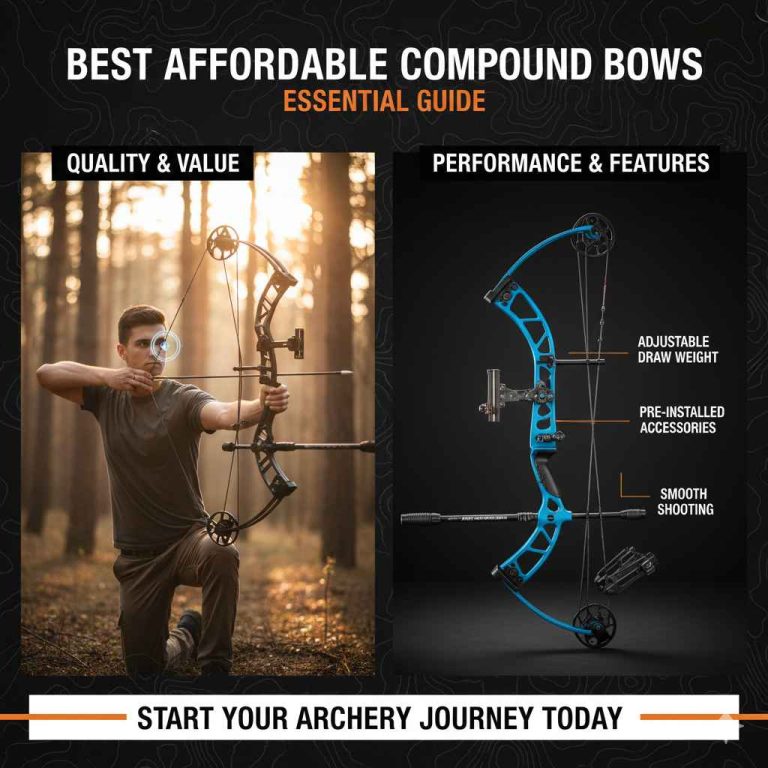
The best target bows for archery competitions are the ones matched to your division and distance: Olympic recurve for fixed-sight target rounds, and a 60–70 lb compound with a long axle-to-axle, stable target setup for the smallest pin float. Pick wrong, and you lose points to fit issues, not bad shooting. What matters most is how a bow behaves on the line, in practice and in competition. This guide compares recurve and compound target bows by division, setup, and shooter level for indoor, outdoor, and 3D rounds.
This guide is part of our Archery competitions: rules, formats and gear series.
Verdict: the best target bow is the one that fits your division and draw



If you want my short answer, buy for your rule set first and your ego last. A target bow that matches your draw length, holds steady at full draw, and gives you room to tune will beat a flashy hunting rig that feels busy on the line.
My short answer for compound shooters
I want a compound target bow with enough axle-to-axle length to settle the pin, a draw weight I can hold cleanly through a scoring round, and enough cam adjustability to land on my exact draw length. If the bow fights me at anchor, I pass.
My short answer for recurve shooters
For recurve, I care more about riser length, limb match, and clean string setup than about speed. A bow that accepts proper sights and stabilizers, balances well at full draw, and gives a repeatable anchor is the one I would put on the line.
When a hunting bow is the wrong choice
A hunting bow is the wrong choice when it feels twitchy, short, or hard to settle through the aiming process. I have seen more score loss from poor hold and awkward fit than from raw lack of arrow speed.
According to Shop the Best Bows for Hunting and Target Shooting — Source Compound Bow has a 32-inch axle-to-axle length.
How I judge target bows for competition
I judge target bows by division rules, then by hold quality, fit, and tuning access. Speed matters far less than repeatability. A bow that settles cleanly on target and lets me make small tuning changes usually scores better than a faster bow that feels nervous in the hand.
Division rules first
The competition division decides what is legal, what is useful, and what is a distraction. Recurve, compound, and barebow each push the bow toward different setups, so I start there before I look at brand, finish, or the number on the sticker.
Stability over raw speed
Target shooting rewards a calm sight picture. Longer axle-to-axle length, balanced mass, and a bow that resists hand torque help the archer hold through the shot. I would rather give up a little speed than fight a nervous bow every end.
Fit, anchor, and repeatability
Draw length fit changes everything. If the draw is wrong, your anchor shifts, your back tension changes, and your release timing gets messy.
What bows are used in archery competition?
Competition archers mainly use compound target bows, Olympic recurve target bows, and barebow setups. The right choice depends on the division, the sight rules, and whether the round rewards pure aiming stability or a simpler, more stripped-down setup.
Compound target bows
Compound target bows are common in scored rounds because they hold well and tune precisely. They usually run longer axle-to-axle than hunting compounds, use target sights, and often include stabilizers, a string stop, and limb dampening for a calmer shot.
Recurve target bows
Recurve target bows are the classic Olympic-style choice. They use a riser, matched limbs, a sight, and stabilizers. The setup is simple in appearance, but the tuning and form demands are real. A clean string picture and repeatable anchor matter a lot.
Where barebow fits
Barebow sits in its own division and strips away much of the aiming hardware. It is still a target competition choice, but the setup priorities change. I treat it as a separate class, not a watered-down version of recurve.
Competition bow selector table: spec ranges by division
Use this table as a starting point, not a shopping script. The numbers below are practical competition ranges I use when matching a bow to a shooter’s division, strength, and experience level. Then I fine-tune around draw length, anchor style, and scoring distance.
| Division | Experience level | Axle-to-axle or riser length | Draw weight | Draw length | Setup priorities |
|---|---|---|---|---|---|
| Compound target | Beginner | 32 to 35 inches axle-to-axle | 30 to 40 lb at the fingers of setup comfort | Must match measured draw; adjust cams to fit | Easy tuning access, steady hold, simple sight setup |
| Compound target | Intermediate | 33 to 37 inches axle-to-axle | 40 to 50 lb if form stays clean | Dial exact length before paper tuning | Cam timing, center shot, stabilizer balance, string stop |
| Recurve target | Beginner | 23 to 25 inch riser | Low enough to maintain clean hold and alignment | Matched through limb choice and anchor comfort | Sight compatibility, stabilizer fit, simple string setup |
| Recurve target | Intermediate | 25 inch riser with matched limbs | Enough to control form through a full practice session | Repeatable anchor without collapsing the shoulder line | Brace height, nocking point, limb weight match, balance |
What is the best target bow for archery competitions?

The best target bow is the one that fits your division, your draw length, and the distance you shoot most often. For many compound shooters, that means a long, stable bow with easy tuning access. For recurve archers, it means a legal setup that holds balance and anchor consistency.
Compound target bow examples from the market
Bear Archery sells compound bows, recurve bows, longbows, and crossbows, so the category itself is broad. Among the listed compound models, Source Compound Bow has a 32-inch axle-to-axle length, is rated at 340 FPS, and offers 45-60 or 55-70 draw weight options. Paramount Compound Bow has a 35-inch axle-to-axle length and is rated at 328 FPS.
More compound fit examples
Whitetail NXT Compound Bow has a 32-inch axle-to-axle length and is rated at 339 FPS. Warrant RTH Compound Bow has a 30-inch axle-to-axle length and is rated at 330 FPS. Paradigm Pro Compound Bow has a 33-inch axle-to-axle length and is rated at 333 FPS. Legit Pro RTH Compound Bow fits draw lengths from 18 inches to 30.5 inches, and Legit NXT RTH Compound Bow has a 30-inch axle-to-axle length.
What I look for before I call it a target bow
I want a bow that can be tuned cleanly, not one that only looks fast on paper. If it lets me set cam timing, paper tune, adjust nocking point, set brace height, and dial center shot without fighting the hardware, I take it seriously for competition use.
Should you buy a target bow or use a hunting bow?
If you plan to shoot competition often, a target bow is usually the better fit because it is calmer to hold, easier to balance, and simpler to tune for scoring. A hunting bow can work, but it often feels twitchier and less forgiving on the line.
Where hunting bows feel twitchy in competition
Hunting bows are usually shorter and quicker handling. That is useful in the field. On the range, though, that same feel can make the pin move more, especially for newer shooters who are still learning a quiet bow arm and clean follow-through.
Where target bows feel calmer and easier to hold
Target bows usually stretch the axle-to-axle length, spread the weight more evenly, and accept more stabilization hardware. That gives me a calmer sight picture and cleaner shot-to-shot repeatability. The bow still needs practice, but the platform is friendlier.
When a hunting bow can still make sense
A hunting bow can make sense if you shoot a few local rounds, already own a well-fit bow, and want to learn the rules before buying again. If your form is stable and the bow tunes well, you can score respectably. Just know the ceiling is lower.
What bow length and draw weight are best for target shooting?
For target shooting, bow length and draw weight should match the division and the shooter, not a generic number off a catalog page. Longer bows usually hold steadier, while draw weight should be light enough to preserve form through a full round and heavy enough to stay engaged.
Axle-to-axle length and stability
Longer axle-to-axle length usually helps stability because the sight picture settles more slowly. That is useful in target rounds. The tradeoff is maneuverability. A shorter bow can feel handier, but it often gives up some forgiveness at full draw.
Draw weight and control
Draw weight should let you expand through the shot without collapsing. If you are shaking, rushing, or letting your shoulder creep up, the bow is too heavy for clean scoring.
Draw length and anchor quality
Draw length affects anchor more than many new shooters expect. If it is short, you may crowd the string and lose back tension. If it is long, you may overreach and lose control. I fit draw length before I worry about accessories.
What compound bow specs matter most for target archery?
The most important compound specs are axle-to-axle length, draw weight, draw length adjustability, let-off, and tuning access. I also care about string stop and limb dampening because they calm the shot and make the bow easier to manage end after end.
Axle-to-axle length and holding steadiness
In target archery, a longer axle-to-axle bow usually feels calmer at anchor. A short bow can be legal and accurate, but it often needs more discipline from the shooter. For line shooting, I want steadiness first and speed second.
Draw weight, let-off, and control
High let-off helps hold the bow at full draw, but it should not hide poor setup. I still want a weight range that matches my form and class. The goal is a clean holding weight that I can manage without shaking through the aim.
Draw length, tuning access, and damping
Compound target bows need easy access to cam timing, paper tuning, and center shot adjustment. If I cannot make small changes without a headache, the bow is a bad competition partner. String stops and limb dampening also matter because they reduce after-shot movement and noise.
What makes a recurve target bow work on the line?
A recurve target bow works when the riser, limbs, string setup, and accessories all support a clean anchor and stable aim. For competition, I want a legal configuration that accepts a sight and stabilizers, balances well, and gives me a repeatable shot cycle.
Bow class, riser length, and limb weight
The riser length and limb weight choice set the whole feel of the bow. A longer riser often feels more stable and forgiving, while limb weight should let the archer stay in good alignment. Too much weight ruins the shot fast.
String setup and sight compatibility
Recurve shooting depends on a clean string picture. Brace height and nocking point must be set properly, then the sight has to land in the right place for the archer’s anchor. If the string setup is off, everything downstream gets messy.
Stabilizer fit and balance
Stabilizers matter more than many beginners expect. They help the bow settle after the clicker or release and keep the front end from jumping around. I set balance with the shooter, not with a rule of thumb from a catalog page.
What’s the difference between a target bow and a hunting bow?
The main difference is how the bow behaves under aim and how much it supports tuning and accessories. Target bows lean toward stability, forgiveness, and repeatable holds. Hunting bows lean toward compact handling and field carry, which is not the same job.
Target-specific geometry
Target-specific geometry usually means longer axle-to-axle length, more balanced mass, and a calmer sight picture. That combination helps shot-to-shot consistency. It does not shoot itself, but it gives the archer a cleaner platform to work from.
Tuning and accessory differences
Target bows usually give me more room for sights, stabilizers, string stops, and damping parts. Hunting bows can be tuned well, but they often prioritize portability. In competition, I would rather have the setup that lets me tune small errors out of the system.
When each makes sense
Use a target bow for scored rounds, fixed distances, and regular practice with a scorecard in mind. Use a hunting bow if that is what you own and you are just starting out. Once you care about placement on the line, the target bow usually wins.
How do I choose a competition bow for my division?
I choose by division first, then by fit, then by setup complexity. A legal bow that matches my draw length and strength is worth more than one with a faster headline spec. The goal is repeatable scoring, not a spec sheet contest.
Step-by-step competition bow checklist
- Confirm your division rules before shopping.
- Measure your draw length and check how the bow fits at full anchor.
- Choose a draw weight you can hold cleanly for a full practice session.
- Look for enough axle-to-axle length or riser length for steady aim.
- Verify tuning access for cam timing, paper tuning, nocking point, brace height, and center shot.
- Budget for sight, stabilizer, release aid or finger tab, and any fit changes.
Cost-adjacent details people miss
The bow is only part of the bill. A competition setup often needs a sight, stabilizer, rest or tab, a release for compound, and time on the press or tuning bench. I tell new shooters to budget for tuning and setup changes, not only the riser or cams.
Pros and cons of target bows for competition
Target bows give you a steadier platform and better competition fit, but they ask for more setup and more discipline. That trade is worth it when you care about score, repeatability, and a bow that behaves the same from end to end.
Pros
- Better stability on target
- More forgiving hold and aim
- Stronger tuning and accessory options
- Better match for division rules
Cons
- More setup time and tuning work
- Often higher total gear cost
- Less convenient for field carry
- Can feel overbuilt for casual shooting
Who this bow is for
This is for beginners entering target leagues, intermediate shooters moving into scored rounds, and compound or recurve archers who want a bow matched to division rules. It is not for someone who wants the lightest, shortest hunting rig and hopes to use it unchanged on the line.
Beginner competitors
If you are new, choose the bow that lets you draw cleanly, anchor repeatably, and learn the round without fighting the equipment. A slightly slower, easier bow often teaches better habits than a fast one that is hard to hold.
Intermediate shooters moving up
If you already score regularly, step into a bow with better stability and more tuning control. This is where axle-to-axle length, stabilizer balance, and exact draw fit start paying real points. That is when I want the setup to disappear and let me shoot.
Compound and recurve buyers
Compound buyers should focus on draw length adjustability, tuning access, and a calm hold. Recurve buyers should focus on bow class, riser and limb match, and accessory compatibility. Different rules, different needs. Same goal: better scores.
Frequently asked questions
Should I use a recurve or compound bow for competition archery?
Use recurve if you want an Olympic-style class with a simpler bow and more emphasis on form. Use compound if your division allows it and you want more holding stability and tuning control. The right answer depends on the rules and your shooting style.
Do I need a target-specific bow or can I use a hunting bow?
You can use a hunting bow to start, but a target-specific bow usually fits competition better. Hunting bows often feel shorter and more nervous on the line. Target bows are built for steadiness, tuning, and repeatable scoring rather than field carry.