5 Best Stocking Stuffers for Archery Lovers (2026): We Compared
The best stocking stuffers for archery lovers are small, useful items that fix common range problems fast: an arrow puller, nock adapters, spare nocks, serving wax, and target or limb maintenance supplies. Without them, archers waste shots fighting stuck arrows or buy the wrong accessories. This guide covers low-cost picks that solve those problems quickly.
Quick comparison
| Product | Badge | Best for | Price | ||
|---|---|---|---|---|---|
 | Dirvcp Black Arrow Puller with Belt Clip, Archery TargetDirvcp | Our pick | Arrow puller · belt clip · black | $5.99 Price as of 29 Oct 2026 | View |
 | Bohning 1306 Tex-Tite Bowstring Wax 1oz, ClearBohning | Pair with it | 1 oz · clear · bowstring wax | $4.99 Price as of 29 Oct 2026 | View |
 | Easton Nock 6.5MM Microlite Orange (DZ)Easton | Also great | 6.5mm · Microlite · orange | $13.38 Price as of 29 Oct 2026 | View |
 | Flying Swifts Hunting Broadheads 12PK Cutting Blade ArcheryFlying Swifts | Upgrade pick | 12-pack · 100 grain · gold | $16.99 Price as of 29 Oct 2026 | View |
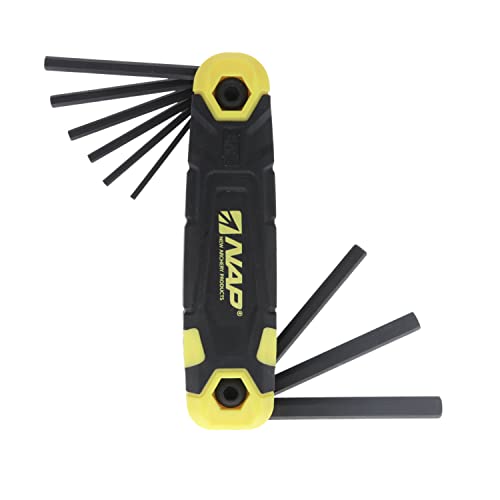 | NEW ARCHERY PRODUCTS Hex Key Standard/Compact Tool –New Archery Products | Also great | Hex key set · standard · compact | $12.99 Price as of 29 Oct 2026 | View |
This quick comparison is for non-archers who need a fast answer. The safest buys fit nearly any setup, while the more specific gifts need bow type and size confirmation.
If you only know that the person shoots bows, start with the least specific item first. If you know the bow type, you can buy with more confidence.
How we chose
Each pick had to solve a common archery problem: stuck arrows, compatibility mistakes, or missing maintenance supplies. That keeps the list practical instead of novelty-heavy.
Preference went to items that fit a stocking, cost little, and are easy to understand without deep bow knowledge. Bow-specific tools only made the list when the fit warning was clear.
Also keep compound, recurve, and bowhunter use separate when the fit changes. That matters with release aids, finger tabs, strings, and broadhead-related parts.
Quick picks
- Best overall: Arrow puller, because it helps remove arrows from targets and fits almost any archer’s routine.
- Best under $25: Bowstring wax, because it is cheap, useful, and easy to keep in a range bag.
- Best for compound bow shooters: Release aid, if you know the exact preference and fit.
- Best for recurve shooters: Bow stringer or finger tab, depending on whether stringing or shooting comfort is the bigger need.
Arrow puller: best for target archers
- Helps remove stuck arrows more easily
- TPR jaws aim for a firmer grip
- Belt clip keeps it handy at the range
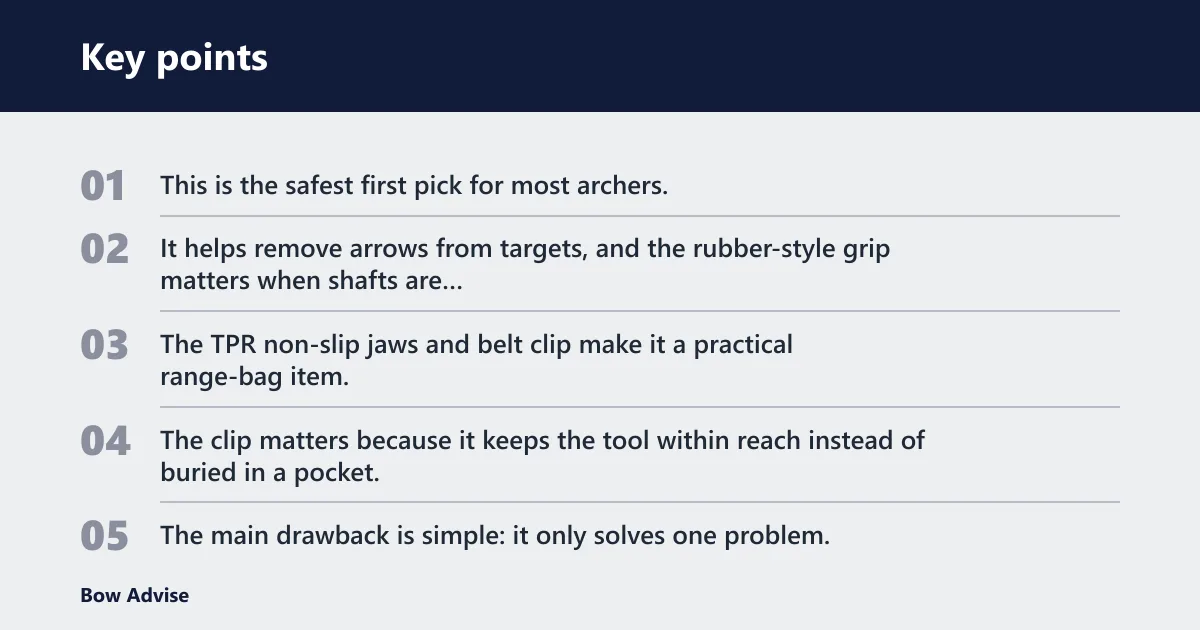
This is the safest first pick for most archers. It helps remove arrows from targets, and the rubber-style grip matters when shafts are set deep or the target face is tight.
The TPR non-slip jaws and belt clip make it a practical range-bag item. The clip matters because it keeps the tool within reach instead of buried in a pocket.
The main drawback is simple: it only solves one problem. It will not help with tuning, string care, or fitting issues.
Why the grip matters
Arrow pullers are most useful when the arrow is hard to move by hand. A firm grip reduces the strain of repeated target removal and keeps carbon and aluminum arrows easier to handle.
That is the common pain point many buyers miss. The tool is small, but it can save a lot of time during practice.
When to pair it with arrow lube
Arrow lube and an arrow puller work well together. The lube reduces target friction, which can make arrows easier to pull from targets, and the puller gives the hand a better hold when the shaft still feels stuck.
For people who shoot often, this pair makes sense as a cheap two-item gift. It addresses the same annoyance from two angles.
What to check before buying
Check whether the shooter uses carbon or aluminum arrows. If the person mostly hunts, this still helps at practice, but it is less useful than a bow-specific repair or maintenance item.
Bowstring wax: best for routine upkeep
- Made for synthetic fiber bowstrings
- Helps lubricate and extend string life
- Tacky formula stays usable in weather
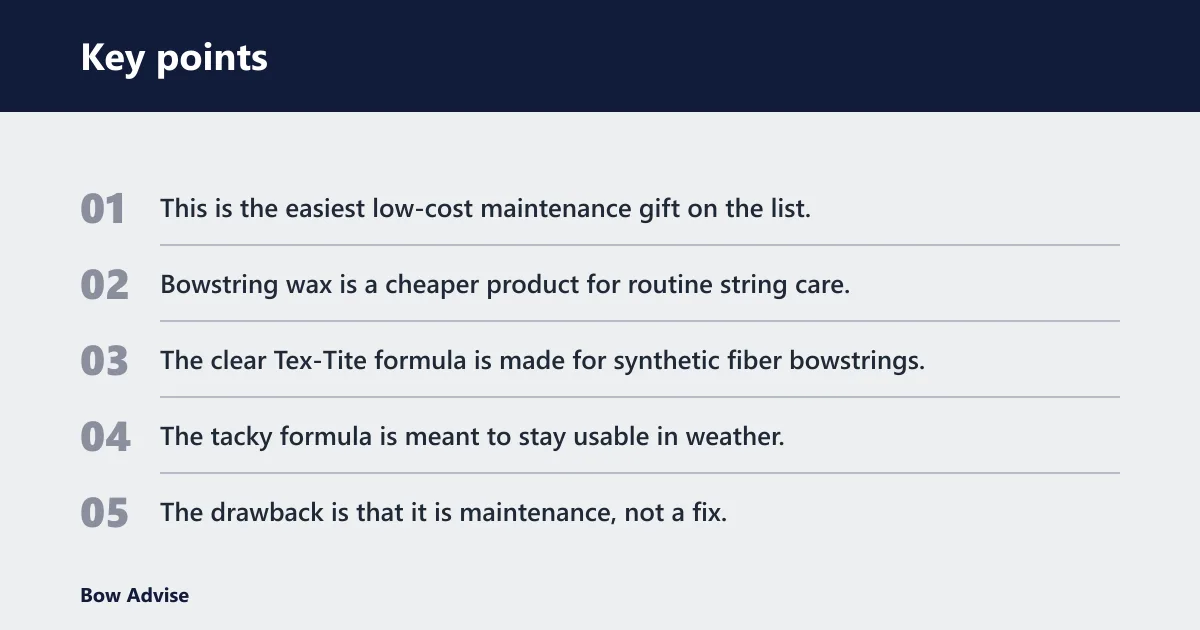
This is the easiest low-cost maintenance gift on the list. Bowstring wax is a cheaper product for routine string care, and it fits well in a stocking or range bag.
The clear Tex-Tite formula is made for synthetic fiber bowstrings, so it suits routine upkeep for many compound and recurve setups. The tacky formula is meant to stay usable in weather, which helps for outdoor practice days.
The drawback is that it is maintenance, not a fix. It helps with care, but it will not repair damaged serving or a worn string.
Who should keep it in a range bag?
Any archer who shoots regularly should have wax close at hand. It is most useful for compound bow shooters and recurve archers who want routine upkeep between sessions.
It also makes sense for bowhunters who leave gear in a truck or pack. String care is easy to forget until the string starts looking dry.
How often it gets used
Wax is not a one-time novelty. It is a repeat-use consumable, which is exactly why it works as a stocking stuffer.
For someone who shoots weekly, even a small tube can stay useful for a long time if it is kept in rotation.
What makes one wax better than another
Look for a formula made for synthetic fiber bowstrings. That is the key fit detail here, not packaging or color.
A good wax should be easy to apply in small amounts and stay workable in changing weather. That keeps it practical for range bags and hunting packs.
Bow stand: best for range use
A bow stand is useful because it holds the bow off the ground and helps prevent damage when the bow is set down. That matters at the range, where bows get leaned against benches, lanes, or dirt more often than they should.
This gift is especially smart for shooters who move between ends of the line often. It keeps the bow stable and reduces the chance of accidental knocks or limb contact.
Why it helps prevent damage
Setting a bow on the ground invites tip damage, limb scuffs, and unnecessary contact with gravel or wet surfaces. A stand reduces that risk by giving the bow a stable resting spot.
It also saves time. The bow does not need to be leaned carefully against a bag or chair every time the shooter steps back.
What works for compound bows
Compound bows usually benefit from a stand that supports the bow upright without crowding cams or accessories. The bow should sit securely, not balance awkwardly.
If the shooter uses a sight, quiver, or stabilizer, the stand needs to allow that setup without tipping.
What works for recurve bows
Recurve bows need gentle support too. A stand should hold the bow without pressing on the limbs in a way that creates stress or sliding.
For traditional shooters, the real value is simple storage between ends and a cleaner place to put the bow down.
Bow stringer: best for recurve and longbow shooters
A bow stringer is a safer stringing tool for recurve and longbow archers. The key reason to buy one is simple: it is recommended for recurve and longbow archers and helps string bows safely without forcing the limbs in a risky way.
This is one of the most useful small gifts for traditional setups. It belongs in a compact backup kit, especially for a shooter who travels to events or changes strings at home.
The drawback is fit sensitivity. It must match the bow style, and buyers should not assume a recurve stringer is a good fit for every bow.
Why it matters for safe stringing
A stringer reduces the chance of twisting limbs the wrong way during setup. That matters because traditional bows are easier to damage when stringing is rushed or improvised.
It is also more consistent than trying to muscle the string on by hand. Consistency matters when the bow is used often.
What size or limb style to confirm
Confirm that the bow is a recurve or longbow before buying. If the setup is hybrid or highly specific, the buyer should verify the limb shape and the stringer style first.
That small check avoids one of the most common gift mistakes: buying a tool that looks universal but is not.
When a backup stringer is useful
A backup stringer makes sense for a traveling archer or anyone who keeps gear in more than one location. It can also be a smart spare for a beginner who is still learning proper bow setup.
If the main stringer gets left behind, the spare keeps practice from stopping.
Release aid: best for compound shooters
A release aid is a strong gift for a compound bow shooter, but only when the preference and fit are known. It is a small archery gift with real value because the wrong style can be uncomfortable or unusable.
This is the most compatibility-sensitive item in the guide. Release aids are not casual one-size-fits-all purchases.
Who should get one?
Choose a release aid only for someone who already shoots a compound bow and already knows the style they prefer. That includes wrist-strap designs, hand-held styles, and similar fit choices.
If the archer has no current release setup, a gift card is often the better buy.
What stands out
Release aids matter because they connect directly to shooting feel. A good match can help the archer keep their shot cycle consistent.
That makes it a good gift for a focused compound shooter who already has a known setup and wants a spare or upgrade.
Honest drawback
The drawback is the risk of buying the wrong handedness, style, or size. That mistake can make the gift unusable.
When specs are unknown, this is not a safe blind purchase.
Finger tab: best for recurve shooters
A finger tab is a useful alternative to a release aid for recurve archers. It protects the fingers during the draw and belongs to the same small-gift category as other shooting accessories.
For traditional archers, it is often the more practical choice than a compound-style release. It is also compact enough for a stocking.
Why it is useful
The tab gives the fingers a barrier against string pressure. That matters during repeated practice sessions, where discomfort can build quickly.
It is a straightforward gift for anyone who shoots barebow or traditional recurve and does not use a mechanical release.
What to confirm before buying
Confirm the shooter’s draw-hand side and preferred tab style before purchasing. Size and fit matter, especially if the tab is meant for regular use rather than a backup.
A tab that does not match hand size can feel awkward fast.
Honest drawback: the drawback is that tabs
The drawback is that tabs are personal. Some shooters prefer a very specific feel, so a wrong choice may sit unused.
If you do not know the user’s preference, a tab is less safe than wax or a bow stand.
Fletching supplies: best for arrow builders
- Replacement nocks for 6.5mm arrows
- Orange color is easy to spot
- Sold by the dozen for spares
Fletching supplies make sense for archers who build or repair their own arrows. The guide-level need here is practical: fletching supplies are recommended for archers who want to make their own arrows.
The Easton Nock 6.5MM Microlite Orange dozen is a good example of a spare-part gift when the arrow system matches. It gives the archer replacement nocks in a visible color, sold by the dozen for spares.
The drawback is obvious. This is a size-sensitive buy, so the arrow diameter and nock fit must match the setup exactly.
What counts as fletching supplies
Fletching supplies can include fletching glue and a fletching jig, along with spare parts for arrow building. The right mix depends on whether the shooter is repairing one arrow or building several.
These gifts are best for hands-on archers who already tinker with arrows at home.
Why compatibility matters here
Arrow parts are easy to mismatch. Nocks, shafts, and other arrow components must fit the exact system.
That is why a buyer should only choose these when the arrow spec is known. Otherwise, a generic consumable is safer.
Bow repair kit: best for field fixes
- Multiple SAE sizes cover common bow adjustments
- Steel build is meant for hard use
- Marked sizes make the right key easy to find
A basic bow repair kit is one of the smartest practical gifts for a serious archer. The New Archery Products hex key set is a compact example of what this kind of kit should cover, with multiple SAE sizes for common bow adjustments.
According to the product details, a bow repair bundle can also include Allen wrenches and other small tuning tools. That makes it useful for field repair and small tuning jobs.
The drawback is that it is only as good as the bow’s hardware. If the shooter uses nonmatching sizes or needs metric tools instead, part of the kit may sit idle.
Why a kit belongs in a stocking
Archers lose time when a small screw loosens or a setting needs a fast adjustment. A compact repair kit keeps the fix close at hand.
It is especially useful for bowhunters and practice shooters who do not want a tiny problem to end a session.
What to check first
Check whether the bow uses SAE or metric hardware before buying. Also confirm whether the archer already has a full tool set, because duplicates are less helpful than a missing size.
A marked-size tool is easier to use under pressure than a loose pile of unlabelled keys.
Archery stocking checklist

This checklist helps a non-archer avoid the most common buying errors. The goal is simple: match the gift to the bow type, then confirm the one detail that can make it fit or fail.
| Gift | Best for | Size or model sensitivity | Why it matters | Buy-if-you-know-this detail | Do not buy |
|---|---|---|---|---|---|
| Arrow puller | Compound, recurve, bowhunter | Low | Helps remove arrows from targets | The archer shoots regularly and struggles with stuck arrows | Skip if you want a tuning gift; it is not one |
| Arrow lube | Compound, recurve, bowhunter | Low | Reduces target friction and pairs well with a puller | The archer practices on dense targets and wants easier arrow removal | Do not treat it as a replacement for a puller |
| Bowstring wax | Compound, recurve | Low | Extends string life and supports routine upkeep | The bow uses synthetic fiber strings | Do not buy for damaged serving that needs repair |
| Bow stand | Compound, recurve | Medium | Prevents bow damage when set down | The archer goes to the range often or stores the bow between ends | Do not buy a stand that does not support the bow’s setup |
| Bow stringer | Recurve, longbow | High | Used to string bows safely | The shooter uses a recurve or longbow and needs a compact backup tool | Do not buy for a compound bow shooter |
| Release aid | Compound | High | Directly affects shot feel and consistency | You know the draw hand, style, and preference | Do not buy wrong-handed or wrong-style release aids |
| Finger tab | Recurve | High | Protects fingers during the draw | You know the draw-hand side and the shooter uses fingers on the string | Do not buy a tab without checking fit |
| Fletching supplies | Arrow builders | High | Useful for making or repairing arrows | You know the shaft size and arrow system | Do not buy nocks or tips without confirming the size |
| Bow repair kit | Compound, recurve, bowhunter | Medium | Helps with field repairs and adjustments | You know the bow uses the included key sizes | Do not assume SAE sizes fit every bow |
| Gift card to local archery shop | Any archer | Low | Best fallback when specs are unknown | You are unsure about the user’s exact bow, release, or arrow setup | Do not guess on a fitting-sensitive part instead |
Which one should you buy?
If you know the bow type, buy the item that matches it. For compound shooters, the best practical gifts are an arrow puller, bowstring wax, a repair kit, or a release aid if the fit is known. For recurve and longbow shooters, a bow stringer, finger tab, or wax is usually safer.
If you do not know the specs, choose the least risky item first. Arrow pullers, bowstring wax, bow stands, and gift cards are safer than release aids, tabs, or string-related parts.
For a beginner archer, start with wax, an arrow puller, or a basic repair kit. Those items teach good habits without forcing a spec guess. A common first-timer mistake is buying a release aid or nock size before confirming the exact setup.
Suppose the person shoots a recurve at a local range and complains about finger soreness. A finger tab is the useful gift, not a compound release aid. If that same shooter also strings their own bow, a bow stringer becomes the stronger second choice.
For the lowest-risk gift, the gift card to a local archery shop is still the safest fallback. It can be redeemed for range time or equipment, and it avoids wrong-size purchases when the bow details are unknown.
Frequently asked questions
What are the best stocking stuffers for archery lovers?
The best stocking stuffers are practical items that fix common range problems. Arrow pullers, bowstring wax, bow stands, bow stringers, repair kits, and gift cards all solve real issues. The safest choices are the ones that do not require exact sizing.
What do archers actually use every week?
Most archers use target-removal helpers, string care products, and small tools more often than flashy gear. Arrow pullers, wax, and compact hex-key tools are common because they support regular shooting. Recurve users may also rely on a stringer and finger tab.
What archery gifts fit in a stocking?
Small tools and consumables fit best. Arrow pullers, wax, nocks, repair tools, and tabs are compact enough for a stocking without feeling like filler. Larger gear is less practical unless it is a gift card or another flat item.
What is a good cheap gift for someone who shoots bows?
Bowstring wax is one of the best cheap gifts because it is useful, low-cost, and easy to store. An arrow puller is another strong pick. Both solve everyday problems without requiring deep knowledge of the shooter’s full setup.
What should I buy for a beginner archer stocking stuffer?
Beginner archers do best with simple, low-risk items like wax, an arrow puller, or a basic repair kit. These gifts teach good upkeep without demanding a perfect fit. Skip release aids and arrow parts unless the bow setup is already known.
What gift card is best for an archery lover?
A gift card to a local archery shop is the best fallback when specs are unknown. It can be used for range time or equipment, and it prevents wrong-size purchases. That makes it the most flexible option when you are unsure about the archer’s setup.