Leather Archery Quivers vs Nylon: Which Lasts Longer?
Nylon quivers usually last longer than leather in wet, hard-use archery because webbing and stitching resist abrasion better; leather wins mainly if it is kept dry and conditioned. Leave either one wet or dirty, and you get cracked straps, stretched seams, rusted hardware, and lost arrows. This guide compares failure points, weather response, edge wear, stitching, and replacement triggers for both materials.
| Factor | Leather archery quivers | nylon | Winner |
|---|---|---|---|
| Rain and sweat | Absorbs moisture, then dries and can stiffen or crack if neglected | Tolerates moisture better and dries faster | nylon |
| Sun and hot truck storage | UV and heat can dry, fade, and harden leather | UV still ages synthetic fabric, but it is usually less affected by brief damp storage | nylon |
| Abrasion at straps and seams | Can wear at belt contact, keepers, and stitched joins | 1000D Cordura-style fabric is built for abrasion resistance | nylon |
| Maintenance burden | Needs regular conditioning and inspection | Needs less routine care, mostly cleaning and seam checks | nylon |
| Longevity with care | Can last 20-plus years with consistent conditioning | Common daily-use service life is often 7 to 12 years in heavy duty use | Leather archery quivers |
Leather archery quivers vs nylon: the real trade-off
Leather archery quivers can outlast nylon when the leather is full-grain, kept conditioned, and stored dry. Nylon often survives wet use and rough storage better, so it frequently reaches the end of service by wear at seams or attachment points before the fabric itself fails. Moisture, abrasion, and upkeep decide the result.
What usually wears out first
Quivers rarely fail because the whole shell disappears at once. More often, the first failure is a strap edge, a keeper hole, a throat that loosens, or stitching that gives way under repeated load. That is why archery-specific wear matters more than general material stereotypes.
Why material alone does not decide lifespan
A full-grain leather quiver that gets cleaned and conditioned will usually outlast a neglected one by a wide margin. A well-made 1000D Cordura nylon quiver can also fail early if the stitching, hardware, or attachment method is weak. Build quality and storage often decide service life before the outer material does.
Who should care most about durability?
Hunters who carry a quiver in rain, damp blinds, or hot vehicles should care about moisture and heat resistance first. Archers who shoot often and remove arrows constantly should care about throat wear, slot deformation, and stitch fatigue. Recurve and compound users should also consider how the quiver mounts, because belt-mounted and bow-mounted setups load different seams.
Quiver longevity matrix
This matrix rates the two materials across the conditions that end service life fastest. A score of 1 means poor durability in that condition, and 5 means strong durability. The likely first failure point matters as much as the score.
| Condition | Leather archery quivers | nylon | Likely first failure point | Buyer recommendation |
|---|---|---|---|---|
| Rain | 2 | 5 | Leather drying and cracking | Choose nylon for wet-weather hunting |
| Sweat | 2 | 4 | Leather stiffness and finish wear | Choose nylon for hot, high-sweat carry |
| Sun | 3 | 3 | UV fading and material aging | Either material needs shade and storage care |
| Truck storage | 2 | 4 | Heat drying leather; nylon seam aging | Choose nylon if gear stays in a vehicle often |
| Blind use | 3 | 4 | Moisture retention and mildew risk | Choose nylon for damp blinds |
| Arrow removal frequency | 2 | 4 | Throat stretch and slot wear | Choose nylon for heavy practice volume |
| Broadhead use | 3 | 4 | Internal lining cuts and abrasion | Choose nylon with reinforced slots |
| Maintenance frequency | 2 | 5 | Neglect-related leather cracking | Choose nylon if low maintenance matters most |
Rain and sweat
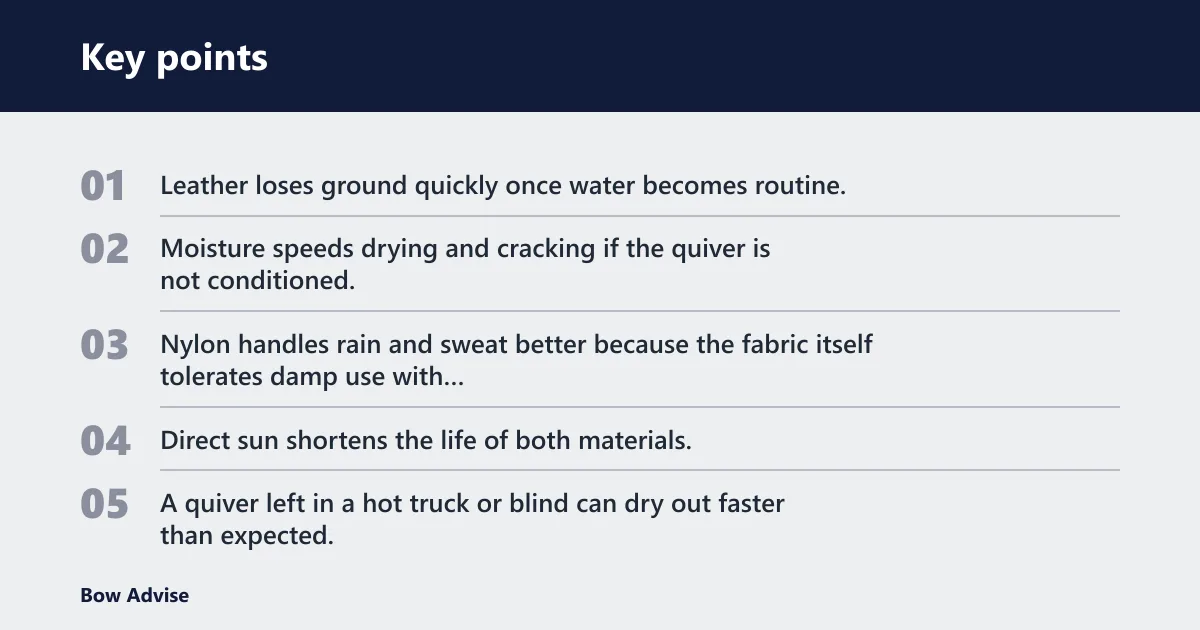
Leather loses ground quickly once water becomes routine. Moisture speeds drying and cracking if the quiver is not conditioned, especially around bends, seams, and attachment points. Nylon handles rain and sweat better because the fabric itself tolerates damp use with less structural change.
Sun and hot truck storage
Direct sun shortens the life of both materials, but heat is especially hard on neglected leather. A quiver left in a hot truck or blind can dry out faster than expected, then stiffen at the strap and throat. Nylon does better here, though UV and heat still age stitching, coatings, and buckles over time.
Blind use and damp gear
A damp blind can trap moisture against the quiver for hours. Leather can stay wet long enough to mildew or harden after repeated wet-dry cycles, while nylon usually tolerates that pattern better. For hunters who store gear in a blind between sits, moisture resistance matters more than appearance.
Arrow removal, broadheads, and maintenance
Heavy arrow removal wears the throat, slots, and internal lining. Broadheads add extra cutting risk, especially if they snag on leather edges or thin fabric inserts. Nylon quivers with stronger webbing and reinforced seams generally hold up better in high-volume practice, but they still need seam checks and hardware inspection.
Which lasts longer in wet weather?
Nylon often lasts longer in wet weather because it tends to handle moisture better and usually needs less immediate care after rain, sweat, or damp storage. Leather can last very long too, but only if it is dried correctly and conditioned before it becomes brittle. In repeated wet use, nylon is the safer longevity choice.
Leather failure in moisture
Leather’s weakness is not instant ruin. It is cumulative damage from wet-dry cycles. Once the hide loses oils, it can stiffen, crack at folds, and start to show split edges near stitching or strap bends.
Why nylon handles moisture better
1000D Cordura nylon is a high-denier ballistic weave, so it is built to resist abrasion and shrug off wet use better than leather. It still needs care, but dampness usually does not cause the same drying-and-cracking chain reaction.
What damp storage does to both materials
In a damp garage or blind, leather can develop mildew if it stays wet too long, then lose flexibility. Nylon is less likely to absorb water in the same way, but trapped moisture can still attack stitching, buckles, and seams. Either material should be dried before long storage.
How do wear points differ on a quiver?
Leather and nylon fail in different places. Leather often wears out at bends, strap edges, and the throat where arrows enter and leave. Nylon more often fails at stitching, keeper holes, and attachment seams, especially when the quiver is loaded, removed, and reattached often.
Strap edges and attachment seams
Strap edges rub against belts, hip points, and bow limbs. On belt-mounted quivers, repeated movement can fray webbing or cut into leather where the strap bends around hardware. The seam near the mount is a common first failure point on both materials.
Keeper holes, throat stretch, and tube deformation
The throat is where frequent arrow insertion creates real wear. A leather throat can stretch and lose shape, while a nylon throat can deform or soften if the internal structure is thin. Once arrows start sitting loose or pulling oddly, the quiver is already aging.
Broadhead contact and arrow removal wear
Broadheads can nick lining material and score the interior during removal. That matters more for hunters who carry multiple fixed-blade arrows, because repeated contact accelerates wear at the same spot. If arrow removal starts feeling sloppy or rough, the quiver is approaching replacement time.
What type of leather is most durable?
Full-grain leather is the most durable choice for a quiver when longevity is the goal. It is the highest-density hide layer and tends to hold up best when conditioned regularly. Lower-grade leather usually wears faster at folds, edges, and stitched joins.
Full-grain leather and density
Full-grain leather keeps the strongest fiber structure, which helps it resist tearing and stretching better than lower grades. It is also more rigid and heavier than nylon, so it can feel stiffer on the body but often lasts longer when cared for correctly.
Conditioning and crack prevention
Conditioning matters more here than many buyers expect. Without regular conditioning, leather dries out, loses flexibility, and starts to crack, especially in dry climates or hot storage. That maintenance burden is part of the purchase decision, not an afterthought.
When leather stops being the better buy
Leather stops being the better longevity buy when the quiver lives in rain, in a hot truck, or in a damp blind and rarely gets conditioned. It also becomes a weaker choice when the user wants the lightest setup and the least routine care. In those cases, nylon usually has the better service life.
How long should a good quiver last with regular use?
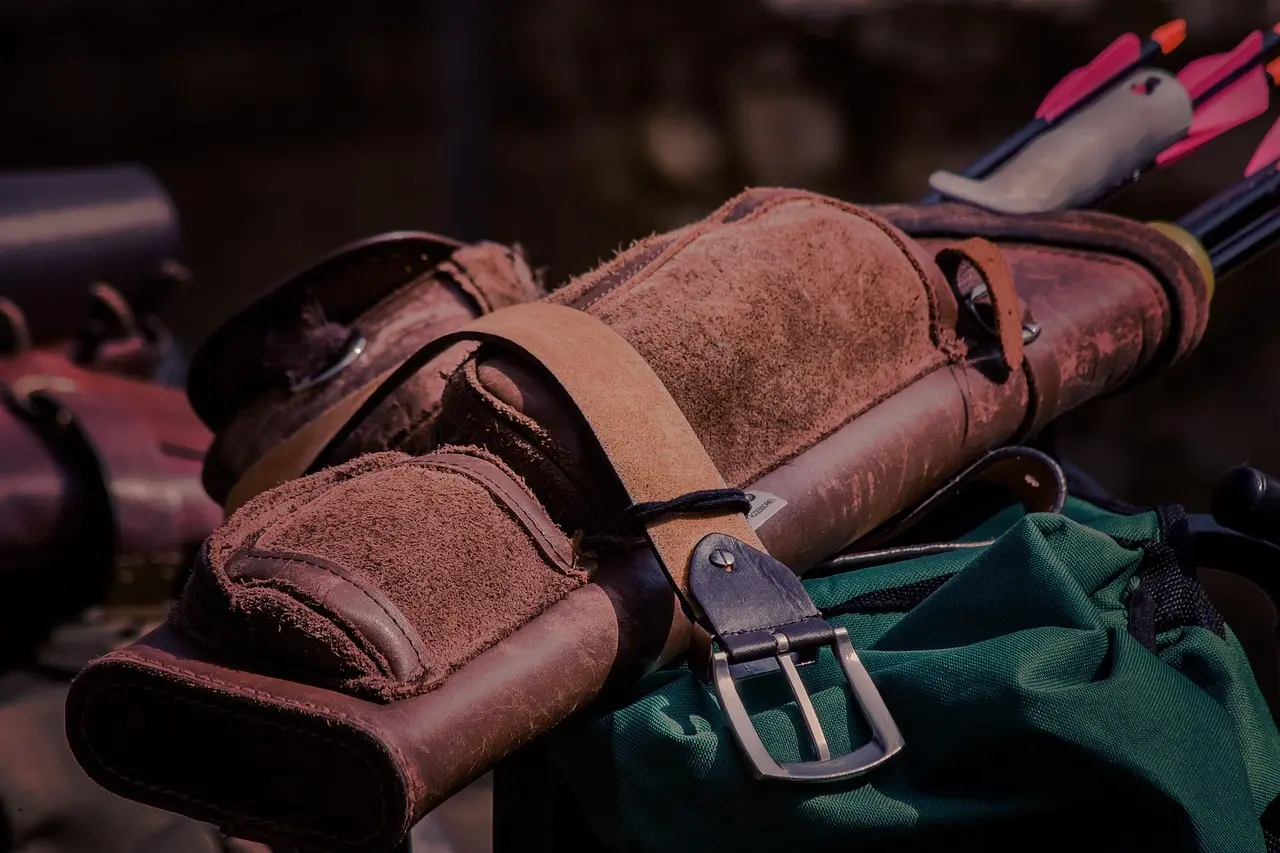
With regular use, a good quiver can last many years, but the range depends on how often it gets wet, loaded, and stored poorly. Leather can last about 20 years or more with consistent conditioning. Nylon duty gear is commonly rated around 7 to 12 years in daily hard use, though less severe archery use can extend that.
Weekend hunting versus daily practice
Weekend hunting usually stresses a quiver less than daily practice. A hunter who carries it a few days each season may get long service from either material if storage is clean and dry. A daily shooter who removes arrows constantly will wear out throat shape, stitching, and attachment points much faster.
Recurve and compound attachment stress
Recurve quivers and compound quivers load differently. Belt-mounted recurve setups can rub more at the hip and throat, while bow-mounted compound quivers add vibration and repeated mount stress near the attachment hardware. That changes where service life ends first, even when the outer material is the same.
What shortens service life fastest
The fastest killers are moisture, heat, and neglected seams. Arrow removal frequency adds wear at the throat, and broadhead use accelerates interior damage. Suppose a bowhunter leaves a leather quiver in a truck every August and only oils it once a year; cracking will usually show at folds and strap edges long before the body itself fails.
Choose Leather archery quivers if… / Choose nylon if…
Choose Leather archery quivers if you want the longest service life and are willing to condition the material on schedule. Choose nylon if you hunt in wet weather, store gear in hot or damp places, or want the lightest field quiver with less upkeep. The winner depends on use, not brand romance.
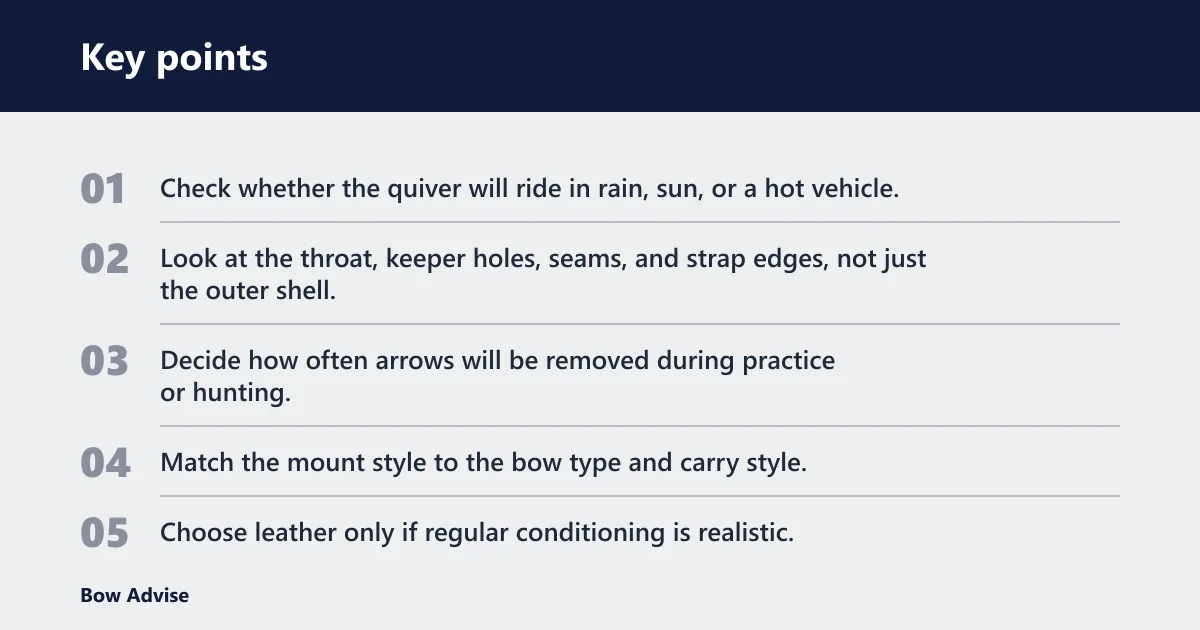
Best fit for hunters in wet or low-maintenance conditions
Choose nylon if rain, sweat, or damp blinds are common. Choose nylon if you want a lighter field quiver and do not want conditioning to be part of regular gear care. Choose nylon if your quiver lives in a truck between trips and you want fewer moisture-related surprises.
Best fit for archers who want maximum service life with care
Choose Leather archery quivers if the climate is dry enough to manage moisture and you are willing to condition and inspect the quiver. Full-grain leather can outlast nylon when it is treated as a maintenance item, not a throw-in-the-back accessory. That is the trade, more care, more potential lifespan.
Quick checklist before buying
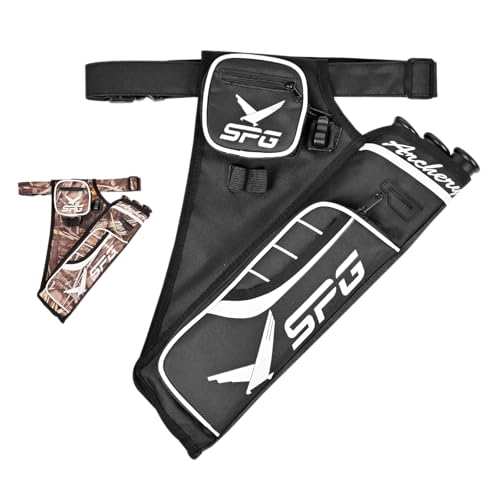
- Check whether the quiver will ride in rain, sun, or a hot vehicle.
- Look at the throat, keeper holes, seams, and strap edges, not just the outer shell.
- Decide how often arrows will be removed during practice or hunting.
- Match the mount style to the bow type and carry style.
- Choose leather only if regular conditioning is realistic.
Frequently asked questions
Which lasts longer, a leather archery quiver or a nylon quiver?
Leather archery quivers often last longer if they are full-grain and consistently conditioned. Nylon often lasts longer in wet, rough, low-maintenance use because it resists moisture and abrasion better in the short to medium term. The better choice depends on storage, weather exposure, and maintenance discipline.
Does leather crack faster than nylon in wet weather?
Yes, leather is more likely to crack after repeated wet-dry cycles if it is not conditioned. Nylon tolerates rain and sweat better and does not dry into the same stiff, brittle state. In damp storage, though, both materials can suffer if seams and hardware are ignored.
Is nylon better than leather for bowhunting in rain?
Yes. Nylon is usually the better choice for bowhunting in rain because it handles moisture better and dries faster. Leather can work, but it needs more drying and conditioning after wet outings. For hunters who cannot baby gear, nylon is the safer durability pick.
What type of leather is most durable for a quiver?
Full-grain leather is the most durable type for a quiver. It keeps the densest hide structure and tends to hold up best when conditioned regularly. Lower-grade leather usually wears faster at folds, strap bends, and stitched seams, especially in dry or hot storage.
How do I tell if a quiver is wearing out?
Look for cracked leather, frayed webbing, loose stitching, stretched throat openings, deformed arrow slots, and loose attachment points. Zipper or buckle failure is another warning sign. If arrows no longer seat cleanly or the quiver shifts during carry, replacement is close.
Which material is lighter for a field quiver?
Nylon is meaningfully lighter than leather, which matters for all-day field carry. The lighter weight can reduce fatigue, especially when the quiver carries several arrows and extra hardware. Leather is usually heavier and more rigid, which can be fine if maximum lifespan matters more than carry weight.