Recurve Sights vs Barebow Aiming
Recurve sights usually suit target competition and fast distance consistency; barebow aiming suits archers who want simpler rules, fewer parts, and stronger close-range instinct, but it is harder to score well at varied distances. Pick badly and you spend months chasing missed marks, weak confidence, or equipment that breaks class rules. This guide compares performance, rules, learning curve, and a practical way to choose.
| Decision factor | Recurve Sights | Barebow Aiming | Winner |
|---|---|---|---|
| Beginner ease | Fixed pin or aperture gives a clear aiming point. | Requires learning gap, crawl, or face references from day one. | Recurve Sights |
| Distance versatility | Strong across many yardages once sight marks are set. | Works across distances, but the aiming reference changes more often. | Recurve Sights |
| Equipment cost | Needs a sight and usually a fuller target setup. | Can run with fewer parts and a simpler riser setup. | Barebow Aiming |
| Tuning complexity | Needs tune work, but aiming method stays stable. | Needs tune work plus crawl or anchor changes that affect impact. | Recurve Sights |
| Competition flexibility | Fits Olympic recurve and many sighted target divisions. | Fits barebow divisions, where equipment limits matter. | Tie |
| Forgiveness of form errors | A bad anchor still costs points, but sight picture is easier to verify. | Small anchor changes can move the arrow more, especially with string walking. | Recurve Sights |
What each aiming method changes on the bow
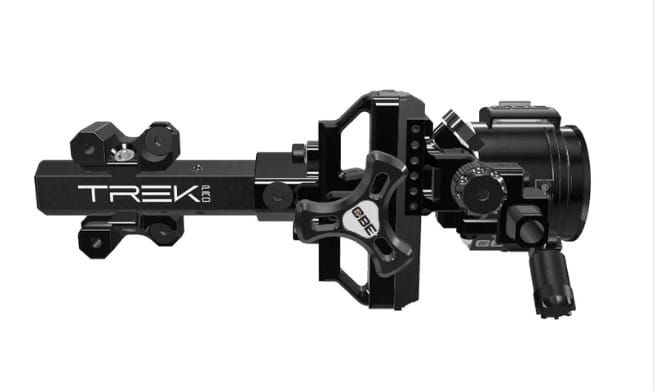
Recurve sights add a fixed aiming reference to the riser, so the archer aligns the pin or aperture with the target and then uses sight marks for distance. Barebow aiming removes that fixed reference and replaces it with body-based references such as gap shooting, string walking, or face walking.
The practical difference is direct. A sighted setup moves most distance work into the sight; a barebow setup moves more of it into the archer’s anchor, crawl, and reference points.
Why competition rules matter before you choose
Division rules decide whether a setup is legal, not only convenient. Olympic recurve commonly allows a bow sight, stabilizers, and a clicker, while barebow recurve typically limits the equipment list and expects the archer to aim without a sight.
That means the right choice depends on the event you want to shoot. A setup that feels easy in practice can be a class violation in a local club round if the rulebook uses different barebow limits or sight allowances.
Side-by-side comparison
Competition use should lead the choice. Recurve Sights usually win on repeatable distance work, while Barebow Aiming usually wins on simplicity and class-driven challenge.
Beginner ease
Recurve Sights are easier for most new archers to understand because the aiming point is visible and repeatable. Barebow Aiming can feel natural for some archers, but it asks them to learn reference points before they have a steady feel for trajectory.
Distance coverage
Recurve Sights handle multiple distances with sight marks, which is why they are common in outdoor target work. Barebow Aiming can cover the same range, but the archer has to manage gap, crawl, or anchor changes as distance shifts.
Equipment and setup
Recurve Sights need a bow sight mounted to the riser, and many target setups also pair that with stabilizers and a clicker. Barebow Aiming keeps the rig simpler, but the archer must stay within equipment limits for the division.
Form feedback
Both methods demand a repeatable anchor point. A small change in jaw contact or string picture can move the shot for either style, but barebow errors often show up faster because the aiming reference moves with crawl or face position.
How do recurve sights work?
Recurve sights give the archer a pin sight or aperture mounted to the riser, with windage and elevation adjustment to place the point of aim. The archer sets sight marks for different yardages or meters, then uses the same anchor and draw cycle while adjusting the sight for distance.
Pin sight or aperture on the riser
A pin sight gives a small aiming point, while an aperture gives a ring-style reference. Both sit on the riser and both let the archer move the sight block up, down, left, or right as arrow impact changes with distance and wind.
Windage, elevation, and sight marks by distance
Sight marks are distance-specific aiming notes. Sight marks depend on arrow speed, arrow weight, and the bow setup, so a change in shaft mass or brace height can shift the marks even if the archer’s form stays the same.
Why Olympic recurve usually starts here
Olympic recurve is the standard sighted target setup for many competitive archers. The sight, clicker, and stabilizers give a structured system that favors strict shot execution and stable scoring over time.
How do you aim barebow?
Barebow aiming uses reference points instead of a sight. The three most common methods are gap shooting, string walking, and face walking, and each depends on a repeatable anchor point and clean execution to keep impact predictable.
Gap shooting as a fixed-reference method
Gap shooting uses a known space between the arrow and the target, and that gap changes with distance. It works best when the anchor is fixed, because the archer needs a consistent starting point to judge how far to hold under or over the spot.
String walking and crawl adjustment
String walking shifts the crawl on the string, which changes the arrow’s point of impact for each distance. It is common in barebow because the tab marks and crawl positions can be repeated, but the method needs careful tuning and a stable anchor.
Face walking and why it is less common
Face walking changes the anchor point on the face, which changes the sight picture and trajectory. It is used less often than string walking because it can be harder to keep consistent under pressure, especially when a tournament round demands many distance changes.
Which method is easier to learn?
Recurve Sights are usually easier to learn first because the aiming task is visible and direct. Barebow Aiming can feel simpler to some archers at close range, but it becomes harder when the archer must judge gaps, crawls, or face references under score pressure.
Beginner clarity with a sight
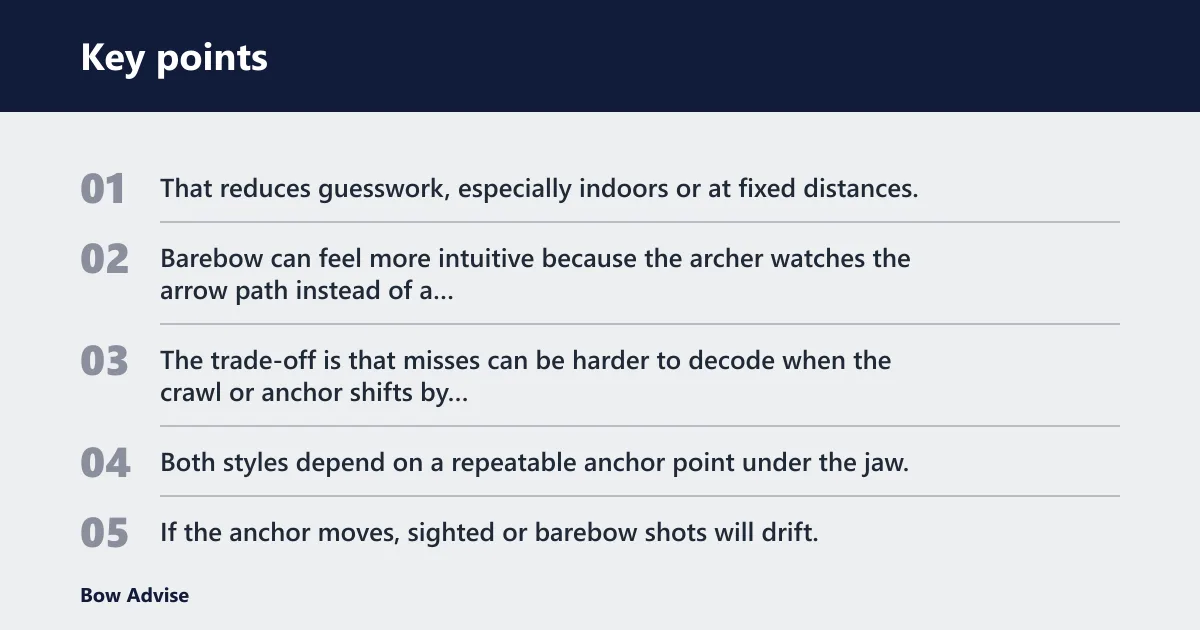
A sight tells the archer where to hold. That reduces guesswork, especially indoors or at fixed distances, and it gives cleaner feedback when the arrow lands left, right, high, or low.
Barebow intuition and feedback from misses
Barebow can feel more intuitive because the archer watches the arrow path instead of a pin. The trade-off is that misses can be harder to decode when the crawl or anchor shifts by a small amount.
Anchor point consistency in both styles
Both styles depend on a repeatable anchor point under the jaw, at the corner of the mouth, or at another fixed facial reference. If the anchor moves, sighted or barebow shots will drift, and no amount of aiming method will fully fix that.
Say your anchor slides from the jawline to slightly below it during a 18-meter indoor round. The sight pin still looks steady, but the arrows start landing low, which often gets blamed on the sight even though the real problem is the anchor.
Aiming decision matrix
This scorecard helps match the setup to the archer. A higher score does not mean the other method is weak; it means that factor matters more for the stated use case.
| Criterion | Recurve Sights | Barebow Aiming | Short recommendation |
|---|---|---|---|
| Ease for beginners | 5 | 3 | Start with Recurve Sights if the goal is quick aiming clarity. |
| Distance versatility | 5 | 3 | Choose Recurve Sights for mixed indoor and outdoor distances. |
| Equipment cost | 3 | 5 | Choose Barebow Aiming if fewer parts and lower entry cost matter. |
| Tuning complexity | 4 | 3 | Choose Recurve Sights if you want one stable aiming reference after tune work. |
| Competition flexibility | 5 | 4 | Pick the setup that matches the division you plan to shoot most. |
| Forgiveness of form errors | 4 | 3 | Choose Recurve Sights if your current anchor still changes under pressure. |
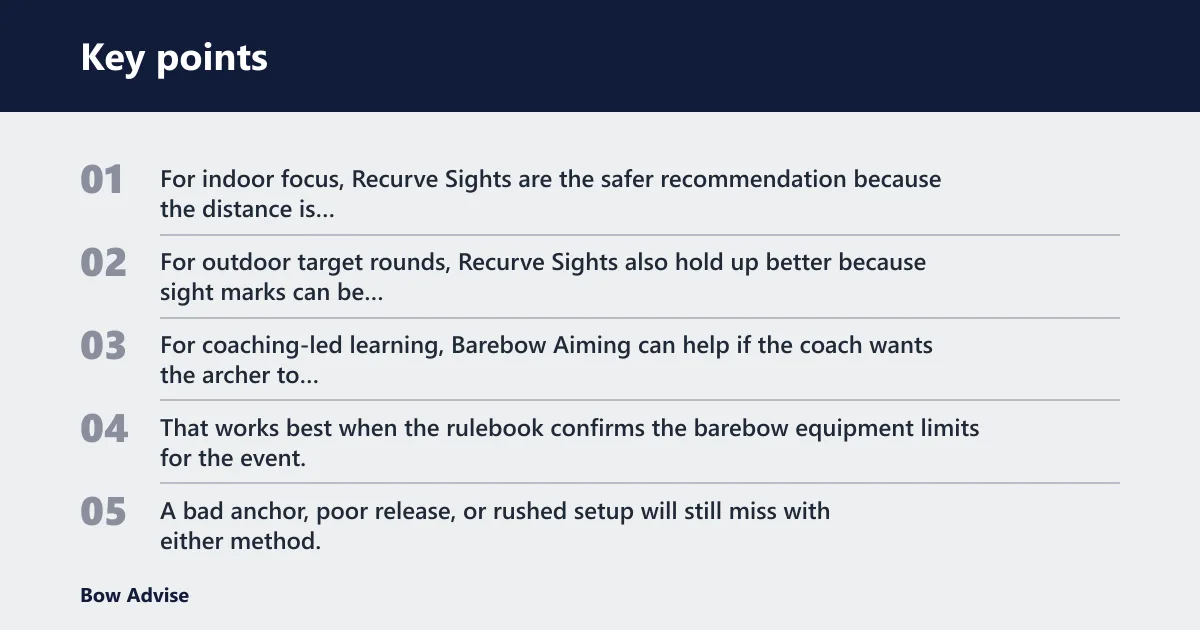
For indoor focus, Recurve Sights are the safer recommendation because the distance is fixed and the sight picture stays easy to repeat. For outdoor target rounds, Recurve Sights also hold up better because sight marks can be logged across many yardages.
For coaching-led learning, Barebow Aiming can help if the coach wants the archer to learn anchor discipline, gap judgment, and clean release without leaning on a sight too early. That works best when the rulebook confirms the barebow equipment limits for the event.
How to read the matrix without overvaluing gear
Scores help, but they do not replace form. A bad anchor, poor release, or rushed setup will still miss with either method, and a good barebow archer can outscore a weak sighted archer at the same distance.
Picture a club archer switching from 30 meters to 50 meters without changing the crawl chart. The first end looks fine, then arrows begin stacking low because the aiming reference was copied instead of recalculated for the longer distance.
Choose Recurve Sights if… / Choose Barebow Aiming if…
Choose Recurve Sights if you want repeatable aiming at many distances, plan to shoot Olympic recurve or another sighted target division, or need the clearest path for indoor and outdoor score work. Choose Barebow Aiming if you want a simpler riser setup, prefer rule-driven equipment limits, or want a method that rewards strict form control and close-range instinct.
If you move between local club events and formal target rounds, check the rulebook first. Some clubs allow both styles in the same session, but the score class and equipment limits can change the right choice even when the bow itself does not.

Frequently asked questions
How to aim with a recurve bow
Use a repeatable anchor point, align the sight pin or aperture with the target, and keep the bow hand quiet through the shot. For target recurve, the sight mark should match the distance and the arrow setup, or the point of impact will drift even with good form.
What is the difference between barebow and sighted recurve?
Barebow recurve uses no sight and follows equipment limits that vary by rulebook, while sighted recurve uses a bow sight and usually a more structured target setup. The sighted version is generally easier for distance control; barebow asks the archer to build that control through references and crawl management.
Which is easier to learn, recurve sights or barebow aiming?
Recurve Sights are usually easier for a new archer to understand because the aiming point is fixed and visible. Barebow Aiming can feel natural once the archer learns anchor discipline, but the learning curve is steeper when distances change often.