Olympic Recurve vs Compound Bow: Which Fits You Best
Choose Olympic recurve for Olympic-style target archery. Choose compound if you want higher let-off, a release aid, and easier holding in compound target divisions. Pick the wrong class and you can spend months learning the wrong rules, gear, and scoring path for your club goals. This guide compares setup, aiming, tuning, cost, and beginner fit so you can choose the right competition bow class.
| Decision factor | Olympic Recurve | Compound Bow | Winner |
|---|---|---|---|
| Competition pathway | Used in Olympic archery and Olympic-style target archery divisions | Common in compound target divisions, not the Olympic recurve class | Olympic Recurve |
| Holding at full draw | Full holding weight stays on the archer | Let-off reduces holding weight, so the bow is easier to hold | Compound Bow |
| Shot execution | Finger release, with more direct connection to the string | Release aid clips to a loop on the string and changes trigger feel | Compound Bow |
| Aiming setup | Often built around a sight, clicker, and stabilizers in target setups | Commonly uses a sight and release aid, often with a more mechanically assisted sight picture | Compound Bow |
| Learning curve for club beginners | Stronger focus on form, anchor, and finger release timing | More parts to set up, but easier holding can calm early aiming | Tie |
Olympic recurve vs compound bow: the real competition trade-off



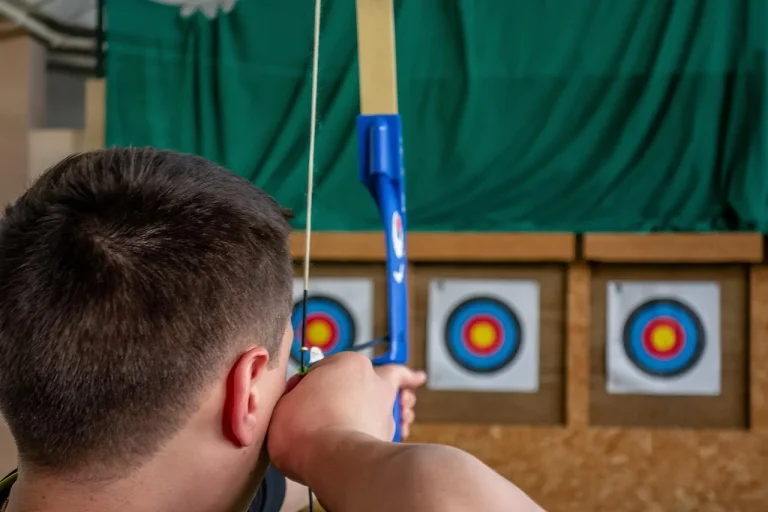
The real choice is not “which bow is better.” It is “which ruleset and shot style do you want to train for.” Olympic recurve fits Olympic-style target archery, where finger release, clean form, and controlled execution matter most. Compound fits shooters who want let-off, a release aid, and a steadier hold outside that division.
Why competition rules matter more than raw power
Both bows store energy in the limbs and send the arrow forward when released. That is the shared base. But target archery competition is shaped by division rules, not just speed. A bow that feels easier may still be the wrong choice if it does not match the class you plan to shoot.
Summer Olympic Games include archery among the sports contested, and the Olympic Games are the world’s only truly global, multi-sport, celebratory athletics competition. That matters because Olympic recurve is not generic “recurve.” It is a specific class with its own setup, shot process, and expectations. (en.wikipedia.org)
How Olympic recurve and compound bows are built
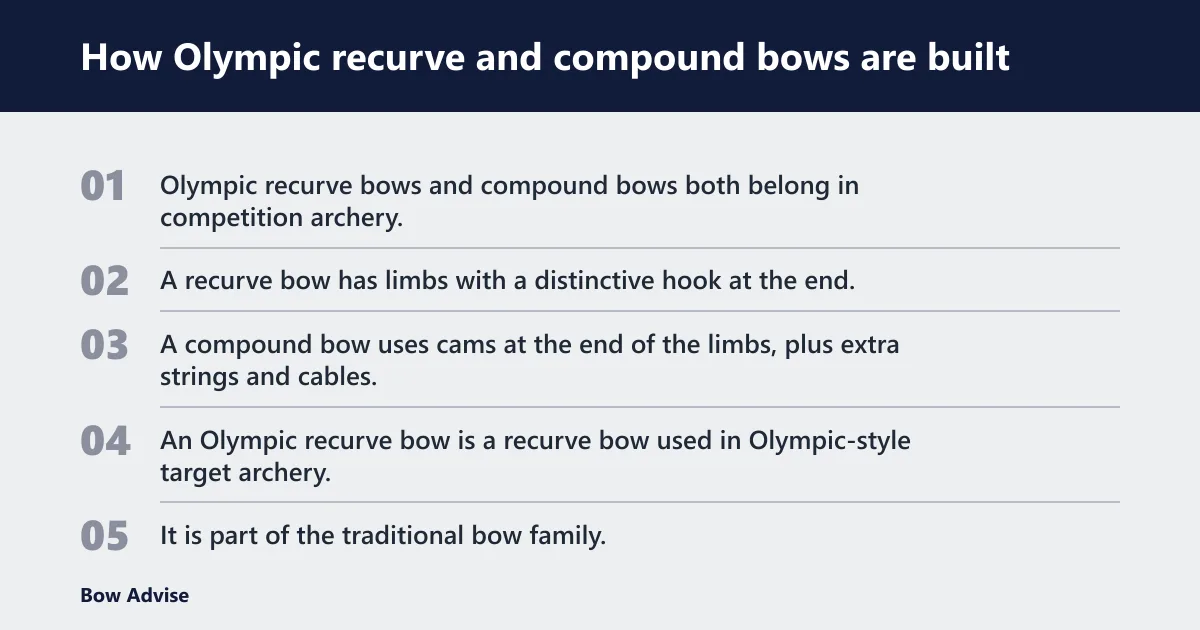
Olympic recurve bows and compound bows both belong in competition archery, but they arrive there by different engineering paths. A recurve bow has limbs with a distinctive hook at the end, and the string rests on a portion of the belly of the limb. A compound bow uses cams at the end of the limbs, plus extra strings and cables.
Olympic recurve bow
An Olympic recurve bow is a recurve bow used in Olympic-style target archery, and it is commonly shot with fingers rather than a release aid. It is part of the traditional bow family, but in competition it is much more than a simple “traditional bow.” Target rigs often include a sight, clicker, and stabilizers.
The key point is division fit. Olympic recurve is a defined competition class. It is not every recurve bow on the market.
Compound bow
A compound bow uses cams and cables to create let-off, which reduces the holding weight at full draw. Compound bows are commonly shot with a sight and a release aid that clips onto a loop on the string. That setup gives a different aiming and shot-execution experience from a finger-shot recurve.
Side-by-side comparison
Here is the practical split that matters for a new competitor. The details below are the ones that usually decide whether a bow class fits the shooter’s goal, not just the shooter’s taste.
| Factor | Olympic Recurve | Compound Bow | Winner |
|---|---|---|---|
| Mechanical advantage | Lower mechanical advantage than compound | Higher mechanical advantage from cams and cables | Compound Bow |
| Holding effort | Full draw weight stays on the fingers and back tension | Let-off reduces holding weight at full draw | Compound Bow |
| Aiming support | Target setups often use a sight and stabilizers, with no release aid | Sight plus release aid is common | Compound Bow |
| Shot feel | Finger release gives direct string contact | Release aid changes the feel of the release and anchor | Tie |
| Division fit | Matches Olympic-style target archery | Matches compound target divisions, not Olympic recurve | Olympic Recurve |
Why the table resolves that way
Compound wins holding ease because let-off changes the amount of force the archer must hold at anchor. A 70-pound compound may only require about 15 pounds of holding weight at full draw, while a 70-pound recurve or longbow requires the full 70 pounds at full draw. That difference changes both comfort and aiming time.
Olympic recurve wins division fit because the bow class itself is part of the rule set. If the goal is Olympic-style target archery, choosing a compound bow solves the wrong problem. It may feel easier, but it does not place the shooter in the same competitive lane.
How does let-off change the shot?
Let-off reduces holding weight at full draw on a compound bow, which makes the bow easier to keep at anchor while aiming. That matters in target archery because steadier holding can reduce collapse, hurry, and shoulder fatigue. It does not make the shot automatic, but it does change the balance of effort.
Peak draw weight vs holding weight
Draw weight has two useful meanings here: peak draw weight and holding weight. Peak draw weight is the heaviest point during the draw cycle. Holding weight is what remains at full draw. On a compound, those can be very different. On a recurve, the draw feels much more direct and continuous.
This is why a compound can be set at a high peak weight without feeling equally heavy at anchor. The recurve does not offer that same drop in holding load.
Why holding time feels easier on a compound
Lower holding weight usually means you can stay at full draw longer with less strain. That can help a shooter keep the sight settled and wait for the right sight picture. It also helps reduce the urge to let down too early. The trade-off is that the bow adds cams, cables, and a more specific tuning path.
Which bow is better for target archery competitions?
For Olympic-style target archery competitions, Olympic recurve is generally the right match because it is the division used in that rule set. For non-Olympic target formats, compound is often stronger because let-off, a sight, and a release aid support steadier aiming and a more controlled shot cycle. The best bow depends on the event.
Olympic-style target archery division basics
Olympic-style target archery typically centers on recurve bows, finger release, and equipment rules that are specific to competition. The shooter usually works with a sight and stabilizers, but not the compound-style release aid. That means the bow class is tied directly to the format, not just to performance goals.
Why Olympic recurve fits that rule set
Olympic recurve is the correct fit when the goal is to shoot in the same class used in Olympic archery. Its lower mechanical advantage means the archer must manage holding, anchor, and execution with the body rather than relying on let-off. That is exactly the skill set the division is built around.
Why compound can be stronger in non-Olympic target formats
Compound can be the better tool when the goal is pure target precision outside the Olympic recurve class. Let-off reduces holding weight. The release aid removes finger pressure from the string. Together, those features can make aiming feel calmer and more repeatable, especially in competition divisions designed for compound bows.
Which bow is easier to learn and hold at full draw?
Compound is easier to hold at full draw because let-off reduces the holding weight, but that does not automatically make it easier to learn well. Olympic recurve is usually simpler in gear count, while compound asks for more setup and tuning knowledge. Beginners often struggle first with anchor consistency, release control, and aiming under pressure.
Finger release versus release aid
Olympic recurve uses fingers on the string, which keeps the shot direct and simple in one sense, but demanding in another. Compound uses a release aid that clips onto a loop on the string. That can reduce finger torque and improve shot consistency, but it adds another piece of equipment to learn correctly.
Coaching, anchor point, and shot consistency
For a beginner entering club or tournament archery, coaching support matters as much as the bow class. Olympic recurve usually builds a clearer foundation in anchor, posture, and tension management. Compound often gives a calmer hold, which can help a new archer stay on target, but only if the release and sight are set correctly.
Where beginners usually struggle first
A common first-timer mistake is choosing a high-draw-weight bow because it “feels like competition gear.” Then the archer struggles to hold, shakes at anchor, and develops a rushed release. A lighter, correctly matched bow usually teaches the right movement pattern faster than a bow that simply looks more advanced.
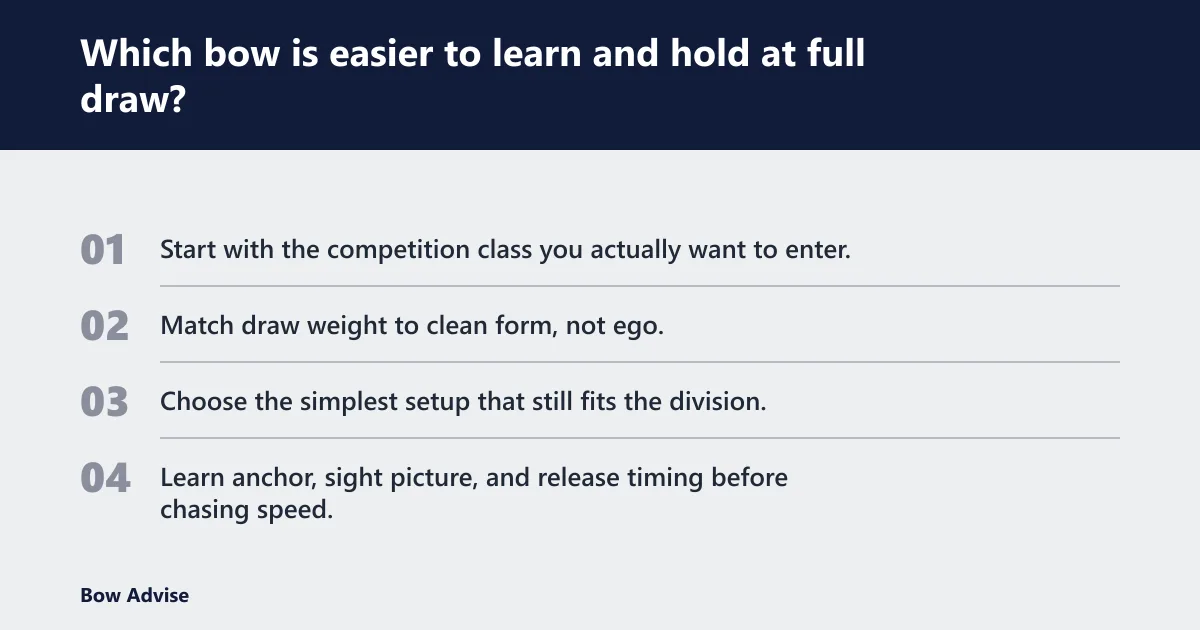
- Start with the competition class you actually want to enter.
- Match draw weight to clean form, not ego.
- Choose the simplest setup that still fits the division.
- Learn anchor, sight picture, and release timing before chasing speed.
Competition bow decision matrix: three common scenarios
This matrix maps bow class to the actual pathway, not to generic “best bow” claims. The right choice changes with the division you want to shoot, the gear your club supports, and how much mechanical help you want at full draw.
| Scenario | Ideal bow class | Expected learning curve | Required accessories | Top failure mode to avoid |
|---|---|---|---|---|
| Olympic-style target archery | Olympic Recurve | Steep at first, especially for finger release and anchor discipline | Sight, stabilizers, clicker, finger tab | Buying a compound first and learning the wrong division rules |
| Club beginner archery | Olympic Recurve or low-draw compound, depending on coaching support | Moderate; simpler gear helps, but consistency still takes work | Properly matched arrows, basic sighting gear, safe form setup | Starting too heavy and building poor release habits |
| Performance-focused target shooting | Compound Bow | Moderate to steep, with more tuning and equipment dependency | Sight, release aid, peep setup, tuned arrow spine, stabilizers | Ignoring tuning and assuming let-off fixes poor execution |
Say your club runs Olympic-style line shooting on Saturday mornings and the coach talks about finger tabs, clickers, and end-of-aim release timing. Olympic recurve is the correct class. The shooter can build the exact habits that event rewards instead of adapting later to a different division.
Suppose a beginner wants local indoor target nights and the range already has compound shooters helping with setup. Compound may be the better fit if the club supports release-aid setup and sight adjustment. The reduced holding weight can make full-draw aiming less punishing while form develops.
Choose Olympic recurve if… / Choose compound if…
Choose Olympic recurve if your goal is Olympic-style target archery, if you want to learn finger release and clean anchor control, or if your club’s coaching path is built around recurve equipment. Choose compound if you want easier holding at full draw, a release aid, and a bow class built for compound target divisions.
Choose Olympic recurve if…
- You want the bow class used in Olympic archery and Olympic-style target archery.
- You want to build finger-shot skill, posture, and anchor discipline from the start.
- Your club has recurve coaching, finger tabs, and target gear support.
- You are willing to accept more holding effort in exchange for division fit.
Choose compound if…
- You want let-off and easier holding at full draw.
- You want to shoot with a sight and a release aid that clips to the string loop.
- You plan to enter compound target divisions rather than Olympic recurve.
- You want mechanical support for aiming and a steadier hold time.
Frequently asked questions
archery recurve vs compound
Recurve and compound differ most in how they hold and release the shot. Recurve uses a simpler limb-and-string layout with finger release, while compound uses cams, cables, let-off, and usually a sight plus release aid. For competition, the better choice depends on the division you want to shoot.
bow compound vs recurve
Compound bows are easier to hold at full draw because let-off reduces holding weight. Recurve bows are simpler in concept and match Olympic-style target archery. If the goal is target competition, the right class depends on whether you want finger-shot recurve skill or compound’s mechanical help.
are compound bows more powerful than recurve
In practical terms, compound bows can feel more powerful because they store and transfer energy through cams and cables, and they can do so with less holding effort at anchor. But power is not just peak draw weight. Arrow setup, draw length, and division rules all affect real performance.
what is the difference between Olympic recurve and compound bow
Olympic recurve is a defined competition class for Olympic-style target archery, usually shot with fingers and target accessories like a sight and stabilizers. Compound bows use cams, cables, let-off, and a release aid. The difference is not only design; it is also the rule set and shot process.
which bow is easier to hold at full draw
Compound is easier to hold at full draw because let-off reduces holding weight. A 70-pound compound may only require about 15 pounds of holding weight at full draw, while a 70-pound recurve or longbow requires the full 70 pounds at full draw. That changes aiming stability and fatigue.
do Olympic recurve bows use sights and releases
Olympic recurve bows often use sights in target setups, and they may also use stabilizers and a clicker. They do not typically use a compound-style release aid. The shot is usually executed with fingers, which keeps the class aligned with Olympic-style recurve rules and technique.
how does let-off work on a compound bow
Let-off is the drop in holding weight that happens near full draw on a compound bow. The cams and cables change the force curve so the archer draws against more resistance early, then holds less at anchor. That helps with aiming time, but it adds tuning and setup complexity.
is recurve or compound better for beginners
Neither is automatically best for every beginner. Recurve is often better for learning form and competition basics because the setup is simpler. Compound can be better if the beginner wants easier holding and a club already supports release-aid shooting. Coaching support matters more than brand or style.
what bow class should I choose for competition archery
Choose Olympic recurve if you want to enter Olympic-style target archery and build finger-shot skill. Choose compound if you want easier holding, higher let-off, and mechanical precision in compound divisions. The safest choice is the bow class that matches your intended competition path from day one.