What Leather Is Best for Archery Gloves and Tabs?
For tabs, 1–1.5 mm cordovan or smooth cowhide is commonly used for a clean release; for gloves, thin goatskin or sheepskin is usually preferred because it bends well and still cushions the string. Poor leather adds drag, finger pinch, and uneven release. This guide matches leather type to recurve, longbow, and barebow use by finger pressure and release quality.
Leather choice for archery handwear

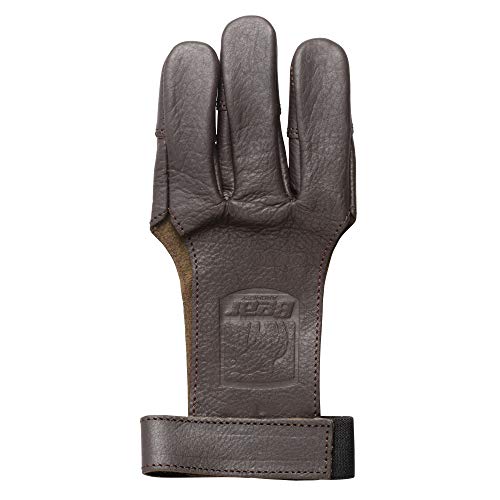
Leather changes how the string rolls off the fingers, how much pressure reaches the pads, and how fast the handwear settles in. A glove and a tab do not need the same leather, because the glove must bend and protect, while the tab must stay stable and release cleanly.
Glove leather vs tab leather
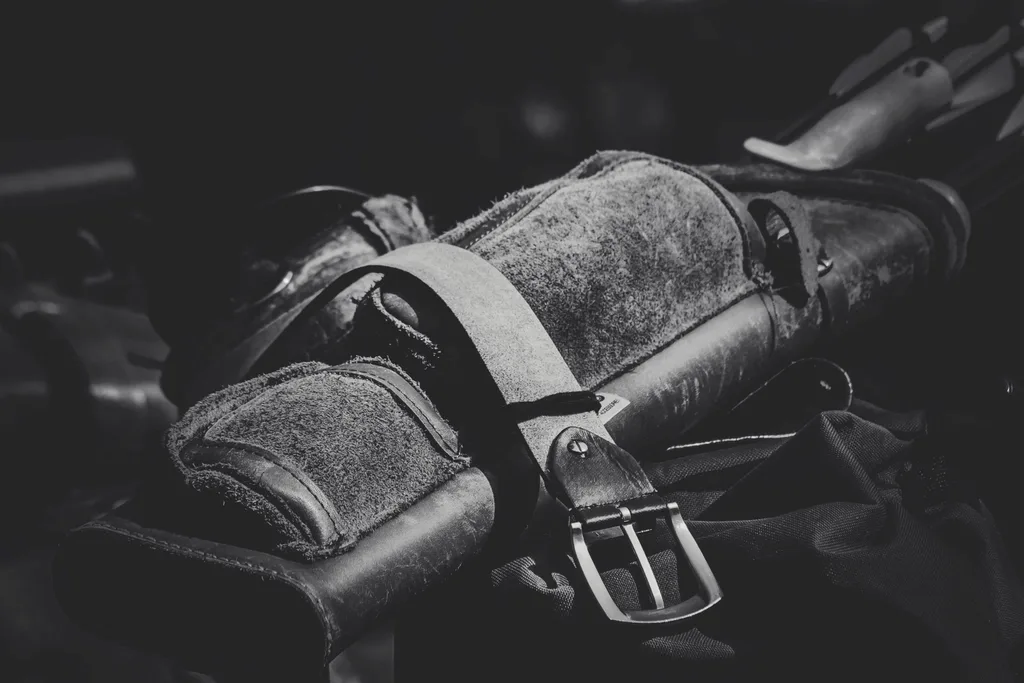
Archery glove leather works best when it bends with the fingers and resists abrasion at the string contact point. Tab leather works best when the face layer stays smooth and the backing layer resists compression, so the string leaves from the same feel shot after shot. That is why a soft glove leather and a firmer tab leather can both be correct.
What changes release feel
Release feel depends on grain, thickness, and stretch. Grain leather usually gives a cleaner surface and better abrasion resistance than split leather. Split leather can feel softer at first, but it often frays sooner and may grab the string more. Too much stretch delays the release; too little flex can make the fingers feel pinched.
Where thickness matters most
Thickness matters most at the string contact area. A glove leather around 0.8–1.2 mm usually gives enough pad protection without making the finger stall stiff. A tab face around 1.0–1.5 mm is commonly used because it helps keep the string from digging in while still allowing a crisp roll off the face layer.
What leather types are used most?
Cowhide, goatskin, deerskin, and kangaroo leather cover most archery handwear choices. Each one behaves differently under finger pressure. The best leather is the one that matches the draw style, the expected wear, and the amount of release control needed.
Cowhide
Cowhide is the common middle ground. It is usually stiffer than goatskin or deerskin, often priced lower than premium kangaroo, and available in many thicknesses. For tabs, smooth cowhide is a practical face material because it holds shape well. For gloves, it can be a little firm unless the cut is thin.
Goatskin
Goatskin is generally thin, soft, and good for dexterity. It bends quickly and lets the fingers feel the string well, which helps on lighter gloves. Its downside is that very thin goatskin can wear faster on the string face if the leather quality is low or the fit is loose.
Deerskin
Deerskin is known for softness and comfort. It stretches more than cowhide and often feels excellent right away. That same stretch can reduce release consistency on tabs and can make glove fingers feel sloppy over time. It is also more sensitive to moisture than firmer grain leathers.
Kangaroo leather
Kangaroo leather is thin, strong, and highly abrasion resistant for its weight. It is often chosen for premium tabs because it can stay smooth while keeping a low bulk profile. It usually costs more, and its value is highest when the archer wants a firm, precise face rather than a soft feel.
Leather weight and thickness guide
Thickness changes protection, break-in speed, and string feel. A thin leather can improve contact and finger sense, but if it gets too thin it will feel harsh and wear quickly. A thicker leather protects better, yet it can mute the release and make the fingers work harder.
Millimeters and finger feel
For glove fingers, a common working range is about 0.8–1.2 mm. For tab faces, about 1.0–1.5 mm is common. Below that, feel rises and protection falls. Above that, the handwear tends to resist finger bend and can slow the release, especially on lighter bows or three-under shooting.
Break-in speed by thickness
Thinner leather usually breaks in faster because the fibers bend more easily. That can help a beginner who needs usable handwear without a long settling period. Thicker leather may need more shots before it softens, but it often keeps its shape longer, which matters on tabs and high-volume practice.
Protection vs dexterity
More thickness gives more pad protection, but it can reduce dexterity. That trade-off is clearest on the glove hand, where too much bulk makes it harder to feel the string under the fingertips. For tabs, extra thickness can mask finger pressure and make the release feel delayed.
Leather handwear decision matrix
This table uses a simple 1–5 score, where 5 is best for the criterion named. It is not a lab test. It is a buying guide based on how each leather type usually behaves in archery handwear.
| Leather type | Release feel | Durability | Stretch | Weather resistance | Break-in speed | Price level | Best use case |
|---|---|---|---|---|---|---|---|
| Cowhide | 4 | 4 | 3 | 4 | 3 | Low to mid | Tabs, general recurve, longbow, youth |
| Goatskin | 4 | 3 | 3 | 3 | 5 | Mid | Gloves, light recurve, beginners who want feel |
| Deerskin | 3 | 2 | 5 | 2 | 5 | Mid | Comfort-first gloves, low-draw practice, casual use |
| Kangaroo leather | 5 | 5 | 2 | 4 | 3 | High | Premium tabs, repeatable release, heavy practice |
Release feel
For tabs, the best release feel usually comes from smooth, firm leather that does not collapse under the fingers. Kangaroo and smooth cowhide score well because they keep the string path more stable. For gloves, goatskin often feels better because it bends without becoming baggy too quickly.
Durability and abrasion resistance
Durability is not only about thickness. Grain structure matters because a grain face generally resists abrasion better than split leather. Kangaroo has an excellent strength-to-thickness profile, while cowhide gives solid wear life at a lower cost. Deerskin can feel great but usually gives up abrasion resistance sooner.
Stretch and weather resistance
Stretch matters because leather that grows loose changes the release. Deerskin stretches the most of the common options and also reacts more to moisture. Cowhide is steadier. Kangaroo stays stable for its weight. Soft leather that gains shape too fast is usually a poor tab face, even if it feels pleasant at first.
Price and use case
Cowhide usually sits in the budget-to-mid range and is the safest all-purpose choice. Goatskin is often worth the extra cost for glove dexterity. Kangaroo is the premium choice where a clean release matters more than soft comfort. Deerskin is best when comfort outranks precision.
Is cowhide or goatskin better?
Neither is always better. Cowhide is usually better for stiffness, wear, and stable tab faces. Goatskin is usually better for a glove when the archer wants thin feel, fast break-in, and easier finger bend. The better choice depends on whether the handwear must guide the release or simply protect the fingers.
Cowhide for stiffness and wear
Cowhide works well when the material must keep shape. On a tab, that means a more predictable face under finger pressure. On a glove, it can protect well but may feel bulky if the leather is too thick or the cut is tight.
Goatskin for thin feel and dexterity
Goatskin is often the better glove leather when the goal is finger movement and quick comfort. It flexes easily and usually breaks in fast. That same softness can be a drawback for tabs, where too much give can blur the release and make the string feel less exact.
Which fits beginners better?
Beginners often do well with cowhide tabs and goatskin gloves. The tab gets a stable face, and the glove stays easy to move in. A beginner who starts with very soft leather on a tab may fight string drag before the hand position is even settled.
Should a finger tab be soft leather or stiff leather?
A finger tab usually works better with firmer leather than with soft leather. The face layer should be smooth and stable, and the backing layer should resist compression so the shot feels similar at low and high finger pressure. Very soft leather can feel pleasant, but it often gives away too much under load.
Face layer and backing layer
The face layer touches the string, so it should be smooth and low-friction. The backing layer supports the fingers and stops the tab from folding under pressure. A good tab may use a firmer face with a slightly softer backing, but both layers still need enough body to stay flat.
Compression resistance
Compression resistance matters because the fingers press hard against the tab under draw weight. If the leather compresses too easily, the string can sink in and change where it leaves the fingers. That can affect timing and the feel of anchor. A stiff-enough tab face keeps the shot more repeatable.
Consistency for recurve and barebow
For recurve and barebow, consistency matters more than plush comfort. Three-under shooting and string walking put direct pressure on the tab, so a face that is too soft will often feel mushy. A firm cowhide or kangaroo face usually supports a more repeatable release than a very soft deerskin layer.
Choose glove leather if… / Choose tab leather if…
Glove leather should move with the fingers. Tab leather should control the string path. That one difference changes the material choice for mediterranean draw, three-under barebow shooting, thumb draw protection, and youth setups.
Choose glove leather if…
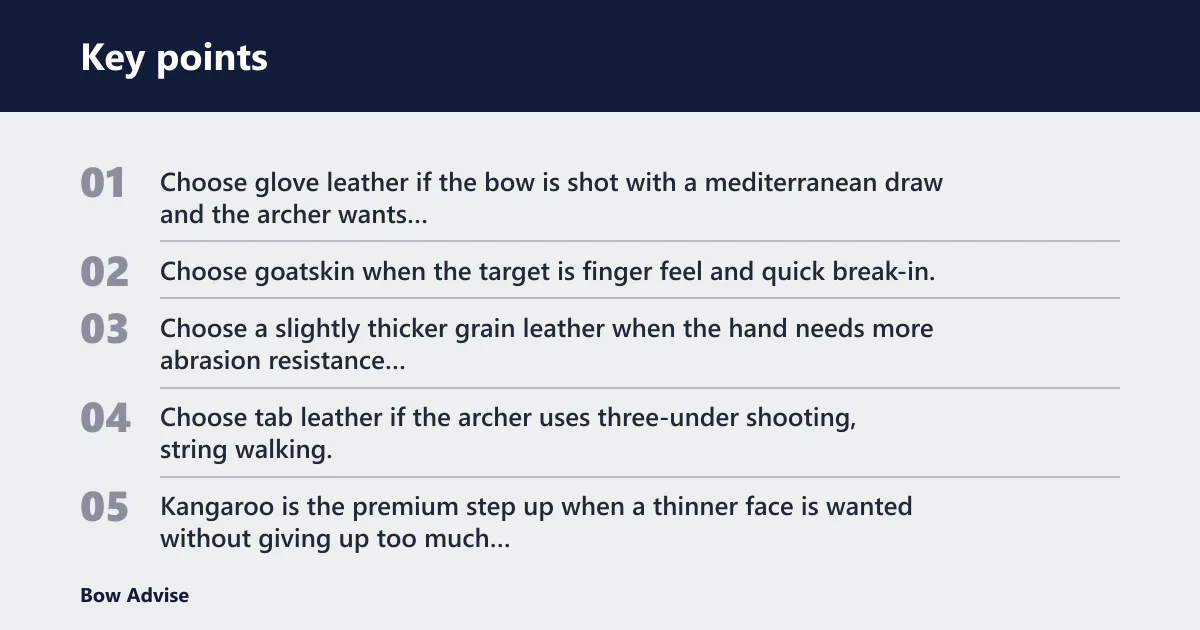
Choose glove leather if the bow is shot with a mediterranean draw and the archer wants each finger covered separately. Choose goatskin when the target is finger feel and quick break-in. Choose a slightly thicker grain leather when the hand needs more abrasion resistance than a very thin hide can give.
Choose tab leather if…
Choose tab leather if the archer uses three-under shooting, string walking, or wants the cleanest possible release under the drawing fingers. Smooth cowhide is the practical default. Kangaroo is the premium step up when a thinner face is wanted without giving up too much wear life.
Thumb draw and ring protection
Thumb draw systems place different stresses on the hand than mediterranean draw. In that case, leather protection often shifts to the thumb ring or thumb pad rather than a glove or tab. The best material there is the one that protects the contact point without turning the release hand clumsy.
Youth and beginner setups
For youth, the better choice is usually the easiest leather to live with, not the fanciest. A soft but not stretchy glove leather helps small hands bend the fingers. For tabs, a simple cowhide face gives more stability than very soft leather that may move around under light pressure.
Say a new barebow archer is drawing 28 pounds with three-under and notices the tab face creasing under the middle finger after only a few sessions. A firmer 1.2 mm cowhide or kangaroo face usually solves the problem better than moving to a thicker, softer hide, because the issue is compression, not just padding.
Suppose a youth recurve shooter gets finger pinch from a stiff glove at the first knuckle, but the glove still needs to survive weekly practice. A thinner goatskin glove around the 0.8–1.0 mm range is often the cleaner fix than adding bulk, because it improves bend without turning the fingertips loose.
Frequently asked questions
What leather is best for archery gloves and tabs?
For gloves, thin goatskin is often the best all-around choice because it bends well and feels natural on the fingers. For tabs, smooth cowhide or kangaroo usually works better because the face stays stable and gives a cleaner release. The best leather depends on whether the handwear must flex or hold shape.
Is cowhide or goatskin better for an archery glove?
Goatskin is usually better for an archery glove when dexterity and quick break-in matter. Cowhide is better when the glove needs more structure and abrasion resistance. If the glove feels too stiff at the fingertips, goatskin often solves that faster than thinner cowhide does.
Do leather tabs stretch over time?
Yes, many leather tabs stretch over time, especially soft hides and leather with a lot of give in the grain. Stretch is more likely in the finger holes and under the drawing fingers. If a tab starts feeling loose or the release changes, the face may have lost shape rather than worn through.
How thick should an archery glove leather be?
A common practical range is about 0.8–1.2 mm for glove fingers. Thinner leather gives more feel and faster break-in, while thicker leather gives more pad protection and usually less dexterity. The right thickness depends on draw weight, finger sensitivity, and how much abrasion the fingers see.
Is leather better than synthetic for archery handwear?
Not always. Leather often gives a more familiar feel and can be easier to tune for release quality, but some synthetic materials dry faster and keep their shape better in wet conditions. Leather is often preferred for traditional feel; synthetic can be better when moisture control and consistent drying matter more.
What leather lasts longest for archery gloves?
For glove use, a good grain cowhide or a quality goatskin often lasts longer than very soft deerskin because the surface resists abrasion better. Kangaroo is extremely durable for its thinness, but it is more often chosen for tabs than for gloves. Fit and thickness still matter as much as hide type.
How do I choose leather for recurve vs longbow shooting?
For recurve, choose leather that matches the release aid or finger style being used, with tabs favoring firm smooth faces and gloves favoring flexible leather. For longbow, comfort and finger protection matter more because the shot often relies on a direct finger release. Softness helps only if it does not add drag.