How to Size an Archery Glove for Youth Archers
Measure the youth archer’s draw hand and choose a glove that fits the fingers snugly without blocking a full hook; leave about 3 mm to 6 mm of fingertip room, then size up only if growth or thick liners require it. A glove that is too loose lets the string slip or twist the release, and one that is too tight can numb fingers and hurt consistency. This guide explains how to measure hand shape, check finger coverage, and choose a youth glove that still leaves room to grow.
Youth archery glove sizing basics

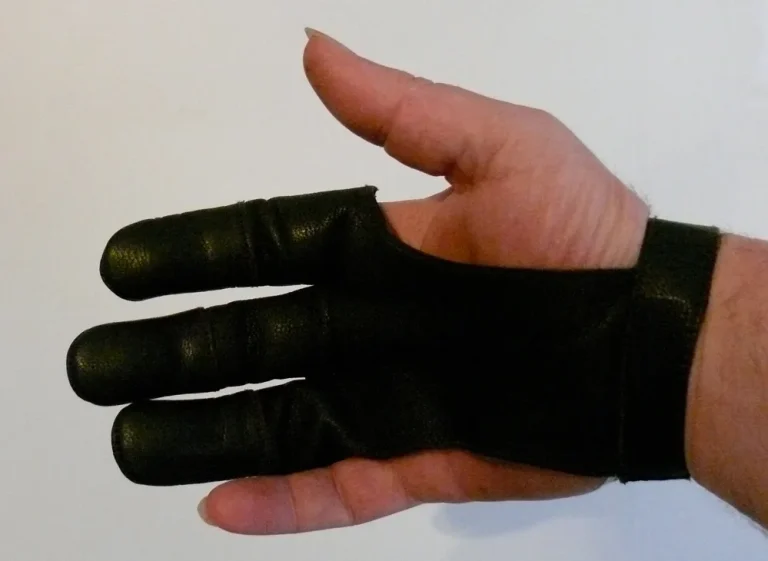
A youth archery glove should protect the drawing fingers, stay secure on the hand, and let the string leave cleanly. For recurve and longbow use, that usually means a three-finger design that covers the index, middle, and ring fingers without bunching at the release point.
Youth sizing is different from adult sizing because hand shape changes faster than age does. Two 12-year-olds can need very different gloves if one has longer fingers, a narrower palm, or a stronger draw weight. Brand charts matter more than a school-age label.
What the glove must do
The glove needs to cover the string-facing fingers, sit flat across the release edge, and hold steady through the draw. Leather versions usually feel stiffer at first and wear in over time. Synthetic or stretch-fabric gloves usually feel lighter and breathe better, but they may fit looser if the chart is not followed closely.
What you’ll need
- Soft measuring tape or a string and ruler
- The maker’s size chart for the exact glove model
- The archer’s draw hand and bow hand identified correctly
- A pencil and note sheet for measurements
How do you measure a youth hand for an archery glove?
Measure the draw hand, not the age, and record the palm width, the hand circumference, and the finger length that reaches the stalls. The best landmarks are just below the fingers across the palm and around the hand above the thumb. Those two points help match the glove body and the finger stalls to the hand shape.
Measure palm width
- Open the hand naturally.
- Place the tape across the palm just below the fingers.
- Record the width from the outside edge to the inside edge.
Measure youth hand circumference
- Wrap the tape around the hand just below the fingers and above the thumb.
- Keep the tape snug, not tight.
- Write down the number and add a note for growth room if the hand is still changing quickly.
Check finger length
- Measure from the base of the finger to the fingertip.
- Compare that length to the stall depth on the chart.
- Leave a little room at the fingertips so the stall does not press on the nail.
Say your youth archer has a 6-inch hand circumference and long fingers for the palm width. A medium glove might fit the hand body, but if the fingertips hit the seam line, a larger size or a different brand chart is the better choice. The finger stall length has to match the hand, not the age group.
How do you read a youth glove size chart
Start with the maker’s chart, then map the palm width and hand circumference to the listed size labels. Most products use small, medium, large, and extra-large, and Bearpaw lists S, M, L, and XL on its glove page. One product also notes that sizing can run loose and may need sizing down.
That means the same measured hand can land in different labels across brands. BestReviews also notes that some gloves run small and advises checking manufacturer measurements carefully. For that reason, the chart should decide first, and the label should only confirm the fit.
| Measurement | How to take it | What to check on the chart | Fit-check note |
|---|---|---|---|
| Palm width | Across the hand just below the fingers | Body width of the glove | No pulling across the knuckles |
| Youth hand circumference | Around the hand above the thumb | Overall size range | Snug, but not pinching |
| Finger length | Base to fingertip | Stall depth | 3 to 6 mm of fingertip room |
| Wrist snugness | With the glove on | Strap range and cuff fit | No gap that lets the glove twist |
Choose between fitted and adjustable models
A fitted glove is better when the hand measurements already sit close to one size and the archer needs cleaner release control. An adjustable glove makes more sense when the hand is between sizes, when the shooter is still growing, or when easy on/off matters more than a precise fit.
Step-by-step fit check
Put the glove on the draw hand and test the three-finger design under shooting tension, not just while standing still. A good fit supports the fingers, keeps the wrist steady, and holds the release point in line. Loose fingertips, a loose wrist, or seams sitting on the string path can all cause distraction and poor consistency.
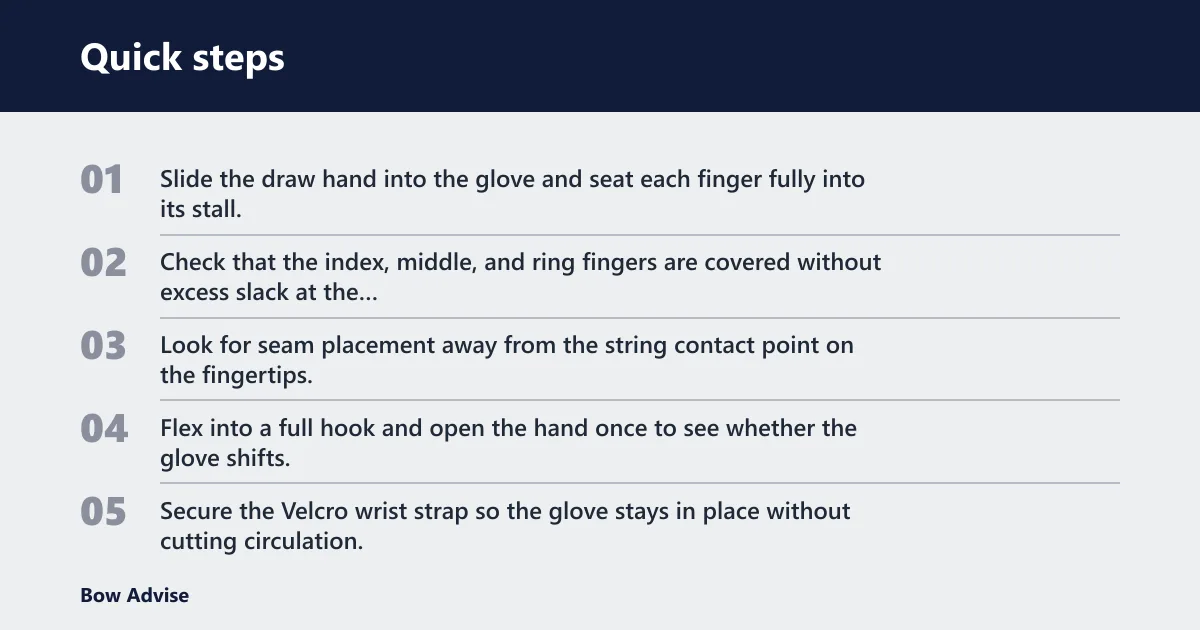
- Slide the draw hand into the glove and seat each finger fully into its stall.
- Check that the index, middle, and ring fingers are covered without excess slack at the tips.
- Look for seam placement away from the string contact point on the fingertips.
- Flex into a full hook and open the hand once to see whether the glove shifts.
- Secure the Velcro wrist strap so the glove stays in place without cutting circulation.
- Draw the bow to a safe practice anchor and confirm the glove does not bunch at release.
- If the fit is between sizes, add 3 mm to 6 mm of fingertip room and recheck, then move up only if the glove still binds or the seam sits too close to the nail.
A common first-timer mistake is picking a glove because the wrist strap closes easily while ignoring fingertip slack. Suppose a youth shooter can close the Velcro strap on a small glove, but the ring-finger stall folds over at the tip. That glove is still too long in the fingers, even if the wrist feels secure.
For traditional recurve and longbow shooting, the glove should feel steady through the draw and quiet at release. The hand should not swim inside the glove, and the wrist should not drift sideways when the string comes under load.
Should a youth glove fit snug or have room to grow?
A youth glove should fit snug enough to prevent string slip, but it should not be so tight that it creates numbness, pinching, or a crooked hook. Growth room is useful only when it does not create fingertip slack, bunching, or wrist looseness. The safest target is a close fit with only modest extra room in the fingers.
What snug looks like
Snug means the stalls follow finger shape, the palm lies flat, and the glove stays put during a draw. It does not mean compression. If the fingertips are pressed hard into the ends or the wrist strap has to be overtightened to keep the glove on, the size is too small.
When growth room goes too far
Too much room shows up as extra fabric at the fingertips, a loose wrist opening, or a stall seam sitting away from the finger pad. That can hurt release control and make a beginner focus on the glove instead of the shot. Youth archers often shoot better when the fit is neat, not oversized.
How draw weight changes the choice
Heavier string weight usually makes finger pressure more noticeable, so a glove with too much slack can feel rougher and harder to control. Lighter draw weights can work with thinner material and a softer feel. Some glove designs are suited to lighter draw weights, which is useful for very new youth shooters.
Picture a beginner with short fingers and a light recurve. A synthetic glove may be easier to wear and easier to take off between ends, but if the wrist is loose, the coach should switch to a smaller size or a model with a better strap before adding more growth room.
Youth glove sizing worksheet
Use this worksheet to compare the hand measurements against the glove chart before choosing a size. The goal is a stable fit for the draw hand, not the biggest size a child can wear.
| Measurement | Recorded value | Recommended size range | Fit-check pass/fail notes |
|---|---|---|---|
| Palm width | ______ | S / M / L / XL or youth equivalent | Pass if the glove body lies flat without pulling |
| Youth hand circumference | ______ | Match chart range and allow limited growth room | Pass if snug above the thumb without pinching |
| Finger length | ______ | Choose the stall depth that leaves 3 to 6 mm room | Pass if fingertips are covered without extra slack |
| Wrist snugness | ______ | Adjustable range if the archer is still growing | Pass if the glove stays secure through the draw |
Use the notes column for pass/fail marks after the glove is on the hand, not before. If one row fails, size selection should change before practice starts.
Common mistakes
The biggest sizing mistakes are oversized fingertips, a loose wrist, and choosing the wrong hand. Each one can distract a youth archer during the draw and release, and each one is easy to catch with a short fit check.
- Oversized fingertips: The stalls fold or wrinkle at the end. Move down a size or choose a different brand chart.
- Loose wrist fit: The glove twists when the hand opens. Tighten the Velcro wrist strap or switch to a smaller size.
- Wrong hand selection: The glove is placed on the bow hand instead of the draw hand. Match the glove to the shooting hand that draws the string.
- Ignoring brand variance: One label fits differently from another maker’s label. Check the exact chart every time.
Left-hand vs right-hand glove selection
The shooting hand determines the glove hand, because the draw hand needs the finger protection. Left-handed and right-handed products are not interchangeable in every model, and some listings specify the orientation directly. If the archer draws with the right hand, choose a right-hand glove; if the archer draws with the left hand, choose a left-hand glove.
Ambidextrous models can work when the chart and stall layout are clearly marked, but they still need the same size check. Orientation does not replace measurement. It only tells the parent or coach which hand gets the glove.
Frequently asked questions
What glove size should a child or teen archery beginner wear?
Start with the manufacturer chart, not the age label. A child or teen beginner usually needs the smallest size that covers the draw fingers cleanly and leaves only modest fingertip room. If measurements sit between sizes, choose the size that keeps the wrist secure and the fingertips supported.
Should a youth archery glove fit snug or have room to grow?
It should fit snug with only limited room to grow. The best fit keeps the stalls close to the fingers and the wrist secure without squeezing. Extra space is acceptable only if it does not create loose fingertips, bunching, or a shifting glove during the draw.
How do I know if an archery glove is too small for my child?
If the fingertips press into the stall ends, the wrist feels tight before the glove is seated, or the hand goes numb after a short hold, the glove is too small. Check the next size up and compare the maker’s chart before practice continues.
Are youth archery gloves different from adult sizes?
They can be, but the more important difference is the chart shape, not the word youth on the package. Adult small may fit a youth hand better than a youth medium if the finger length is longer or the palm is narrower. Always check the exact measurements.
Can a youth use an adjustable archery glove instead of a fitted one?
Yes, especially when the archer is still growing or needs easy on/off use. A Velcro wrist strap can help keep the glove secure during shooting, but the finger stalls still need to match the hand. Adjustable does not mean one-size-fits-all.
Does left-handed or right-handed shooting change glove sizing?
It changes which glove hand is used, not the measurement method. The draw hand gets the glove, and the fit should still follow the same palm width, hand circumference, and finger-length checks. Orientation only decides whether the glove is left-hand or right-hand.