Indoor vs Outdoor Archery Handwear Fit: What Changes?
Yes: indoor handwear often fits a bit tighter for cleaner string feel, while outdoor handwear may need a little more room for cold fingers and longer sessions. If your draw hand feels cramped or numb, move up a size or change thickness. Wrong fit can hurt clean releases, finger comfort, and group size. I’ll break down how distance goals, shot volume, weather, and glove-vs-tab choice should change your fit.
The trade-off is plain. Indoors, I care more about string feedback and repeatable anchor points. Outdoors, I care more about protection from cold, wind, sweat, and weather changes that can swell my fingers or make the handwear slip.
Indoor vs outdoor archery handwear fit: what actually changes

| Decision factor | Indoor | outdoor archery handwear: Should your fit change for distance and shot volume | Winner |
|---|---|---|---|
| String feel | Usually thinner and closer to the hand | Usually thicker or slightly roomier for protection | Indoor |
| Weather protection | Less important in a temperature-controlled range | More important for cold, wind, rain, sweat, and dust | Outdoor |
| High shot volume | Repeatability matters, but bulk can stay low | Needs room for swelling, friction, and fatigue over long sessions | Outdoor |
| Precision at distance | Can favor a cleaner, thinner setup | Can still win if conditions demand protection, but bulk can cost feedback | Indoor |
| Cold-weather use | Usually not needed | Often needs liner space or added thickness | Outdoor |
String feel
Thinner handwear gives me better feedback on the string and a cleaner anchor reference. Once the material gets too thick, I lose some of that direct feel, and the shot starts to feel vague.
Weather protection
Outdoor handwear has to deal with more than comfort. Cold fingers, damp leather, and sweat all change how the tab or glove sits on my hand and how well I can hold anchor through the draw cycle.
High shot volume
More arrows can mean more friction, more swelling, and more chances for a fit that looked perfect at the start to fail later in the session. That is where a little extra room can beat a snug fit that pinches late.
Distance precision
At longer distances, small changes in anchor and release get expensive fast. I want the handwear to stay predictable through the full shot, and I would rather give up some warmth than lose that reference when the target gets farther away.
Glove or tab: how each one should fit on the string hand
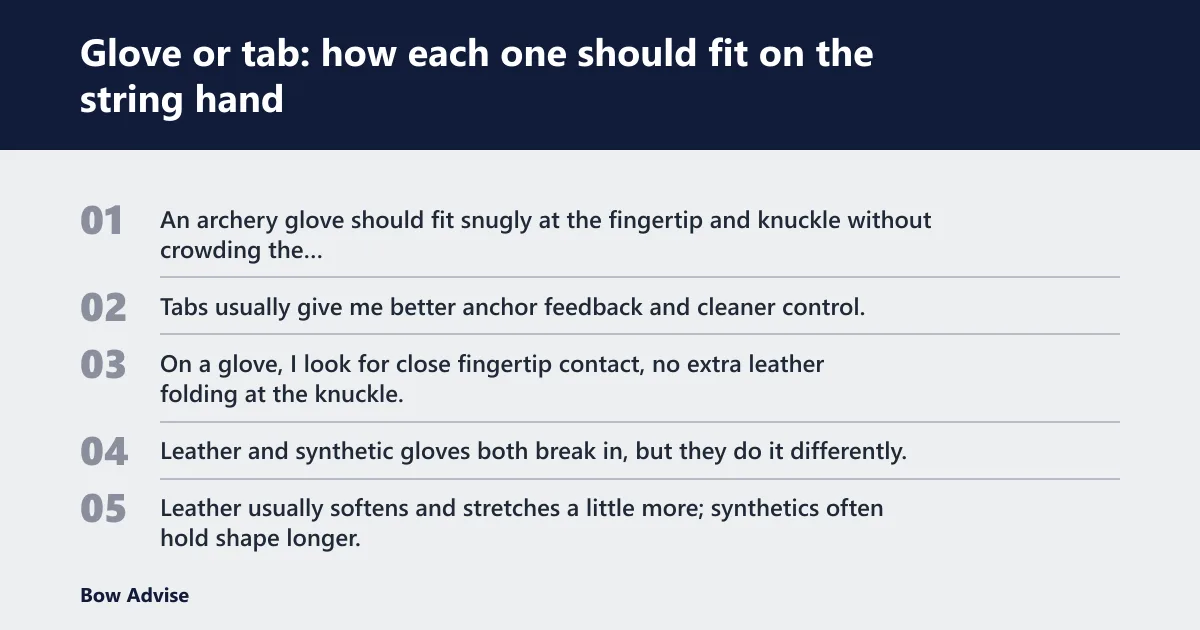
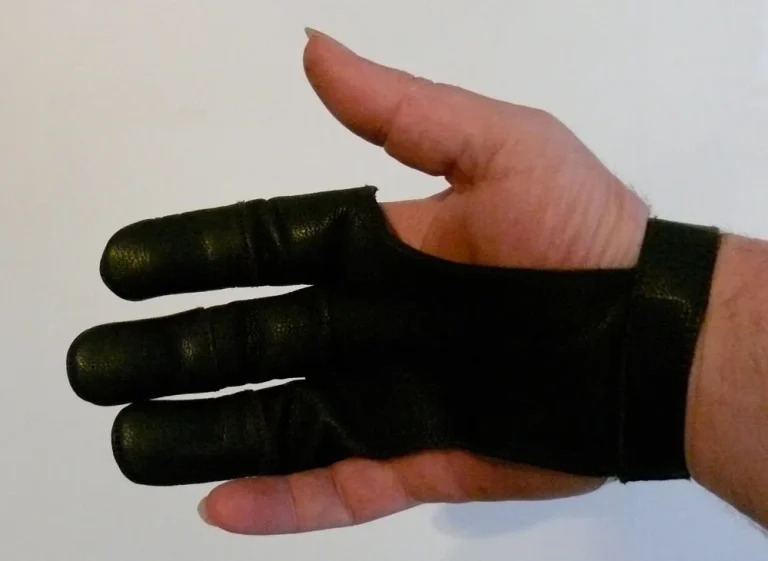
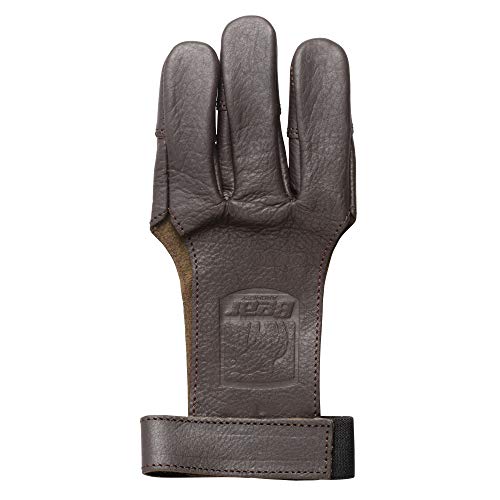
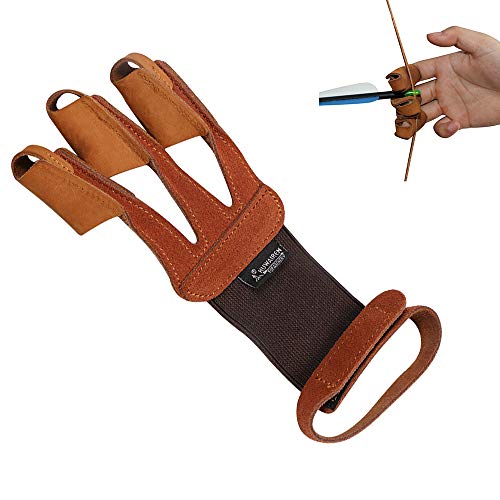
An archery glove should fit snugly at the fingertip and knuckle without crowding the joint, while a finger tab should sit flat, keep the string clear, and not shift under pressure. Gloves give more coverage. Tabs usually give me better anchor feedback and cleaner control.
Archery glove fit at the fingertips, knuckles, and palm
On a glove, I look for close fingertip contact, no extra leather folding at the knuckle, and no tight band across the back of the hand. Leather and synthetic gloves both break in, but they do it differently. Leather usually softens and stretches a little more; synthetics often hold shape longer.
If the glove crowds my fingertip or pinches the knuckle when I hook the string, I know it is too small. If the glove twists or bunches at release, it is too loose.
Finger tab face thickness, anchor feel, and clearance
Tab face thickness changes how far the string sits from my fingers and how cleanly I can settle into anchor. A thicker face can soften string bite, but it can also reduce feedback and may shift the anchor point enough to matter at distance.
Tabs also stretch over time. I have seen a tab feel perfect for the first few sessions, then loosen enough that the face starts to move when the shot count climbs.
How split-finger and single-crawl use change the fit check
Split-finger tab use asks for a stable face and a clean shelf for the fingers. Single-crawl setups can be even more sensitive, because small changes in tab thickness alter crawl feel and anchor reference faster than most archers expect.
For barebow recurve, that matters. In my experience, close-range practice can hide a bad fit, while longer-distance work can expose it quickly.
Should my archery glove fit change for indoor vs outdoor shooting?
Usually yes. Indoors, I can run a slimmer fit because the range is temperature-controlled and weather protection matters less. Outdoors, I often need a touch more room for cold fingers, sweat, or a liner, as long as I do not give up anchor consistency.
Temperature-controlled ranges and lower weather exposure
Indoor shooting strips away most weather variables. I do not need much insulation, so I can prioritize feel, finger dexterity, and repeatability over bulk.
Why repeatability usually matters more than insulation indoors
On an indoor line, the same anchor and same release matter every end. I want the glove or tab to disappear in the shot, not call attention to itself with extra material or movement.
When indoor practice still needs a roomier fit
Even indoors, a long practice can swell my fingers and rub hot spots into the skin. If I plan a high-volume session, I may leave a little extra space rather than start tight and finish miserable.
Does outdoor shooting change the fit more than people think?
Yes. Outdoor shooting changes fit more than most archers admit because cold, wind, sweat, rain, and sun all alter hand size, grip comfort, and dexterity. A fit that works in mild weather can become too tight, slippery, or numb when the temperature drops.
Cold, wind, rain, sweat, and sun exposure
Cold cuts dexterity fast. Wind and rain can make me tense up and clamp down harder, while sweat and humidity can soften materials and create slide or twist issues. Sun and dust can also dry leather and change how it breaks in.
How cold-weather liners and layering change bulk
Linings add bulk. That extra material can protect my fingers, but it also changes string feel and can crowd the hook if I do not account for it when sizing.
If I expect to use a liner, I test the full setup with the liner on. I do not guess. I have made that mistake, and it felt like drawing with a folded towel wrapped around my fingers.
What fit problems show up when hands swell or sweat
Swelling makes a previously perfect fit start to pinch at the knuckle or fingertip. Sweat can make a tab slide across the fingers, shift anchor, or bunch at the face, which shows up as release inconsistency long before I notice it at rest.
How distance shooting changes the fit decision
Distance shooting puts more pressure on anchor repeatability and release cleanliness. At close range, a little extra bulk may be tolerable. At longer range, the same bulk can hide string feel and make tiny errors harder to diagnose.
Why clean release and anchor repeatability matter more at distance
The farther the target, the less I want mystery in the shot. If the handwear shifts even slightly, the arrow will show it downrange, especially in barebow recurve where the fingers do more of the work.
How thicker tabs or gloves can mask string feel
A thicker face or glove can help protect the fingers, but it also filters feedback. That makes it harder to tell whether the string is settling the same way every time.
I learned the hard way on my first compound bow, which was set 10 lb too heavy. I flinched for a month before I backed the limb bolts out. Fit and setup can be like that: a little too much makes clean execution nearly impossible.
Barebow recurve setup: close practice versus longer-distance work
For barebow, I often want a slightly different feel for close work than for longer-distance practice. Close targets let me tolerate more protection. Longer work asks for the thinnest setup that still stays comfortable through the full session.
How shot volume changes handwear fit over a long session
Shot volume changes everything. A tab or glove that feels perfect at arrow one can create hot spots, pinch points, or migration after 100-plus arrows. That is the failure case many archers miss until the session is already broken.
Hot spots, pinch points, and friction after 100+ arrows
After enough shots, friction builds in the same place over and over. If the fit is even slightly off, I feel it on the fingertip, the knuckle, or the tab face before I see it in the group.
Hand swelling and why a good fit at arrow one can fail later
Swelling makes the hand wider and less forgiving. What feels snug at the start can become restrictive later, and a fit that seemed fine early on may turn into pressure and distraction by the end of practice.
Stretch, break-in, and when fit drift becomes a problem
Both gloves and tabs stretch over time. That is normal, but when the shift becomes obvious enough that anchor feel changes or the tab starts sliding, I treat it as fit drift and reconsider size or thickness.
- Try the glove or tab at full draw, not just at rest.
- Shoot a short warm-up of arrows before judging comfort.
- Check again after a longer stretch of shooting if you train that long.
- Watch for pinch, slide, bunching, or numb fingers.
- Change thickness or size if the same symptom repeats.
What changes in handwear fit when shooting outdoors in cold weather?
Cold weather usually asks for more allowance. Fingers tighten, dexterity drops, and liners or heavier materials add bulk, so I need enough room to keep circulation and string feel usable. If the fit stays summer-tight, winter shooting often turns numb and sloppy.
Cold fingers, stiffness, and circulation
When my hands are cold, I lose fine control fast. A fit that feels fine in mild weather can suddenly feel crowded, especially at the knuckle and fingertip.
Seasonal adjustment for gloves and tabs
Winter usually means one of three changes: a little more room, a thinner liner, or a different handwear choice altogether. I do not force my warm-weather fit to do a winter job.
Keeping string feel while adding protection
The trick is adding just enough protection without burying the string feedback. Too much bulk can make the release feel vague, and that hurts confidence at distance.
How do I know if my indoor setup needs thinner handwear than my outdoor setup?
If your indoor shot feels crowded outdoors only because of the weather, thinner indoor handwear is often the right move. If your outdoor setup needs extra warmth or liner space, keep that thicker setup outside and run a cleaner, thinner fit indoors for better string feel and anchor feedback.
Keep the same fit when the session is similar
If temperature, shot count, and distance goals stay close, I usually keep the same setup. That helps me avoid introducing another variable when I am already trying to tune form.
Change fit when symptoms show up
Change the fit when I feel pinch, slide, bunching, cold-numb fingers, or tab migration. Those are not small annoyances. They are signs the handwear is no longer matching the job.
Fit matrix: indoor vs outdoor choices by temperature, volume, and distance
This is the practical matrix I use. I start with temperature, then shot count, then distance goal, and finally the symptom on my hand. If the session is hot, long, or precise, I move toward thinner and cleaner. If it is cold or high volume, I allow more room.
| Condition | Indoor choice | Outdoor choice | Action |
|---|---|---|---|
| 65-75°F, under 60 arrows, close-range practice | Thin glove or thin tab face | Same fit if weather is calm | Keep the same fit |
| Below 50°F, 60-120 arrows, any distance | Usually still thin indoors | Roomier glove or tab, possibly with liner allowance | Size up or add thickness |
| Warm indoor range, 100+ arrows, distance work | Thin, close fit to keep anchor clean | Same if weather is mild | Keep same fit unless swelling starts |
| Hot, sweaty outdoor session, 80+ arrows | Not the main concern | Slightly roomier fit to manage sweat and friction | Size up if slide or hot spots appear |
| Long barebow session at longer distance | Clean, low-bulk setup | Low-bulk unless cold protection is needed | Size down in thickness if anchor feels vague |
When to keep the same fit
Keep the same fit when the temperature, shot count, and distance demands are all close to what the handwear already handles well. If the shot feels clean from the first end through the last, I leave it alone.
When to size up for warmth or volume
Size up when cold fingers, swelling, or friction start to change the shot. That extra room can save a session if the handwear still keeps the string secure and the anchor stable.
When to size down for cleaner string feel
Size down, or choose thinner material, when the handwear is dulling feedback and making anchor less precise. I do this most often for indoor practice and for longer-distance barebow work where I want the shot to feel crisp.
Choose Indoor if… / Choose outdoor archery handwear: Should your fit change for distance and shot volume if…
Choose Indoor if you shoot in a temperature-controlled range, want the cleanest possible string feel, and plan to work on distance precision or barebow anchor repeatability. Choose outdoor archery handwear: Should your fit change for distance and shot volume if you train in cold, wind, rain, or high shot volume and need more room for comfort without losing control.
Choose Indoor if…
Choose Indoor if your hands stay warm, your practice is shorter, and you want thinner material for feedback. It also fits better when you are tuning barebow form and want the handwear to disappear in the shot.
Choose outdoor archery handwear: Should your fit change for distance and shot volume if…
Choose outdoor archery handwear: Should your fit change for distance and shot volume if you expect cold-weather layers, sweat, or long sessions that push past 100 arrows. It is the better choice when your hands need a little more space to stay comfortable and functional.
Frequently asked questions
Should my archery glove fit change for indoor vs outdoor shooting?
Usually yes. I keep indoor fit a little tighter for cleaner string feel and anchor repeatability, while outdoor fit often needs more room for cold fingers, sweat, or a liner. If the glove pinches, I move up; if it bunches, I trim bulk.
Does a longer shooting session require a looser archery glove fit?
Often it does. Long sessions can swell the hand, create friction, and turn a perfect early fit into a tight one later. I want enough room that the glove or tab still feels stable after many ends, not just during the first 20 arrows.
How tight should finger tabs and gloves be for distance shooting?
Close, but not crowded. At distance, I want the handwear to stay stable without hiding string feel or shifting anchor. If the tab or glove is so thick that I lose feedback, I usually back off the bulk before I accept the extra padding.
What changes in handwear fit when shooting outdoors in cold weather?
Cold weather usually means more room, not less. Fingers get stiff, circulation drops, and liners add bulk, so I check that the fit still allows clean draw and release without numbness. If it feels tight at rest in winter, it usually gets worse at full draw.
Can I use the same handwear fit for practice and competition?
Sometimes, but I only do that when the conditions and shot count are similar. For barebow recurve, competition fit usually needs to match the exact anchor feel I trust under pressure. Practice can be a little more forgiving, but I test both at full draw.
Do finger tabs stretch enough that I should size up for high shot volume?
They can stretch enough to matter. I do not size up blindly, but I do expect a tab to loosen over time, especially after heavy use. If the face starts moving or the anchor changes during long sessions, I treat that as a real fit problem.