Do Finger Tabs Stretch Over Time? What Archers Should Know
If your finger tab feels looser after break-in, that is usually leather relaxation, not major stretch. Once the fit changes enough to alter anchor or fingertip coverage, re-fit or replace it. Ignoring fit drift can change string contact, disturb release quality, and expose fingertips. This guide explains what actually changes in a tab, what normal break-in looks like, and when wear becomes a performance problem.
Leather compression and synthetic wear patterns to watch


Usually, a finger tab does not “stretch” much in the way fabric does. What archers notice first is leather compression, softening, and small shape changes around the fingers, holes, and strap. A tab should cover your fingertips without extending too far beyond them, and fit drift matters once that coverage or anchor feel changes.
What actually changes
Leather tabs mold to your fingers over time. That means the face material can flatten where the string sits, the finger holes can open slightly, and the strap can relax. Synthetic materials need little to no break-in time, so they usually change less in the first few sessions, though the strap and stitching can still wear.
Normal break-in is a shallow change in feel. The tab softens, a crease appears, and the fingers settle into the shape of the plate. Problematic change is different: hole elongation, visible slack in the strap, fingertip exposure at anchor, or a tab that shifts during the shot.
Why recurve and traditional archers notice it sooner
Recurve and traditional archers often anchor with repeatable contact under the jaw or along the face, so small fit drift shows up fast. If the tab creeps between the fingers or changes the height of the draw hand, the anchor point can feel different from shot to shot. That is a performance problem, not just a comfort issue.
Picture a barebow archer whose split-finger tab starts to curl after a few sessions. The tab still protects the fingers, but the lower edge no longer sits flat at anchor. The result is a different string feel under the fingers, and that can show up as a moving crawl reference or inconsistent face contact.
Finger tab fit drift checklist
| Symptom | Likely cause | Action |
|---|---|---|
| Tab feels softer, but coverage stays the same | Normal break-in and leather compression | Keep using it and check anchor consistency |
| Finger holes look oval or longer than new | Hole elongation from repeated draw pressure | Trim if the tab still covers well; replace if the holes no longer hold position |
| Strap feels slack or slides during the shot | Strap stretch, worn holes, or weak stitching | Adjust if there is room; replace if the strap cannot hold tension |
| Fingertips start showing beyond the tab edge | Tab has shifted, shrunk in coverage, or was undersized from the start | Trim carefully only if the base fit is sound; replace if coverage is lost at anchor |
| Anchor feels higher, lower, or less repeatable | Fit drift affecting finger position or tab bulk | Re-check size and trim pattern; replace if the anchor still wanders |
| Crease forms but the tab still sits flat and stable | Normal break-in | Keep using it; this is expected |
| String contact layer curls or folds under pressure | Backing plate too soft, worn face layer, or excess bulk | Trim or replace depending on how severe the fold is |
How much does a leather tab change?
Leather tabs change mostly by compression and surface wear, not by dramatic length growth. Shell Cordovan, super leather, and calf-hair face are different materials with different feel and wear characteristics.
Shell Cordovan, super leather, and calf-hair face
Shell Cordovan is one face option that some archers choose for a firmer feel over time. It can crease, but the way it changes will depend on use, fit, and care.
Super leather is a budget option that gives a more pliable feel sooner. That flexibility can help the tab settle quickly, but it also means the face may change faster under repeated draw pressure. Calf-hair face is another option that can feel different as the nap breaks down and moisture exposure accumulates.
What parts of a tab change first?
The face material usually changes first because it takes the string load. Next come the finger holes and strap, which can loosen enough to shift the tab in the hand. The backing plate resists folding under string pressure, so a stiffer plate helps slow unwanted shape change. It can be plastic or leather.
A spacer sits between the index and middle fingers and can reduce pinching. If it compresses or migrates, the tab may feel thinner at anchor even if the face material is still sound. A separator and platform can also wear, especially on tabs used with a hard under-chin reference point.
A platform is particularly popular among Olympic recurve and barebow archers. It gives a rigid reference point under the chin, but that same rigidity means wear becomes obvious when the edge rounds off or the fit changes. On a split-finger tab, the leading edge varies by design. (Wikipedia)
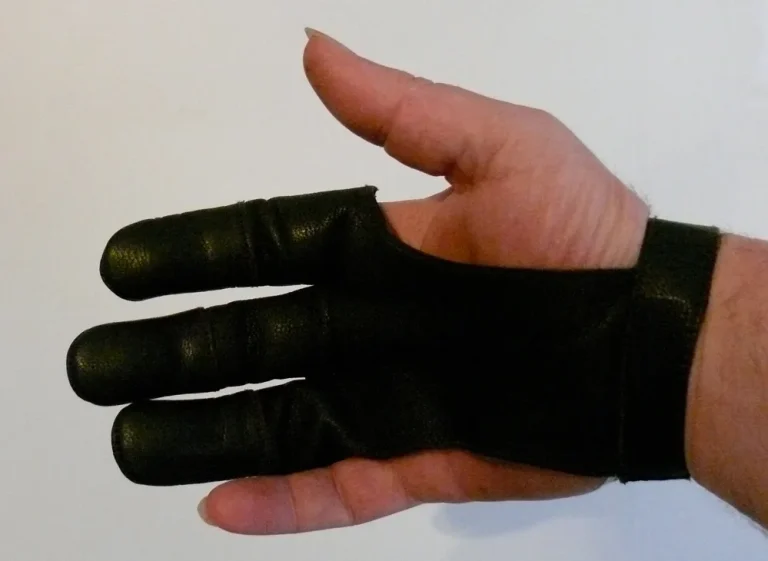
A three-finger tab uses three separate finger slots and is used in some three-under styles in barebow and traditional shooting. Those tabs can show slot drift differently from split-finger models. The middle slot may loosen first, while the outer edges keep their shape longer.
How long does break-in take?
Break-in often starts in the first few sessions, though the timeline can depend on material and fit. Leather usually needs some settling, while synthetic materials need little to no break-in time. A tab should not feel better only because it is getting loose. It should feel settled while still covering the fingers and holding anchor.
What is normal in the first few sessions?
In the early stage, the face softens and a crease appears where the string contacts the tab. That is normal. Some new tabs may include extra material for final fitting, depending on brand and model. The fit should improve without the fingers sliding around inside the tab.
When a new tab should start to crease
A crease is expected after repeated draw cycles, especially on leather. Once the crease forms and the tab still covers the fingertips correctly, the next step is trimming in a crescent shape following the finger outline. The string-contact layer can be trimmed slightly shorter than the backing layers, but the exact amount varies by tab design and shooter preference.
Say your split-finger tab fits snugly on day one, then after a week of shooting the leather face develops a clear crease but the fingertips still stay covered. That is normal break-in. If the same tab starts exposing the tips at anchor, the fit has drifted past break-in and needs attention.
When break-in has gone too far
Break-in has gone too far when the tab stops holding its shape. If the string-contact layer folds under pressure, the holes elongate, or the tab slides because the strap no longer holds tension, the issue is no longer simple softening. At that point, trimming may help, but a replacement is sometimes the cleaner fix.
Should you size down for stretch?
No. Do not size down just because a tab may relax later. Size to the hand first, then allow for normal break-in and trimming. Measure middle finger length and palm width below the knuckles, then compare those numbers with the brand size chart. If the tab is truly too large, it will shift during the shot; if it is too small, it will cause discomfort and inadequate coverage.
Why new tabs ship oversized
Some new tabs include room for the tab to mold to the hand and for final trimming after the first crease appears, depending on the brand and model. A fresh tab can often feel bulky at first. The goal is not to keep all that extra material. The goal is to end up with fingertip coverage that stays stable at anchor.
How to measure and decide on size
- Measure middle finger length and palm width below the knuckles.
- Check the manufacturer’s size chart for the model in question.
- Choose the size that covers the fingertips without extending too far beyond them.
- Fit the tab on the hand and check whether it shifts, pinches, or crowds the fingers.
- Only trim after the tab has formed a crease and the anchor feel is repeatable.
How do you trim and adjust a stretched tab?
Trim only after the tab has formed to the hand and the problem is clear. The usual fix is to remove excess material in a crescent shape that follows the finger outline. Keep the string-contact layer slightly shorter than the backing layers if that suits the tab design and your fit preference.
When trimming helps
Trimming helps when the tab is oversized but still sound. It can reduce bulk, improve fingertip coverage, and make the anchor feel more repeatable. It also helps when the face has creased in a normal way and the tab simply carries too much extra material beyond the finger line.
When trimming is not enough
Trim will not fix a tab with stretched holes, a strap that no longer holds, or a platform that has lost its edge. If the tab shifts during the shot after adjustment, replacement is the better choice. A worn tab can still look serviceable while changing contact under load.
Suppose a traditional archer’s three-finger tab still looks intact, but the top hole has lengthened and the strap now slips one notch tighter than before. That is not a trim problem. The fit is drifting at the attachment point, and the tab may need replacement even if the face still looks usable.
Frequently asked questions
Do finger tabs stretch over time?
They usually relax more than they stretch. Leather compresses, softens, and takes a set around the fingers; synthetic tabs change less. Once the tab starts to lose fingertip coverage or shift at anchor, that is no longer normal break-in. At that point, trim, adjust, or replace it based on what is moving.
How much does a leather finger tab stretch?
There is no reliable single number that fits every tab. The more useful distinction is between compression, hole elongation, and true material stretch. Leather tabs can change enough to feel looser, but the bigger issue is whether the tab still covers the fingers and holds the same anchor position.
How long does it take to break in a finger tab?
Break-in begins in the first few sessions for leather tabs, while synthetic materials need little to no break-in time. A tab can soften, crease, and settle without losing coverage. If it keeps changing after that point, the issue is likely fit drift or wear rather than normal settling.
How do I know if my finger tab is too loose after break-in?
If the tab shifts during the shot, exposes fingertips, or makes anchor feel inconsistent, it is too loose. Loose finger holes and strap slack are common warning signs. The tab should still sit where you put it and should not change the feel of the release from one shot to the next.
Can you trim a finger tab after it stretches?
Yes, if the tab is only oversized or has softened in a normal way. Trim in a crescent shape after the crease forms, and keep the string-contact layer slightly shorter than the backing layers if that suits the tab design. If the holes or strap are the real problem, trimming will not solve it.
How often should I replace a worn finger tab?
Replace it when the fit no longer stays stable, the strap or holes will not hold adjustment, or anchor inconsistency keeps returning after trimming. A worn tab can still protect the fingers, but if it changes release feel or fingertip coverage, it has moved past useful service for precise recurve or traditional shooting.