Archery Glove vs Shooting Tab for Youth Archers
Choose a shooting tab for most youth recurve archers once fit is stable. Pick a glove for very young beginners or inconsistent anchors. Bad finger protection changes anchor point, adds string slip, and can slow clean form development. This guide compares fit, coaching stage, accuracy, comfort, and when to switch from glove to tab.
| Decision factor | Archery Glove | Shooting Tab for Youth Archers | Winner |
|---|---|---|---|
| Fit on small hands | Can fit small hands well, but finger sleeves and palm bulk can bunch or twist on very small fingers. | Can work well when sized correctly, but oversized tabs can crowd the face or interfere with anchor. | Archery Glove |
| Anchor repeatability | Feels natural for cheek-anchor styles, but stitched fingers can give a less uniform string feel. | Flatter string contact usually gives a more repeatable anchor reference for recurve practice. | Shooting Tab for Youth Archers |
| Coaching stage | Useful in the first 30 days, especially if the child is still learning hand placement and drawing rhythm. | Better once the archer is holding a repeatable anchor and starting structured target work. | Tie |
| Cold-weather use | Often easier in autumn and winter, and can pair with a fingerless wool layer. | Can work, but numb fingers may shift on the tab and make the anchor less steady. | Archery Glove |
| Target and Olympic recurve fit | Usable, but less standard for Olympic-style target work. | Standard choice for Olympic recurve shooting and target archery. | Shooting Tab for Youth Archers |
| Cost and buying range | Basic gloves start around $10-15. | Quality recurve finger tabs range from $20 to $120. | Archery Glove |
Decision factors
Fit on small hands
Youth archers are not small adults. Small fingers, shorter anchor reach, and fast changes in hand size create fit failures that adults often miss, especially loose fingertip roll, excess palm bulk, and seams sitting on the wrong part of the finger.
A glove can be easier to put on, but the separate finger covers may bunch if the child has very short fingers. A tab can be the better precision tool once the size is right, because the contact surface is simpler and easier to place the same way each time.
Anchor repeatability
Anchor point repeatability matters more than style. A tab usually gives a flatter release surface, so the fingers meet the string in a more controlled way, while a glove can feel more natural for cheek-anchor shooting and field-style hand positions.
Suppose a 10-year-old draws a low-poundage recurve and keeps sliding the index finger higher on the face from shot to shot. A glove may feel comfortable, but the finger shape can still let the anchor wander. A properly sized tab gives that same child a clearer string reference.
Coaching stage
During the first 30 days, the goal is to keep gear fit from distracting from learning hand placement and drawing rhythm. The goal is a child who can learn where the drawing fingers go, where the anchor lands, and how to relax the release hand without fighting bad fit every end.
Once scoring starts and the archer is making a first bow-weight increase, the handwear choice matters more. That is the point where a tab often becomes the better teaching tool for indoor target shooting and club practice.
Cold-weather use
Cold weather changes finger feel fast. Gloves are often easier in autumn and winter because they cover each finger and can be paired with a fingerless wool layer, while tabs may shift if the fingers go numb and lose fine control.
For outdoor club practice in cold air, the choice often leans glove first. For target sessions inside or during milder months, a tab usually holds the advantage for consistency.
Price and buying range
Price matters, but it should not lead the decision. Basic shooting gloves start around $10-15, while quality recurve finger tabs range from $20 to $120, and the higher tab prices usually reflect added fit options, layered construction, spacer parts, or more adjustable designs.
Entry-level gear can be enough for a child who is just beginning. Competition-style tabs become more relevant when the archer needs a stable anchor, cleaner release surface, and repeatable setup from week to week.
What a finger tab
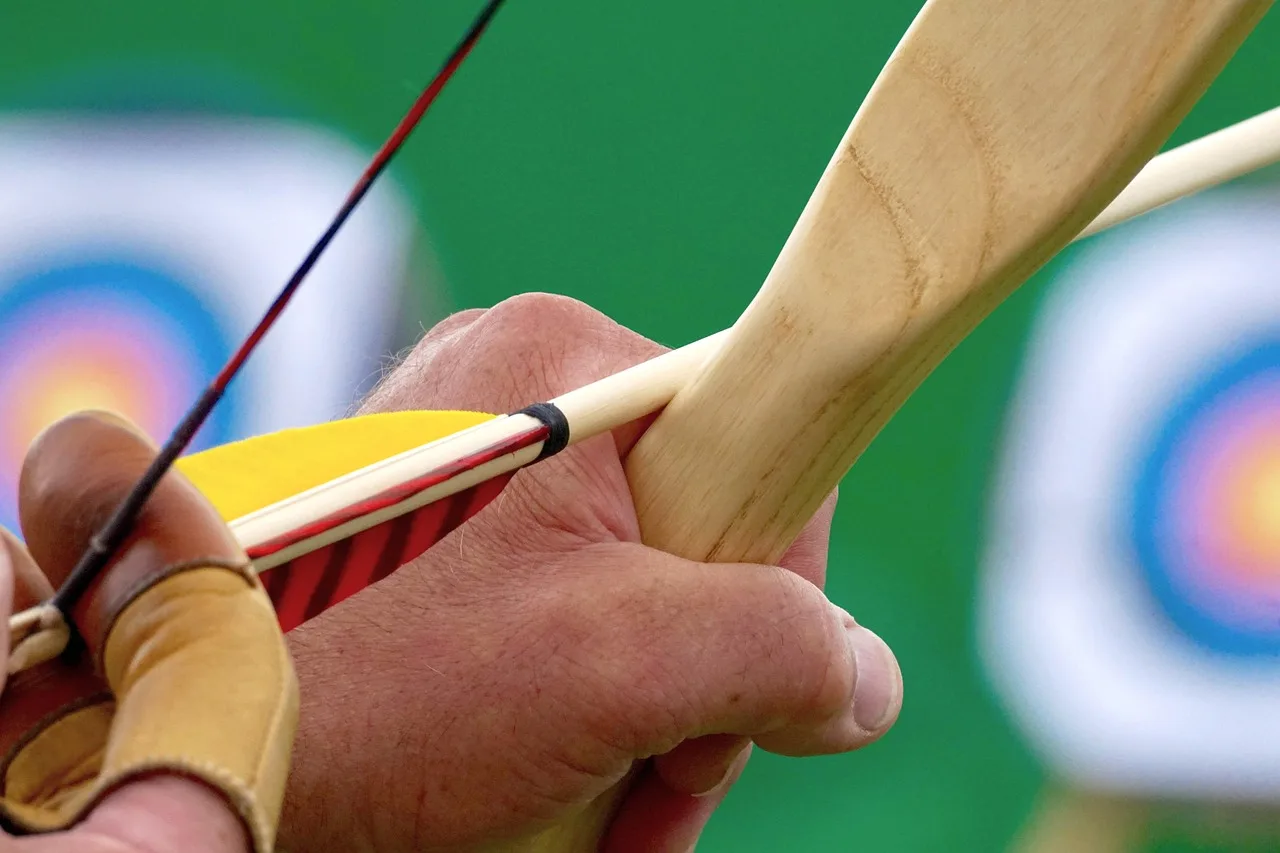
A finger tab is a small leather shield worn over the drawing fingers, and it is the standard choice for Olympic recurve shooting. It sits between the string and the index, middle, and ring fingers, which helps protect the drawing fingers from abrasion and gives a flatter release face.
Tabs are commonly used with recurve, longbow, and barebow. Some include a finger spacer to prevent nocking pinch, and others add adjustable features or an anchor shelf that helps a youth archer find the same face contact every shot.
How a tab sits on the drawing fingers
The tab does not cover each finger separately. Instead, it creates one working surface across the drawing fingers, so the string contact feels more uniform than stitched glove fingers in many setups.
That simpler face is one reason youth coaches often move a stable archer toward a tab once the anchor starts to settle.
Common tab materials and features
Most tabs use leather, synthetic material, or layered construction. A better tab may also include a spacer, an anchor shelf, or a way to adjust fit so the tab stays in the same place under the hand instead of sliding toward the palm.
Those features matter more on a child’s hand than on an adult’s, because a small change in position can alter the anchor and the string line.
Why target archers often start here
Tabs are standard for Olympic recurve and target archery because they support repeatable contact and clean release mechanics. That matters most when scoring consistency starts to matter more than simple comfort.
For a youth archer moving into club rounds, the tab often becomes the better training tool because it supports the same anchor point from end to end.
What a shooting glove
A shooting glove covers the three drawing fingers individually. It is often made from leather or synthetic material, and many versions use a strap or Velcro closure for easy on-and-off use in the field.
Gloves are popular for traditional bowhunting and field shooting. They can feel more natural for some children who want less gear between the hand and the string, especially when the setup is simple and the anchor is more cheek-based than chin-based.
How glove fingers cover the string hand
Each drawing finger gets its own cover, so the index, middle, and ring fingers move more like they would barehanded. That can help a child who is still learning the feel of a bowstring and does not want a large tab on the hand.
The trade-off is that stitched seams and finger shaping can change how the string leaves the hand from shot to shot.
Where gloves fit better for field use
Gloves are often the better fit for walking, hunting, or moving between stands and practice lanes. The convenience is part of the appeal, especially when quick setup matters more than fine anchor work.
Traditional bowhunters may even switch from tabs in warm months to gloves in November season.
Why some youth shooters prefer gloves first
Very young beginners sometimes shoot better with a glove, since some beginners find it more familiar and easier to understand at first. It can also be a sensible first step for children whose anchors are still changing every session.
That first step should not last forever if the child starts chasing tighter groups and a cleaner anchor.
Which is easier for a child?
For many beginners, a glove is easier to understand at first, but a tab is easier to make repeatable once fit is stable. The real question is not which one looks simpler; it is which one lets the child anchor the same way without fighting the gear.
A glove can be the easier starter choice for a small child with a low draw weight and a cheek-anchor style. A tab becomes easier once the archer needs cleaner repeatability, especially in coached target practice.
Fit problems that make tabs hard to use
Tabs can be difficult when the hand is very small and the tab body hangs below the fingers. Oversized tabs can hit the face, catch on the jawline, or pull the anchor out of place.
If the finger shelf is too far from the fingertips, the child may end up reaching for the tab instead of using it naturally.
Fit problems that make gloves hard to use
Gloves can fail when the finger sleeves are too long, the palm is too bulky, or the seams sit where the string pressure lands. Loose fingertip roll is common on juvenile hands and can make the release feel vague.
A glove that moves around on the hand may be comfortable for five minutes and disruptive for the next five ends.
What coaches should watch in the first 30 days
Look for whether the child finds the same anchor point without coaching every arrow. Also watch whether the drawing fingers stay protected without rubbing, whether the hand stops twisting at full draw, and whether the gear distracts from stance and alignment.
A youth archer who keeps chasing the string or rubbing the face usually needs a different handwear choice, not more reminders.
Does a tab give better accuracy?
Usually yes for target work, but only when it fits correctly. A tab can support better accuracy because its flatter release surface and clearer anchor reference make string contact more repeatable than a glove with stitched fingers.
That does not mean every glove shoots poorly. A well-fitting glove can group well, especially in field shooting or on a cheek-anchor setup, but it is less likely to be the long-term choice for Olympic-style youth target work.
Release surface and string contact
The release surface is one of the biggest differences. A flat tab face tends to give cleaner string contact, while glove fingers can create small changes in pressure from seam to seam or finger to finger.
Those small changes matter because the drawing fingers control the string at the moment of release.
Anchor point repeatability
A tab often gives the youth archer a more reliable anchor shelf or edge to settle against the face. That is useful for a below-chin anchor style with a sight, where the same contact point matters shot after shot.
A glove may still work well for a cheek-anchor, no-sight setup, where the hand position feels more natural and the release does not depend on a rigid tab reference.
When a glove can still group well
A glove can still produce tight groups when the archer is young, the bow weight is modest, and the anchor style stays simple. In that case, the convenience of the glove may outweigh the finer release edge of a tab for a while.
Once the child starts entering scored rounds or asks for a more precise anchor, the tab usually becomes the better tool.
Youth handwear decision matrix
This matrix gives parents a simple range-side decision process. Score each fit check from 0 to 2: 0 for poor, 1 for acceptable, 2 for good. Then use the total and the conditions below to decide whether to choose a glove, a tab, or to wait and grow.
| Hand size and shooting condition | Glove | Tab | Wait and grow | Suggested pick |
|---|---|---|---|---|
| Very small hands, short fingers, first lessons, low draw weight | Good fit if finger sleeves stay flat | Often bulky unless very small sizes are available | Not needed if a glove fits | Archery Glove |
| Small hands, stable anchor, indoor target practice, coached form work | Usable, but less repeatable at the release | Best if the tab fits without face interference | Only if both options move too much | Shooting Tab for Youth Archers |
| Cheek-anchor style, no sight, outdoor field use | Natural feel and simple handling | May be unnecessary for the current stage | Not needed unless fit is bad | Archery Glove |
| Below-chin anchor with a sight, scoring round, repeatability focus | Can work, but less precise for many youths | Usually the stronger choice | Only if the child still cannot hold anchor consistently | Shooting Tab for Youth Archers |
| Cold autumn practice, numb fingers, higher supervision needs | Better warmth and easier handling | Possible, but less forgiving on numb fingers | Not needed if the glove fits | Archery Glove |
10 fit checks parents can score at the range
- Finger length match: The fingers must reach the ends without excess material bunching at the tips.
- Seam placement: Seams should not sit directly on the string pressure line.
- Palm bulk: The handwear should not push the bow hand or drawing hand out of a natural position.
- Anchor interference: The tab or glove must not block the cheek or chin contact point.
- Finger pressure balance: Index, middle, and ring fingers should share the load without one finger taking over.
- Release surface smoothness: The string should roll off the same surface every shot.
- Fingertip roll: The fingertips should not twist inside a glove finger or slide under a tab edge.
- Retention security: The gear should stay put through a full draw and let-down.
- Cold-weather feel: The child should still feel the string well enough to anchor correctly.
- Coach visibility: The coach should be able to see whether the same anchor point is being used every shot.
Score each item from 0 to 2. A total near the top of the range points toward the current choice being usable; a low total means the gear is distracting the shot and should be replaced or resized.
Choose Archery Glove if… / Choose Shooting Tab for Youth Archers if…
Choose Archery Glove if the child is very young, still changing anchors, shoots a cheek-anchor style, practices in cold weather, or needs a simple first handwear option for field use. It is also the better short-term choice when the current priority is comfort, warmth, and easy handling rather than precision target work.
Choose Shooting Tab for Youth Archers if the child has stable fit, uses a below-chin anchor with a sight, has moved into club scoring, or needs a cleaner release surface for repeatable target shooting. If the current glove is causing fingertip roll, seam pressure, or anchor interference, the tab is usually the better next step.
Choose to wait and grow if both options fail the fit checks because the hand is too small for a stable setup. In that case, the best move is not forcing adult gear onto a child; it is using the most workable option now and revisiting the switch as hand size and coaching stage change.

Frequently asked questions
Should a youth archer use a glove or a tab?
Most youth recurve archers should move toward a tab once fit is stable and the anchor starts to settle. A glove is a good start for very young beginners or field-oriented shooting, but a tab usually wins when the goal is a repeatable anchor and cleaner target release.
Is a finger tab better than a glove for accuracy?
Usually yes for target recurve work. The flatter release surface and more consistent anchor reference help many youth archers hold the string the same way shot after shot, while a glove can vary more at the seams and fingers.
What is easier for a child to learn, a glove or tab?
A glove is often easier at the very beginning because it feels familiar and is simple to put on. A tab becomes easier once the child is learning structured anchor points, because it gives a clearer contact reference for the drawing fingers and face.
Can a youth archer use a glove for recurve and longbow?
Yes. Gloves are commonly used with recurve and longbow, especially in traditional and hunting settings. They are practical for field use, but they are not always the best choice for a youth recurve archer who needs a very repeatable target anchor.
When should a youth archer switch from a glove to a tab?
Switch when the child can hold a repeatable anchor and starts doing coached target rounds or scoring sessions. If the glove causes fingertip roll, seam pressure, or inconsistent face contact, the tab is usually the better training tool and should come in sooner.
How do I know if an archery glove fits a child correctly?
The glove should cover the three drawing fingers without loose fingertip roll, bulky palm material, or seams sitting on the string contact line. It also should not pull the child’s hand out of a natural anchor or twist during the draw.
How do I know if a finger tab fits a young archer correctly?
A good tab stays centered, does not crowd the face, and gives the child a clear anchor reference without reaching too far below the fingers. The tab should protect the drawing fingers, sit flat under tension, and avoid shifting when the bow is at full draw.
Which is better for cold weather, a tab or glove?
Gloves usually work better in cold weather because they cover each finger and are easier to manage when the air is cold. Tabs can still work, but numb fingers may make them shift, which hurts anchor consistency during winter practice or hunting season.