How to Shoot a Bow with Gloves on: Fit, Grip, Release
Shoot with the thinnest glove or mitten system that still keeps your fingers warm: bare-finger releases are best for compound bows with a release aid, while recurve and finger shooters usually need thin, flexible glove tips or a tab-friendly liner. Thick gloves can change anchor, shorten draw length, and make string clearance unsafe.
Why gloves change your shot
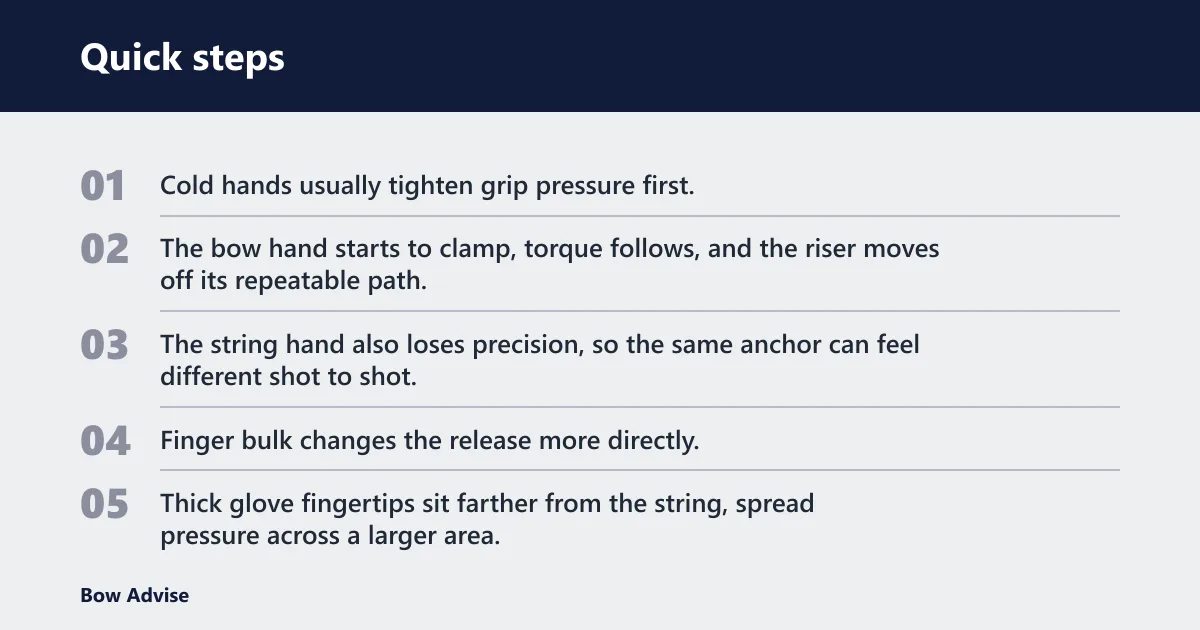

Cold hands usually tighten grip pressure first. The bow hand starts to clamp, torque follows, and the riser moves off its repeatable path. The string hand also loses precision, so the same anchor can feel different shot to shot.
Finger bulk changes the release more directly. Thick glove fingertips sit farther from the string, spread pressure across a larger area, and can snag at the moment of release. That matters most on a recurve bow, where string feel and clean finger release are part of the shot.
Draw weight also feels different in winter. A bow that is manageable barehanded can feel harder when cold fingers lose dexterity and a glove reduces contact feedback. For adult beginners, a recurve starting point of 18 to 24 lbs is still the safer range, especially when winter clothing makes the shot less forgiving. (Wikihow)
What cold hands do to grip pressure
Cold cuts hand sensitivity. The bow hand often starts to clamp down because the shooter cannot feel the riser well. A textured grip helps, but relaxed thumb-pad contact and the same hand placement every shot still matter more.
Why finger bulk changes release consistency
Bulky fingertips change where the string sits on the finger. That can move the contact point onto a seam, create pressure spikes, and make the release less clean. Thin gloves or a tab keep the finger shape closer to a bare hand and reduce that problem.
How draw weight feels different in winter
Winter layers make the bow feel heavier because the hand works harder to hold steady while the fingers lose fine control. A common rule is simple: if the glove changes anchor or forces a squeeze, the setup is probably too demanding for the conditions.
📊 Average teenager and adult should use a 66 or 68 inch bow. Source: Wikihow.
What you’ll need
- Thin liner gloves with flexible fingertips
- A recurve finger tab if you shoot fingers on the string
- Warm outer layers that do not crowd the string hand
- A bow with enough grip texture for wet-cold conditions
- Arrow and bow setup that matches your draw weight
- A safe indoor or approved outdoor shooting space
Glove shooting table
| Glove type | Insulation level | Finger dexterity | Grip feel | String contact risk | Best use case |
|---|---|---|---|---|---|
| Thin liner gloves | Low | High | Good, with a textured palm | Low on compounds, moderate on recurves | Cold-weather practice when you still need fine hand control |
| Fingerless gloves | Low to medium | High at the fingertips | Good at the palm, open at fingers | Low for compounds, mixed for finger shooters | Warmth with better finger feel, if the exposed fingers stay warm enough |
| Heavy insulated gloves | High | Low | Variable, often bulky | High on recurves, moderate on compounds | Waiting, scouting, or non-shooting time in very cold weather |
| Finger tab | Low | High for draw fingers | Not for bow hand grip | Lowest for recurve finger release | Recurve shooting where clean release matters more than hand warmth |
Thin liner gloves
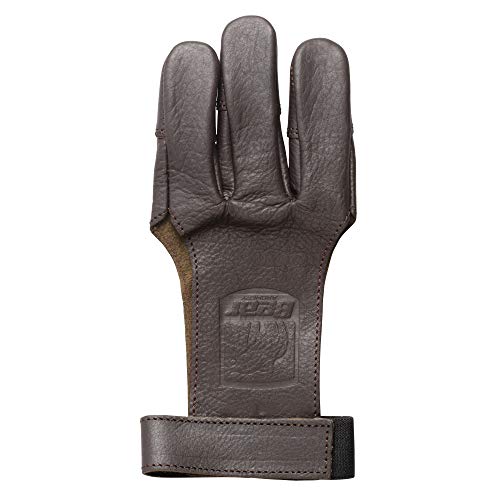
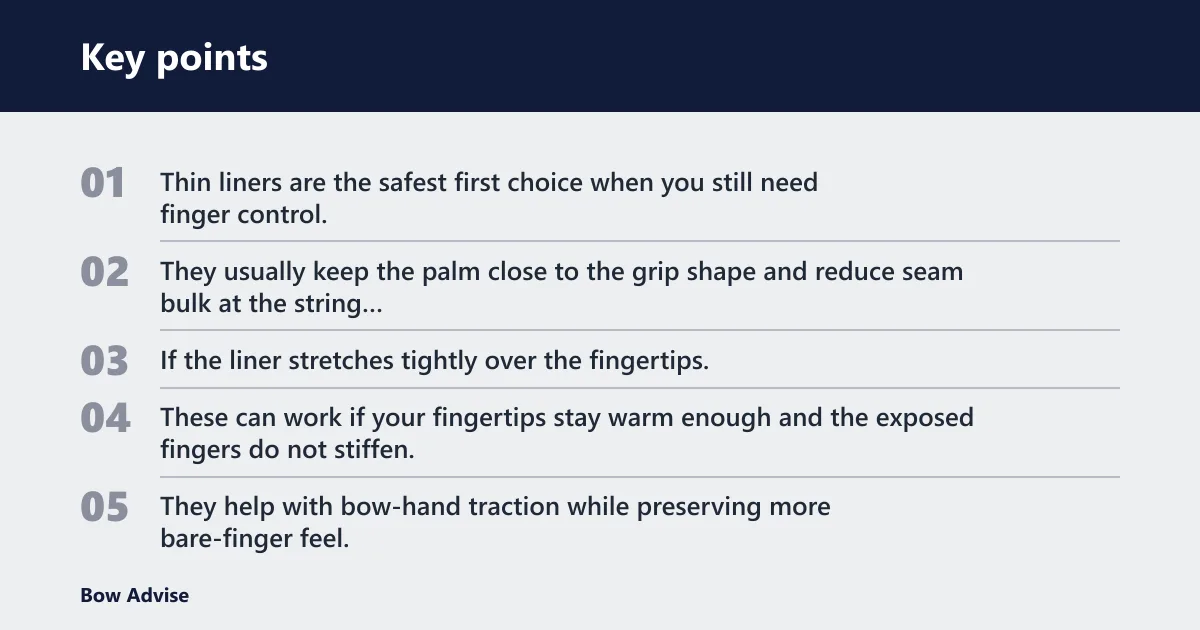
Thin liners are the safest first choice when you still need finger control. They usually keep the palm close to the grip shape and reduce seam bulk at the string contact point. If the liner stretches tightly over the fingertips, it is usually better than a thick winter glove for shooting.
Fingerless or partial-finger gloves
These can work if your fingertips stay warm enough and the exposed fingers do not stiffen. They help with bow-hand traction while preserving more bare-finger feel. They are less useful in bitter cold, where numb fingers can change anchor and release timing.
Heavy insulated gloves
Heavy gloves are usually the wrong choice for recurve finger release. They add fingertip bulk, move the string farther from the fingers, and can reduce feedback enough to change the shot. On a compound bow, they can also interfere with the trigger hand and the bow hand if they are too thick.
Finger tab versus glove
A finger tab is often the better answer for recurve shooters because it protects the draw fingers without adding as much bulk as a glove. It supports a cleaner release and keeps pressure distribution more consistent across the fingers. That advantage becomes more important as the temperature drops.
How should a recurve shooter use gloves?
A recurve shooter should use the thinnest protection that still allows a clean finger release. A tab is often better than a glove because it keeps string feel clearer and reduces fingertip bulk. If a glove shifts the string contact point or makes the release feel sticky, it is too thick.
Set finger placement on the string
Place the string on the same part of the fingers every time. With gloves, that means checking whether the seam sits on the string contact point. If it does, move to a thinner liner or a tab before the seam starts to snag on release.
Choose a tab when a glove adds too much bulk
A tab is the better choice when fingertip bulk interferes with anchor or release. It helps keep the draw fingers in a consistent shape and limits pressure spikes at the string. That is especially useful on beginner-friendly recurve setups.
Keep the release clean with minimal fingertip pressure
Do not choke the string with gloved fingers. Keep the pressure even, then let the string roll off the fingers in the same way every shot. Thick gloves make that harder, so the cleanest fix is usually less bulk, not more force.
How should a compound shooter use gloves?
A compound shooter usually gets better results with a release aid than with bare fingers in gloves. Gloves can interfere with trigger feel, crowd the hand position, and create clearance issues near the string and cam. For most shooters, the bow hand still needs the most attention in cold weather.
Use a release aid instead of bare fingers
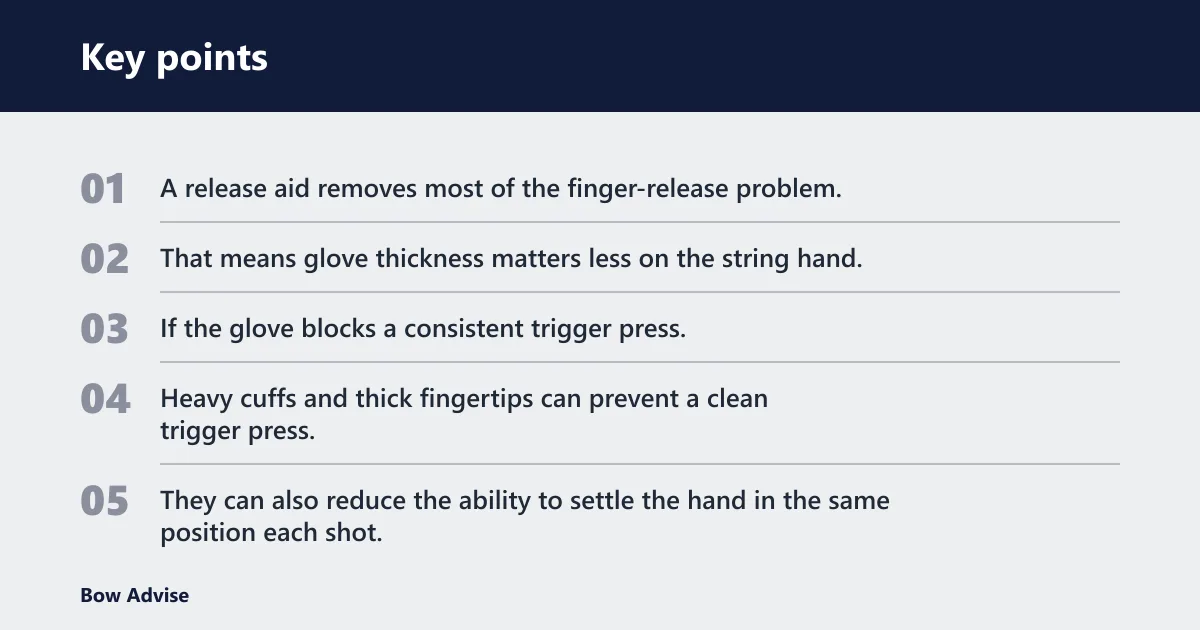
A release aid removes most of the finger-release problem. That means glove thickness matters less on the string hand, but it still matters at the trigger hand. If the glove blocks a consistent trigger press, switch to a thinner liner or bare fingers under a warm muff.
Check glove bulk around the trigger hand
Heavy cuffs and thick fingertips can prevent a clean trigger press. They can also reduce the ability to settle the hand in the same position each shot. A glove that feels warm but changes trigger control is not a good trade for a compound setup.
Watch for grip torque on the bow hand
Compound bows still punish a tight bow-hand grip. A bulky glove can make the grip feel slippery, which often leads to squeezing. Use a textured grip, place pressure on the thumb pad, and keep the hand relaxed so the riser can move consistently.
Four steps for winter form
- Set a relaxed thumb-pad grip and keep the fingers loose.
- Choose the least-bulky hand protection that still keeps your hands warm.
- Draw without crowding the string hand; if the glove touches the string path, change gloves before continuing.
- Release and follow through without tightening the grip, then check whether the anchor and hand placement stayed identical.
Say your recurve is set at 24 lbs and your winter glove has a raised seam at the index fingertip. If the string catches that seam, the release will feel sticky and the anchor may shift. A thinner liner or a tab removes the seam from the contact point.
Suppose your compound bow feels fine barehanded, but a heavy glove makes the bow hand slip on a wet grip. The fix is usually not more squeeze. Add grip traction first, then return to a lighter glove so the hand stays relaxed and repeatable.
Common mistakes with gloves
The most common problem is squeezing the bow hand. A glove that feels cold or slippery often triggers that response, and the shot starts to drift. The fix is a better grip surface and a lighter hand, not more pressure.
Another mistake is putting a seam on the string contact point. That creates snag risk and makes the release less consistent. Thick fingertips can do the same thing, especially on recurve bows where finger feel matters more than on a compound with a release aid.
Using a glove that is too thick for the draw style is another failure case. It can shorten draw length, change anchor position, and reduce clearance. If the hand feels crowded, drop to thinner protection before you change your shot form.
If that didn’t work, try this next: move from a heavy glove to a thin liner, then from a liner to a tab for recurve finger shooting. If the bow hand still slips, switch to a grip with better texture or add a slim grip wrap that does not change hand shape much.
Prevention: keep one glove reserved for shooting and check seam placement before every session. That simple habit prevents most winter-shot problems before they start.
Frequently asked questions
Can you shoot a bow with gloves on?
Yes, if the glove is thin enough to preserve finger placement and grip feel. Compound bows with a release aid tolerate gloves better than recurve bows. Thick winter gloves are the main problem because they change anchor, reduce dexterity, and increase string contact risk.
How do I shoot a bow with gloves on without slipping?
Use a textured bow grip and keep pressure on the thumb pad instead of squeezing. If the palm still slips, move to a thinner glove with better palm friction. On wet-cold days, a repeatable hand placement matters more than extra padding.
What kind of gloves work best for archery?
Thin liner gloves with flexible fingertips are the best starting point for most archers. Recurve shooters often do better with a tab than with a full glove. Heavy insulated gloves are better for waiting in the cold than for the shot itself.
Can thick winter gloves affect my accuracy?
They can change finger placement, shift the anchor, and make the bow hand squeeze harder. That combination affects consistency fast, especially on recurve bows. If accuracy drops only when the gloves go on, the glove is probably the cause.
How do I grip a bow when my hands are cold?
Keep the grip relaxed and use the thumb pad, not the full palm squeeze. A textured grip helps the hand stay in the same spot. If the cold forces a firmer hold, add warmer but thinner hand protection rather than tightening the bow hand.
Do I need a shooting tab instead of gloves?
If you shoot a recurve with fingers, a tab is often the better choice. It gives cleaner string feel and less bulk than many gloves. A glove can still work if it is thin, but a tab usually keeps the release more consistent.
Can you properly shoot a bow in winter gear?
Yes, but only if the layers do not crowd the string hand or force a different grip. Keep sleeves and cuffs clear of the string path, choose the least-bulky hand protection that still warms your fingers, and check that the bow hand remains repeatable.
How do I avoid torque when wearing gloves?
Use a grip with enough traction that you do not need to squeeze. Place the hand the same way every shot and let the bow settle into the thumb pad. If the glove makes the grip feel slippery, switch gloves before the torque shows up in the shot.
Can you shoot a bow in your backyard?
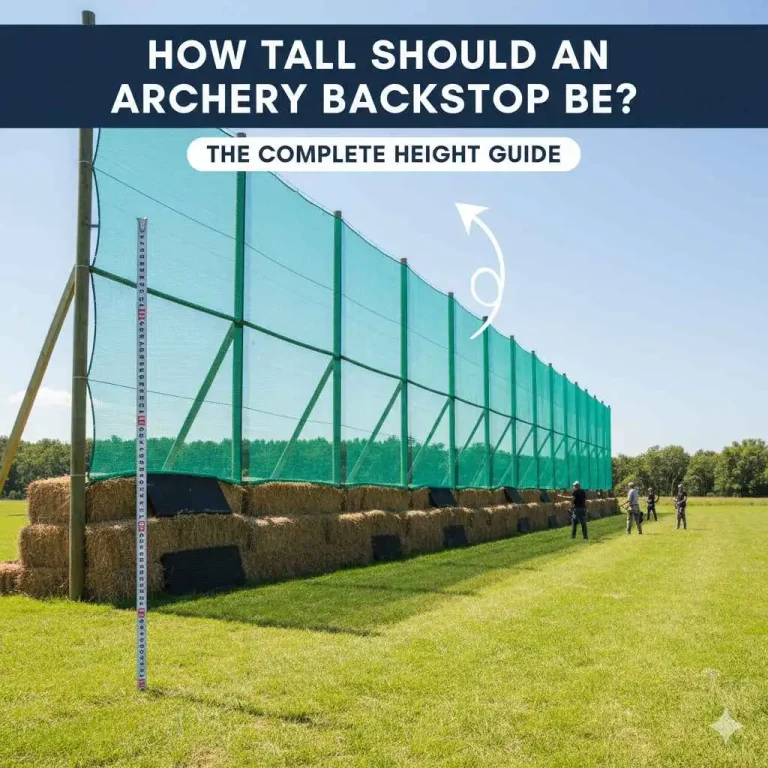
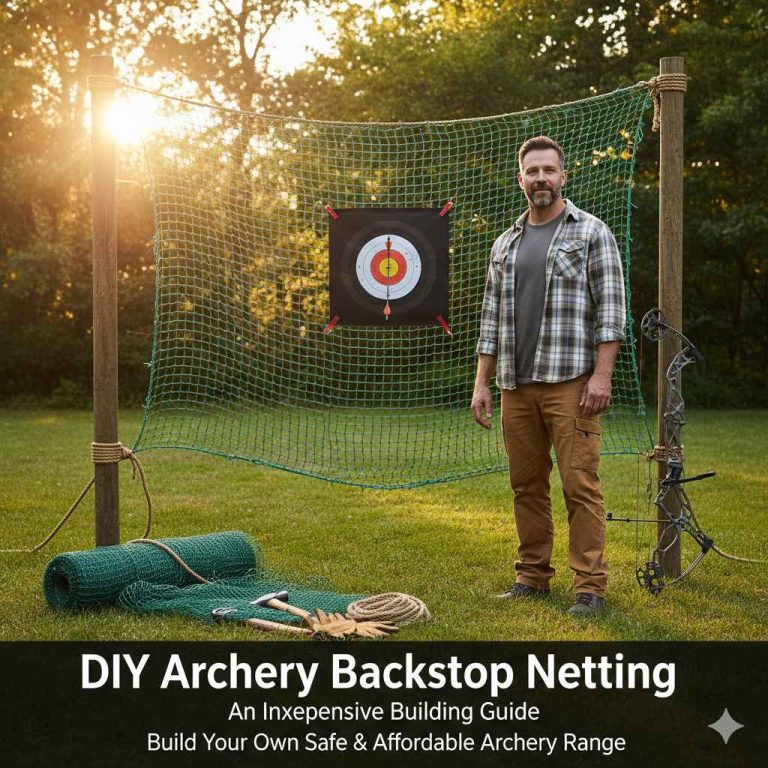
Only if local rules allow it and the area is safe, enclosed, and free of people, pets, and property risks. Check local ordinances before shooting. A safe backstop and a clear target lane matter more than convenience.
Can you use a bow and arrow in public?
Usually not as casual practice. Public use is often restricted by local law, park rules, and safety concerns. If archery is allowed at all, it is typically limited to approved ranges or designated hunting areas with the proper permissions.