Shooting a Bow in Cold Weather: Gear and Comfort
In freezing weather, start with a five-point check: inspect string and serving, confirm arrow spine and nocks, clear bulky clothing from the string path, warm release fingers, and expect lower point of impact. Skip it and cold-stiff gear, sleeve contact, and numb hands can turn a tune into low hits, erratic groups, or a dry-fire risk. This guide covers winter checks for recurve and compound bows, clothing clearance, arrow and string issues, and the comfort steps that protect safety and accuracy.
Can you shoot a bow in freezing temperatures?
Yes, if the bow is structurally sound, moving parts stay clear of snow and ice, and the shooter can still draw, anchor, and release safely in winter clothing. Cold rarely causes the whole problem by itself. Trouble usually starts when three things change at once: gear condition, clothing clearance, and the shooter’s ability to keep hands and posture consistent.
Bow condition comes first
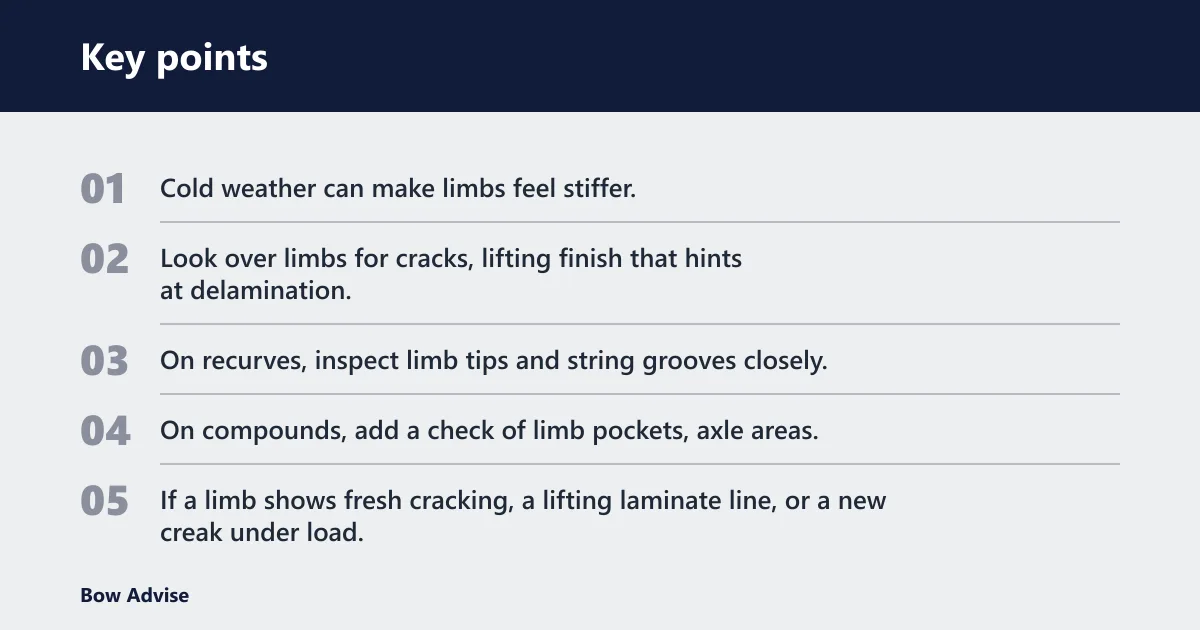
Cold weather can make limbs feel stiffer, but that alone does not mean the bow’s actual setup has changed in a meaningful way. Start with damage checks instead. Look over limbs for cracks, lifting finish that hints at delamination, edge chips that expose fibers, and any unusual brittleness around the fades and limb pockets.
On recurves, inspect limb tips and string grooves closely. On compounds, add a check of limb pockets, axle areas, and any split-limb gap where packed snow can hide. If a limb shows fresh cracking, a lifting laminate line, or a new creak under load, shooting stops there.
How the bow is stored matters before the bow ever reaches the range. The safest baseline is indoor storage at room temperature. That cuts moisture exposure and avoids repeated cold-soak cycles that make winter inspection harder and leave condensation on parts later.
Clear shot path matters as much as tune
A perfect summer setup can throw poor arrows in winter if sleeves, chest layers, or face covering fabric touch the string. Heavy outerwear changes shoulder position, elbow rotation, and anchor shape. Those are execution changes first, not proof that the bow suddenly needs a full retune.
Test base, mid, and outer layers at full draw before serious practice, competition, or hunting. That includes checking chest clearance, sleeve bulk at the forearm, and whether a jacket cuff drifts into the string path during the hold.
An arm guard earns its place in winter because it compresses loose sleeves and cuts string slap. It also needs to fit over thicker clothing. A guard that works over a thin shirt can become too short or too tight over fleece and a shell.
Hand feel and posture are the third part
Cold hands and cold feet hurt performance fast. Numb fingers alter trigger feel on a release aid, reduce hook consistency with a tab or glove, and shorten the time most shooters can hold on target. If the bow feels heavier in winter, that usually comes from cold muscles, reduced mobility, and bulkier clothing, not from a large real change in draw weight.
Suppose a compound bow still times correctly and paper tunes clean indoors, but groups drop low outdoors in a puffy jacket and insulated gloves. The first suspect is usually a changed anchor and slower release timing, not an immediate cam or limb problem.
When freezing weather becomes a stop-shooting problem
Keep shooting only while safety checks stay clean. Stop if any limb shows cracking or separation, if serving is opening up, if cams or a drop-away rest freeze and fail to cycle, if a whisker biscuit packs with snow and cannot be cleared, if repeated clothing contact continues after adjustment, or if numb hands make a safe release uncertain.
Persistent icing is a stop signal too. Clearing snow buildup between shots is recommended, but if snow or ice keeps returning fast enough to affect function, conditions have moved from inconvenient to unsafe.
Why a bow can feel heavier in winter
Cold weather usually does not change your bow’s measured draw weight much, but it can make the draw feel tougher and less controlled. The supporting article breaks down the difference between actual poundage and winter draw feel, so you can spot when the issue is your body, your clothing, or your release setup rather than the bow itself. That matters because a “heavier” draw can lead to rushed anchor points, poor alignment, and sloppy shots at the moment accuracy matters most.
If winter has your bow feeling different, this cold weather draw weight guide explains what changes, how much it changes, and what to check before you assume your setup needs a major adjustment.
Must-have
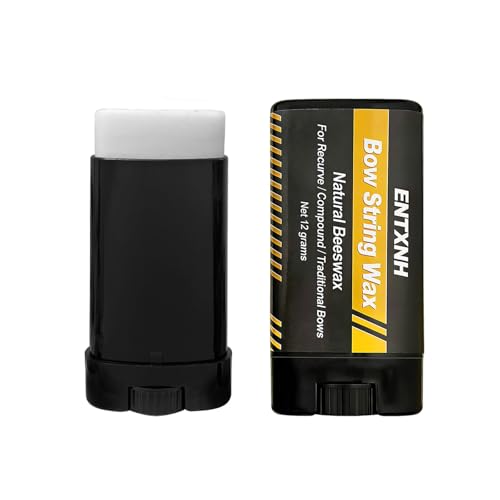
ENTXNH bowstring wax
String care is the first winter consumable because the string tends to wear out more in rain and snow, and dry cold air can speed visible fuzzing and serving wear. Below freezing, the string should be waxed before every session. That simple rule prevents a lot of avoidable winter damage.
This ENTXNH wax is a universal beeswax option in a twist-up tube, which makes field use easier than carrying a soft block loose in a pack. Based on specs and reviews, its best fit is routine touch-up on recurve, compound, and crossbow strings.
Its limitation is also obvious: wax does not fix serving separation, broken strands, or deep abrasion. It is maintenance, not repair. Avoid packing excess wax into servings where it can collect grit.
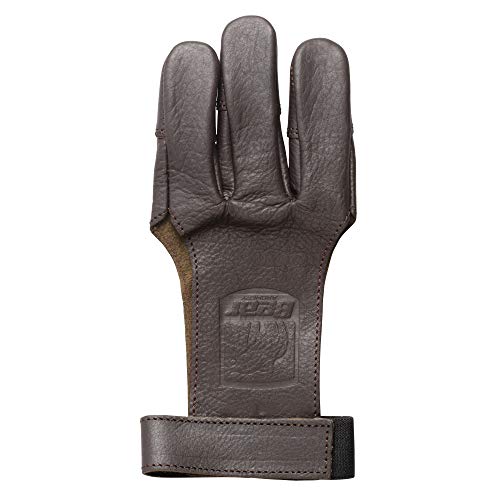
Bear Archery leather glove
For traditional shooters and some barebow archers, a fitted shooting glove helps keep release feel usable in the cold without adding the bulk of insulated work gloves. Full-grain leather and a wrist strap matter here because finger placement and secure fit matter more in winter, when feel is already reduced.
The drawback is warmth. A thin leather glove protects the string fingers and preserves feel, but it is not a deep-cold insulation piece. Compound shooters using a wrist or handheld release may also prefer a separate liner glove rather than a shooting glove like this.
What changes first in cold weather archery?
The first changes are usually feel, clearance, and moisture-related function, not a dramatic mechanical shift in the bow itself. Winter archers often notice a stiffer draw, shorter hold tolerance, and lower impacts before they find a true tune problem. Serving wear, icy rests, and altered anchor points usually show up sooner than limb-related issues.
Feel changes versus real setup changes
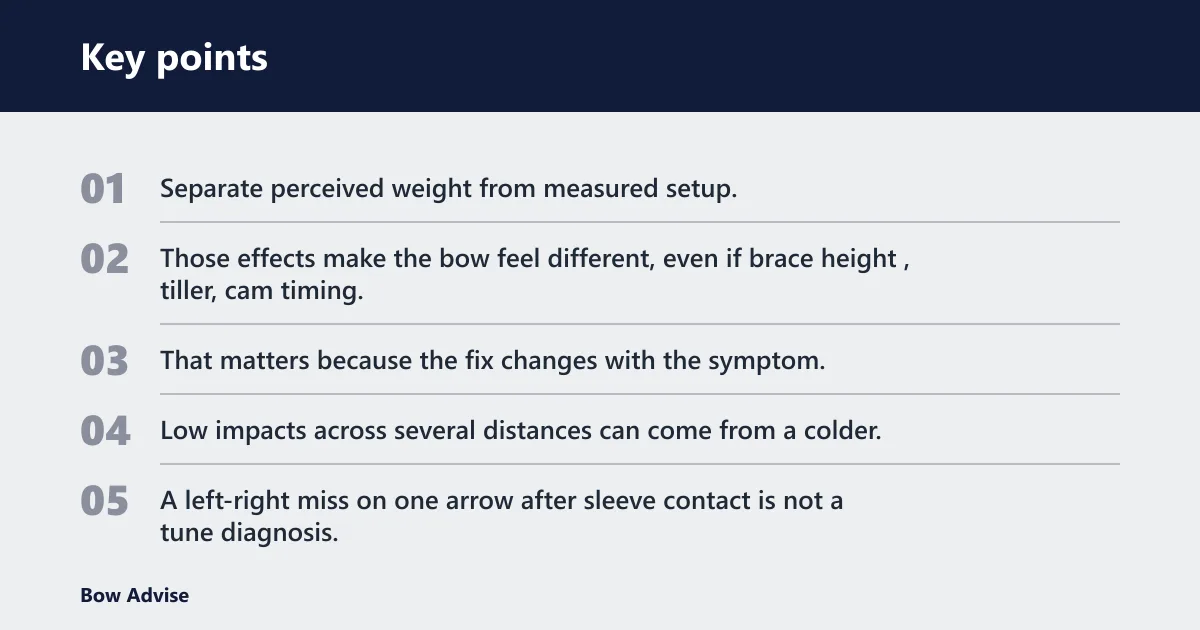
Separate perceived weight from measured setup. Heavy sleeves can block scapular movement. Cold fingers can delay a release. A face covering can move anchor pressure. Those effects make the bow feel different, even if brace height, tiller, cam timing, and nock fit are still within normal range.
That matters because the fix changes with the symptom. Low impacts across several distances can come from a colder, less efficient shot pattern or from a sight mark that no longer matches winter conditions. A left-right miss on one arrow after sleeve contact is not a tune diagnosis.
What usually fails first
On many setups, the first visible wear point is the serving. Look for separation, flattened spots, and fraying where the release or fingers load the string. Dry cold can also leave the string looking fluffy sooner, especially after repeated wet-to-dry cycles.
For compounds, cams and cables can feel stiffer, and snow or ice around tracks, modules, or the cable slide can change how smoothly the system cycles. Some cam systems also become slick when partly frozen, which can create inconsistent feel even before true function fails.
Rests are another early trouble spot. A drop-away can slow down or hang up if moisture freezes at the pivot. A whisker biscuit can hold packed snow that drags the shaft or contacts fletching.
Peep systems deserve a quick mention here. If a compound still uses peep tubing, cold weather and age can make that tubing an early weak point. Even without tubing, ice or condensation around the peep can change the sight picture before the bow’s tune changes.
Shooter changes show up fast
Hands usually fail before equipment does. Trigger pressure gets coarse. Hook depth changes. Finger tabs feel thicker. Footing gets less stable. That is why winter practice has to include the actual glove, tab, release, jacket, and face covering that will be used later.
Picture a recurve archer shooting fine in a base layer, then adding a lofted jacket and suddenly hitting left. The limb bolts did not move. More often, the string brushed the chest seam or the drawing elbow could not rotate the same way through the clicker.
Why carbon arrows fail in cold weather
Cold air by itself usually is not what breaks a carbon arrow. The bigger risk is a shaft that already has hidden damage from a hard impact, a nick, or crushed fibers. In winter, that weakness can show up at full draw or on release, which is why a simple pre-hunt inspection matters so much.
The article explains how to tell temperature effects from true damage, when an arrow should be retired, and how to store and transport shafts to reduce risk. If you hunt in freezing conditions, this carbon arrow cold guide helps you avoid a bad shot and catch a dangerous failure before it happens.
Nice-to-have

MADHOLLY hand warmer pouch
A hand warmer pouch solves a real winter shooting problem: keeping release fingers warm without wearing bulky gloves between ends or between stands. The insulated, fleece-lined design and zippered pocket make sense for bowhunters who need access to a release, windicator, or small cloth while keeping dexterity available.
The drawback is movement and bulk. It helps between shots, but it does not replace practicing the actual shot with the glove or release setup that will be used. Target archers may also find a large muff less convenient on the line than simple pockets and hand warmers.

Hartena camo face mask
A face covering can keep the jawline and neck warm, which helps preserve anchor comfort, but winter archers should judge it by clearance first. A mesh mouth panel and stretch fit are useful because thick seams around the mouth or cheek can move the anchor or brush the string on the shot.
The weak point is fit variability. Any face mask that bunches at the corner of the mouth or pushes the peep picture off center can cost more points than it saves in warmth. It needs a full-draw test with the exact hood, hat, and jacket collar.
Consumables and spares

Pinals carbon hunting arrows
Winter is a bad time to ignore arrow housekeeping. Arrow flight changes are usually caused by contamination or mismatch, not by cold air alone. Check nocks for cracks, make sure shafts are clean, and inspect vanes for snow, ice, or moisture before each shot. If a shaft drags through a snow-packed rest, that is an arrow-path problem first.
The value in a multi-spine pack like these Pinals arrows is having options that fit different bow setups, plus removable field points for practice. Based on specs and reviews, they are aimed more at hunting and broadhead prep than formal target shooting.
The drawback is that mixed options can tempt shooters to treat “close enough” as good enough. Confirm spine and nock fit against the actual bow, especially when using heavier winter hunting points or changing draw weight.
Field cloths, nock spares, and release backups
A dry cloth is still one of the best winter tools. Use it to wipe riser shelves, cams, cables, peeps, sights, and arrow shafts after wet ends or a snowy stalk. A few spare nocks matter because cold, hard impacts into frozen ground or tight targets can crack them without much warning.
Compound shooters should consider a backup release or at least a simple contingency plan if a release head ices up or a battery-powered accessory quits. Recurve shooters should carry serving-safe string tools and a spare string already checked for brace height.
How should you check strings, limbs, cams, and rests in winter?
Check winter gear in a strict order: limbs first for structural damage, strings and servings next for wear, then cables, cams, and rests for ice or slow movement. That sequence separates unsafe problems from minor maintenance. It also prevents blaming tune when the real issue is sleeve contact or frozen hardware.
Limbs and riser
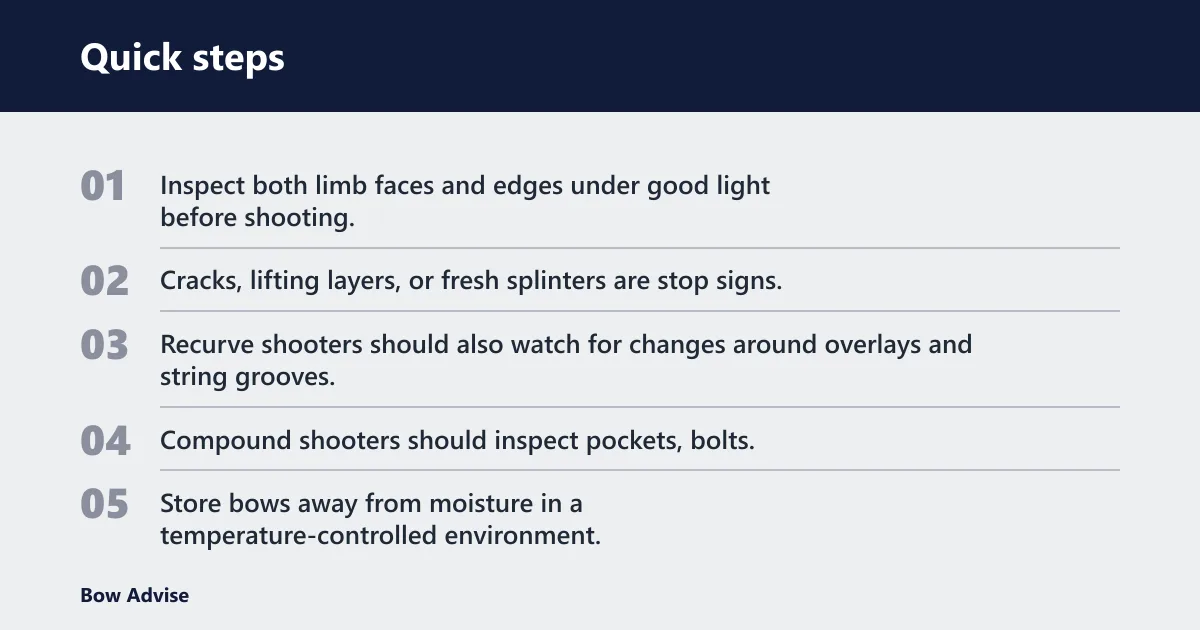
Inspect both limb faces and edges under good light before shooting. Cracks, lifting layers, or fresh splinters are stop signs. Recurve shooters should also watch for changes around overlays and string grooves. Compound shooters should inspect pockets, bolts, and visible limb interfaces where moisture can collect.
Store bows away from moisture in a temperature-controlled environment. Avoid leaving a wet bow in a case or vehicle. After winter shooting, the bow should be dried before storing in a case or bag, and it should be clean and dry before storage.
Strings, servings, and cables
String checks are simple but specific: look for fluffing, broken fibers, dry patches, serving separation, and fraying around common contact points. Winter demands more frequent waxing because cold air and wet conditions can strip the string’s surface protection faster.
Cables deserve the same visual inspection on compounds. Watch for ice crystals, stiff bends, or contamination near the cable slide or roller guard. If the system cycles unevenly after clearing and drying, stop and inspect more closely rather than shooting through it.
Cams and arrow rests
Snow and ice on cams, modules, or tracks can create a slippery or frozen cam system that feels wrong before it looks dramatic. Clear all buildup before drawing. Do not force a draw through visible ice on moving parts.
Arrow rests need equal attention. Clear snow and ice from a drop-away’s launcher arm and pivot. On a whisker biscuit, check inside the ring for packed snow and moisture that can contact the shaft or fletching. Obstruction at the rest is one of the cleanest explanations for sudden winter arrow-flight errors.
Cold weather checklist table
| Use case | Temperature band | Gear check | Clothing clearance check | What to re-tune or re-zero |
|---|---|---|---|---|
| Recurve target or barebow | Below freezing, dry | Inspect limbs for cracks or delamination; check string for fluffing, fraying, and serving wear; verify nock fit; wipe shelf and plunger area dry | Draw in base, mid, and outer layers; confirm chest and sleeve clearance; fit arm guard over winter layers; confirm tab or glove still gives the same anchor | Recheck brace height and sight marks at real distance first; only revisit nocking point or plunger settings after clearance and anchor are confirmed |
| Compound target | Below freezing, wet snow risk | Inspect limbs; check string and cables for fraying or serving separation; clear cams, cable slide, peep, and drop-away rest of snow or ice between shots | Test jacket cuff, chest bulk, and face covering at full draw; confirm release trigger feel with winter glove or liner; verify peep alignment with hood or hat on | Re-zero sight marks before changing rest or timing; if impacts shift only after adding clothing, fix anchor and clearance before touching tune |
| Bowhunting setup | Freezing with repeated transitions from car or stand to warm shelter | Check for condensation after temperature changes; dry bow, arrows, and broadhead ferrules; inspect whisker biscuit or drop-away for packed snow; clear snow buildup between shots | Practice kneeling and seated draws in full layers; confirm bino strap, rangefinder tether, jacket sleeve, and face mask stay out of the string path | Reconfirm hunting sight marks and broadhead impact in actual clothing; if point of impact drops but groups stay clean, re-zero before assuming a tune fault |
How to tell whether winter changes are from the string or the setup
Cold weather can make a bow shoot differently, but that does not always mean the string has truly stretched. The supporting guide explains the most common winter causes of point-of-impact change, including cables, limb performance, serving wear, and nock fit, so you can separate real string growth from other setup shifts. It also gives a simple checklist for compound and recurve bows to help you diagnose whether the bow is out of tune or just reacting to low temperatures. If you want to understand when a winter change is normal and when it needs correction, see cold-weather string stretch.
When to Verify Your Bow’s Zero in Winter
You do not need to re-sight every time the temperature drops, but you should verify your zero if winter changes your anchor, arrow speed, or where your setup references sit. Small shifts in draw length feel, clothing bulk, or string behavior can move impacts enough to matter on target.
The winter re-sight guide explains the warning signs that point to a real sight change, what equipment to have ready, and how to decide whether a quick sight check is enough or a full re-zero is smarter. That matters because it helps you avoid chasing tiny temperature changes while still catching the setup shifts that can cost accuracy.
Do sight marks and tune change in cold weather?
Sometimes, but not for the same reason and not in the same order. Summer sight marks often stop matching winter impacts before a bow needs real tuning work. First recheck distance, anchor, and clothing clearance. Only after those are ruled out should a shooter chase tune changes on a recurve or compound.
Why point of impact often moves first
Lower impacts in winter are common because hold quality, release timing, and anchor pressure change in heavy clothing and cold hands. That is different from a tune issue. If groups stay reasonably shaped but land low, re-zeroing the sight may solve more than moving the rest or twisting cables.
Do not assume summer marks carry over. Recheck actual distances outdoors in winter conditions, especially for longer target distances or hunting pins beyond close range.
What to verify first on recurve
- Confirm sleeve and chest clearance at full draw.
- Check anchor with hat, neck gaiter, or face mask on.
- Inspect string, serving, and nock fit.
- Shoot enough arrows to verify whether the change is group location or group shape.
- Only then revisit brace height, tiller, or plunger pressure.
What to verify first on compound
- Clear cams, cables, peep, and rest completely.
- Confirm the release still breaks cleanly with the chosen glove or liner.
- Check peep alignment with winter headwear.
- Recheck sight marks at distance.
- If groups remain erratic after that, inspect timing, center shot, and rest function.
Temperature-transition shock and condensation
Moving a cold bow into a warm house or truck can create condensation on metal, strings, optics, and inside cases. The reverse can leave residual moisture ready to freeze once the bow goes back outside. That transition cycle causes more winter maintenance trouble than steady dry cold.
Bring the bow in, let moisture show itself, wipe it down, and do not zip it away wet. Cases trap moisture. Storage should stay dry and temperature controlled.
Budget setups
Low-cost winter prep should solve the failures that happen first: string wear, cold fingers, and clearance problems. Based on specs and reviews, these options make the most sense when matched to the shooter’s style rather than bought as generic “winter gear.”
Where to spend first
For most archers, first money goes to string care and hand management. A small wax tube and a shooting glove or warming solution do more for winter consistency than expensive accessories. Bowhunters usually get more value from hand warmth and face-cover fit, while target archers get more from repeatable anchor and sleeve control.
| Setup level | Best fit | Items | Price | Why it makes sense |
|---|---|---|---|---|
| Starter | Any archer shooting outdoors occasionally | ENTXNH bowstring wax | $8.99 | Cheap protection against winter string wear and moisture exposure |
| Mid | Recurve, barebow, traditional | ENTXNH bowstring wax + Bear Archery glove | $24.98 | Preserves string condition while keeping finger feel usable without bulky insulation |
| Serious | Bowhunting in freezing weather | ENTXNH bowstring wax + MADHOLLY hand warmer pouch + Hartena face mask | $53.96 | Targets the biggest hunting-specific issues: string care, warm hands, and a face covering that is less likely to disrupt anchor |
One-variable examples
Say your compound groups are centered at 20 yards in a thin hoodie, then drop low after switching to a heavy parka while every arrow still groups tightly. Change one thing first: shoot the same distance in the parka, then re-zero if the group stays clean. That is a sight-mark and execution check before a tuning session.
A common first-timer mistake is packing a whisker biscuit with sleet during a short walk to the target, then shooting the next arrow without clearing it. The bow can feel normal, but the shaft may drag and vane contact can throw the next impact out of the group.
Frequently asked questions
What gear do I need for winter archery?
Start with string wax, a dry cloth, an arm guard that fits over layers, and gloves or a hand-warming system that preserves release feel. Then add clothing-clearance checks, spare nocks, and a storage routine that keeps the bow dry in a temperature-controlled space.
Do bow strings need more wax in cold weather?
Yes. Winter air is often dry, and wet sessions add wear, so strings need closer attention. Below freezing, the string should be waxed before every session. Wax is there to reduce moisture exposure and surface wear, not to hide fraying, serving separation, or damaged strands.
How does cold weather affect bow draw weight?
Most shooters notice the bow feels heavier before they can prove a major mechanical change. Cold muscles, restricted layers, and numb hands usually explain more than any large shift in actual bow specs. Treat “harder to draw” as a form and clearance question first, then inspect the bow.
Will snow or ice change arrow flight?
Yes, when it contaminates the path of the arrow. Snow packed into a whisker biscuit, ice on a drop-away rest, wet vanes, or slush around a nock can all affect flight. The problem is usually obstruction or moisture on the arrow system, not cold air by itself.
How do I keep my clothes from hitting the bowstring in winter?
Build from thin base layers, then test every added layer at full draw. Watch sleeve cuffs, chest seams, jacket bulk, and face coverings. Use an arm guard over winter layers to compress fabric. If contact keeps happening, change clothing or fit before changing the bow.
Do I need to adjust my sight marks in cold weather?
Often, yes. Summer marks may not carry over once winter clothing, cold hands, and outdoor conditions change the shot. Recheck at real distance before touching tune. If arrows still group well but land low or slightly off, a re-zero is more likely than a major setup fault.