Best Archery Gloves for Cold Weather (2026): we compared
The best cold-weather archery gloves depend on the shot and the temperature: thin tactile gloves for recurve and barebow, quiet insulated gloves for late-season sits, and a liner-plus-muff or mitten backup for severe cold. Pick the wrong setup and you lose string feel, start missing anchor, or end a sit with numb fingers. This guide compares glove types, materials, dexterity tradeoffs, and the best pick for each hunting and target scenario.
Quick comparison
| Product | Badge | Best for | Price | ||
|---|---|---|---|---|---|
 | PavinCrafter Leather Archery Finger Tab for Left HandPavinCrafter | Also great | Left Hand Finger Tab | $17.99 Price as of 9 Oct 2026 | View |
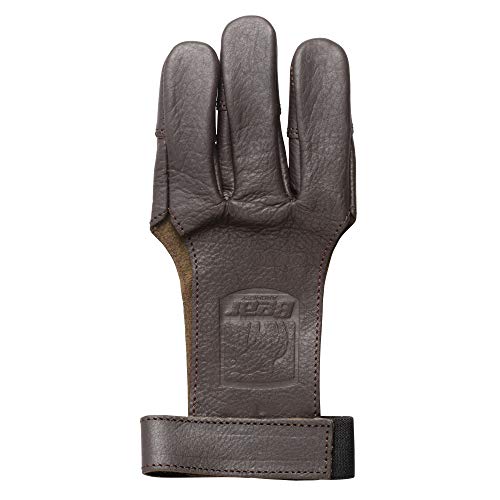 | Bear Archery Leather 3 Finger Traditional Archery ShootingBear Archery | Budget pick | Full-Grain Leather 3-Finger | $15.99 Price as of 9 Oct 2026 | View |
 | Palmyth Men’s Hunting Gloves for Cold Weather and WinterPalmyth | Our pick | Camo Hunting Gloves | $29.98 Price as of 9 Oct 2026 | View |
 | MARKEEP Archery Gloves 2 Packs, Shooting Hunting ThreeMARKEEP | Upgrade pick | 2-Pack Leather Archery Gloves | $7.99 Price as of 9 Oct 2026 | View |
The fast rule is simple: lighter gloves for shooting sessions, warmer systems for static sits, and a muff or mitten backup once temperatures drop hard. For archery, the glove that feels best in the hand is not always the glove that keeps you shooting well after 90 minutes outdoors.
📊 Merino liner gloves are suggested as standalone wear at 40°F and above. Source: Best Hunting Gloves: Cold-Weather Tested for 2026….
How we chose
Warmth-to-dexterity balance
Archery gloves have to preserve anchor feel, string pinch control, and release consistency. A glove that insulates well but hides finger position is a poor fit for recurve and barebow use.
Noise and scent control
Quiet exterior fabrics matter in a treestand. Rustly shells, stiff seams, and noisy hook-and-loop closures are a problem when deer are close.
Fit, grip, and anchor feel
Good options fit the string-hand fingers without extra material at the fingertips. Grip patches, anti-slip palms, and pre-curved fingers help, but only if they do not create pressure points.
Layering flexibility
Cold-weather hand systems should adapt across temperature bands. A liner, an insulated glove, and a muff should work together instead of forcing one thick glove to do everything.
Merino wool liner gloves: best for light cold and layering
Merino liner gloves are the best starting point for 40°F and above, and they remain useful below 40°F under an insulated shell. They are the simplest option when you need basic warmth without giving up too much string feel.
Their main advantage is thinness. That matters for recurve and barebow archers, where the string-hand fingers need clear feedback at anchor and the bow hand still needs enough grip to stay relaxed.
Merino also handles odor well compared with many synthetics, which helps on the hunting side. The drawback is obvious: on their own, liners are not enough for long, static sits once wind and stillness start pulling heat from the hands.
Insulated hunting gloves: best for late-season sits
Insulated hunting gloves are the better choice for 25-45°F extended sits when warmth matters more than fine finger work. The Traverse glove uses 60g PrimaLoft Gold insulation and is recommended for 25-45°F extended sits, with an 8/10 dexterity rating. That is a strong balance for hunters who still need to shoulder a bow calmly.
The Kenai Pro goes warmer, with 170g Toray synthetic insulation and a listed range of 5-25°F stationary hunting. Its 5/10 dexterity rating tells the story: it is built more for heat than for precise finger feel.
Pre-curved fingers help because they reduce bunching when the hand is at rest around a bow grip or against a tree stand rail. Quiet shells also matter. DWR-treated softshell exteriors are often a better treestand choice than noisy, stiff fabrics.
Mittens and hand muffs: best for extreme cold backup systems
Mittens and hand muffs are the right answer below 20°F, especially when the goal is to keep blood moving in the hands between shots. A muff works as an outer warmth layer over thinner gloves and can be removed quickly before the shot.
This is the best system when a shooter needs warmth, not constant finger use. It also avoids the common mistake of buying a huge insulated glove that ruins anchor feel and still leaves the index finger numb after a short wait.
The tradeoff is handling time. If a glove or muff takes too long to clear away before the shot, it becomes a liability. That is why extreme-cold systems should be practiced before they go into a blind or treestand.
What are the best archery shooting gloves for cold weather?
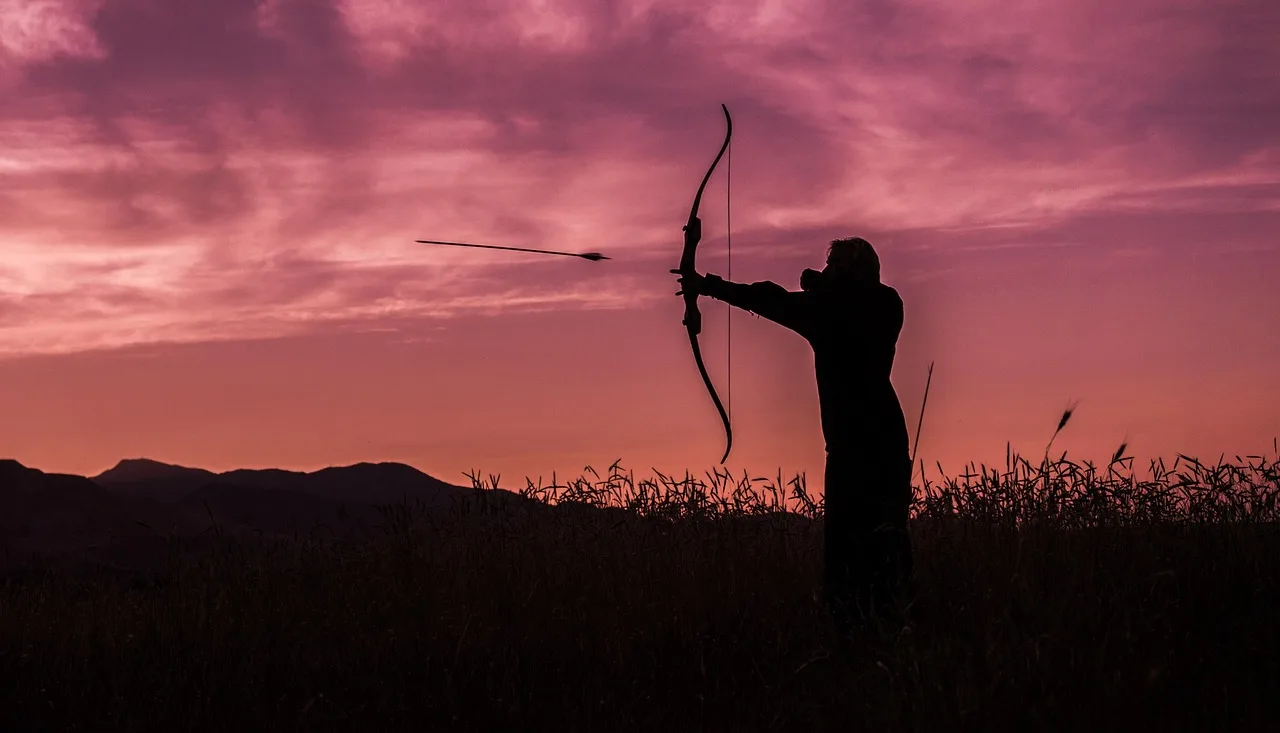
The best cold-weather archery glove system often depends more on the shot than on the season alone. For recurve and barebow, a thin merino liner or a tactile shooting glove is often a good starting point. For late-season bowhunting, a quiet insulated glove with solid grip is better. For severe cold, consider adding a muff or mitten backup.
That split matters because target shooters and hunters ask different things of the hand. Recurve archers need string feel and anchor consistency. Hunters need usable warmth during long, still periods, then enough dexterity to draw without fumbling gear.
Best pick by temperature band and shooting style
| Temperature band | Shooting style | Dexterity need | Best glove system |
|---|---|---|---|
| 40°F and above | Recurve, barebow, light target practice | High string feel | Merino wool liner gloves |
| 25-45°F | Late-season hunting sits | Moderate hand control | Quiet insulated hunting gloves |
| Below 40°F with active shooting | Mixed range and hunting use | Balanced warmth and feel | Liner under a quieter insulated glove |
| Below 20°F | Stationary sits, very limited shots | Low during wait, high at release | Glove plus hand muff or mitten backup |
For example, a barebow shooter at a mid-range distance in cold weather may start missing the same anchor point after several shots. The likely cause is extra material at the fingertips or seam pressure near the string hand, not the bow itself. A thinner liner often fixes the problem better than more insulation.
Are winter archery gloves too bulky for shooting accurately?
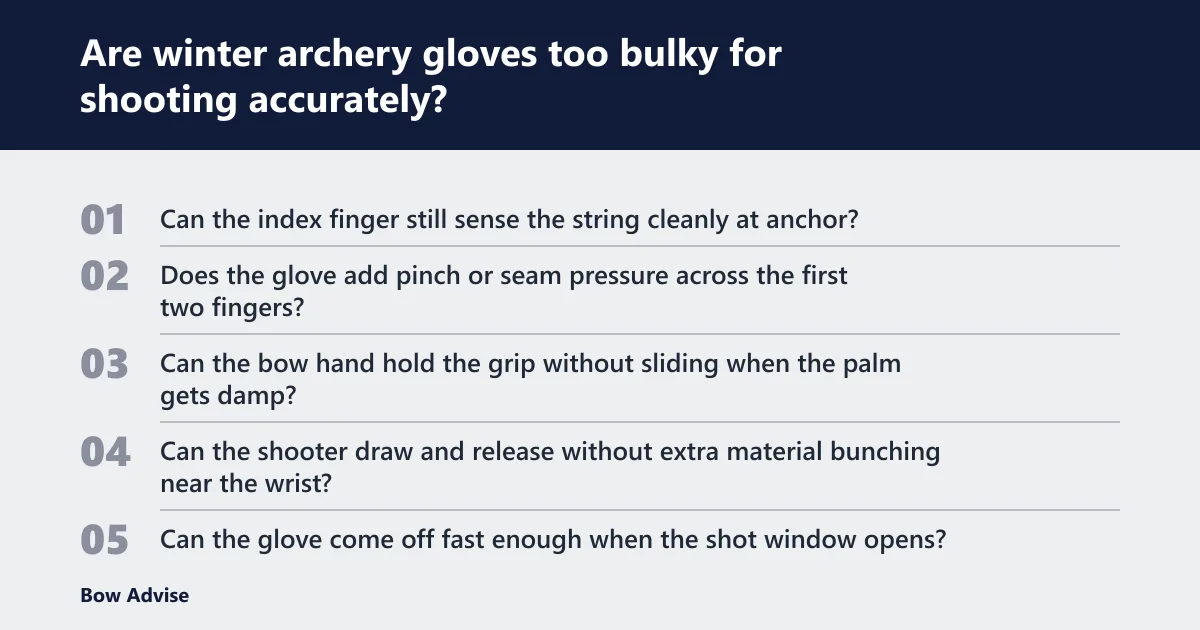
They can be. Bulky gloves often interfere with anchor point repeatability, reduce string feel, and create pinch around the finger pads. That does not mean winter gloves are unusable; it means thickness has to match the shot, the bow style, and the amount of time the hand stays still.
For recurve and barebow shooting, thickness at the string fingers is the first thing that hurts accuracy. For hunting, bulk usually becomes a problem when the hand needs to clear the string, settle on the grip, and hold steady without the palm shifting inside the glove.
What makes a glove actually shootable?
A shootable glove needs a usable dexterity rating, low-noise material, and enough grip to keep the bow hand secure in wet or cold weather. Reviewers often use a dexterity scale to describe how much finger feel remains, and that scale should be weighed against insulation, not ignored.
Silicone palm patches and anti-slip surfaces help on the bow hand. On the string hand, the bigger question is fit: if the fingers are loose, seam pressure rises and string feel drops. If the glove is too tight, circulation suffers and the hand gets colder faster.
Dexterity checks that matter
- Can the index finger still sense the string cleanly at anchor?
- Does the glove add pinch or seam pressure across the first two fingers?
- Can the bow hand hold the grip without sliding when the palm gets damp?
- Can the shooter draw and release without extra material bunching near the wrist?
- Can the glove come off fast enough when the shot window opens?
Should I use glove liners, insulated gloves, or mittens for archery?
Use liners for light cold, insulated gloves for colder sits, and mittens or a muff for extreme cold. The best answer is often a layered system: merino liner first, insulated glove second, and a quick-access warmth layer for waiting. That stack gives more control than one oversized glove.
Merino liners are the cleanest choice around 40°F and above, and they work below 40°F under a warmer outer layer. Insulated gloves are better when the shooter is waiting more than shooting. Mittens and muffs are best when warmth is needed between brief shots.
Failure-case checklist
- Numb index finger during anchor or release
- Poor string feel from thick fingertips
- Seam pressure on the string-hand pads
- Noisy fabric that catches attention in a treestand
- Bulk that blocks a consistent grip or release
- Wet-weather slippage on the bow hand
How warm can archery gloves be before they hurt bow feel?
Warmth becomes a problem when insulation starts hiding the string, the anchor, or the grip. There is no single universal limit, but in practice a glove that feels fine for still hunting may be too thick for recurve shooting or for a clean finger release.
That is why the best systems separate the bow hand from the string hand. The bow hand can tolerate more warmth and grip texture. The string hand usually needs the thinnest workable layer, even if that means adding a muff between shots.
Why thickness changes the shot
Thicker gloves can shift the hand position by a few millimeters, which is enough to change anchor consistency on a recurve or barebow setup. They can also reduce tactile feedback, making it harder to sense whether the string is settled correctly before release.
A common first-timer mistake is buying one heavily insulated glove for everything, then finding out the index finger goes numb anyway while the anchor feels vague. The better move is to choose the lightest setup that still preserves heat for the longest likely pause between shots.
What gloves work best for late-season bowhunting?
Late-season bowhunting usually works best with quiet insulated gloves that balance warmth, low noise, and enough dexterity to handle the bow safely. For many stationary sits, the Traverse-style range of 25-45°F is the practical zone, while colder conditions push hunters toward heavier insulation and backup warmth.
The best hunting glove also needs a calm exterior. Fleece, brushed stretch fabric, and softshells are usually better than loud shells. Merino underlayers help when temperatures dip further, but the outer glove still has to stay quiet in the stand.
Two common cold-weather scenarios
Suppose a hunter sits in a tree stand at 28°F with light wind and has to wait 45 minutes for the next shot opportunity. A thin liner alone will not keep the hand usable. A quiet insulated glove with decent dexterity is the better choice, even if it is not ideal for target feel.
Picture a target archer shooting indoors and then stepping outside into 35°F air for a few ends. A merino liner may be enough for the shooting hand, especially if the bow hand stays active and the round is short. That same liner is also the best base layer if a heavier glove is added later.
Do cold weather archery gloves need anti-slip grips?
Yes, if the glove is used for hunting or wet-weather shooting. Anti-slip surfaces improve bow-hand security and help the riser stay put when the palm is cold, damp, or stiff. They matter less for pure string feel than for keeping the bow from shifting under pressure.
Silicone palm patches and similar grip treatments should be quiet and thin. If the grip material is too stiff, it can add noise and make the hand feel clumsy. The goal is control, not a thick rubberized palm.
Noise, scent, and material tradeoffs
Synthetic gloves often dry faster and can be warmer for their weight, but they may be noisier than merino in some builds. Merino is quieter and better for odor control, which helps in the woods, though it usually needs help from insulation once the temperature drops.
For treestand use, the best exterior materials are soft, brushed, or fleece-like rather than crisp or rustly. That is one reason hunting gloves with DWR-treated softshell exteriors are common in colder setups.
What should I look for in winter gloves for recurve archery?
Recurve archers should look first at fingertip thickness, seam placement, and how the glove changes anchor feel. Warmth matters, but a recurve glove that hides the string or shifts the drawing fingers is not a good match, even if it feels comfortable in the hand.
For recurve and barebow, fit over the string-hand fingers is more important than general palm insulation. A snug, thin glove or liner that avoids extra fabric at the fingertips is usually the better path than a loose insulated glove.
Fit and comfort notes
Sizes should avoid pressure points without leaving dead space at the fingertips. Pre-curved patterns can help keep material from stacking at the joints. Adjustable straps are useful, but they should not create a bulky closure where the wrist needs to bend naturally.
Touchscreen-compatible fingertips are fine as a convenience feature, but they are not a shooting feature. They matter for checking a phone or GPS in the field without stripping off a glove, which is useful in cold weather but secondary to fit and feel.
Are touchscreen gloves good for bowhunting and archery practice?
They are useful, but only as a convenience. Touchscreen fingertips help with phone or GPS use without removing the glove, which is helpful on cold days. They do not replace warmth, string feel, low noise, or a secure grip.
If a touchscreen tip adds bulk to the drawing fingers, it can hurt anchor consistency. For that reason, touchscreen compatibility should be treated as a bonus feature, not a deciding factor for a shooting glove.
PavinCrafter Leather Archery Finger Tab for Left Hand Recurve Bow: best for left-hand recurve control
- Full-grain leather protects drawing fingers
- Adjustable strap customizes fit securely
- Handmade for precise left-hand control
This is for left-hand recurve shooters who want a simple finger-tab style option with a leather face and an adjustable strap. Based on the spec sheet and owner feedback patterns, the appeal is precise finger control without the thickness of a winter glove.
The main strength is predictable string contact. Full-grain leather protects the drawing fingers, and the adjustable strap helps secure the fit. The drawback is obvious for cold weather: it is not a warmth-first solution, so it needs a liner or another hand-warming layer when temperatures drop.
Bear Archery Leather 3 Finger Traditional Archery Shooting Glove, Medium, Black (ASG101M): best for traditional shooting feel
- 100% full-grain leather construction
- Adjustable Velcro wrist strap for secure fit
- Ambidextrous design for left- and right-handed archers
This glove suits traditional archers who want a straightforward three-finger design and a secure wrist strap. The 100% full-grain leather construction and ambidextrous design make it a sensible option for classic shooting setups where string feel matters more than heavy insulation.
The secure Velcro wrist strap helps with fit, which matters when cold air tends to make fingers less responsive. Its drawback is the same one that affects most leather shooting gloves in winter: leather alone does not solve long, still hunts in cold wind, so it is better as a tactile layer than a deep-winter system.
Palmyth Men’s Hunting Gloves for Cold Weather and Winter Camo Glove: best for quiet hunting dexterity
- 2-cuts design preserves fingertip dexterity
- Synthetic leather palm adds durability
- Brushed stretch fabric balances warmth and fit
This is aimed at hunters who want more warmth than a liner but do not want a noisy, overbuilt glove. The 2-cuts design preserves fingertip dexterity, while the synthetic leather palm adds durability and grip control for bow handling.
The brushed stretch fabric is the key feature here because it balances warmth and fit better than stiff fabrics. The honest drawback is that it is still a glove, not a mitten system, so severe cold will eventually demand extra warmth or a hand muff.
MARKEEP Archery Gloves 2 Packs, Shooting Hunting Three Finger Leather Guard: best budget backup pair
- Three-finger design with anti-slip pads
- Adjustable Velcro wristbands ensure secure fit
- Two-pack allows easier cleaning and replacement
This is the budget choice for archers who want a spare shooting glove or a low-cost backup in the gear bag. The three-finger leather design with anti-slip pads is useful when a shooter wants grip help without moving to a bulky insulated glove.
The two-pack makes replacement simpler, which is practical for a glove that sees hard use. The drawback is the usual one for low-cost leather shooting gear: the fit and finish may not feel as refined as a more carefully built option, so it is best as a value buy rather than a premium cold-weather system.
Which one should you buy

If the main use is recurve range sessions, start with a thin leather tab or a merino liner, then add warmth only if the fingers start to go dull. If the main use is late-season bowhunting, choose a quiet insulated glove with a grippy palm and enough room for a liner underneath.
For extreme cold, skip the idea of one heavy glove and build a system around a liner plus muff or mitten backup. That approach keeps the shooting hand ready while protecting the hands during long pauses.
Buy by need
- Best for recurve range sessions: PavinCrafter or Bear Archery, because both keep finger feel higher than a thick winter glove.
- Best for late-season bowhunting: Palmyth, because it keeps better dexterity than heavy insulated options while still adding warmth and quiet fabric.
- Best for a budget backup: MARKEEP, because the two-pack works well as a spare or a light cold-weather option.
- Best for very cold sits: a liner-plus-insulated-glove system, with a muff or mitten nearby for breaks between shots.
When to skip gloves and use a hand-warming system instead
If the temperature is low enough that the shooting hand goes numb between opportunities, a glove alone is the wrong answer. Add a muff, chemical warmer, or mitten backup system and use a thinner glove inside it. That keeps the shot hand usable without forcing extra bulk onto the string fingers.
Frequently asked questions
What are the best archery shooting gloves for cold weather?
The best cold-weather archery gloves are the ones matched to the shot. Thin leather or merino-based options work best for recurve and barebow, while quiet insulated gloves suit late-season hunting. Below extreme cold, a liner plus muff or mitten system is usually better than one thick glove.
Are winter archery gloves too bulky for shooting accurately?
They can be if the fingers are thick, the seams sit on the anchor point, or the palm material interferes with the grip. Accuracy usually falls when the glove hides string feel or changes hand position. A thinner, quieter glove is generally safer for consistent shooting.
Should I use glove liners, insulated gloves, or mittens for archery?
Use liners for 40°F and above, insulated gloves for colder sits, and mittens or a muff for extreme cold. The best option depends on whether the hand is shooting often or waiting for long periods. For archery, layered systems usually work better than a single heavy glove.
How warm can archery gloves be before they hurt bow feel?
Once a glove gets thick enough to hide the string or alter the anchor, bow feel suffers. That point comes sooner for recurve and barebow than for hunting. If finger feedback weakens or the draw hand starts shifting, the glove is too warm for that shot type.
What gloves work best for late-season bowhunting?
Quiet insulated gloves with a grippy palm are the best fit for late-season bowhunting. They should reduce heat loss during long waits without making the draw clumsy. For colder stands, pair them with a liner or carry a muff so the hands stay ready.
Do cold weather archery gloves need anti-slip grips?
For hunting and wet conditions, yes. Anti-slip palms or silicone patches help the bow hand hold steady and reduce shifting on the riser. They are less important than fit and noise control, but they are worth having when the hands are cold or damp.
What should I look for in winter gloves for recurve archery?
Look for thin fingertips, low seam pressure, and enough warmth to keep the drawing fingers responsive. Recurve shooters should prioritize anchor consistency and string feel over heavy insulation. A liner or a very thin shooting glove is usually better than a thick winter glove.
Are touchscreen gloves good for bowhunting and archery practice?
They are useful for phone or GPS use without removing the glove, which helps in cold weather. They are not a performance feature for archery. If the touchscreen tip adds bulk to the fingers or makes the glove noisier, it is the wrong tradeoff.