Do You Need a Finger Guard for Archery? Essential Guide
Most recurve and traditional archers are likely to need finger protection once draw weight reaches about 25–30 lb, while compound bows commonly use a release aid rather than a finger guard. Without it, string pinch, numb fingertips, and a sloppy release can build fast during longer sessions. This guide breaks down finger protection by bow type, draw weight, and shooting time so you can pick the lightest setup that still feels clean and comfortable.
Do you need a finger guard?

The short answer is yes for many recurve and traditional setups, but not for every bow and not for every session. Finger protection cuts string pressure and helps keep the release steady. The goal is not maximum padding. It is the least protection that still lets the string leave cleanly and your fingers stay comfortable.
The quick answer by bow type
Recurve archers commonly use a finger tab, and beginner guides treat tabs as essential for recurve shooting. Traditional archers often use a glove, though some styles favor a thumb ring or other finger protection depending on how the bow is shot. Compound archers typically use a mechanical release aid, so a finger guard is usually the wrong tool for that setup.
When finger protection becomes worth it
Finger protection becomes worth it as soon as string pressure starts to change your release. That often happens sooner with higher draw weight, longer practice sessions, or cold weather. If your fingers start tingling, your anchor shifts, or you begin plucking the string, protection is no longer optional in practical terms.
What counts as minimum protection
Minimum protection means the smallest setup that still protects the skin and preserves string feel. For many recurve shooters, that is a thin tab. For some traditional archers, it is a properly fitted glove. Tape can work for short sessions or as backup, but it should not replace proper gear for regular shooting.
Finger protection decision matrix
Use this table to match protection to bow type, draw weight, and session length. When more than one row applies, choose the stronger recommendation. If pain or numbness appears, move up one level of protection immediately.
| Factor | Bare fingers | Tape | Tab | Glove | Release aid | Recommended protection |
|---|---|---|---|---|---|---|
| Bow type | Light traditional bows only | Short-term backup | Common on recurve bows | Common in traditional archery | Typical on compound bows | Recurve: tab; traditional: glove or style-specific finger protection; compound: release aid |
| Draw weight | Lower weights only | Very light draw only | Often needed by 20–28 lbs on adult beginner recurves | Useful when pressure rises and string feel still matters | Not tied to finger pressure | At 25–30 lb, most shooters should move to proper protection |
| Session length | Very short practice | Brief sessions or emergency backup | Best for normal practice | Good for longer traditional sessions | Typical for compound shooting | Longer sessions call for tab or glove, not bare fingers |
| Cold-weather use | Poor choice | Poor adhesion risk | Works if fit allows a thin liner | Often better, especially with a thin liner | Common on compound setups | Glove if warmth matters, tab if clean release matters more |
| Pain level | Acceptable only with no pain | Temporary relief | Good next step for finger soreness | Good next step for finger soreness | Stops finger loading on compound | Any numbness, sharp pain, or lingering soreness means upgrade protection |
| Recommended protection | Only for very light, short practice | Backup only | Best fit for most recurve beginners | Best fit for many traditional archers | Best fit for compound archers | Choose the least protection that still feels clean and controlled |
Red flags
Stop shooting and change gear if your fingertips go numb, if string slap starts to bruise the hand, or if your release collapses and the string slips off the fingers. Pain that appears quickly, worsens each end, or changes your anchor is a sign that your setup is too light, too small, or both.
Tab, glove, or tape?
A finger tab, shooting glove, and archery finger tape all reduce pressure, but they do not solve the same problem in the same way. Tabs give structure for a steady release. Gloves add coverage and warmth. Tape is the lightest option and the least structured. Choose the one that fits your bow style and session length.
Finger tab basics
A finger tab is a small leather or synthetic pad worn on the drawing fingers. It is used mainly by recurve archers and supports a smooth, consistent release. Entry-level tabs often cost about $10–$30, which can make them a practical starting point for beginners who want more structure without a large purchase.
Shooting glove basics
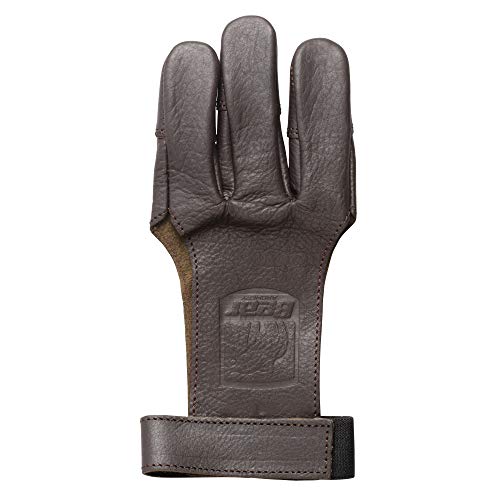
A shooting glove is finger protection for traditional archery. It is more common with traditional bows than with recurves, and it should fit without reducing string feel. A glove is useful when cold weather, longer sessions, or a simpler setup matters more than the structured feel of a tab.
When tape is enough and when it is not
Archery finger tape can work for short sessions or as backup protection. It should be checked for wear and adhesion because it loses grip and compresses quickly. Tape is not as structured as a tab, so it should not replace proper gear when draw weight rises, when practice runs long, or when release quality starts to slip.
Picture a beginner recurve shooter at about 24 lb doing 20 arrows after work. Tape may survive that session, but if the same shooter adds another 40 arrows the next day, the thin layer can start to shift, and finger comfort drops before form does. That is the point to move to a tab.
Do you need a finger guard for archery?
You need finger protection when the string load becomes enough to affect comfort or release, and that happens sooner for recurve and traditional bows than for compounds. The practical answer is yes for most beginner recurve shooters and many traditional archers, while compound archers generally need a release aid instead of a finger guard.
Can you shoot a recurve bow without finger protection?
Yes, but only in limited cases. A very light recurve at short distance may be manageable bare-handed for a few arrows, yet most adult beginner recurves are recommended at 20–28 lbs, and that range usually benefits from a tab. Bare fingers are a poor choice once the string starts to bite or the release gets rough.
Say a recurve is set at about 26 lb and a one-hour practice is planned. Bare fingers may feel fine for the first end, then the pressure builds and the release gets uneven. A thin tab gives enough cushion to keep the fingers calm without muting string feel.
Why recurves usually pair with a tab
Recurve bows need a clean finger release because the string leaves the hand directly, without a mechanical release aid. That is why tabs are the standard beginner answer. They spread pressure across the drawing fingers and help keep anchor and release more repeatable, especially as draw weight rises.
Beginner draw weight and finger comfort
For adult beginners, the common recurve starting range is 20–28 lbs. Youth beginners are advised to start around 10–16 lbs. Lower weight may allow bare fingers for a short time, but comfort and form should decide the setup, not pride. If the hand starts to feel hot, sore, or cramped, protection is doing its job.
Traditional archery finger protection
Traditional archery often uses a glove or other finger protection depending on style. Some shooters want more finger feel, while others want more coverage and warmth. The right choice depends on how the bow is shot, how long the session runs, and whether the string hand needs extra help with cold, pressure, or consistency.
Glove use in traditional styles
Traditional archers often reach for a shooting glove because it is simple and familiar. It can work well for field shooting, hunting practice, or casual target work. The key is fit: if the glove is too thick, the string feel drops and anchor consistency can suffer.
Thumb ring and style-specific needs
Some traditional styles use a thumb ring rather than a tab or glove. That choice depends on the release method, not on general comfort alone. The main rule is the same: use the least protection that preserves a clean release and does not distort the style you are shooting.
String feel versus coverage
Traditional archers often care about string feel more than thick padding, but coverage still matters when sessions get long or the weather turns cold. A glove with thin fingers may keep better feel, while a liner under the glove may solve cold-weather comfort without forcing a bigger size. Fit changes matter here.
Finger protection and beginner gear
A beginner archery kit usually includes a bow, arrows, arm guard, finger tab or glove, and a quiver. Starter budgets for essential gear are often around $165–$375, and a basic hip quiver can cost under $30. Finger protection is small in the budget, but it has a big effect on whether the bow is pleasant to shoot.
What belongs in a beginner archery kit
At minimum, a beginner should think about bow, arrows, arm guard, finger protection, and a quiver. The arm guard is not the same thing as finger protection. It protects the forearm from string slap, and a gear guide treats it as not optional because string slap can be painful and cause bruising.
Where finger protection fits in the budget
Finger protection usually sits near the low end of the budget, which is helpful because it should be replaced before it becomes unreliable. A tab is often the most cost-effective recurve choice, while a glove may be the better traditional choice if style and warmth matter more than structure.
Fit details that matter
Tab thickness changes how much string feel you keep. Plate size should cover the fingers without crowding them, and finger spacing should let the hook sit naturally. With gloves, a thin liner can change fit enough to affect release feel, so cold-weather sizing should be checked with the liner in place.
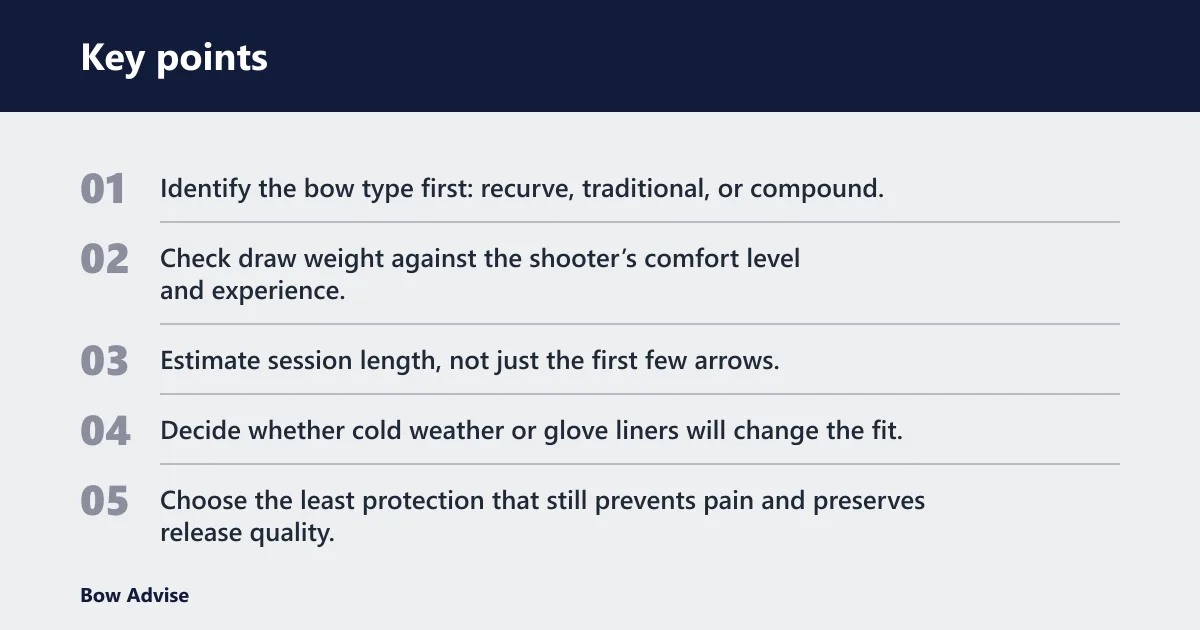
- Identify the bow type first: recurve, traditional, or compound.
- Check draw weight against the shooter’s comfort level and experience.
- Estimate session length, not just the first few arrows.
- Decide whether cold weather or glove liners will change the fit.
- Choose the least protection that still prevents pain and preserves release quality.
- Inspect the gear before each session for wear, compression, or loss of adhesion.
Maintenance cues
Replace a tab when the leather glazes, the stitching loosens, or the padding compresses enough to change the release. Replace gloves when seams open or the fingers stretch out. Replace tape when it peels, frays, or loses adhesion. Once the protection changes feel more than the bow does, it is overdue.
Frequently asked questions
Are finger tabs required for archery?
They are not required for every bow, but beginner guides treat them as essential for recurve archers. A tab is the default choice when the string is drawn directly with the fingers. If a setup uses a mechanical release aid, such as most compound bows, a tab is usually not the right accessory.
What is the difference between a finger tab and a shooting glove?
A finger tab is a small pad for the drawing fingers and is used mainly by recurve archers to support a smooth, consistent release. A shooting glove covers the fingers more like normal handwear and is more common in traditional archery. Tabs usually give more structure; gloves usually give more coverage.
Is a finger tab better than tape for archery?
For regular shooting, yes. Tape can help for short sessions or as a backup, but it is not as structured as a tab and wears out faster. A tab gives better repeatability, better finger spacing control, and better protection when draw weight or shot count starts to climb.
What finger protection should a beginner use for archery?
Most beginner recurve archers should start with a finger tab. Many traditional archers do better with a shooting glove. The right answer depends on bow type, draw weight, and whether the shooter values a structured release or more hand coverage. For compound bows, a release aid is usually the correct tool.
What protection do traditional archers wear on their fingers?
Traditional archers often wear a shooting glove, though some styles use a thumb ring or another style-specific aid. The choice depends on the release method and how much finger feel the shooter wants to keep. Cold-weather layers can change the fit, so the protection should be checked with those layers on.