How to Choose a Thumb Ring for Traditional Archery
Pick the ring for your thumb draw, not your bow. Under-hook drawers usually need a deeper ring with a higher ridge, while a flatter thumb-draw profile often fits a lower, smoother ring. Size it so the thumb can flex without slipping or pinching. A poor match leads to string slip, pressure points, and a messy release.
What thumb ring fit should you choose?
A thumb ring shields the thumb pad from string pressure and sharp bowstring angles. In thumb draw technique, the thumb is the main string contact point, and the index finger wraps around the thumb to steady the shot. The ring should sit just behind the thumb knuckle and cover the thumb pad evenly so pressure spreads across the contact area instead of loading one edge.
Fit should lock behind the thumb knuckle
The first fit check is simple: the ring should sit behind the thumb knuckle and stay there when the hand relaxes. If it rides forward, twists easily, or has to be held in place by tension alone, the shape or size is wrong.
A secure fit should feel stable, not cramped. You should be able to close the thumb and keep a normal hook-over-thumb hold without numbing the joint or creating a hot spot at the knuckle.
The ring should cover the thumb pad evenly
The thumb pad is the area that needs protection during the draw. The ring should cover it fully so the string does not cut across a bare edge or load a small point. That matters more as bow weight rises.
If pressure lands on one side of the pad, the ring is either too narrow, too shallow, or shaped for a different draw style. Even contact is the goal.
What “secure but not constricting” should feel like
“Secure but not constricting” means the ring stays put during the draw, but the thumb still moves without swelling, tingling, or delayed release. It should not need force to put on, and it should not leave a deep line after a short session.
Suppose a size 22 ring slides on easily but rotates when the bow is loaded. That points to too much clearance around the knuckle or a shape that does not match the thumb. Taping a slightly oversized ring can help, but only as a stopgap, not a fix for the wrong shape.
How does draw style change the choice?
Thumb draw technique changes ring choice because the string load, anchor shape, and arrow control all sit on the thumb side of the hand. A ring that works for one thumb draw style can feel unstable in another, especially when the bow is heavier or the anchor is compact.
Korean-style thumb ring use adds one more step: the ring is rotated 90 degrees after insertion, then positioned behind the thumb knuckle. The arrow usually sits on the opposite side compared with a three-finger draw, so the ring shape has to support that hand angle without letting the string roll off early.
Thumb draw and arrow control
The thumb draw relies on the thumb as the main string contact point, with the index finger wrapping over the thumb to keep the string and arrow stable. That hook-over-thumb hold helps prevent the arrow from falling off, and it also supports the arrow during canting.
If the arrow shelf or nock point sits too high or the hand angle is off, the ring can seem “wrong” when the real issue is arrow control. The ring cannot fix poor alignment by itself.
Korean-style thumb ring orientation
That orientation changes how the ridge contacts the string and how the thumb pad is shielded.
A ring that feels fine in a relaxed grip can feel unstable once rotated. If the ring turns freely after insertion, the fit around the knuckle is usually too loose or the inner shape does not lock onto the thumb.
How bow weight changes pressure on the thumb
Light to moderate draw weights are more forgiving. Heavy-draw traditional bows put more pressure on the thumb pad and push harder against the ring’s contact points, so material stiffness and shape matter more as weight rises.
When the bow weight climbs, small fit problems show up faster: rotation, numbness, and string pinch. That is why a ring chosen for comfort at low weight may feel unstable on a stronger bow.
Thumb ring decision matrix
| Product | Badge | Best for | Price | ||
|---|---|---|---|---|---|
 | DEWIN Archery Thumb Ring Handmade Brass Leather Finger GuardDEWIN | Our pick | Adjustable brass · no rating · black leather wrap | $13.99 Price as of 2 Nov 2026 | View |
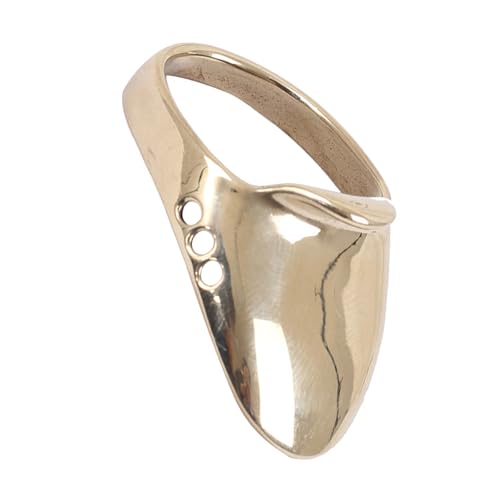 | Brass Archery Thumb Ring Finger Guard for Controlled StringVANZACK | Also great | Polished brass · no rating · single-finger design | $16.59 Price as of 2 Nov 2026 | View |
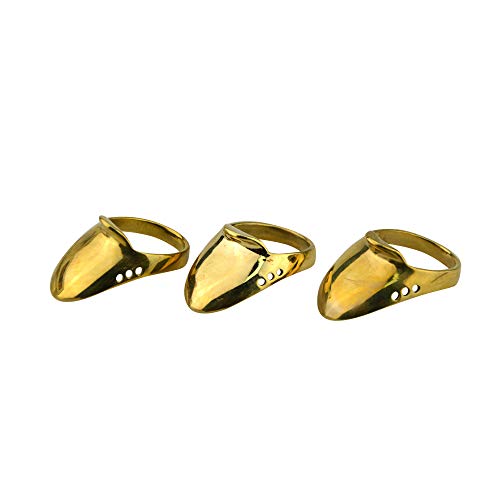 | SHARROW Archery Thumb Ring Copper Thumb Ring TraditionalSHARROW | Upgrade pick | 23mm brass-steel · no rating · 8 sizes | $11.99 Price as of 2 Nov 2026 | View |
| Bow type | Draw weight range | Ring material | Fit cue | Common failure mode |
|---|---|---|---|---|
| Beginner traditional recurve or light Asian bow | 20–30 lb | Leather thumb guard or softer adjustable ring | Secure behind the knuckle, easy on and off, no thumb numbness after a short session | Rotation from a loose fit; inconsistent anchor from over-tightening |
| Intermediate thumb-draw practice bow | 30–40 lb | Rigid brass or brass-steel ring | Ring stays fixed during the draw and covers the thumb pad evenly | String pinch if the ridge is too shallow; release inconsistency if the ring shifts |
| Heavy-draw traditional bow | 40 lb and up | Stiffer rigid ring with a stable inner shape | Fits firmly around the thumb knuckle without squeezing circulation | Numbness, rotation, and release drag when the ring is too smooth or too small |
| Leather thumb guard versus rigid ring | Any, especially first-time users | Leather for adjustability; rigid for repeatable anchor | Guard bends with the thumb and can be fully adjusted | Less repeatable anchor than a rigid ring; more movement under higher draw weight |
That matrix is the shortest way to sort the choice. If the draw is light and the archer is still learning anchor discipline, adjustability matters more than stiffness. If the bow is heavier, stable shape and pressure spread matter more than softness.
What material should you buy?
Material changes feel, stiffness, and durability. Asian bows and other traditional setups often use rigid brass, brass-steel, or similar hard materials for repeatable release, while leather-based guards trade some rigidity for easier adjustment and more thumb mobility.
Asianbows notes that thumb rings come in different sizes and materials, and that matters because the same size in two materials can feel very different on the thumb. A ring that is too smooth, too soft, or too stiff for the draw weight may create a release problem that looks like a sizing problem.
Rigid ring materials and what they change
Brass rings are common because they hold shape and give a firm contact surface. Brass-steel or steel-backed designs add wear resistance, which helps if the ring will see repeated practice with the same anchor and bow weight.
A polished surface can feel cleaner at release, but too much smoothness can let the ring roll if the fit is loose. A hard ring also shows fit errors faster than leather does.
Leather thumb guards for adjustable comfort
A leather thumb guard is a good option when the archer wants protection without a rigid feel. Odinson Archery describes its leather thumb guard as fully adjustable and frames it as giving dexterity and protection.
That makes sense for a first-time thumb-draw archer, a rule-limited setup, or anyone who wants more thumb movement while learning the anchor. The tradeoff is less rigid control than a hard ring under load.
When a softer material helps more than a harder one
Soft or adjustable material helps when the thumb shape is still changing, when the archer is new to the thumb draw, or when the bow weight is still low enough that a rigid ring feels excessive. It can also make a clearer first step before moving to a fixed ring.
Picture a beginner with a 28 lb bow and a thumb that swells slightly after ten arrows. A rigid ring sized for the morning may feel tight later in the session, while an adjustable guard gives room to keep shooting without forcing a bad fit.
Our picks by need
First-time thumb-draw archers: DEWIN adjustable brass leather ring
Based on the published details, this DEWIN option fits a first purchase better than a fixed-size ring because it is adjustable and uses a leather wrap to spread bowstring pressure. That can help a new thumb-draw archer settle into anchor work before moving to a stiffer ring.
Its drawback is the same thing that helps it: the adjustable structure may not lock the thumb as firmly as a true rigid ring on a stronger bow. It is a practical start, not the strongest choice for heavy draw weights.
Consistent training and form work: SHARROW 23mm thumb ring
This SHARROW ring fits the training category well because the size range gives more room to match thumb shape, and the brass-stainless build should hold up under repeated practice. That kind of fixed structure suits archers who want a repeatable anchor and cleaner release work.
The downside is predictability: a rigid ring leaves less room for comfort adjustments than a leather guard, so the wrong size will feel wrong fast. The 23mm option is useful only if the thumb and knuckle shape match it closely.
Heavier traditional bows: VANZACK polished brass ring
The VANZACK ring makes sense for archers who want a hard, repeatable surface and a wear-resistant brass build. A polished finish can help the string move cleanly, which matters more when draw pressure rises and release drag becomes obvious.
The drawback is that a polished, single-finger design can still feel unforgiving if the ring does not match the knuckle well. It is best for archers already comfortable with thumb draw mechanics and anchor control.
More thumb mobility: DEWIN adjustable brass leather ring
For archers who want more thumb movement, a leather-based design is the safer fit because it balances protection with dexterity. That can matter when the draw style is still changing or when the hand position needs frequent small corrections.
The tradeoff is less repeatable rigidity than a hard ring. If the goal is the most consistent anchor under rising draw weight, a rigid ring is usually the next step.
Is a thumb ring better than a thumb guard?
A rigid thumb ring is the better buy when the archer wants a fixed anchor point, repeatable release behavior, and a ring that stays stable behind the knuckle under real draw pressure. A leather thumb guard makes more sense when adjustability, dexterity, or a softer first step matter more than maximum rigidity.
Odinson Archery’s adjustable leather guard is a useful clue here: fully adjustable gear is easier to fit, but rigid gear usually gives the more consistent release once the technique is stable. Rule set, comfort, and draw weight all affect the right answer.
When a rigid ring is the better buy
Choose a rigid ring when the bow weight is high enough that the thumb needs a fixed contact surface, or when the goal is a consistent anchor for regular practice. A hard ring also works better when the archer wants a repeatable shape for the thumb knuckle and pad.
Rigid rings are the stronger option for archers who already know their thumb-draw pattern and want less movement in the release phase.
When a leather thumb guard makes more sense
Choose a leather guard when the archer is learning the thumb draw, needs more adjustability, or wants a flexible option for rule-limited use. It can protect the thumb while leaving room to change fit as the hand settles into the technique.
That flexibility matters because thumb ring fit is often difficult for beginners. A guard reduces the penalty for small fit errors.
How rules, dexterity, and comfort affect the choice
Some traditional setups and local rules may allow one style more easily than the other, so the gear choice should follow the discipline, not only the hand. Dexterity also matters: if the thumb needs more movement to settle on the arrow shelf or maintain cant, a softer guard may be the better first choice.
Comfort is useful only if it does not hide a bad fit. A loose guard can feel easy while creating poor release control.
Why does my thumb ring slip?
Thumb ring slip usually comes from one of three places: a poor fit around the thumb knuckle, a ring shape that rotates under load, or an arrow and anchor setup that makes the ring seem unstable. Any of those can make the release feel inconsistent.
Because the index finger wraps around the thumb to stabilize the shot, a problem at the hook-over-thumb hold can show up as ring slip even when the ring size is close. The cause is not always the ring itself.
Fit problems around the knuckle
If the ring sits too loosely behind the thumb knuckle, it can slide forward or twist during the draw. If it is too tight, it may numb the thumb and still rotate because the hand cannot settle naturally.
Fit around the knuckle affects stability and release consistency more than appearance does. That is why the knuckle check should come before any style preference.
Rotation from poor ring shape or orientation
Some rings rotate because their inner contour does not match the thumb, and some rotate because the ring is not oriented correctly for the draw style. Korean-style use depends on that ninety-degree rotation after insertion, so a ring that sits badly in that position can feel unstable immediately.
If the contact point is wrong, the ring may pinch one side of the thumb pad and leave the other side floating. That creates pressure spikes and a rough release.
Arrow setup and anchor issues that can mimic fit problems
An arrow that sits too far from the shelf edge, or an anchor that shifts from shot to shot, can mimic ring slip. The ring may be fine while the bow hand or string hand position is moving.
A common first-timer mistake is to keep changing ring size when the real issue is inconsistent thumb hook pressure or a poor arrow hold. Fix the hand position before buying a second ring.
Mistakes to avoid
Buy by fit and draw style, not appearance. A polished brass ring may look right and still fail if the knuckle shape does not match or the draw weight is higher than the ring can handle.
Do not ignore draw weight. Thumb pressure, numbness, and string pinch usually rise with load, so a ring that feels fine at low weight may stop working when the bow gets heavier.
- Do not choose a ring that blocks a stable anchor behind the thumb knuckle.
- Do not confuse a thumb ring with a release aid; they work differently.
- Do not expect a leather guard to behave like a rigid ring under higher draw weight.
- Do not keep using a ring that causes numbness, even if the release looks clean.
- Do not skip arrow shelf and thumb-hook checks when the ring seems to slip.
Frequently asked questions
What is a thumb ring in archery?
A thumb ring is a protective ring worn on the thumb for thumb draw shooting. It shields the thumb pad from string pressure and sharp angles, and it gives the archer a more repeatable contact point. The right ring must fit securely so the thumb can anchor consistently without pinching.
How do I choose the right size thumb ring for archery?
Choose the size that sits securely behind the knuckle without constricting the thumb. It should not slide easily, but it should also not cause numbness or pressure spikes. If a ring is slightly large, taping can help for a temporary fit, though the shape still needs to match the thumb.
What material is best for a thumb ring in traditional archery?
Brass and brass-steel are common for rigid rings because they hold shape and suit repeatable release work. Leather works better when adjustability and thumb mobility matter more. The best material depends on bow weight, draw style, and whether the archer needs a fixed anchor or a softer fit.
Is a thumb ring better than a leather thumb guard?
A thumb ring is better when the goal is a fixed, repeatable anchor and a firmer release surface. A leather thumb guard is better when the archer needs more adjustability, more dexterity, or a first-step option while learning. The right choice depends on the draw and the bow weight.
What is the difference between a thumb ring and a release aid?
A thumb ring is worn on the thumb and is part of a thumb draw setup in traditional archery. A release aid is a separate device that holds and releases the string for other bow styles. They solve different problems and are not interchangeable.