Do Archers Need Safety Glasses? What to Wear at the Range
Most archers do not need special safety glasses at a normal range, but ANSI Z87.1-rated eye protection is the safer choice whenever string slap, broken arrows, nocking-point failure, or debris from a bow or target could happen. Eye injuries can cost far more than a cheap pair of glasses, and they can stop a shooting session fast. This guide gives a direct decision path for glasses-wearing archers, plus the safest eyewear setup for recurve, compound, indoor, and outdoor shooting.
When to choose safety glasses over regular eyewear

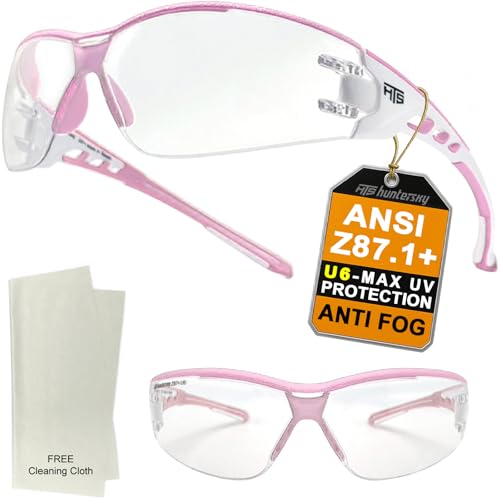

Most of the time, archers can shoot with regular prescription glasses if the range has no eyewear rule and the setup is low risk. That does not make ordinary eyeglasses impact-rated protection. When string slap, a broken arrow shaft, or target bounce-back is possible, true safety eyewear is the better choice.
Regular glasses help you see the target. They do not promise side coverage, impact resistance, or a frame that stays fixed under movement. That difference matters most when a string hits the face, an arrow fails near the rest, or a fragment comes back from the boss or hardware.
When a range may require eye protection
Some archery ranges set their own safety rules, and those rules can be stricter than the minimum gear a shooter would choose on personal judgment. If the range requires eye protection, comply with that rule first. Range staff can also ask for specific eyewear when a lane setup, target style, or class format changes the risk profile.
ANSI Z87.1 eye protection matters because it is a commonly cited impact-rating standard for range-grade eyewear. That does not mean every pair with a sporty look is enough. The lens and frame need to be made for impact, not only for glare reduction or style.
Which shooting situations raise eye risk?
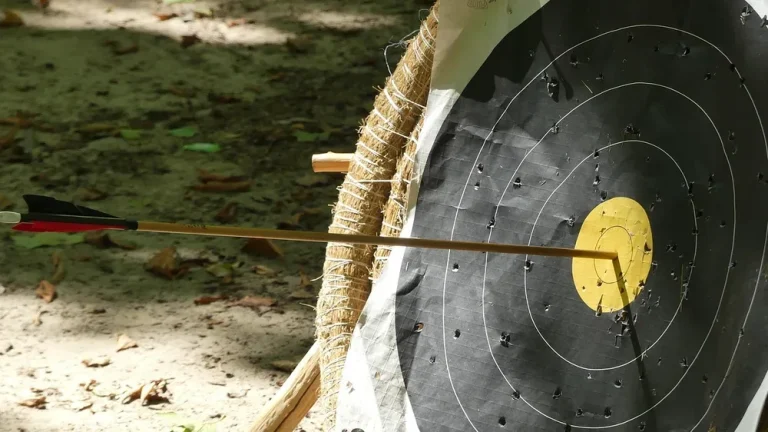
Three common risks need separate attention. String slap can hit the face or frame. Broken arrow shafts can splinter near the riser, rest, or target. Bounce-back from a hard target face, backstop, or hardware can send debris toward the shooting line. These risks are not the same, and the safest eyewear choice can change with each one.
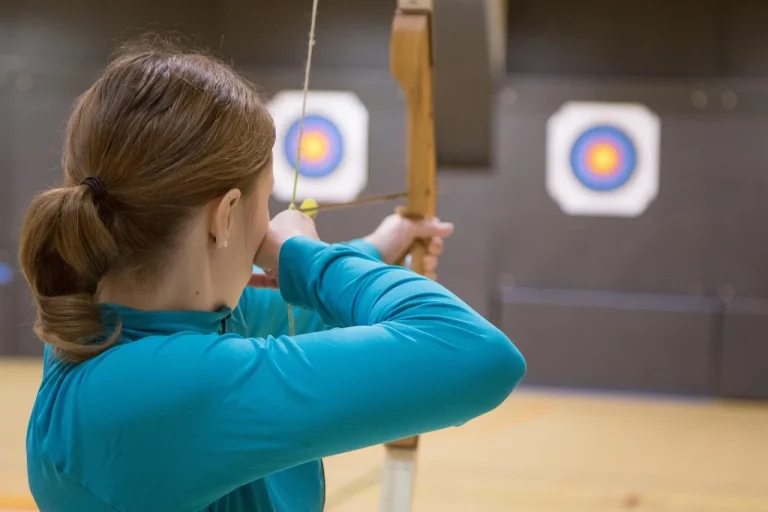
Say your recurve string has a tall nocking point and your glasses sit close to your cheekbone. If the string brushes the frame at full draw, a snug wrap-around safety lens becomes more useful than a fashion frame with thin temples. The issue is contact and side exposure.
Range eyewear decision table
This table separates shooter type, range type, vision correction, and risk level so the eyewear choice matches the actual setup. Start with the riskiest likely problem, then choose the least risky eyewear that still covers it well.
| Shooter type | Range type | Prescription need | Risk level | Safest eyewear choice | What to avoid | Quick pre-shot eyewear check |
|---|---|---|---|---|---|---|
| Recurve beginner | Indoor lane | No prescription | Moderate | Clear, wrap-around safety glasses with polycarbonate lenses and anti-fog lens coating | Loose fashion frames, scratched lenses, mirrored tints | Lens clean, temples secure, no fog, no contact with face at anchor |
| Recurve shooter | Outdoor field or club range | Prescription glasses | Moderate to higher | Wrap-around safety glasses that fit over regular glasses, or prescription safety eyewear with an Rx holder clipped onto the nose piece | Thin side arms, untethered eyewear, dark tint in changing light | Frame stays centered, side coverage is complete, no slip during draw |
| Compound shooter | Indoor lane | Prescription need | Higher if string clearance is tight | Prescription safety inserts inside an impact-rated frame, or contact lenses with safety glasses on top when needed | Regular eyeglasses with hard edges near the string path | Check peep alignment, anchor clearance, and lens position at full draw |
| Compound shooter | Outdoor range | No prescription | Moderate | ANSI Z87.1-rated wrap-around safety glasses with clear or amber/yellow lenses, depending on light | Polarized lenses if they change sight picture or target contrast | Confirm no glare on the lens and no frame movement when the bow is raised |
| Any shooter | Hard-faced target or unknown target condition | Any | Higher | Impact-rated polycarbonate eyewear with side coverage and secure fit | Regular prescription glasses alone | Inspect for cracks, loose screws, and any lens distortion before the line |
The safest pattern is simple: normal prescription glasses may be fine for low-risk shooting, but they are not the same as impact-rated protection. If the range has hard targets, crowded lanes, or any chance of debris, move up to true safety eyewear.
Which lens and frame features matter most?
Polycarbonate lenses are the main feature to look for because they are a shatter-resistant material commonly used in prescription and non-prescription safety eyewear. For archery range use, that matters more than lens color or fashion frame shape. If the lens can take impact better, it gives a better margin when something goes wrong.
ANSI Z87.1 is the standard to look for when the goal is impact-rated eye protection. A frame may fit well and still fail the range-safety test if it is not built for impact. The safest choice combines rating, side coverage, and a stable fit.
Wrap-around coverage and snug fit
Wrap-around safety glasses can fit over regular glasses, which makes them useful for prescription wearers who do not want to give up their usual correction. The wrap shape adds side coverage, and that helps with string slap, fragments, and dust. A loose pair is a weak choice, even if the lens itself is impact-rated.
Fit matters because glasses that slide down the nose change the sight picture and can shift during the draw cycle. Low-profile frames help, but only if they stay clear of the string path and do not press into the face at anchor.
Anti-fog coating, scratch resistance, and side protection
Anti-fog lens coating helps indoors and in humid conditions, where heat from breathing and body movement can fog a lens. A fogged lens is more than an annoyance. It can change how the sight ring or target face appears, which makes a steady anchor less useful.
Scratch resistance is worth having because small scratches can scatter light and can make aiming less precise. Side protection is equally important. If the frame leaves the temple area exposed, it cuts into the reason for wearing safety eyewear at all.
Can I shoot in prescription glasses?

Yes, many archers shoot in prescription glasses, but the answer changes once impact protection enters the picture. Regular prescription glasses can correct vision, yet they do not automatically meet a range-safe impact standard. For higher-risk setups, use prescription safety inserts, prescription safety eyewear, or contacts paired with protective eyewear.
Prescription safety inserts versus prescription lenses
Prescription safety eyewear can use an Rx holder clipped onto the nose piece, which keeps the corrective lens inside an impact-rated frame system. Some shooters prefer that setup because it preserves eye protection while still matching the prescription. The trade-off is fit; inserts can affect spacing, optics, and how the frame sits on the face.
Prescription lenses made of polycarbonate were described as the best of both worlds in range discussions, and that fits archery well. They correct vision and add shatter resistance. Still, the frame needs to suit the shot string and the shooting position.
Contacts plus protective eyewear
Some shooters use daily disposable contacts at the range. That can widen the field of view and remove frame pressure points around the nose and ears. Contacts should not be treated as eye protection, though. If the setup calls for protection, wear safety glasses over them. (CDC)
Suppose a compound archer wears contacts for a clear peep picture but shoots on a lane where arrow fragments are a concern. The contacts solve vision correction. The safety glasses solve impact risk. One does not replace the other.
Fit problems that affect aiming
Glasses that slip, pinch, or sit crooked can change the anchor picture even if the lenses are optically good. A small drop at the nose can move the sight picture enough to matter. Look for stable nose support, enough room for the bridge, and side arms that do not interfere with the string path.
Reflections can matter too. Shiny lenses or strong glare on the inside surface can distract the eye at full draw. A matte frame finish and clean lens surfaces reduce that problem better than a flashy frame shape.
What should recurve and compound archers wear?
Recurve and compound archers face some of the same eyewear issues, but the risk profile is not identical. Recurve shooters often need room for string alignment and face contact. Compound shooters often need cleaner clearance around peep sight alignment, release hand position, and string travel. In both cases, impact-rated eyewear is the safer call when risk rises.
Recurve: string contact and face clearance
Recurve shooting can bring the string close to the face, so a frame that sits too far forward or too loosely can become part of the problem. A wrap-around safety frame with a secure fit is a practical choice. If the frame touches at anchor, change the frame or the setup before shooting more ends.
Legend Archery says arm guards are not required by rule, which is useful as a reminder that rule-required gear and smart protection are not always the same thing. Eye protection follows the same logic. A rule may not force it, but the risk may still justify it.
Compound: clearance, bounce-back, and target hardware
Compound archers should pay close attention to clearance around the string and release aid, because the face sits close to a precise anchor point. Broken arrow shafts near the rest and bounce-back from a hard target are also part of the risk picture. A lens that stays stable through the draw cycle is more useful than a lens that only looks sporty.
A common first-timer mistake is choosing dark wraparound sunglasses for an indoor compound lane. The shooter gets less glare, but also less target detail and a worse sight picture. Clear lenses are usually the better indoor choice.
Do lens tints help or hurt archery?
Lens color can help, but it is not always an upgrade. Clear lenses are commonly a good all-around choice for indoor and low-light shooting because they preserve visibility without changing the target face much. Amber or yellow lenses can help in glare or dim outdoor conditions, but they can also alter contrast perception.
Clear lenses for indoor and low-light use
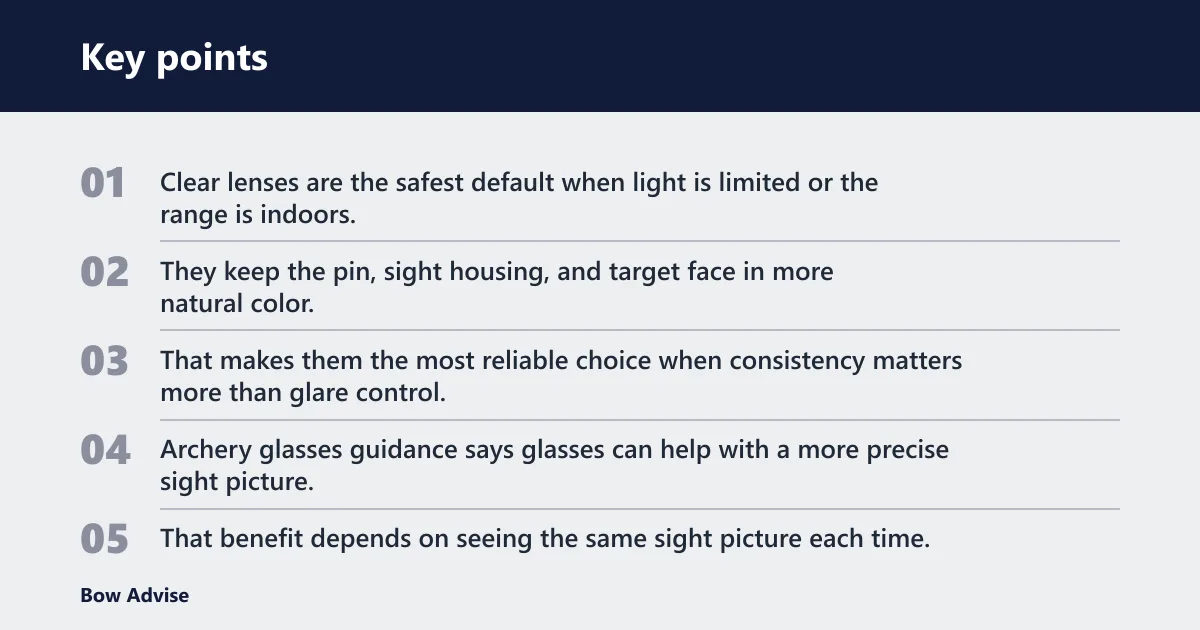
Clear lenses are the safest default when light is limited or the range is indoors. They keep the pin, sight housing, and target face in more natural color. That makes them the most reliable choice when consistency matters more than glare control.
Archery glasses guidance says glasses can help with a more precise sight picture. That benefit depends on seeing the same sight picture each time. Clear lenses usually interfere least with that goal.
Amber or yellow lenses for glare and contrast
Archery glasses advice recommends yellow or amber lenses for dim light. Those tints can reduce glare and make targets stand out better in some outdoor settings, especially when the background is flat or washed out. They are useful when the problem is contrast, not darkness alone.
Oakley Mil Spec M-frame glasses come in clear, orange, or yellow lenses, which shows how common this choice is for range use. The better question is not “colored or clear?” It is “what light condition am I actually shooting in?”
When polarized lenses can be a bad fit
Do polarized lenses work for archery or hurt aim? They can do either, depending on the sight picture. Polarization cuts glare, but it can also change how reflective surfaces, target faces, and sight windows appear. For some archers, that change is distracting enough to hurt consistency.
Use polarized lenses only if they do not change the way the pins, scope, or target appear at full draw. If the image feels different from one lane or one angle to the next, switch to clear or non-polarized amber lenses instead.
How do you stop glasses from fogging?
Fogging usually comes from heat, humidity, and a frame that traps warm breath near the lens. Anti-fog lens coating helps, and so does a frame with better airflow. The goal is stable vision from the first arrow to the last, not constant lens wiping between ends.
Anti-fog coating and ventilation
Anti-fog lens coating is one of the simplest upgrades for indoor or humid conditions. It helps the lens stay clear when breathing rate rises after a walk to the line or repeated drawing. Ventilation around the frame matters too, because trapped moisture will fog any lens faster.
Wrap-around safety glasses can help with coverage, but very tight wraps may trap heat if they sit too close to the skin. That is why fit and ventilation need to be balanced, not chosen separately.
Frame fit, sweat, and humidity
Hot weather and sweat can make glasses slip down the nose, which creates a second problem after fogging. A slipping frame breaks the sight picture and can move at release. Look for nose pieces that grip without digging in, and choose a frame that keeps its position when the bow is raised.
One shooter reported unburned powder and brass hitting their lenses, which is a reminder that tiny debris can reach the face when conditions are busy. Archery usually throws different debris than firearms, but the lesson is the same: a lens needs to stay on the face and stay intact.
Quick pre-shot eyewear check
- Clean both lenses and check for scratches that blur the target.
- Confirm the frame is centered and not sliding on the nose.
- Look for side coverage at the temples and around the eyes.
- Draw the bow carefully once and confirm there is no frame contact.
- Check for fog, glare, or reflections before stepping to the line.
Frequently asked questions
Are safety glasses required at archery ranges?
Not always. Some ranges require them, while others leave the choice to the shooter unless a class, target type, or facility rule says otherwise. If the range has a rule, follow it. If it does not, choose based on risk: string slap, broken shafts, and bounce-back all justify stronger eye protection.
Can I shoot archery in my regular prescription glasses?
Yes, if the range allows it and the risk is low. Regular prescription glasses correct vision, but they are not the same as impact-rated protection. If there is any chance of string contact, broken arrows, or target debris, use ANSI Z87.1-rated eyewear or a protective frame system.
Are shooting glasses better than normal eyeglasses for archery?
Yes, when the glasses are truly impact-rated and fit well. Normal eyeglasses may help you see, but they do not necessarily protect the eyes from impact or side debris. Polycarbonate lenses, wrap-around coverage, and a stable frame make shooting glasses the safer option for higher-risk archery setups.
What kind of glasses should I wear for indoor archery practice?
Clear lenses are usually the best choice indoors because they preserve target detail and do not alter color much. If fogging is a problem, choose anti-fog lens coating and a frame with some airflow. If you wear prescription lenses, look for a protective frame or safety insert system.
Do polarized lenses work for archery or hurt aim?
They can help with glare, but they can also change how the target, sight housing, or reflective surfaces look. That matters if the lens makes the sight picture feel different from lane to lane. If that happens, switch to clear or non-polarized amber lenses for a steadier aim.
What are the best glasses options if I wear prescription lenses?
Prescription safety eyewear, prescription safety inserts, or contacts paired with protective eyewear are the main options. Wrap-around safety glasses can fit over regular glasses, and some shooters prefer prescription lenses made of polycarbonate. The best choice is the one that keeps correction, impact protection, and fit working together.