Archery Protective Gear for Left-Handed Shooters
Left-handed archers should choose protective gear by draw-hand orientation first: glove or finger tab for the right hand, armguard for the right forearm if the bow is held in the left hand, and enough clearance for the string path. Wrong orientation or poor fit can cause string slap, restricted release, and gear that shifts during the shot. This guide covers fit checks, hand orientation, and the most common buying mistakes for recurve and traditional shooters.
Left-handed archers should choose protective gear by draw-hand orientation first: glove or finger tab for the right hand, arm guard for the right forearm if the bow is held in the left hand, and enough clearance for the string path. Wrong orientation or poor fit can cause string slap, restricted release, and gear that shifts during the shot. This guide covers hand orientation checks, fit checks, and the most common buying mistakes for recurve and traditional shooters.
What makes gear left-handed?
Left-handed archery gear follows the drawing hand, not the hand that holds the riser. A left-handed bow is held in the right hand and drawn with the left, so the maker’s RH/LH label should match that setup. Eye dominance can affect aiming preference, but it does not automatically decide handedness.
Left-handed bow orientation
A left-handed bow is the reverse of a right-handed bow. The naming rule follows the drawing hand, not the hand holding the grip. That matters for rest placement, sight side, and riser setup, so the bow, accessories, and protective gear should all match the same handedness before ordering.
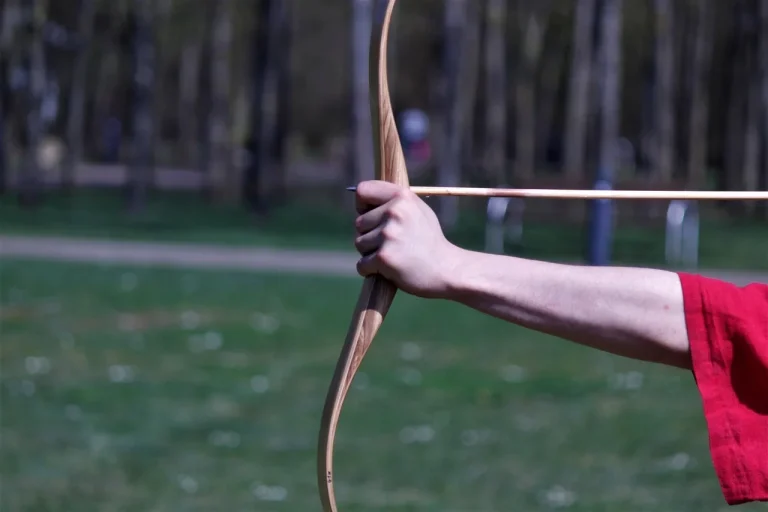
For a left-handed shooter, the glove or tab belongs on the left draw hand if the archer is using a left-handed bow. The right hand holds the grip, so the bow-side forearm or wrist may need a guard if string contact is a risk.
Why eye dominance still matters
Eye dominance is the eye you naturally use first for aiming. It can steer sight picture choice, especially on recurve and traditional bows, but it does not force a handedness choice. A left-handed bow often fits left-eye aiming, while cross-dominance is a fit issue, not a flaw.
Say your left eye is dominant, but you still prefer a steadier hold with the right hand on the bow. A coached trial with a light loaner bow can show whether the issue is aim comfort, bow hold, or a release problem. The gear choice should follow that result, not a guess.
Must-have protective gear
The three core items are a shooting glove or finger tab for the draw hand, plus a bow-side guard only when string contact is a real risk. Gloves protect the draw hand, tabs sit between the fingers and the string, and a guard protects the bow hand or forearm from contact and slap.
 As an Amazon Associate we earn from qualifying purchases. Prices and availability are accurate as of the date shown and are subject to change

The SAS 3 Finger Archery Shooting Glove is a basic draw-hand option for a left-handed bow setup when worn on the left hand. Its ambidextrous layout keeps it simple for either side, and the adjustable wrist strap helps prevent slip. The drawback is that glove thickness can soften string feel and slightly change the release.

As an Amazon Associate we earn from qualifying purchases. Prices and availability are accurate as of the date shown and are subject to change

The HNZMDY Barebow Finger Tab is reportedly made for left-handed shooters, so it is intended for the left draw hand in a left-handed setup. The aluminum plate adds finger protection, and the radiused edges help comfort. The downside is that tab length and strap tension still need checking, because a mirrored or short fit can disturb anchor and release.
As an Amazon Associate we earn from qualifying purchases. Prices and availability are accurate as of the date shown and are subject to change

The KRATARC Arm Guard is for the bow-side forearm, not the draw hand, and it is commonly described as suitable for either left- or right-handed shooters. Three adjustable straps help secure it, but the fit needs enough room to avoid sliding and enough coverage to stay between the string path and the wrist. It does not replace a glove or tab.
What each piece should do
A shooting glove covers three fingers on the drawing hand. It should protect skin without pinching the fingers at anchor. A finger tab sits between the fingers and the string, which is why many competitive recurve shooters prefer tabs for a cleaner release. A bow-side guard only deals with string contact on the bow arm area.
Do not mix up bow hand guard, hand guard, and arm guard. In practical buying terms, the protective piece for string slap is worn on the bow-side forearm or wrist area, while the glove or tab belongs to the draw hand. Those jobs are different.
Left-handed gear fit checklist
This checklist shows where fit mistakes usually appear. The most common problems are obvious once the archer checks finger length, palm width, wrist mobility, and whether the gear interferes with anchor or release. For a left-handed bow, compatibility checks should focus on left-hand draw use, not just a generic “fits either hand” label.
| Gear type | What to measure or test | Common failure sign | Affected side | Left/right compatibility |
|---|---|---|---|---|
| Shooting glove | Finger length, palm width, wrist strap placement, and whether the three-finger layout covers the draw hand without bunching | Finger tips feel cramped, the strap blocks wrist bend, or the glove shifts as the string settles | Draw hand | Check whether it is labeled left-hand, right-hand, or ambidextrous |
| Finger tab | Tab length, finger clearance, anchor comfort, and whether the material sits flat between the fingers and the string | Mirrored stitching, strap interference, pinch at anchor, or a release that feels rough | Draw hand | Check whether the tab is cut for left-hand use or reversible |
| Bow-side guard | Forearm coverage, strap placement, and whether the guard stays clear of the string path | Guard slips, rotates, or leaves the wrist exposed to string contact | Bow hand | Usually ambidextrous if the strap layout fits both sides |
| Finger saver | String thickness fit, clip tension, and whether the extra weight changes nock feel | Twisting on the string, added drag, or a slower release than expected | Both | Usually usable on either side, but confirm string fit |
A common first-timer mistake is buying a glove by size label alone and then finding that the wrist strap lands across the wrist crease. That usually shows up as a glove that slips during practice or makes the hand curl less naturally at anchor. The fix is to check strap placement with the hand closed and relaxed.
Suppose a left-handed beginner orders a mirrored tab, but the stitching runs into the string side of the draw hand. The release may feel rough immediately, even if the tab “fits” on paper. That is a compatibility problem, not a skill issue, and it usually means the tab shape is wrong for that hand.
How do I size gloves and tabs?
Start with finger length and palm width, then check whether the hand can settle into anchor without the gear pushing the fingers out of line. The right glove or tab should protect the draw hand while leaving enough feel for the string. If the wrist cannot bend freely, the fit is too tight or the strap sits wrong.
Measure the hand, then test the anchor
For a glove, the key check is whether the three fingers sit fully inside the leather without the tips pressing hard against the end. The adjustable wrist strap should secure the glove without limiting wrist mobility. For a tab, the material should sit between the fingers and the string with no hard edge at the anchor point.
Spot the common fit errors
A glove that slips usually shows up as a shifting fingertip line or a strap that loosens after a few draws. A tab that is too short can leave finger pads exposed, while one that is too long can bunch under the chin or jaw at anchor. Both problems can affect release quality on the draw hand.
Can a left-handed archer use a right-handed glove or tab? Sometimes, but only if the product is truly ambidextrous or the cut does not force the seams into the wrong place. If the stitching, strap, or plate shape is mirrored, it can interfere with release even when the size number seems right.
Nice-to-have extras
String-mount finger savers are the easiest extra for new archers who want less finger pressure. They clip directly onto the bowstring, which makes them beginner-friendly and youth-archer friendly, but they also add slight weight to the string. That extra bulk can help early on and get in the way later.
As an Amazon Associate we earn from qualifying purchases. Prices and availability are accurate as of the date shown and are subject to change
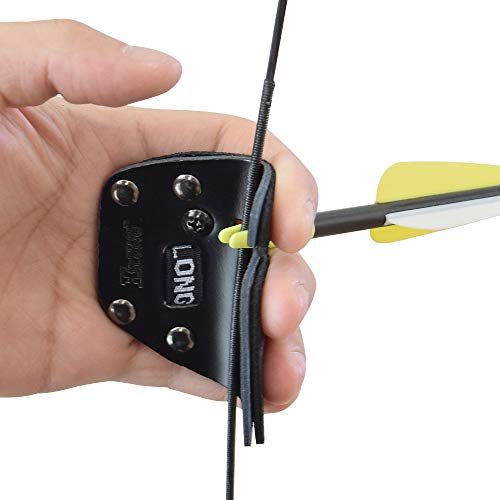
The Szeo Finger Tab is a left-handed recurve option that also appears in the finger-saver category for a simple beginner setup. Its adjustable elastic strap helps dial in fit, and the sweat-resistant materials can help reduce slip. The tradeoff is that any added strap or bulk can still change how cleanly the string leaves the fingers.
When extra gear helps
A string-mount finger saver can make sense for youth archers or complete beginners who are still building finger strength and release control. It is also useful when the main goal is comfort, not a competitive recurve release. If the archer later wants a cleaner release, a tab often becomes the better long-term option.
Do left-handed archers need different arm protection than right-handed archers? The protection itself is the same kind of item, but the side it goes on changes with the setup. For a left-handed bow, the guard belongs on the bow-side forearm or wrist area, while the draw-hand glove or tab still belongs on the drawing hand.
Consumables and spares
Gloves and tabs wear first at the contact points. Leather thins at the fingers, strap hardware loosens, and tab surfaces mark up where the string rides. If the wear changes release feel or anchor comfort, replacement is usually better than trying to force the part to last.
What to watch
Check the edge of the tab where the string contacts the material, and check the glove fingers where the string pressure lands. If the leather looks polished thin, the glove or tab may no longer protect evenly. On a bow-side guard, worn straps or cracked padding can let the piece rotate at the wrong time.
When to replace instead of adjust
Small fit issues can often be fixed with strap position or sizing changes. Once the stitching pulls, the plate bends, or the glove stops holding shape, replacement is the better move. That is especially true for draw-hand gear, where a small defect changes the release immediately.
Are cross-dominant archers better off switching?
Cross-dominance means the aiming eye and the drawing hand do not match. It is a fitting consideration, not a defect. Some archers stay with the left-handed bow they already prefer, while others switch sides after a coached trial shows that eye alignment or anchor comfort is easier the other way.
Try before changing sides
A coached trial with a light loaner bow is the cleanest way to decide. It lets the archer compare aiming comfort, draw-hand control, and gear interference without buying the wrong setup first. If the bow feels stable but the sight picture is poor, the issue may be eye preference rather than handedness.
When to stay left-handed
Stay left-handed when the draw hand feels natural, the anchor is consistent, and the right-side bow hold is stable. Switch only when a coached trial shows a clear advantage on the other side. A hasty switch can create new fit problems with the glove, tab, and guard all at once.
Budget setups
Use the setup that matches the archer’s current need. The rows below are not product recommendations by price alone; they are practical starter, mid, and serious fit paths. Confirm the exact item details before ordering, since handedness and strap layout matter more than the label on the package.
| Setup | Best fit path | What it covers | Price |
|---|---|---|---|
| Starter | Finger saver or a simple bow-side guard while learning form | Basic finger comfort and first contact protection | |
| Mid | Draw-hand glove plus bow-side guard | Better draw-hand protection and forearm coverage | |
| Serious | Finger tab plus a fitted bow-side guard | Cleaner release and more precise anchor control |
Frequently asked questions
How do I know if I need left-handed archery protective gear?
If the left hand draws the string, the archery protective gear should follow that draw-hand orientation. A left-handed bow is held in the right hand, so the glove or tab belongs on the left draw hand, while the bow-side forearm may need a guard if string contact is likely.
Does left-handed archery gear mean the same as left-handed bow setup?
Not always. Gear handedness tracks the drawing hand, while bow setup tracks the bow’s orientation, rest placement, and grip side. A left-handed bow is the reverse of a right-handed bow, so the maker’s RH or LH label should be checked separately from glove or tab orientation.
Which hand should wear the shooting glove on a left-handed bow?
The draw hand wears the glove. On a left-handed bow, that is usually the left hand. The glove should protect the three fingers used on the string without limiting wrist mobility or creating pinch at anchor. The bow hand stays free unless a separate guard is needed.
How do I choose the right glove size for left-handed archery?
Measure finger length and palm width, then check whether the glove’s three-finger layout settles without bunching. The adjustable wrist strap should secure the glove without blocking wrist bend. If the fingers press into the ends or the strap lands awkwardly, the size is wrong even if the label looks close.
Can a left-handed archer use a right-handed glove or tab?
Sometimes, but only when the cut, stitching, and strap layout do not interfere with the draw side. A mirrored tab or a glove with reversed seams can change release feel and anchor comfort. Ambidextrous models are the safer choice when the product is meant to work on either hand.
What protective gear should left-handed beginners start with?
Start with a draw-hand glove or a beginner-friendly finger saver, then add a bow-side guard if the string track is close to the forearm or wrist. That order keeps the setup simple. Beginners usually benefit from comfort and clear string protection before moving to a more exact tab fit.
How do I stop archery gloves from slipping during practice?
Check the wrist strap placement first. It should tighten the glove without crossing the wrist crease or blocking movement. If the glove still shifts, the size may be too large, the leather may be too soft, or the fingers may be too long for the draw hand.
Do left-handed archers need different arm protection than right-handed archers?
The style of protection is the same, but the side changes with handedness. A left-handed bow usually puts the bow-side forearm in the path of string contact, so the guard belongs there. That is separate from the draw-hand glove or tab, which still protects the drawing fingers.