How to Prevent String Slap in Archery: Gear and Technique
Prevent string slap by checking anchor and bow fit first: if the string hits your forearm, use a small brace-height adjustment appropriate to your bow type, or a cleaner grip before changing arrows. On recurve bows, brace height is typically tuned in small increments; on compound bows, changes are made through the bow’s setup rather than large swings. Ignoring it usually means bruising, inconsistent release, and groups that open up fast. This guide separates form errors from setup problems and shows the smallest fix for each.
Must-have
The three basics are an arm guard, a relaxed grip setup, and sleeve control. An arm guard gives temporary forearm protection, but it should not replace form correction. A wrist sling or open-hand setup helps remove finger tension from the bow hand. Clothing should not sit in the string path.
 As an Amazon Associate we earn from qualifying purchases. Prices and availability are accurate as of the date shown and are subject to change.

SUNGOOYUE leather arm guard
This leather arm guard is an adjustable forearm protector meant to stop repeated bruising while you diagnose the cause. It is a short-term aid, not a fix for elbow rotation, shoulder collapse, or draw length. The drawback is simple: any guard can hide bad form if it becomes permanent training equipment.
As an Amazon Associate we earn from qualifying purchases. Prices and availability are accurate as of the date shown and are subject to change.

Easton Deluxe Bone Armguard Red 526106|TF
Based on the published product details, this is a purpose-built archery arm guard with a straightforward design. It suits archers who want a plain forearm shield while they clean up technique. The drawback is fit and coverage: a guard that sits poorly or ends too short will still leave part of the forearm exposed.
As an Amazon Associate we earn from qualifying purchases. Prices and availability are accurate as of the date shown and are subject to change.

Hunt&Seek cow leather archery arm guard
This adjustable leather guard gives forearm protection with dual elastic straps and a soft backing. It is useful when you need repeatable placement on the forearm, where arm guards are normally worn. The drawback is that leather guards can feel warmer and bulkier than minimal options, especially under layered clothing.
Nice-to-have
These items help once the basic fit is under control. A wrist sling supports a relaxed open-hand grip, especially with compound and open-grip recurve setups. Better sleeve management matters in cold weather, because loose cuffs and bunching can drift into the string path. A longer arm guard can help on days when your elbow creeps up or your sleeve shifts, but it should not become a substitute for fixing the cause.
Wrist sling or open-hand setup
A wrist sling supports an open hand so the bow can jump forward without a death-grip on release. A proper bow grip means pressure on the meaty pad below the thumb, and the bow hand knuckles are described as approximately 45 degrees. The drawback is that a sling does nothing for a shoulder that collapses or an anchor that drifts.
Clothing sleeve management
Tight or rolled sleeves reduce contact risk, and layering should be checked before every cold-weather session. Loose sleeves can interfere with the string path, especially when a thick outer layer bunches near the forearm or elbow. The drawback is easy to miss: fabric can look clear at full draw and still move into the path on release.
Consumables and spares
Keep spare straps, a backup sling, and an extra sleeve layer in the bag. These are small items, but they prevent a session from turning into a stop-start troubleshooting exercise. Replacing a worn strap or switching to a cleaner sleeve can be the difference between a useful practice block and a bad habit that gets repeated.
Replacement arm guard straps
Straps stretch, fray, and lose consistent tension. If the guard twists, rides up, or leaves marks that move shot to shot, the strap may be the weak point rather than the guard shell. The drawback is that strap failure can look like form failure, so the symptom needs a quick check before the archer changes technique.
Spare wrist sling
A spare sling matters because an open-hand grip becomes less consistent when the sling is missing or damaged. That is especially relevant for compound shooters and recurve shooters using an open grip. The drawback is that a sling is only useful when the bow hand stays relaxed; it will not correct a torque-heavy release.
Backup sleeve layers or arm protection
Extra sleeves or a second forearm protector are useful for cold mornings when fabric and clothing thickness change. Layering can alter clearance enough to create a new contact point. The drawback is that more cloth can add bulk, so the backup layer needs to stay close-fitting rather than loose.
Budget setups
Here are simple buying combinations by priority. The goal is not to stack parts. It is to cover the forearm, keep the bow hand relaxed, and avoid sleeve interference while you correct the actual cause.
| Setup | What to buy first | What it solves | Typical drawback | Price |
|---|---|---|---|---|
| Starter | One basic arm guard | Immediate forearm protection while you diagnose form | Can mask elbow or draw-length problems | $14.99–$17.38 |
| Mid | Arm guard plus wrist sling | Forearm protection and a relaxed open-hand grip | Still depends on anchor and shoulder control | $14.99–$17.38 plus sling cost |
| Serious | Arm guard, wrist sling, and sleeve management | Protection, cleaner release, and fewer clothing contacts | More parts can hide the real fit issue if never retuned | Varies by setup |
Why does the bowstring hit my forearm?
String slap is contact between the bowstring and inner forearm at release. The most common culprit is elbow rotation with the crease facing upward, but an improper stance, an overlong draw length, a drifting anchor, or a shrugged shoulder can all move the string path toward the arm. The hit is a symptom, not the diagnosis.
Bow shoulder and elbow position
The bow shoulder should stay down and back, not shrugged forward. A level, stable shoulder keeps the bow arm from drifting into the string line. A rotated elbow can help clear the forearm, but the real target is stable alignment rather than a forced twist that breaks repeatability.
Suppose a beginner gets a forearm bruise every third shot at 20 yards. If the bruise appears only when the bow shoulder creeps upward, the cause is likely shoulder position, not the arm guard. A small posture correction should come before any equipment change.
String slap troubleshooting matrix
This table separates the most common failure modes shot by shot. Use the symptom pattern, confirm it with one test, then make the smallest fix first. If the hit disappears after one change, do not add another change until the pattern stays stable for several shots.
| Symptom pattern | Likely cause | Confirmation test | Immediate gear fix | Form fix | When to retune draw length |
|---|---|---|---|---|---|
| Hit lands high on the forearm with bruising near the elbow side | Elbow crease facing upward; bow shoulder may be lifted | Watch the arm at full draw and on release | Arm guard positioned just above the wrist | Rotate the bow elbow so the inner elbow is not open to the string | If the arm still gets tagged after shoulder and elbow correction |
| Hit appears only on shots with a loose sleeve | Clothing sleeve fit | Roll or tighten the sleeve and shoot again | Tighten, roll, or remove the loose layer | Keep the forearm clear and stable through release | Not first; check clothing before changing draw length |
| Hit happens on good shots and bad shots alike | Draw length too long or anchor drifting | Check whether the drawing hand lands forward of its normal anchor | Use a temporary arm guard while testing | Set anchor point consistently shot to shot | Yes, if the draw feels stretched or the string travel reaches the arm |
| Hit starts after a grip change or tense release | Bow grip torque | See whether the bow hand clamps or twists at release | Add a wrist sling and lighten hand pressure | Place pressure on the thenar pad only | Usually no, unless grip change reveals a longer-fit problem |
| Recurve or barebow string hits despite a clean grip | Anchor drift, stance, or overlong draw | Compare anchor point from shot to shot | Arm guard during diagnosis | Keep stance square and anchor fixed | Yes, if the anchor keeps shifting or the draw feels overextended |
| Compound forearm slap with relaxed fingers on the bow hand | Release timing, shoulder position, or draw-length mismatch | Check whether the bow shoulder rises at anchor or during release | Wrist sling and forearm protection | Keep the shoulder down and back; maintain a relaxed hand | Yes, if the setup feels stretched and repeatability drops |
What is causing the string hit?
Start with the bruise pattern, then separate form from fit. Forearm contact is different from string pinch, which happens at the drawing hand and fingers. If the hit changes with sleeve choice, grip tension, shoulder height, or anchor point, the cause is probably not a single bad accessory. In practice, there are usually more than two interacting causes.
Forearm bruising versus string pinch
String slap lands on the inner forearm. String pinch is a different problem tied to finger placement and nock angle at the drawing hand. Mixing them up sends people toward the wrong fix. If the skin bruise is on the arm, focus on arm path, elbow rotation, and shoulder alignment first.
Grip torque and bow hand pressure
A relaxed, minimal-contact open-hand grip is recommended for accuracy. The bow hand should rest on the meaty pad below the thumb, not clamp the riser. Overgripping twists the bow and can steer the string toward the arm. A wrist sling supports that open hand and keeps the fingers from helping too much.
Anchor drift and draw-length mismatch
Anchor point must stay consistent shot to shot because changes in anchor can alter the string path. Draw length that is too long can force overextension and cause string slap, and it can also reduce repeatability. If the draw feels stretched, the shooting side shoulder creeps forward, or the string path changes from shot to shot, treat fit as part of the problem.
How do I stop string slap in archery?
Stop it by fixing the most likely cause in order: check elbow rotation, then grip pressure, then anchor consistency, then draw length. Use an arm guard while diagnosing, but do not leave the guard as the final answer if the string still contacts the forearm when the stance and alignment are correct. Small changes should be isolated one at a time.
Bow grip and thenar pad contact
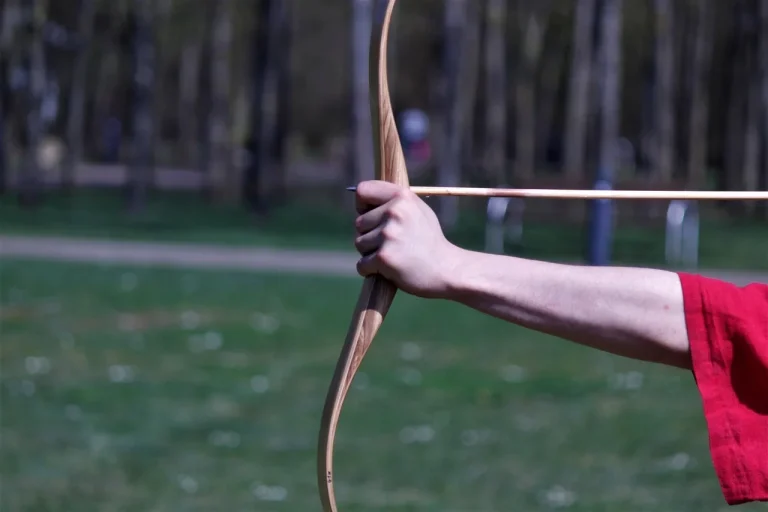
Use a minimal-contact grip with pressure on the thenar pad only. The hand should stay relaxed, and the knuckles sit approximately 45 degrees rather than flattened by tension. If the bow hand clamps during release, the string path can shift enough to hit the forearm even when the elbow looks acceptable.
Bow shoulder down and back
Bow shoulder alignment should stay level and stable. A shrugged shoulder shortens the clearance window and often moves the forearm closer to the string. A lowered, set shoulder gives the elbow room to rotate and helps the bow arm stay out of the release path.
Consistent anchor point
Keep the anchor point fixed from shot to shot. Recurve and compound setups use different anchor cues, but both need repeatability. If the hand settles farther forward on some shots, the string path can shift and start tapping the arm. Check anchor before changing accessories.
Controlled release follow-through
A jerky release can contribute to forearm contact by disturbing the bow hand and shoulder at the moment of string travel. The solution is not to snatch the string or pinch the grip harder. Let the shot finish with a relaxed follow-through and a clear bow arm line.
Do I need an arm guard for string slap?
An arm guard is wise if the string has already tagged the forearm or if you are still diagnosing the cause. It protects the skin, especially where the forearm is contacted. But it should remain temporary protection and training feedback, not a permanent excuse to ignore elbow, shoulder, anchor, or draw-length problems.
Arm guard placement and fit
Arm guards are positioned on the forearm to cover the contact zone without sliding during the shot. If the guard shifts, twists, or leaves the bruised area exposed, the fit is off and the diagnosis becomes less clear.
Picture a compound shooter with a bare forearm and a wrist sling. The shot is clean until a thick hoodie cuff gets pulled back halfway and bunches near the wrist. The next arrow grazes fabric instead of skin. The cause is clothing interference, not a sudden change in release.
What arm position prevents string slap?
The safest arm position keeps the bow shoulder down and back, the elbow rotated away from the string, and the forearm clear of the release path. Stance matters too. One competitor lists open, square, natural, and closed stances; the exact choice matters less than keeping the arm aligned and repeatable through the shot.
Bow arm and stance checks
A bow string hitting your arm can result from an improper archery stance. If the front shoulder rolls in or the torso leans excessively, the forearm may enter the string path. Start with a square or natural stance, then confirm that the elbow still clears cleanly at full draw.
How tight should I grip the bow to avoid string slap?
The bow should be held with minimal pressure, not squeezed. A proper bow grip means pressure on the meaty pad below the thumb, while the fingers stay relaxed. The hand should not fight the bow at release. A death-grip can torque the riser and pull the string path toward the forearm.
Open-hand grip with a wrist sling
A wrist sling lets the hand stay open without fear of dropping the bow. That matters because tension in the fingers often shows up as torque elsewhere. For compound and open-grip recurve setups, the sling often helps more than a tighter hold ever will.
Can clothing cause string slap in archery?
Yes. Loose sleeves can interfere with the string path, and cold-weather layers make this more likely because fabric bunches near the wrist and elbow. Tight or rolled sleeves reduce contact risk, but the key is to check clothing every time the layer stack changes. A clean form can still be undone by a loose cuff.
Is string slap caused by bad form or bad gear?
It can be either, but the fastest diagnosis starts with form. True string slap is contact between the bowstring and inner forearm at release, and the most common culprit is elbow rotation with the crease facing upward. If form checks do not solve it, then look at draw length, brace height, sleeve fit, and guard placement.
When setup changes matter most
Draw length that is too long can drive the string toward the forearm and reduce repeatability. Recurve, barebow, and compound shooters can all run into this, but the symptom patterns differ. Recurve and barebow archers often expose elbow rotation and anchor drift sooner; compound archers often feel fit issues through shoulder position and overextension.
What is the difference between string slap and string pinch?
String slap is a forearm hit from the bowstring at release. String pinch is a different issue near the fingers and nock area, usually tied to finger pressure and angle. They can both hurt, but they happen in different places and need different corrections. If the bruise is on the forearm, start with arm path and setup clearance.
How do I know if my draw length is causing string slap?
A too-long draw length often feels stretched at anchor, makes repeatability worse, and can move the string closer to the arm. If the hit appears more when you reach hard for anchor or when the bow shoulder creeps forward, draw length deserves attention. A small setup change can remove the problem without changing arrows.
Retune draw length only after the basics
Do not retune draw length before checking elbow rotation, shoulder position, grip pressure, and anchor consistency. If those are correct and the arm still gets hit, then the bow may be set too long for the archer. Retuning makes sense when the draw feels overextended and the string path still reaches the forearm.