Best Protective Gear for Archers (2026): Based on Specs and Reviews
Best protective gear for traditional archers in rain or snow is thin, waterproof, non-bulky kit that leaves the string path clear; if a layer changes anchor, string clearance, or release, leave it off. Wet-cold shooting goes wrong fast: numb fingers, slippery grips, frozen strings, and errant arrows. This guide ranks gloves, sleeves, face protection, bow covers, and boot choices by rain, wet snow, and freezing wind.
Quick comparison
| Product | Badge | Best for | Price | ||
|---|---|---|---|---|---|
 | Shatterproof Archery Leather Archery Armguard EssentialShatterproof Archery | Our pick | Real leather · Essential · Adjustable | $24.99 Price as of 18 Oct 2026 | View |
 | Favuit Camouflage Hunting Gloves, Lightweight Anti-SlipFavuit | Also great | Camo · Lightweight · Anti-Slip | $10.61 Price as of 18 Oct 2026 | View |
 | ACEIken Golf Umbrella Windproof Large 62 Inch Double CanopyACEIken | Upgrade pick | 62 inch · Double Canopy · Windproof | $24.99 Price as of 18 Oct 2026 | View |
Traditional archery needs tighter clothing control than compound shooting because the string runs closer to the face and forearm. The best setup changes with temperature, precipitation, and how long the session lasts.
How we chose
The list below favors gear that keeps the head, hands, legs, and feet dry without adding drag near the string. It also prioritizes materials that still work when damp, plus items that help on a wet range between ends.
- Low interference with anchor, release, and string clearance.
- Weather protection for rain, snow, and cold wind.
- Breathability, so layers do not turn into a heat trap.
- Practical fit for traditional bows, where sleeve bulk matters more.
Weather gear decision table
| Weather condition | Temperature band | Shooting style | Best protective gear choices | Do not wear |
|---|---|---|---|---|
| Light rain | Above freezing | Recurve, longbow | Water-resistant wool hat, waterproof shoes, breathable rain pants, light shell only if sleeves stay snug | Loose cuffs, bulky gloves, long sleeves that brush the string |
| Steady rain | Above freezing | Recurve, longbow | Waterproof shoes, water-resistant pants that cover shoe tops, rain jacket with cinched sleeves, umbrella between ends | Baggy jacket hem, wide sleeves, cotton layers that stay wet |
| Wet snow | Near freezing | Traditional bare hand or thin glove | Wool hat, waterproof shoes with flat soles, insulated but thin hand cover, breathable shell, dry spare layers | Thick gloves, frozen cuffs, slippery fashion soles, soaked cotton |
| Cold wind | Below freezing | Short practice ends, hunting-style shooting | Wool hat, layered top, wind-blocking jacket only if it stays tight, pants that breathe, insulated bottle, chair for breaks | Loose hood cords, heavy sleeves, anything that shifts the anchor |
| Mixed rain and snow | Near freezing | Long session | Waterproof shoes, breathable pants, wool hat, spare dry gloves, umbrella for gear, camp chair, dry bag for extras | Bulky mittens, cotton socks, loose outerwear that catches the string |
Traditional archer’s wool hat: best for cold wet head cover
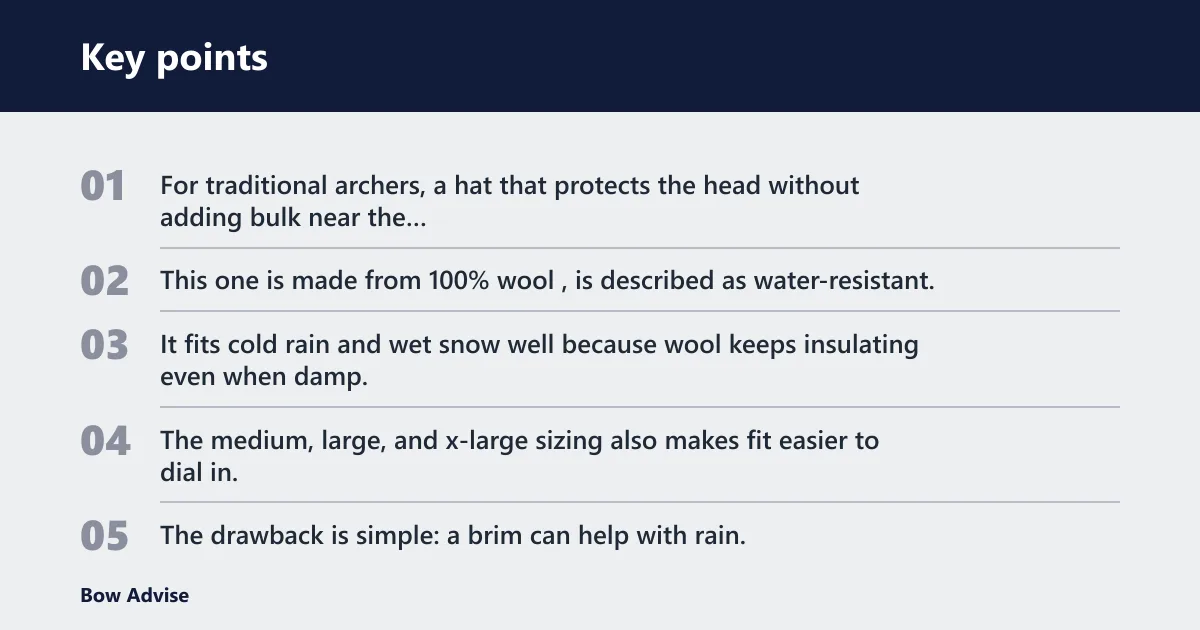
For traditional archers, a hat that protects the head without adding bulk near the string path is often a better choice than a hood. This one is made from 100% wool, is described as water-resistant, and uses a 2-1/2-inch down-turned brim with a cotton twill sweatband.
It fits cold rain and wet snow well because wool keeps insulating even when damp, and the material is said to have natural moisture-wicking properties. The medium, large, and x-large sizing also makes fit easier to dial in, which matters when a hat must stay put during the draw.
The drawback is simple: a brim can help with rain, but it should not dip into the upper string path or block the top of the view. That is usually manageable on traditional bows, yet shooters who wear high head position or deep anchor may need to check brim clearance carefully.
What shoes and pants work best in wet conditions?
Waterproof shoes and breathable pants are the foundation of wet-weather archery because they keep the archer stable and dry from the ground up. For traditional shooting, the best footwear has a flat sole and enough grip for standing still, while pants should cover the tops of the shoes and keep legs dry without overheating.
Waterproof shoes and stable footing
Outdoor archers are advised to use waterproof shoes, and golf shoes are often recommended because they are usually waterproof and have a flatter sole for stability. That matters on damp grass, muddy targets, and snowy firing lines, where a soft or uneven sole can shift during anchor and release.
A common first-timer mistake is wearing trail shoes with tall lugs because they feel secure in mud. On a sloped, wet firing line, those lugs can still feel unstable when the archer starts to settle into stance and draw.
Waterproof pants that still breathe
Waterproof or water-resistant pants help keep legs dry, and they should cover the tops of the shoes so meltwater and splash do not run straight into socks. Breathability matters because wet-weather archery often means standing still, then drawing, then waiting again, which can trap heat fast.
That tradeoff matters more in snow than in rain. Heavy pants may block water well, but if they overheat the legs, the archer starts to sweat, then chills during the next idle stretch.
Should traditional archers wear a rain jacket when shooting?
A rain jacket can help in outdoor archery, but it is only useful if the sleeves, collar, and hem stay out of the string path. Compound archers usually adapt more easily to a jacket, while recurve archers may need to cinch loose fabric down before drawing, and some will shoot better with the jacket off between ends.
When a shell helps
Use a rain jacket when rain is steady, the session is long, or wind is pushing wet weather sideways. A jacket is most useful during walking, waiting, and setup, especially when it can be closed tightly enough to keep rain off the torso and upper arms.
When a shell gets in the way
Loose sleeves can brush the string, interfere with the forearm, or change how the bow arm settles at anchor. That is why recurve and longbow shooters need to check sleeve width and cuff control more carefully than compound archers, who often have more room around the shot cycle.
If the jacket has a loose collar, cinch it down or choose a different layer. A high collar that bunches near the jaw can change face contact, and that is enough to alter repeatability on a traditional shot.
What should I pack for winter range days?
Winter range days reward simple extras that keep gear dry and keep the archer functional between ends. A backup umbrella, an insulated water bottle, a folding camp chair, and a lightweight long-sleeved shirt cover the main gaps that wet-cold weather creates on a traditional range.
Umbrella as backup cover
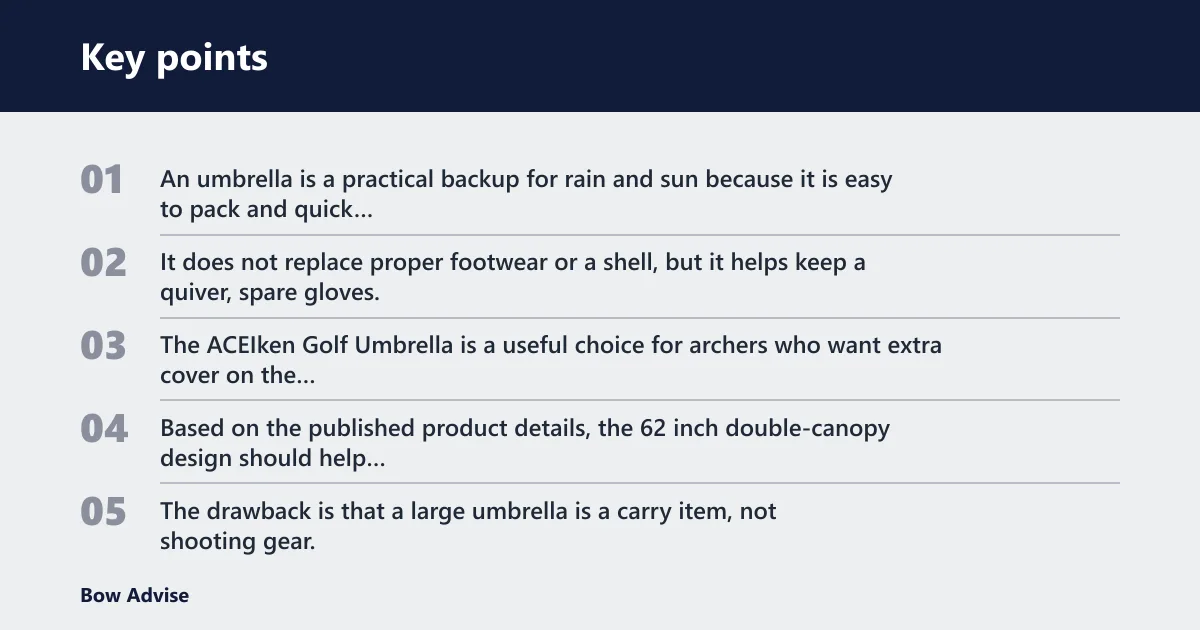
An umbrella is a practical backup for rain and sun because it is easy to pack and quick to open while waiting. It does not replace proper footwear or a shell, but it helps keep a quiver, spare gloves, and a bow bag dry between ends.
The ACEIken Golf Umbrella is a useful choice for archers who want extra cover on the range. Based on the published product details, the 62 inch double-canopy design should help with rain and wind, and the automatic open feature makes it easy to deploy with cold hands.
The drawback is that a large umbrella is a carry item, not shooting gear. It helps during breaks, but it cannot fix string-clearance problems, and it is one more item to manage in gusty weather.
Insulated water bottle and chair
An insulated water bottle supports hydration during outdoor sessions, and examples such as Yeti and Hydro Flask are common reference points for all-day cold retention. Bring it filled with warm water or tea for cold sessions, because dry air and layered clothing can leave the archer dehydrated without obvious sweating.
A folding camp chair also earns its place because sitting between ends reduces fatigue and keeps boots and socks out of standing water. That helps longer sessions, especially when the range has little shelter and the ground is wet or slushy.
Lightweight long-sleeved shirt
A lightweight long-sleeved shirt gives sun protection and a little warmth without the bulk of a heavy outer layer. Light-colored fabric is a smart choice because it helps limit overheating, and top outdoor archery teams commonly use this kind of layer when conditions are variable.
For traditional archers, this layer works best under a shell or by itself in cool, dry wind. Once the sleeves get heavy or saturated, they can start affecting the draw and release.
How do you keep gloves, fingers, and sleeves out of the shot?
Hand warmth matters, but bulky gloves and loose sleeves are common causes of poor clearance in traditional archery. The goal is warmth with a thin, close fit, because wet strings, damp fingers, and dragging cuffs can disturb the release far more than they would on a compound bow.
Hand warmth without bulky contact points
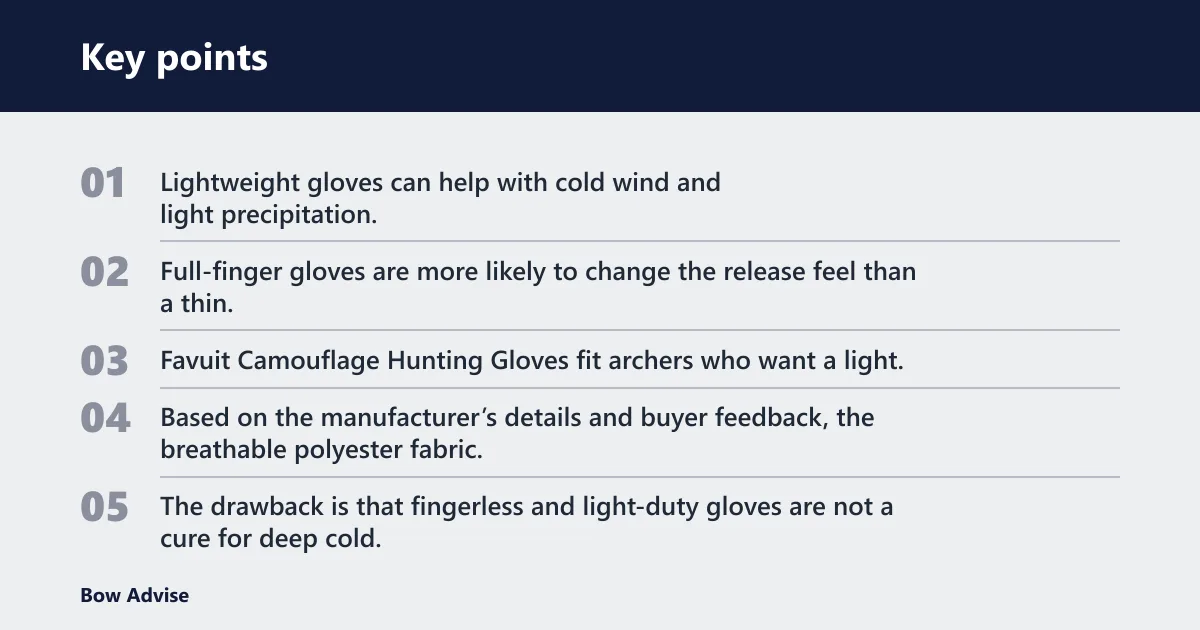
Lightweight gloves can help with cold wind and light precipitation, but they should remain flexible enough that the string does not snag or mute finger feel. Full-finger gloves are more likely to change the release feel than a thin, grippy layer that still allows clean string contact.
Favuit Camouflage Hunting Gloves fit archers who want a light, flexible hand layer for cold, damp range work. Based on the manufacturer’s details and buyer feedback, the breathable polyester fabric, adjustable fingerless design, and anti-slip palm make them more adaptable than thick winter gloves.
The drawback is that fingerless and light-duty gloves are not a cure for deep cold. In wet snow, exposed fingertips can still go numb, and any glove that adds bulk near the string fingers can change release quality on a traditional bow.
Forearm coverage without string interference
Forearm protection matters because rain does not remove the risk of string slap; it can make the skin colder and less responsive. An armguard is often the better answer than a bulky sleeve, because it protects the forearm while leaving the rest of the shot mechanics unchanged.
Shatterproof Archery’s leather armguard is a practical option for archers who want simple forearm protection with a low-profile fit. Based on the published details, it is made from one piece of full grain leather, is handmade in the USA, and is described as silent and quick to put on.
The drawback is that an armguard protects the forearm, not the hand or the string hand fingers. It should be paired with careful sleeve selection, not used as a reason to wear a loose rain shell that might interfere with the bowstring.
When to remove a layer before drawing
If a sleeve crosses the string path, or if a glove changes the way the string sits on the fingers, remove the layer before shooting. That is often the safer choice in traditional archery, where repeatable contact matters more than extra insulation.
Suppose a recurve archer wears a rain jacket with a loose cuff and notices the sleeve brushing the string on the first draw. The clean fix is not to keep shooting and hope it settles; it is to cinch the cuff, roll the sleeve if possible, or take the jacket off before the next end.
Can you shoot archery safely in wet conditions?
Yes, but only if footing, visibility, and string clearance are checked before each end. Wet conditions add real risks: slick grass, slow reactions from cold hands, damp strings, and clothing that shifts during the draw. Safe shooting is still possible when the setup is kept simple and dry enough to control.
- Check the ground where the stance will land.
- Make sure sleeves, hood edges, and gloves do not enter the string path.
- Confirm that the string is dry enough to feel predictable in the fingers.
- Keep spare cloths, gloves, or socks dry between ends.
- Stop if footing or visibility becomes unsafe.
Snow adds a few extra problems. Strings can feel frozen, fingers can go numb faster, and gear left on benches or cases can come back damp. Dry storage between ends matters more in snow because melted water turns into chill the moment the shooter sits still.
Picture a longbow shooter on wet grass with a light rain falling and a wool hat on. If the shoes grip well and the sleeves stay tight, the shot can stay clean; if the cuffs sag over the hand, the release suffers before the arrow leaves the string.
What gear helps a traditional archer stay dry and comfortable on the range?
The best comfort gear is the gear that solves a specific problem without changing the shot. For traditional archers, that usually means a wool hat, waterproof shoes, breathable pants, a controlled rain shell, a light top layer, and small support items that keep the session manageable between ends.
- Head: wool hat for cold rain and wet snow.
- Feet: waterproof shoes with a stable flat sole.
- Legs: waterproof or water-resistant pants that breathe.
- Hands: thin, flexible gloves only when they do not disturb release.
- Arms: armguard or close-fitting sleeves instead of loose fabric.
- Breaks: umbrella, insulated bottle, and folding chair.
The material choice matters as much as the item choice. Wool remains useful when damp, while cotton can stay wet and cold; synthetic shells can block weather well, but they still need to fit close enough that the string path stays clear.
Which one should you buy?
If the priority is cold rain or wet snow, start with the wool hat and waterproof shoes. If the range is open and windy, add the umbrella and rain shell for breaks, then check whether the jacket still leaves clean clearance on the draw.
For recurve and longbow shooters, clothing fit matters more than total coverage. A closer sleeve, a tighter cuff, and a thin glove usually beat a bulkier shell that forces the archer to compensate at anchor.
If the need is forearm protection with minimal noise and fuss, the leather armguard is the most traditional add-on here. If the need is grip help and light hand cover in mild cold, the Favuit gloves make more sense, but they should stay out of deep winter duty.
For long, wet range days with no shelter, the umbrella is the easiest comfort purchase because it helps during waiting periods without changing the shot itself. It is backup gear, not active shooting gear.
Frequently asked questions
What protective gear should a traditional archer wear in rain or snow?
Traditional archers should focus on a wool hat, waterproof shoes, breathable pants, and close-fitting outer layers that do not enter the string path. Add forearm protection if string slap is likely, then use an umbrella or chair only as range support. The key is dryness without loose fabric.
Is a wool hat good for archery in cold wet weather?
Yes. A wool hat is a strong choice because it is warm, water-resistant, and less likely than cotton to turn cold and soggy. The 2-1/2-inch down-turned brim helps with rain, but the shooter still needs to check that the brim does not block vision or interfere with form.
What clothing keeps you warm without interfering with a traditional shot?
Thin, close-fitting layers work best. A lightweight long-sleeved shirt, a snug rain shell, and breathable pants can keep a shooter warm while limiting sleeve drag and anchor disruption. Wool is a better damp-weather choice than cotton because it keeps insulating after it gets wet.
What shoes are best for shooting archery in rain or snow?
Waterproof or water-resistant shoes are the right starting point, and a flatter sole is useful for stable standing on wet ground. Many archers like golf shoes for that reason. Avoid soles that feel unstable when pivoting or when settling into stance on slick grass or slush.
How do you keep gloves, fingers, and sleeves from getting in the way while shooting?
Use the thinnest hand layer that still gives warmth and grip, then keep sleeves close and cuffed. If a glove dulls string feel, or a sleeve brushes the bowstring, remove or shorten the layer before drawing. Traditional archery rewards clean contact more than extra insulation.