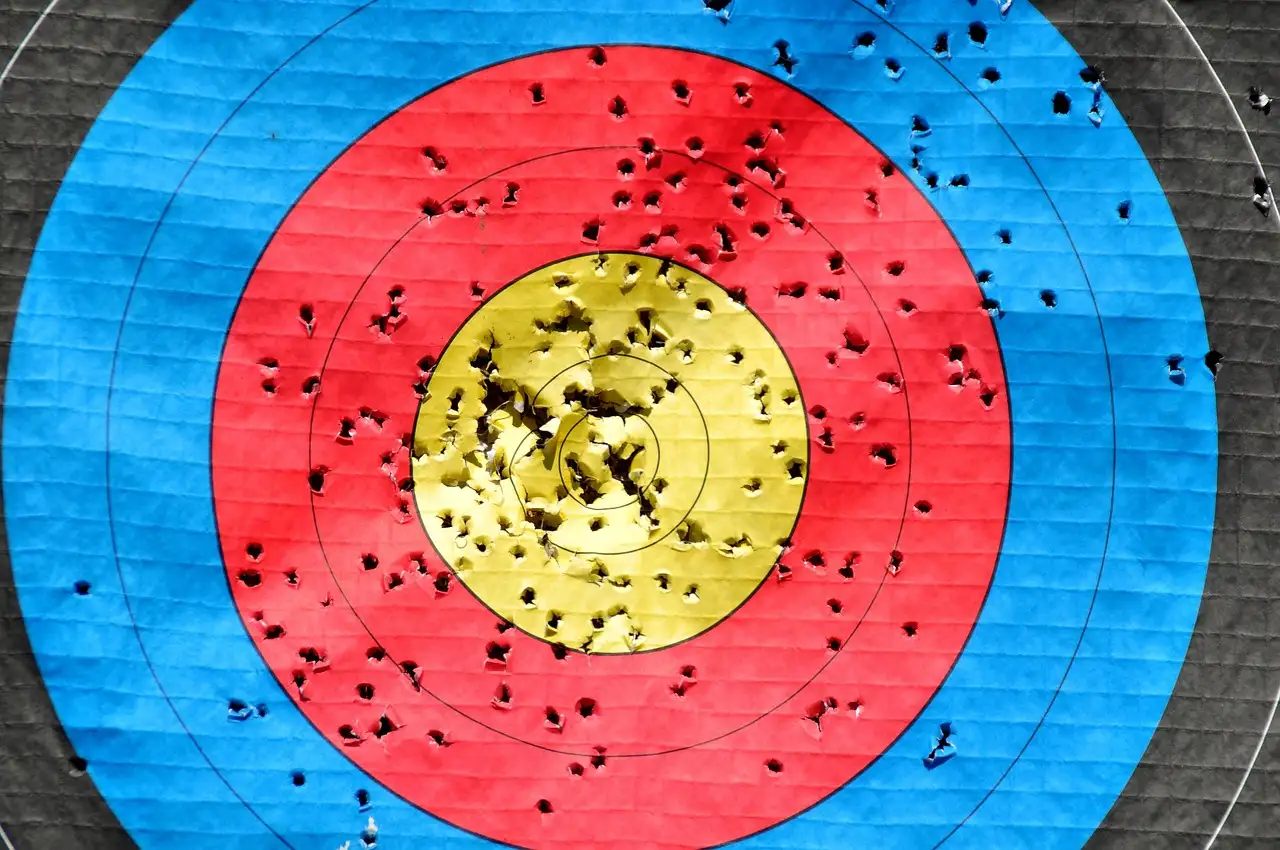
Best Archery Glasses for Ranges & Bowhunting (2026): we compared
Choose archery safety glasses by the shot you face: amber or clear for outdoor ranges, photochromic or amber for bowhunting, and prescription-compatible wraparound frames if you wear glasses. Prioritize UV 400, ANSI Z87.1, and anti-fog coating.
This guide is part of our Archery protective gear guide series.
Bad lens tint, weak side coverage, or a poor fit can blur pins, distort target edges, and leave your eyes exposed to branches, dust, or string slap.
This guide compares lens tint, coverage, fit, fog resistance, and prescription options so you can pick the right pair for your range or hunt.
Quick comparison
| Product | Badge | Best for | Price | ||
|---|---|---|---|---|---|
 | NoCry Lightly Tinted Anti Fog Safety Glasses for Men orNoCry | Our pick | ANSI Z87.1 · 100% UV · Lightweight | $15.99 Price as of 11 Oct 2026 | View |
 | Walker’s Sport High-Grade Polycarbonate Lenses Half FrameWalker’s | Budget pick | Amber · Polycarbonate · Adjustable Nose | $5.99 Price as of 11 Oct 2026 | View |
 | BLUE CUT Sports Protection Goggles, Safety Glasses forBLUE CUT | Also great | Sports Goggles · Anti-Fog · Adjustable Strap | $29.97 Price as of 11 Oct 2026 | View |
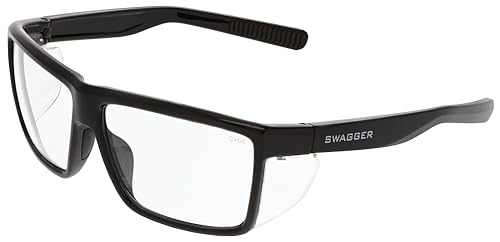 | MCR Safety SR210 Swagger (Sr2) Glasses, Clear LensMCR Safety | Pair with it | Clear Lens · UV Filter · Detachable Shields | $8.89 Price as of 11 Oct 2026 | View |
Use the chart to match lens tint and frame style to the light you shoot in first. That matters more than brand name when weather shifts, glare spikes, or you need the glasses to stay planted at full anchor.
How we chose
The picks below favor archery fit, lens clarity, and protection details that matter in the field. We compared ANSI Z87.1 coverage where listed, lens material, UV protection, anti-fog and anti-scratch notes, and whether the frame shape suits a drawn bow.
We also weighed scenario fit: open-sun range use, low-light sessions, prescription needs, and bowhunting conditions where brush, dawn glare, and headlamps change the best choice.
XAegis Shooting Glasses with Case: best for most archers
- 5x more fog-resistant coating
- Adjustable temples and nose pad
- Scratch-resistant lenses
XAegis is the best overall pick because it checks the widest set of outdoor archery boxes without getting fussy. It uses clear polycarbonate lenses with UV protection, includes a carrying case, and the page says the glasses can see red laser sights clearly.
Its lightweight, rubber wraparound frame is the most useful part for archery. The wraparound design adds peripheral vision, and the anti-fog and anti-scratch claims suit humid ranges, range bags, and repeated sessions.
The main drawback is tint flexibility. Clear lenses are great for visibility, but archers who shoot in strong sun may still want a smoke lens option for glare-heavy afternoons.
Walker’s Sport Amber: best for low light and overcast days
- Improved air flow design
- Exceeds ANSI Z87.1 high-impact requirements
- Amber tint enhances vision contrast
Walker’s Sport Amber fits archers who need more contrast when the sky is flat, the stand is shaded, or dusk is closing in. The amber tint is the key feature here, and the half-frame design with a soft rubber nose piece can suit shooters who want a lighter feel at anchor.
It also exceeds ANSI Z87.1 high-impact requirements, which matters when you are thinking about nock failures, target-face debris, or brush contact near a blind. The improved airflow design helps, but the open frame still gives less wraparound coverage than a fuller shape.
The tradeoff is simple: amber helps contrast, not glare control in hard sun. For bright, open range work, this is not the first tint to reach for.
NoCry lightly tinted anti-fog glasses: best for bright sunlight
NoCry is a practical fit for bright outdoor ranges where glare can wash out target detail. The lightly tinted lens, 100% UV protection, wraparound design, and ANSI Z87.1 certification make it a straightforward choice when sun is the main problem and you still need a clear sight picture.
The adjustable temples and nose pad help with retention, which matters when you draw with a cap on or move between shots. The 5x more fog-resistant coating is also useful on warm days when sweat and breathing can cloud cheaper lenses.
The drawback is that lightly tinted glasses are not a substitute for a dedicated low-light lens. At dawn, dusk, or under heavy canopy, a clearer or amber lens may read target edges better.
MCR Safety SR210 Swagger: best for prescription wearers
- Filters 99.9% of harmful UV rays
- Duramass scratch-resistant coating
- Detachable side shields available
MCR Safety SR210 Swagger is the most flexible option here for archers who need prescription accommodation or extra side coverage. The clear lens, UV filter, detachable side shields, and Duramass scratch-resistant coating give it a practical, no-nonsense profile for range work and field carry.
The full frame helps with coverage, and the detachable shields can be useful if you want more wrap on the sides. For prescription wearers, that frame layout is easier to evaluate than a minimal sport shape, especially if you need room for inserts or a larger eyeglass profile.
The drawback is that clear lenses are best for visibility, not glare. In bright sun, this model will not do as much lens-side work as smoke or lightly tinted glasses.
Why eye protection matters in archery
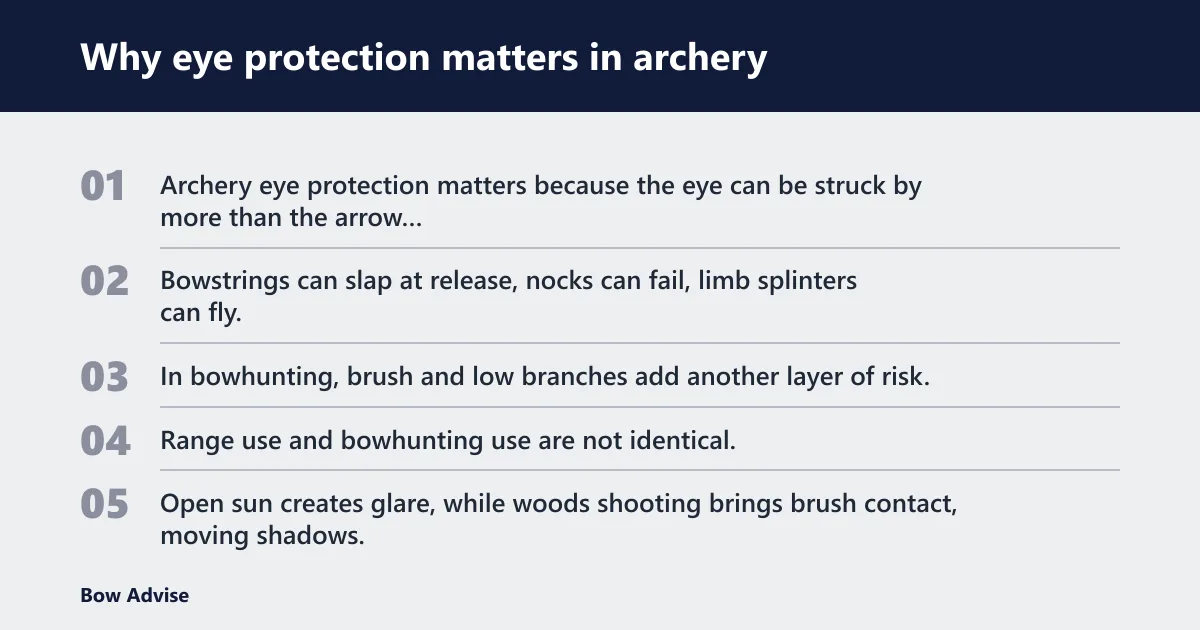
Archery eye protection matters because the eye can be struck by more than the arrow itself. Bowstrings can slap at release, nocks can fail, limb splinters can fly, and target-face debris can rebound at close range. In bowhunting, brush and low branches add another layer of risk.
Range use and bowhunting use are not identical. Open sun creates glare, while woods shooting brings brush contact, moving shadows, and headlamp use at dawn or dusk. The best glasses match those conditions instead of treating every session the same.
Bowstring, arrow, and debris risks
A broken nock, a frayed string, or a limb splinter can send small fragments where your face is. Most archers think first about arrows, but tiny debris is the more realistic eye hazard in daily shooting. Safety glasses should stop that kind of impact without blurring the pins.
Range and bowhunting risks are not identical
Outdoor ranges usually mean glare, wind, dust, and repeated drawing. Bowhunting adds brush, wet leaves, condensation on lenses, and light levels that can swing fast. A lens that looks fine at noon can be the wrong choice at first light in the timber.
Which archery safety glasses are best for outdoor ranges?
For outdoor ranges, the best archery safety glasses usually have polycarbonate lenses, UV protection, and a tint that matches the light: clear for shade and overcast conditions, smoke for hard sun, and amber for muted contrast. A wraparound frame helps keep side debris out and keeps the glasses steady during the draw.
On open ranges, lens choice should track the day’s glare first. Bright concrete pads, pale backstops, and snow or light sand can push glare up fast. In those settings, smoke tint usually makes more sense than clear lenses, while amber is better when contrast is the real issue.
Best lens tint for sun and glare
Smoke lenses are the best fit for bright sun. The page data notes smoke lenses for sunny conditions, and that matches archery use where glare can wash pins and target edges together. Clear lenses work for visibility, but they do less work against harsh light.
Features that help on open ranges
Look for wraparound coverage, anti-fog coating, and rubber nose pads or ear pieces. Those parts help the glasses stay put when you draw, lower the chance of slip from sweat, and keep the frame from drifting down your nose between ends.
XAegis Shooting Glasses with Case: best for bright sunlight
XAegis is the strongest bright-sun pick in this group because it combines UV-protected clear polycarbonate lenses with a wraparound rubber frame and anti-fog, anti-scratch claims. That makes it a sensible all-day range option when you want one pair that still works after weather changes.
The lightweight frame matters less on paper than it does at anchor. A frame that stays settled is easier to forget during a shot, and the wraparound shape gives better peripheral coverage than a flat front design.
The tradeoff is still tint. Clear lenses are excellent when visibility matters most, but they are not the best glare filter for long sessions in direct noon sun.
Walker’s Sport Amber: best for low light and overcast days
Walker’s Sport Amber is the right fit when the range is dim, the sky is washed out, or you are trying to read a target face in the trees. Amber lenses are a standard answer for low light because they increase contrast more than they darken the scene.
That can matter for beginners, too. A clean sight picture is easier to learn from than a dark one, especially when the light is flat and the target edge starts to disappear into the background.
The drawback is that amber can feel too warm and too bright in strong sun. It solves contrast better than it solves glare.
MCR Safety SR210 Swagger: best for prescription wearers
MCR Safety SR210 Swagger is the cleanest path for shooters who need room for prescription use. The full frame and detachable side shields make the coverage story stronger than many open sport frames, and the clear lens keeps the field of view simple.
If you wear glasses full-time, check whether the frame works over your current pair or whether a prescription insert is the better route. The key is to keep the lenses stable at full anchor without the temples pressing into your face or interfering with your hat brim.
The drawback is that clear lenses are less useful in bright sun. Prescription wearers may still want a second tint for outdoor hunting or summer range days.
How to choose archery safety glasses
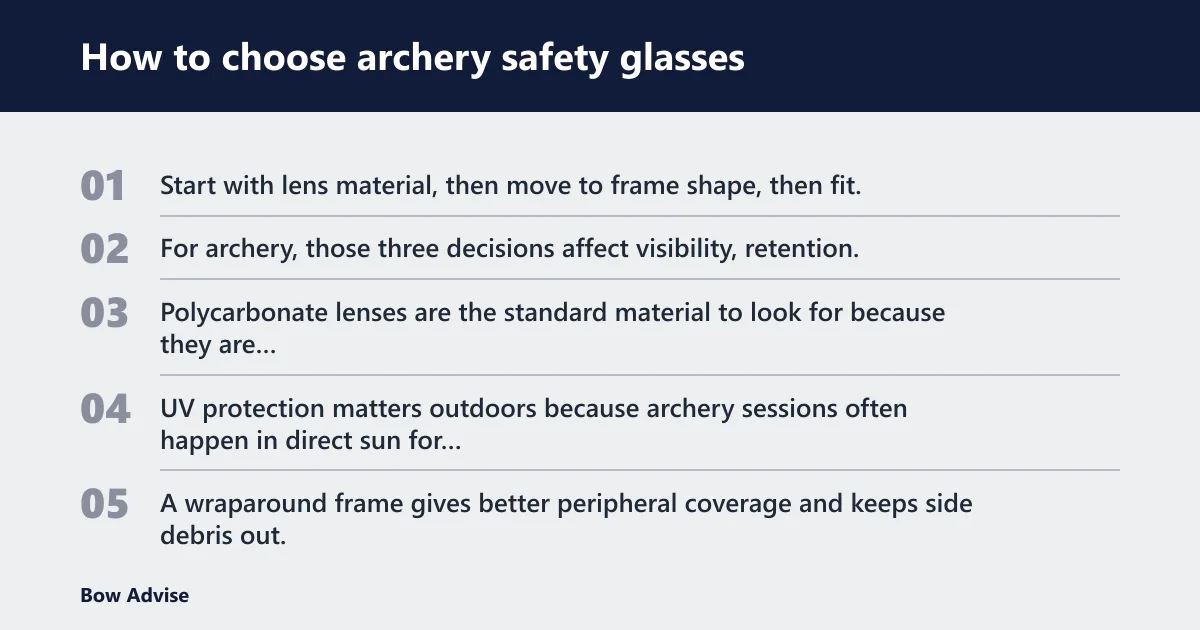
Start with lens material, then move to frame shape, then fit. For archery, those three decisions affect visibility, retention, and side protection more than cosmetic details do.
Polycarbonate lenses and UV protection
Polycarbonate lenses are the standard material to look for because they are impact-resistant, widely used in shooting glasses, and available in clear lens options that preserve visibility. UV protection matters outdoors because archery sessions often happen in direct sun for long blocks of time.
Wraparound coverage and draw stability
A wraparound frame gives better peripheral coverage and keeps side debris out. It also helps the glasses stay stable during the draw, which matters when the string path, hat brim, and anchor point all sit close together.
Anti-fog and anti-scratch coatings
Anti-fog coating matters most on humid ranges, cold mornings, high-exertion sessions, and over-the-glasses use. Anti-scratch coating helps preserve optical clarity when the glasses ride in a range bag with releases, broadheads, and keys.
Nose pads, ear pieces, and retention
Rubber nose pads and ear pieces improve fit and reduce slipping during shooting. That matters with sweat, rain, and repeated mounting. If the frame slides when you settle at anchor, it is the wrong frame.
Carrying case and field durability
A carrying case is more than a bonus. It keeps lenses from picking up scratches between sessions and makes the glasses easier to keep in a range bag or bowhunting pack. For field carry, durability and storage are part of the protection system.
Scenario-based selector table
| Range type | Light conditions | Weather or fog risk | Prescription needs | Recommended lens tint and frame style |
|---|---|---|---|---|
| Outdoor target range | Bright sun, open glare | Low to moderate fog risk | Standard fit or over-glasses fit | Smoke tint, wraparound frame, anti-fog coating |
| Outdoor target range | Overcast, shaded lanes | Humid or cool-morning fog risk | Standard fit | Amber or clear lens, wraparound or half-frame with good seal |
| Bowhunting at dawn or dusk | Low light, changing contrast | High fog risk from breath and temperature swing | Prescription insert or over-glasses | Amber or clear lens, wraparound frame, anti-fog coating, secure retention |
| Brushy treestand or blind | Mixed shade and sudden glare | Moderate fog and debris risk | Prescription compatible | Wraparound frame with side coverage, clear or amber lens |
| Beginner first pair | Mostly mixed outdoor use | Moderate | Either standard or over-glasses | Clear or lightly tinted polycarbonate, wraparound frame, nose pads, case |
Simple fit checklist for trying glasses on
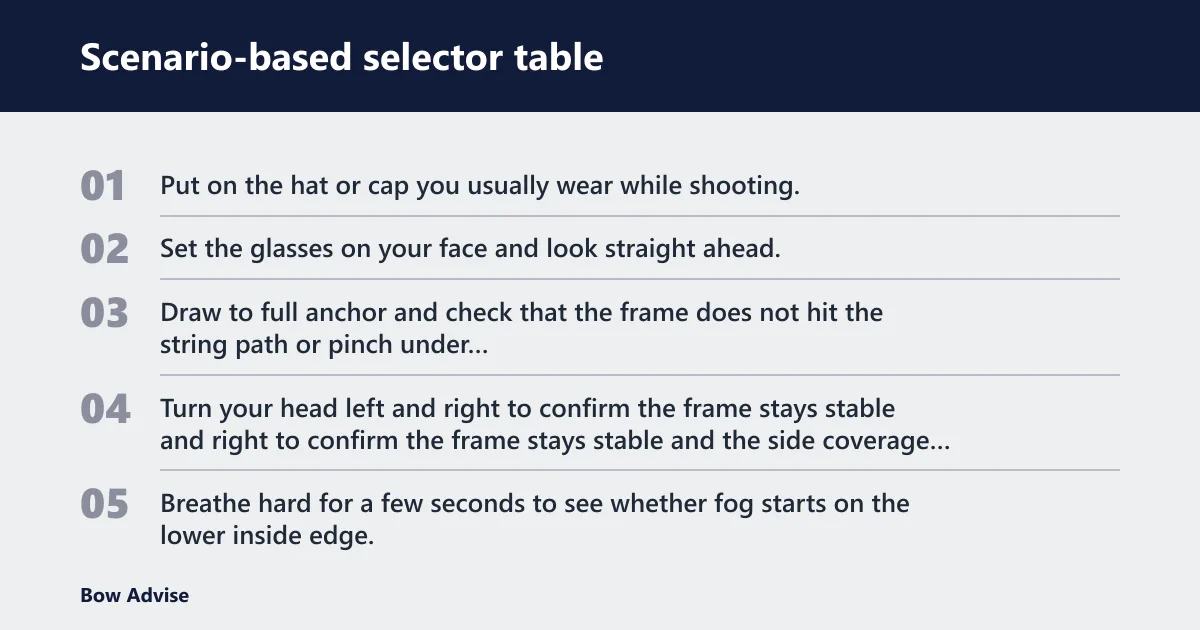
- Put on the hat or cap you usually wear while shooting.
- Set the glasses on your face and look straight ahead.
- Draw to full anchor and check that the frame does not hit the string path or pinch under the hat brim.
- Turn your head left and right to confirm the frame stays stable and the side coverage still feels secure.
- Breathe hard for a few seconds to see whether fog starts on the lower inside edge.
Suppose a shooter wears a low-profile cap and anchors under the cheekbone. A frame that looks fine in the store can still ride too low once the cap brim and string angle meet. That is why the full-anchor check matters more than a quick mirror test.
A common first-timer mistake is buying sunglasses that feel “good enough” in the parking lot. Ten ends later, the nose bridge slips, the lens fogs, and the frame starts shifting every time the bow comes up. That is the wrong kind of comfort.
Which one should you buy?
For most archers, choose XAegis. It is the broadest fit for outdoor range use because it combines clear polycarbonate lenses, UV protection, anti-fog and anti-scratch claims, a wraparound rubber frame, and a carrying case.
Choose Walker’s Sport Amber if you shoot more often in low light, shaded lanes, or cloudy weather. Choose NoCry if bright sunlight is the main problem and you want a lightly tinted, wraparound option. Choose MCR Safety SR210 Swagger if you need a prescription-friendly clear-lens setup with side shielding.
On budget alone, Walker’s Sport Amber is the low-cost entry point. On bowhunting use, XAegis is the most balanced pick because clear visibility, wraparound coverage, and fog control all matter when light changes fast.
Can I wear regular sunglasses for archery?
Regular sunglasses can be better than nothing, but they are not the same as purpose-built safety glasses. Many sunglasses lack impact ratings, have weak side coverage, and may not stay put during a draw. For archery, that matters because small debris and string contact are the real risks.
If the sunglasses are not ANSI Z87.1 rated, do not treat them as eye protection. A proper pair should give you impact resistance, UV protection, and a frame shape that stays stable with a hat and full anchor.
Do I need safety glasses for bowhunting?
Yes, bowhunting is a good reason to wear eye protection. Brush contact, headlamp use, low-light glare, and sudden debris from branches or moving gear all create real eye risks. A clear or amber wraparound lens usually makes more sense in the woods than a dark sunglass lens.
Fog control matters more here than many hunters expect. A lens that fogs while glassing, climbing, or drawing in cool air can be worse than a slightly less tinted lens that stays clear.
How do I keep shooting glasses from fogging up?
Use anti-fog coating, choose a frame that does not seal too tightly against your face, and match the lens to the weather. Humid outdoor ranges, cold mornings, and heavy breathing during a long practice block all raise fog risk. Over-glasses fit can make fogging worse if airflow is poor.
Fit also matters. If the nose pads trap warm air or the frame sits too close to the brow, moisture has nowhere to go. A small lift at the bridge and better venting often help more than wiping the lens after every end.
What features should archery safety glasses have?
Look for polycarbonate lenses, UV protection, ANSI Z87.1 impact rating, a wraparound frame, anti-fog coating, and anti-scratch coating. Rubber nose pads and ear pieces help retention, and a carrying case protects the lenses between sessions. Those are the features that directly support shooting use.
For prescription wearers, the frame must also work with your correction method. That means over-glasses fit, or enough room and compatibility for a prescription insert, without crowding the anchor point or blocking peripheral vision.
Are wraparound glasses better for archery?
Usually, yes. Wraparound glasses are better for archery because they cover more of the sides, help keep dust and brush out, and stay steadier during the draw. They also help preserve peripheral vision, which is useful on outdoor ranges and in the woods.
The only time a different shape may make more sense is when prescription fit or facial structure makes a wraparound frame unstable. In that case, the frame still needs side protection, but the best fit may come from a different style.
Which safety glasses work best in bright sunlight?
Smoke lenses work best in bright sunlight because they cut glare more effectively than clear lenses while preserving a natural view of the target. For archery, that can make pin alignment and target edges easier to read on open, reflective ranges.
If the day swings between shade and sun, a lightly tinted wraparound pair can be a reasonable middle ground. But for constant direct light, smoke is the stronger choice.
Which safety glasses are best for beginners?
Beginners usually do best with a clear or lightly tinted polycarbonate lens, wraparound coverage, and a secure fit with rubber nose pads or ear pieces. That combination keeps the field of view simple while still providing impact protection and UV coverage for outdoor practice.
A carrying case helps beginners, too, because scratches are a common early problem. If the glasses stay clean and clear, it is easier to learn anchor, sight picture, and follow-through without fighting lens haze or damage.
Frequently asked questions
What are the best archery safety glasses for outdoor ranges?
The best outdoor range glasses usually have polycarbonate lenses, UV protection, wraparound coverage, and a tint matched to the light. Smoke is best for bright sun, amber helps in flat light, and clear works well when visibility matters more than glare control.
Which lens color is best for archery safety glasses?
Clear is best for low light and overcast conditions, amber is best when you want contrast in dim light, and smoke is best for bright sunlight. The right choice depends on glare, not just comfort. For mixed use, a clear or lightly tinted pair is the safest starting point.
How do I keep shooting glasses from fogging up?
Choose anti-fog coating, avoid a frame that seals too tightly, and make sure the nose pads do not trap warm air against the lens. Fog risk goes up with humidity, cold air, and heavy breathing, so fit and venting matter as much as coating.
Can I wear regular sunglasses for archery?
You can, but they are not the best choice unless they carry a real impact rating and enough side coverage. Regular sunglasses often fall short on retention, protection, and fit at full anchor. Purpose-built safety glasses are a better match for bows, strings, and debris.
Which safety glasses are best for beginners?
Beginners should start with clear or lightly tinted polycarbonate glasses that carry ANSI Z87.1 protection and stay stable on the face. Wraparound coverage and a case are practical extras. The goal is simple: see well, protect well, and avoid distraction while learning form.
Do I need safety glasses for bowhunting?
Yes. Bowhunting brings brush, branches, low-light glare, and fast-moving gear near the face. A wraparound, impact-rated pair helps reduce the chance that a splinter, twig, or bit of debris reaches the eye when the shot window is tight.